Glass vs Screen Terrariums: Picking the Right Enclosure
Exo Terra’s Glass Natural Terrarium is the strongest all around pick, with front doors, a raised substrate base and a lamp ready screen top. REPTI ZOO’s Full Glass Terrarium is the value choice, and the Zoo Med ReptiBreeze suits chameleons and other species that need constant airflow.
Most keepers do best with the Exo Terra Glass Natural Terrarium, since front doors and a lamp ready screen top solve daily husbandry in one design. Budget conscious buyers get nearly the same access with the REPTI ZOO Full Glass Terrarium. Chameleon owners need the all mesh airflow of the Zoo Med ReptiBreeze instead.
Terrarium choice is really a humidity decision wearing a different name. Full screen enclosures vent moisture fast and suit arid or arboreal species, while glass with a partial screen top holds humidity for tropical setups. We compared door mechanisms, ventilation placement, base depth and published lid load ratings, then weighed what owners report about seal quality and hinge wear.
The shortlist, ranked
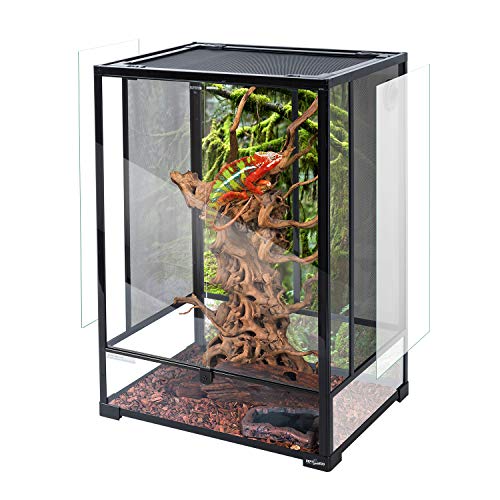
Exo Terra Glass Natural Terrarium 36 x 18 x 18
Dual front doors open at eye level, so feeding and misting do not spook the animal inside. A raised base frame holds several inches of substrate without spilling. Owners report the full screen top accepts basking lamps and UVB fixtures with no adapter needed.
Pros
- Eye level doors keep stress low during handling
- Screen top fits most lamp and UVB fixtures
- Built in cable ports keep wiring tidy
Cons
- Screen top sheds humidity fast
- Full setup gets heavy to move
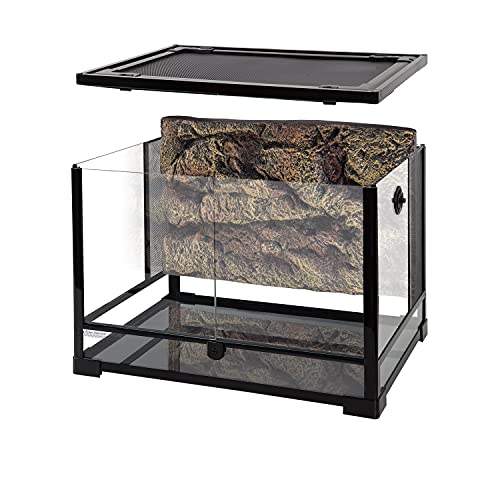
REPTI ZOO Full Glass Reptile Terrarium 34 Gallon
Toughened glass panels and a metal mesh top match pricier enclosures at a lower cost. Assembly comes flat packed, and owners report finishing it in under an hour. Seals hold water well once built, which suits a bioactive substrate layer.
Pros
- Full glass build costs less than comparable options
- Seals well enough for a bioactive substrate
- Mesh top lifts off for deep cleaning
Cons
- Assembly required before first use
- Sliding doors can bind if substrate collects in the track

Zoo Med ReptiBreeze LED Deluxe Open Air Screen Cage
Aluminium screen covers every side, giving chameleons the constant airflow they need. An integrated LED bar powers live plants inside the enclosure. Humidity dependent species will struggle here, but veiled and panther chameleon keepers rely on this design.
Pros
- All sided mesh matches chameleon airflow needs
- Wide front door simplifies planting and feeding
- LED bar keeps live plants growing
Cons
- Humidity drops fast without frequent misting
- Mesh can snag claws on some species
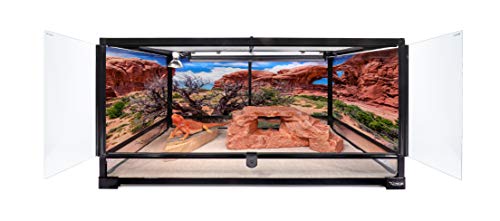
Carolina Custom Cages Terrarium 36 x 18 x 18
Thicker glass and a reinforced frame keep this enclosure square after years of use. Hinged doors swing fully open instead of sliding, so substrate never jams the track. Many owners treat it as the last terrarium they need to buy.
Pros
- Frame resists warping over years of use
- Hinged doors avoid substrate jams
- Rated to support heavier lighting fixtures
Cons
- Costs more upfront than mainstream models
- Weighs considerably more once furnished

Zilla Front Opening Terrarium 20 Gallon
Twenty gallons suits a crested gecko, a young leopard gecko or a small snake without overwhelming a new keeper. It arrives fully assembled, skipping the flat pack frustration common at this size. Front ventilation strips work with the screen top for gentle airflow.
Pros
- No assembly needed out of the box
- Latch keeps doors shut securely
- Sized sensibly for smaller species
Cons
- Fast growing species outgrow it quickly
- Screen top limits humidity retention

Exo Terra Nano Glass Terrarium
Dart frogs, isopod colonies and small planted displays fit this scaled down Exo Terra design. Front opening access and a raised base carry over from the larger models. A partly coverable screen top makes humidity easier to hold at desktop size.
Pros
- Compact footprint fits a desk or shelf
- Front access matches larger Exo Terra models
- Partial lid cover helps retain humidity
Cons
- Only fits very small species
- Little space for a temperature gradient

Zoo Med Naturalistic Terrarium 18 x 18 x 24
Vertical space matters more than floor space for crested geckos and tree frogs. This eighteen by eighteen by twenty four inch frame gives climbing room a standard tank cannot. Front opening doors and a raised base keep daily care practical despite the height.
Pros
- Height suits climbing and jumping species
- Vertical space creates a natural temperature gradient
- Compact footprint fits on a standard shelf
Cons
- Floor area stays limited for ground dwellers
- Reaching the substrate means bending down
The lineup, side by side
| # | Model | Dimensions | Best for | Score | Price |
|---|---|---|---|---|---|
| 1 | Exo Terra Glass Natural Terrarium 36 x 18 x 18 | 36 x 18 x 18 inches | Best overall | 9.4 | Check price |
| 2 | REPTI ZOO Full Glass Reptile Terrarium 34 Gallon | 34 gallons | Best value | 9.2 | Check price |
| 3 | Zoo Med ReptiBreeze LED Deluxe Open Air Screen Cage | Aluminium screen on all sides | Best for chameleons | 9.0 | Check price |
| 4 | Carolina Custom Cages Terrarium 36 x 18 x 18 | 36 x 18 x 18 inches | Best for durability | 8.8 | Check price |
| 5 | Zilla Front Opening Terrarium 20 Gallon | 20 gallons | Best for first time keepers | 8.6 | Check price |
| 6 | Exo Terra Nano Glass Terrarium | Nano, desktop footprint | Best for small species and plants | 8.3 | Check price |
| 7 | Zoo Med Naturalistic Terrarium 18 x 18 x 24 | 18 x 18 x 24 inches | Best for arboreal setups | 8.0 | Check price |
What to look for
What matters most when choosing a terrarium? Species comes before size. Bearded dragons need floor space and strong airflow. Tropical geckos need height and steady humidity. Chameleons need mesh on every side. Published minimum dimensions are a floor, not a target, and owners report calmer behavior once animals get more room than the bare minimum.
Front opening or top opening: which is better for reptiles? Reaching in from above mimics a predator strike, and many reptiles react with stress. Front doors approach at eye level instead, which speeds up feeding and spot cleaning. Escape risk rises slightly with any door, so check the latch before buying. Sliding doors can also jam once substrate builds up in the track.
How do you keep humidity from escaping a screen top terrarium? A full screen lid moves plenty of air but holds almost no moisture. Tropical setups usually need part of that screen covered with an acrylic or foil panel between mistings. Arid species do better with the lid left fully open. Plan the cover before setup rather than fighting a low hygrometer reading later.
What does a bioactive terrarium need from the enclosure? Live plants and a cleanup crew need real substrate depth, often several inches once a drainage layer goes in. A raised base frame and a lid that seals reasonably well both matter here. Low front lips spill substrate every time the door opens. Check that lip height before committing to a deep bioactive build.
Questions worth asking
Glass or screen terrarium: which is better?
Glass holds heat and humidity, which suits tropical and terrestrial reptiles. Full screen suits chameleons and other species that need constant airflow. Many keepers land on a middle ground: glass sides with a screen top.
Can a fish tank work as a terrarium?
It can, but access from above and no front ventilation make daily care harder. Purpose built terrariums with front doors handle husbandry with far less stress on the animal.
How big does a terrarium need to be?
Bigger than the published minimum whenever space allows. Adult bearded dragons commonly need a four foot enclosure. Crested geckos need vertical height more than floor length.
Do terrariums come with heat or UVB lighting included?
Most ship without lamps, since requirements vary by species. Screen tops are usually rated to hold fixtures placed on top. Some screen cages, like ReptiBreeze models, include an LED bar for plants only.
What is the best terrarium for a beginner reptile keeper?
A twenty gallon front opening enclosure that arrives assembled removes the biggest early frustration. Look for a secure latch and simple ventilation, since complex setups can wait until husbandry basics feel routine.
Which terrarium works best for chameleons?
Full screen cages with mesh on every side match a chameleon’s need for constant airflow. Look for a wide front door for planting and an integrated light bar if the enclosure holds live plants.
Are flat pack terrariums hard to assemble?
Most owners report finishing assembly in under an hour with two people. Overtightening frame screws against the glass is the main risk. Fully assembled models cost more to ship but skip that step.
Can live plants survive inside a reptile terrarium?
Yes, provided lighting is adequate and the species will not trample or eat them. Pothos, bromeliads and snake plants tolerate humidity swings and occasional damage well.
How often should a terrarium get deep cleaned?
Spot clean daily, then do a full substrate change and glass clean on a set schedule, often monthly. Bioactive enclosures need far less frequent intervention once the cleanup crew is established.
Final word
Exo Terra’s Glass Natural Terrarium remains the pick most keepers should start with, since front access, a raised base and a lamp ready top solve the three daily headaches at once. Choose the REPTI ZOO version for a lower outlay, or the Zoo Med ReptiBreeze when constant airflow matters more than holding humidity.
Olivia Hartley
Olivia spent several years working at an animal shelter and a pet-supply retailer before joining the editorial team. She researches pet gear with an emphasis on safety, comfort and the fine print that owners often miss.
