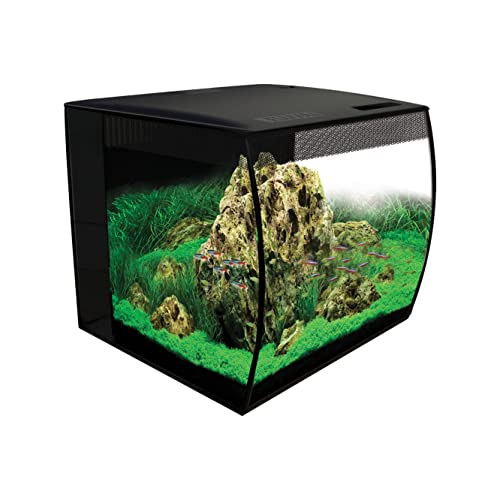
How to Pick the Right Indoor Terrarium for Reptiles
Exo Terra’s Glass Natural Terrarium suits most tropical geckos and small snakes with front doors and screen ventilation. Zoo Med’s ReptiBreeze gives chameleons the constant airflow mesh walls provide. First time keepers often start with the Zilla Tropical Reptile Habitat Kit, which bundles the tank with starter heating and lighting gear.
Exo Terra’s Glass Natural Terrarium works for tropical geckos and small snakes, pairing front opening doors with a raised screen top. Humidity holds well behind glass, though the design weighs more than mesh alternatives. Chameleon owners need airflow instead, which points toward the Zoo Med ReptiBreeze and its full mesh walls, while first time keepers often start with the bundled Zilla Tropical Reptile Habitat Kit.
Terrarium shopping gets confusing because humidity, ventilation and access work against each other depending on species. A screen top vents well but drops humidity fast, which frogs and some geckos need to avoid. Front doors ease feeding and cleaning more than lifting a full screen lid. We compared material, ventilation design and stated dimensions, then weighed owner reports on humidity retention and daily handling.
What to look for
What decides day to day usability in an indoor terrarium Material, ventilation style and access points shape daily usability more than size alone. Glass holds humidity and heat better than mesh, while mesh gives arboreal species the airflow they need. Front doors ease feeding and spot cleaning far more than lifting a full top lid. Match dimensions to a species’ adult size, not just what it needs as a juvenile.
Matching ventilation to species needs Desert species like leopard geckos need drier air and do fine with mostly screen tops over glass sides. Tropical frogs and moisture dependent geckos need higher humidity, which sealed glass sides support better than mesh walls. Chameleons sit at the other extreme, needing constant airflow that only full mesh enclosures like the ReptiBreeze provide. Mismatching ventilation to species ranks among the more common care mistakes new keepers make.
Sizing an enclosure for the long term Buying for a species’ adult size avoids a costly upgrade within the first year. Bearded dragons and larger monitors need floor space measured in tens of gallons, while smaller geckos and frogs do fine in compact tanks. Vertical space matters as much as floor space for climbing species. Oversized enclosures for very young animals can also make food harder for them to find.
Setting up heating and lighting inside the tank A screen top accommodates basking bulbs and UVB fixtures more easily than solid glass or dense mesh. Thermometers and hygrometers placed at both ends reveal real temperature and humidity gradients, not just an average. Species needing high humidity often need extra misting or a fogger regardless of enclosure type. Check fixture compatibility with the terrarium’s top material before buying heat lamps separately.
The best picks, ranked

Exo Terra Glass Natural Terrarium
Front opening double doors simplify feeding and spot cleaning without disturbing an overhead basking setup. A raised screen top holds heat and UVB fixtures while still allowing airflow. Glass panels retain humidity better than mesh, suiting tropical geckos, small snakes and many amphibians.
Pros
- Front doors simplify daily feeding and cleaning
- Glass holds humidity better than mesh walls
- Raised screen top supports heat and UVB fixtures
Cons
- Heavier than plastic or full mesh enclosures
- Glass can fog when humidity runs high without airflow

Zoo Med ReptiBreeze Screen Terrarium
Mesh walls on every side give chameleons and other arboreal species the constant airflow they need to avoid respiratory issues. Tall vertical space fits climbing branches and vines better than a wide floor plan. Lighter weight than glass eases moves between rooms during cleaning.
Pros
- Full mesh gives constant airflow for arboreal species
- Tall design fits climbing branches and vines
- Lighter than an equivalent glass enclosure
Cons
- Holds humidity poorly without extra misting
- Screen walls offer less heat insulation than glass
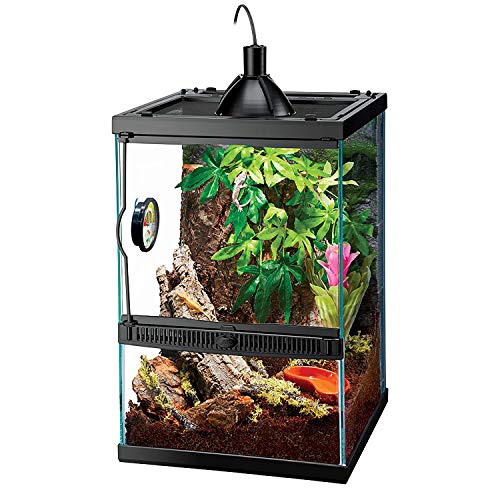
Zilla Tropical Reptile Habitat Kit
This kit pairs a glass terrarium with a heat lamp, thermometer and substrate starter, cutting down separate purchases. Leopard geckos, crested geckos and similar tropical species suit first time keepers using it. A screen top accommodates a basking bulb without extra hardware.
Pros
- Bundles core equipment for first time owners
- Screen top fits standard basking bulbs directly
- Lower total cost than buying parts separately
Cons
- Sliding top is less convenient than front doors
- Included gear suits only smaller species long term
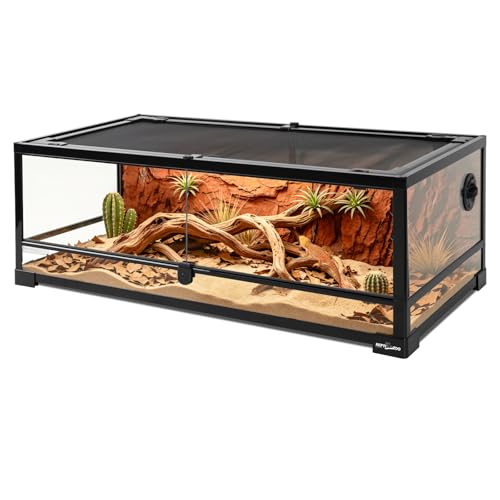
REPTI ZOO 40 Gallon Glass Terrarium
A 40 gallon footprint gives adult bearded dragons and larger geckos real room to move and thermoregulate. Front sliding glass doors work alongside a screen top, covering daily access and lighting needs together. Reinforced corners help the larger glass panels hold up through years of cleaning.
Pros
- Roomy footprint suits adult reptiles well
- Front sliding doors ease daily handling
- Reinforced corners support larger glass panels long term
Cons
- Heavy once furnished, awkward to relocate
- Takes up more floor space than smaller tanks

Vivosun Reptile Glass Terrarium
A straightforward glass enclosure with front doors covers basic needs for geckos and small snakes below premium brand pricing. Fine hardware details lag pricier tanks, though core ventilation and access still work well. Everyday keeping needs little more than what this design offers.
Pros
- Lower price than premium glass terrariums
- Front doors still ease daily access
- Ventilation adequately suits common gecko and snake species
Cons
- Door latches feel less refined than name brand kits
- Fewer size options than larger competitors
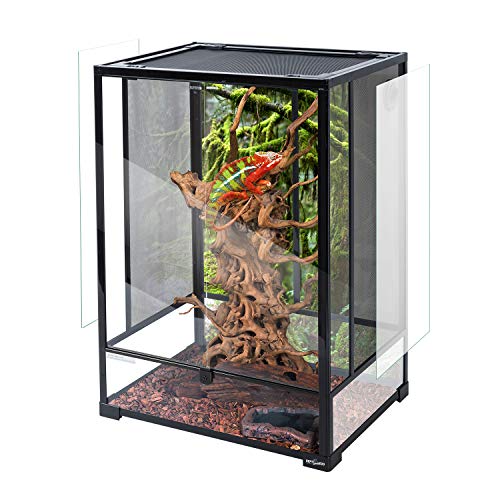
Kollea Glass Reptile Terrarium
Mostly sealed glass sides hold humidity higher than heavily meshed tanks, useful for tropical frogs and moisture loving geckos. A smaller top vent still allows airflow, preventing stagnant air buildup. Species needing consistently damp substrate suit this design more than open ventilation setups.
Pros
- Retains humidity better than mesh heavy tanks
- Suits tropical frogs and moisture dependent geckos
- Compact footprint fits shelves easily
Cons
- Limited airflow needs regular monitoring
- Not suited to species that need dry, ventilated air
Zilla Vertical Tall Terrarium
Extra height over floor space suits tree frogs, crested geckos and other climbers spending most time off the ground. A front door keeps daily maintenance simple despite the taller build. Vertical decor like cork bark and vines pairs naturally with this shape.
Pros
- Vertical space suits climbing species well
- Front door simplifies feeding and cleaning
- Works well with cork bark and vine decor
Cons
- Smaller floor footprint than horizontal tanks
- Less suited to ground dwelling species
Compared at a glance
| # | Model | Material | Best for | Score | Price |
|---|---|---|---|---|---|
| 1 | Exo Terra Glass Natural Terrarium | Glass with raised screen top | Best overall | 9.4 | Check price |
| 2 | Zoo Med ReptiBreeze Screen Terrarium | Aluminum screen mesh | Best for chameleons | 9.1 | Check price |
| 3 | Zilla Tropical Reptile Habitat Kit | Glass with screen top | Best for beginners | 8.8 | Check price |
| 4 | REPTI ZOO 40 Gallon Glass Terrarium | Glass with screen top | Best for larger reptiles | 8.6 | Check price |
| 5 | Vivosun Reptile Glass Terrarium | Glass with screen top | Best value glass tank | 8.3 | Check price |
| 6 | Kollea Glass Reptile Terrarium | Glass with small top vent | Best for humidity retention | 8.1 | Check price |
| 7 | Zilla Vertical Tall Terrarium | Glass with screen top | Best for climbing species | 8.0 | Check price |
Frequently asked questions
What is the best terrarium material for indoor reptiles?
Glass holds humidity and heat more effectively and suits most tropical species. Mesh screen terrariums, like the ReptiBreeze, work better for chameleons and other species needing constant airflow.
Do terrariums need a screen top?
Most reptile terrariums need some screen ventilation to prevent stagnant air and to safely mount heat or UVB lighting overhead. Fully sealed glass without any vent risks overheating and poor air quality.
How do you raise humidity in a glass terrarium?
Reduce open ventilation where possible, add live or artificial plants, and mist the substrate regularly or run an automatic fogger. Enclosures with more sealed glass sides, like the Kollea terrarium, naturally hold humidity longer between mistings.
What size terrarium does a leopard gecko need?
Adult leopard geckos generally need at least a 20 gallon floor plan, though larger footprints give more room for a temperature gradient. Starter kits sized for juveniles often need an upgrade within the first year or two.
Can one terrarium work for both reptiles and amphibians?
Many glass terrariums work for both, but amphibians typically need higher humidity and softer substrate than reptiles. Check ventilation levels first, since a tank vented for a dry species dries out too quickly for most frogs.
Front opening or top opening terrarium, which works better?
Front opening doors ease feeding and spot cleaning without disturbing overhead lighting or climbing decor. Top opening designs work fine for smaller, less established setups but grow inconvenient once plants and branches fill the space.
Do chameleons need a mesh terrarium?
Yes, chameleons generally do best in full mesh enclosures like the Zoo Med ReptiBreeze. Stagnant air in a glass tank raises the risk of respiratory illness for this species.
How heavy is a large glass terrarium once furnished?
A 40 gallon glass terrarium with substrate, decor and water can weigh well over 100 pounds. Plan for a sturdy stand rather than a standard shelf before setup.
What terrarium size fits a bearded dragon?
Adult bearded dragons need a footprint close to 40 gallons or larger, like the REPTI ZOO model, to move and thermoregulate properly. Juvenile setups sized smaller almost always need an upgrade within a year.
Our take
Pick the Exo Terra Glass Natural Terrarium for most tropical geckos and small snakes, since front doors and balanced ventilation cover daily care well. Chameleon owners should skip glass entirely and choose the Zoo Med ReptiBreeze for its full mesh airflow instead. First time keepers on a budget do better starting with the Zilla Tropical Reptile Habitat Kit, which bundles the basics into one purchase.
Olivia Hartley
Olivia spent several years working at an animal shelter and a pet-supply retailer before joining the editorial team. She researches pet gear with an emphasis on safety, comfort and the fine print that owners often miss.