Tents Compared for Family Camping, Hiking and Wind
Coleman Sundome 4 Person is our top pick for general camping thanks to a simple pitch and reliable rainfly. MSR Hubba Hubba suits backpackers who need a weight to weather balance, while CORE 9 Person Instant Cabin fits families wanting room to stand.
Coleman Sundome 4 Person quietly does everything well for most campers, MSR Hubba Hubba covers backpacking trips, and CORE 9 Person Instant Cabin suits families who want standing room. Weight and weather resistance pull in opposite directions, so the trip decides the tent.
Every tent design trades weight against space and weather protection, and manufacturer person ratings assume sleeping bags packed edge to edge with no room for kit. We compared packed weights, waterproof ratings, pole structures, pitch times, real usable floor area and ventilation, then ranked seven tents by the kind of camping each is genuinely built for.
How to pick the right one
What tent size do you actually need A tent labelled for four people fits four sleeping mats side by side with no gap and nowhere for boots, bags or a dog. Most experienced campers size up by one or two, so a couple with gear buys a three or four person tent and a family of four looks at six person models. Check floor dimensions rather than the number on the box, and remember a tall occupant needs the length as much as the width.
Weight versus weather protection Every gram removed from a tent comes out of fabric thickness, pole strength or coverage. That trade makes sense carrying gear up a mountain and accepting it knowingly. It is a poor deal when the tent lives in a car boot, where a heavier, stronger, cheaper tent serves better. Decide first whether the tent rides on your back, since that single question eliminates most of the options.
Waterproofing, seams and ventilation for wet trips Hydrostatic head measures how much water pressure fabric resists, with around 1500mm adequate for showers and 3000mm or more suited to sustained rain. The floor matters as much as the fly, since ground water pushes upward under a sleeper’s weight. Sealed or taped seams stop leaks at the stitch lines. Condensation from breathing forms on cold fabric and gets mistaken for a leak in almost every poorly vented tent, so ventilation matters just as much.
How pitch design behaves in wind and rain Crossing poles make dome tents stable and good at shedding wind, which is why they dominate general camping. Cabin tents with near vertical walls add far more living space but present a large flat surface to wind and need guying out properly. Instant or preattached pole systems save real time in rain and darkness. Pitch any new tent once in the garden before a trip, since a missing pole discovered at dusk on site ruins an evening.
What we recommend

Coleman Sundome 4 Person Tent
Two poles let the Sundome pitch in minutes, and welded floor seams shed rain properly at a fraction of the cost of technical tents. Four person sizing realistically suits two adults with gear or a small family. Owners report it handles ordinary wind and rain far better than its price suggests.
Pros
- Fast simple pitch even in the dark
- Handles rain reliably for the price
- Good roof ventilation reduces condensation
Cons
- Not enough headroom to stand
- Too heavy to backpack with

MSR Hubba Hubba 2 Person Tent
Serious hikers keep returning to this tent because it holds up in real mountain weather without the weight penalty of an expedition shelter. A freestanding pole structure pitches on rock or hardpack where pegs will not bite. Two doors and two vestibules mean neither occupant climbs over the other.
Pros
- Genuinely capable in poor weather
- Freestanding pitch works on hard ground
- Two doors avoid climbing over each other
Cons
- Premium price for the specification
- Tight for two large occupants with gear
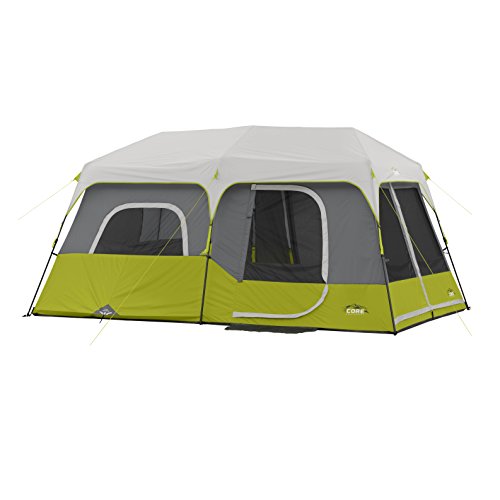
CORE 9 Person Instant Cabin Tent
Near vertical walls trade weather performance for a ceiling you can actually stand under, changing how a wet afternoon feels with children. Preattached poles mean the frame goes up in a couple of minutes. A room divider splits the cabin into two separate sleeping areas.
Pros
- Stand up height across most of the floor
- Very fast to pitch for its size
- Divider creates separate sleeping areas
Cons
- Tall walls catch wind badly
- Heavy and bulky to transport

Coleman Skydome 6 Person Tent
Walls push outward compared with a classic dome, adding noticeable headroom and shoulder room without losing wind stability. Preattached poles let the Skydome pitch faster than the Sundome. Based on specifications the rainfly extends further down the walls than older Coleman models.
Pros
- More headroom than a classic dome
- Quicker to pitch than the Sundome
- Better rainfly coverage down the walls
Cons
- Still not full standing height
- Bulky packed size
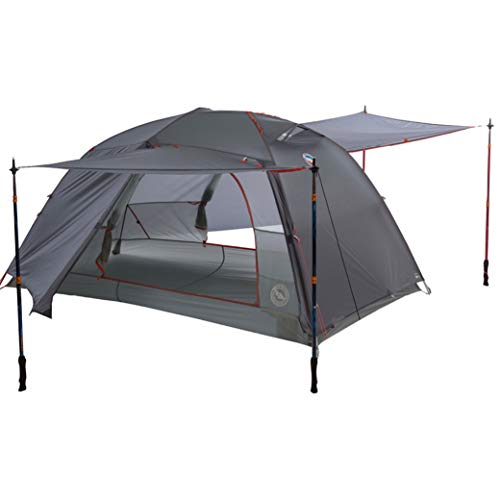
Big Agnes Copper Spur HV UL2
Long distance hikers count every hundred grams, and the Copper Spur cuts weight hard while a steep wall design keeps the interior liveable. Two doors and two vestibules are rare at this weight class. Lightweight fabrics need more careful handling than heavier tents, particularly around the groundsheet.
Pros
- Very low weight for a two person tent
- Steep walls keep it liveable inside
- Two doors despite the light build
Cons
- Thin fabrics need careful handling
- One of the most expensive options here

ALPS Mountaineering Lynx 2 Person Tent
Aluminium poles, a full coverage fly and two vestibules cover most of what a hiking tent needs at a fraction of premium prices. Extra weight over ultralight options is the trade for that lower cost. Owners report it works as a sensible first backpacking tent before committing to pricier gear.
Pros
- Aluminium poles at a low price
- Full coverage fly and two vestibules
- Durable enough for regular use
Cons
- Noticeably heavier than premium tents
- Packed size is bulky for a small pack

Naturehike Cloud Up 2 Person Tent
Naturehike undercuts established brands significantly while keeping weight down, explaining why it shows up in so many first time hiking setups. A single door saves weight but forces the inside occupant to climb across their partner. Moderate weather is fine, though it is no substitute for a mountain tent.
Pros
- Low weight at a low price
- Aluminium poles rather than fibreglass
- Packs down small for its capacity
Cons
- Single door is awkward for two people
- Not built for sustained severe weather
Side by side
| # | Model | Capacity | Best for | Score | Price |
|---|---|---|---|---|---|
| 1 | Coleman Sundome 4 Person Tent | 4 person | Best overall | 9.4 | Check price |
| 2 | MSR Hubba Hubba 2 Person Tent | 2 person | Best for backpacking | 9.2 | Check price |
| 3 | CORE 9 Person Instant Cabin Tent | 9 person | Best for families | 9.0 | Check price |
| 4 | Coleman Skydome 6 Person Tent | 6 person | Best value family tent | 8.8 | Check price |
| 5 | Big Agnes Copper Spur HV UL2 | 2 person | Best ultralight | 8.6 | Check price |
| 6 | ALPS Mountaineering Lynx 2 Person Tent | 2 person | Best value backpacking tent | 8.3 | Check price |
| 7 | Naturehike Cloud Up 2 Person Tent | 2 person | Best budget lightweight | 8.0 | Check price |
Frequently asked questions
What size tent do I need for a family of four?
Add one or two to your group size. A two person tent suits one person with gear comfortably, and a six person tent works for a family of four with bags. Check stated floor dimensions rather than trusting the capacity label.
What waterproof rating should a tent have?
Around 1500mm hydrostatic head copes with typical showers, while 3000mm or higher suits sustained rain and exposed sites. Taped seams and a well specified groundsheet matter as much as the headline number.
Why is the inside of my tent wet when it has not rained?
Condensation. Breathing releases moisture that condenses on cold fabric overnight. Opening vents, keeping wet gear in the vestibule and avoiding cooking inside all cut it substantially.
Do I need a footprint or groundsheet under a tent?
It is not essential, but it extends the life of the tent floor considerably and adds a barrier against ground moisture. Any groundsheet should be cut slightly smaller than the tent floor, since an oversized one channels rain underneath.
Are instant cabin tents worth buying for camping?
For family camping, yes. Preattached poles cut pitch time to a couple of minutes, genuinely valuable when arriving late or in rain. They run heavier and bulkier packed, which suits car camping rather than hiking.
How do I stop a tent from blowing away in wind?
Peg every point provided and use the guy lines rather than treating them as optional. Orient the smallest end into the prevailing wind, and choose a dome shape over a tall cabin design on an exposed site.
How should a tent be stored between trips?
Completely dry and loosely packed rather than compressed for months. Packing a damp tent away ruins it fastest, since mildew attacks the waterproof coating and the smell never fully leaves.
How long do tents typically last?
A well cared for tent lasts many seasons, with the waterproof coating and zips usually failing before the fabric does. Drying after every trip, avoiding prolonged direct sun and occasional reproofing all extend that considerably.
Backpacking tent vs family tent, what is the real difference?
Backpacking tents like the MSR Hubba Hubba prioritise low weight and wind resistance for carrying on foot. Family tents like the CORE Instant Cabin prioritise standing height and floor space instead, at the cost of extra weight and bulk.
Is a heavier tent always more weatherproof?
Not always, but weight often buys thicker fabric, stronger poles and fuller rain coverage. A light tent can still handle real weather if the design is right, which is exactly what makes the MSR Hubba Hubba stand out among ultralight options.
The bottom line
For general camping, Coleman Sundome 4 Person remains hard to beat, pitching quickly and handling weather well without asking much of your wallet. Backpackers should spend the money on MSR Hubba Hubba, which earns its weight in genuinely bad conditions, and families who want to stand up and move around will get more use out of CORE 9 Person Instant Cabin than any dome tent.
Sierra Daniels
Sierra's background is in landscape design and nursery retail. She focuses on lawn and garden equipment, outdoor furniture and gear durability, weighing published specs against how materials actually hold up outside.