Telephoto Zoom Lenses Ranked by Sharpness and Reach
The Sony FE 70-200mm f4 Macro G OSS II leads for full-frame sharpness and close focus. The Tamron 70-300mm is the value pick that adds reach for less money, and the Canon EF 70-300mm IS II covers the budget DSLR route. Always match a pick to your camera mount first.
Full-frame Sony shooters get the sharpest all-round telephoto here in the Sony FE 70-200mm f4 Macro G OSS II. Budget matters most for the Tamron 70-300mm and the Canon EF 70-300mm IS II, and every option below only fits one camera mount, so confirm that first.
The same focal range comes in mounts that do not interchange, which makes this category tricky, and reach, aperture and stabilization all trade against price and weight. We looked at sharpness across the zoom, autofocus speed and image stabilization, then flagged which mount each lens fits so nobody buys glass their body cannot use.
How to choose
Matching a lens to your exact camera mount This step comes before everything else, since a Sony E lens will not fit a Canon RF body and vice versa. Confirm the exact mount first, whether Sony FE, Sony E APS-C, Canon RF, Canon EF, Nikon Z or L mount, then buy only the version listed for it. Adapters exist in some cases, such as EF glass on RF bodies, but they are not universal across brands.
How reach trades against aperture and weight More reach almost always means a slower aperture along with more weight or cost. A 70-200mm f4 stays bright and sharp but tops out at 200mm, while a 100-400mm reaches farther but often drops to f8 at the long end. Deciding how far you truly need to shoot matters more than chasing the biggest number on the box.
Why stabilization matters more the further you zoom Long lenses magnify every shake, so image stabilization becomes more important as focal length grows. Optical stabilization built into the lens, labeled OSS, IS, VR or OS depending on the brand, helps keep handheld shots sharp at slower shutter speeds. Cameras without in-body stabilization especially benefit from a lens that carries its own.
Getting extra reach for free on a crop sensor An APS-C body shows a tighter, more magnified view than full frame from the same lens, so a 70-350mm behaves like a 525mm equivalent. That makes crop cameras a smart, affordable path to serious reach for wildlife and sports. Enough available light still matters, since the smaller sensor gathers less of it.
What we recommend

Sony FE 70-200mm f4 Macro G OSS II
Sharpness stays razor edge to edge on this updated 70-200mm f4 G, and autofocus locks fast. Genuine macro-style close focus sets it apart from rivals at this focal range. Most full-frame Sony shooters looking for one versatile telephoto should start here.
Pros
- Excellent sharpness edge to edge
- Constant f4 and close macro focus
- Fast, quiet autofocus
Cons
- Pricier than variable-aperture zooms
- 200mm reach shorter than the super-teles

Tamron 70-300mm f4.5-6.3 Di III RXD
Full-frame mirrorless shooters get real 300mm reach here in a light, affordable package. RXD autofocus stays quiet and quick during travel, wildlife or event shooting. Budget-conscious buyers looking for reach beyond 200mm without heavy glass land on this lens most often.
Pros
- 300mm reach for the money
- Light and compact for travel
- Quiet, quick autofocus
Cons
- No optical stabilization built in
- Slower aperture at the long end

Canon EF 70-300mm f4-5.6 IS II USM
Existing Canon DSLR shooters get a useful 300mm reach here with built-in image stabilization. This EF-mount zoom also adapts cleanly to RF mirrorless bodies, extending its useful life. A small info display on the barrel is a nice extra at this price.
Pros
- Affordable reach with stabilization
- Works on EF bodies and adapts to RF
- Small info display on the barrel
Cons
- Older DSLR-era design
- Softer corners wide open at 300mm

Canon RF 100-400mm f5.6-8 IS USM
Real 400mm reach lands on Canon mirrorless bodies here in a light, affordable super-tele. Wildlife and sports shooters favor it when distance matters more than a heavy kit. Built-in stabilization helps steady handheld shots at the long end.
Pros
- 400mm reach in a light body
- Great value for a super-tele
- Effective built-in stabilization
Cons
- Slow f8 aperture at 400mm
- Needs good light or higher ISO

Nikon Z 100-400mm f4.5-5.6 VR S
Serious Nikon mirrorless shooters reach for this premium S-line super-tele first. Sharpness stays high and autofocus locks fast, backed by strong vibration reduction. A weather-sealed build holds up better than budget alternatives in the field.
Pros
- Sharp with fast, sure autofocus
- Brighter aperture than f8 rivals
- Robust weather-sealed build
Cons
- Premium S-line price
- Heavier than budget super-teles
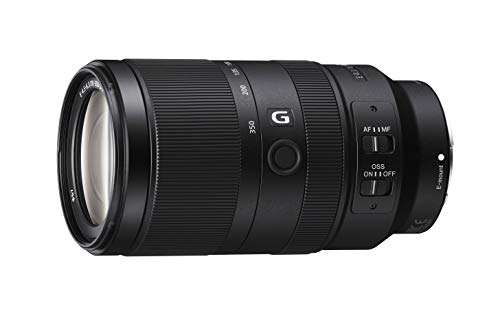
Sony E 70-350mm f4.5-6.3 G OSS
Crop-sensor Sony bodies gain an effective 525mm reach here, built specifically for the smaller APS-C mount. Sharp G-series optics and optical stabilization keep shots usable at that distance. Wildlife shooters on a budget mirrorless kit find this the standout long zoom in the range.
Pros
- Huge effective reach on crop bodies
- Sharp G-series optics
- Compact for the range offered
Cons
- Covers APS-C image circle only
- Variable aperture dims when zoomed

Sigma 100-400mm f5-6.3 DG DN OS
Hikers and travelers get 400mm reach here in a slim, packable barrel that skips the usual super-tele bulk. This mirrorless mount lens costs less than most rivals with similar reach. All-day carry matters more than weather sealing for the buyer this suits.
Pros
- Light enough for all-day carry
- Slightly brighter than f8 rivals
- Good value super-tele reach
Cons
- Not weather sealed like pro glass
- Corners soften at maximum zoom
Compared at a glance
| # | Model | Mount | Best for | Score | Price |
|---|---|---|---|---|---|
| 1 | Sony FE 70-200mm f4 Macro G OSS II | Sony FE full frame | Best overall | 9.4 | Check price |
| 2 | Tamron 70-300mm f4.5-6.3 Di III RXD | Sony FE and Nikon Z | Best value | 9.0 | Check price |
| 3 | Canon EF 70-300mm f4-5.6 IS II USM | Canon EF DSLR | Best budget for DSLR | 8.6 | Check price |
| 4 | Canon RF 100-400mm f5.6-8 IS USM | Canon RF mirrorless | Best reach for Canon RF | 9.1 | Check price |
| 5 | Nikon Z 100-400mm f4.5-5.6 VR S | Nikon Z mirrorless | Best for Nikon Z | 9.2 | Check price |
| 6 | Sony E 70-350mm f4.5-6.3 G OSS | Sony E APS-C | Best for Sony APS-C | 8.9 | Check price |
| 7 | Sigma 100-400mm f5-6.3 DG DN OS | Sony FE and L mount | Best lightweight super-tele | 8.8 | Check price |
Frequently asked questions
Will any telephoto lens fit my camera?
No. Lenses are mount specific, so a Sony, Canon or Nikon lens only fits that maker’s matching mount. Always buy the version made for your exact camera body.
How much reach do I need?
For portraits and events, 200mm is often plenty, while wildlife and distant sports usually call for 400mm or more. Match the focal range to your subject and how close you can physically get to it.
What does a variable aperture like f4.5-6.3 mean?
It means the lens lets in less light as you zoom in. That can slow autofocus and push ISO higher in dim conditions, which is why brighter constant-aperture lenses cost more.
Do I need image stabilization on a telephoto lens?
For long lenses, yes, unless the camera body has strong in-body stabilization already. Optical stabilization helps shoot sharp handheld shots at the long end without needing a tripod.
Are crop-sensor cameras better for reach?
In effect, yes. An APS-C body magnifies the view, so a 70-350mm acts like a 525mm equivalent, giving wildlife shooters extra reach affordably as long as the light holds up.
Can I use adapters across camera mounts?
Sometimes. Canon EF lenses adapt well to Canon RF bodies, for example, but adapting is not universal and can affect autofocus speed. Native mount lenses stay the safer choice when one is available.
Which telephoto lens is best for wildlife?
Reach-focused super-teles like the Canon RF 100-400mm, Nikon Z 100-400mm and Sony E 70-350mm on crop bodies stand out for their distance and stabilization.
Is a 70-200mm lens enough telephoto reach?
For sports, events and portraits it often is, and lenses like the Sony 70-200mm f4 earn a reputation for sharpness. Distant wildlife usually calls for reach beyond 200mm instead.
Telephoto zoom versus prime lens: which reaches farther for less money?
Zooms like the ones here cover a broad range in one lens, which usually costs less than buying several fixed focal length primes to match. Primes can edge out sharpness at a single focal length, but flexibility favors the zoom for most buyers.
What is the difference between a 70-300mm and a 100-400mm lens?
A 70-300mm starts wider and suits portraits alongside distant subjects, while a 100-400mm sacrifices the wide end for extra reach aimed at wildlife and sports shooters who rarely need anything under 100mm.
Final word
The Sony FE 70-200mm f4 Macro G OSS II rates highest for sharpness and versatility on full-frame Sony. Choose the Tamron 70-300mm to add reach for less, or the Canon EF 70-300mm IS II as a budget option for DSLR owners, and always confirm the lens matches your camera mount before buying.
Marcus Chen
Marcus covered consumer electronics for enthusiast tech publications for six years before joining ChoiceCrest. He specializes in translating manufacturer spec sheets into plain-language buying advice, with a focus on audio, computing accessories and smart-home gear.


