Sump Pumps Built for Basements That Actually Flood
The Zoeller M53 Mighty-Mate is the strongest overall pick, its cast iron housing and reliable float switch handling moderate basement water intrusion. The WAYNE CDU980E suits basements with higher water volume needing a 3/4 HP motor, while the WAYNE WSS30VN fits homes that lose power during the same storms that cause flooding.
The Zoeller M53 Mighty-Mate leads this list because its cast iron housing and mechanical float switch combine long-term durability with a flow rate that handles most basement water intrusion. Buyers whose power goes out during storms may need a battery backup system instead of a standard pump.
We compared horsepower, flow rate, switch type and housing material across seven sump pumps rather than installing and running each ourselves.
The top picks, ranked
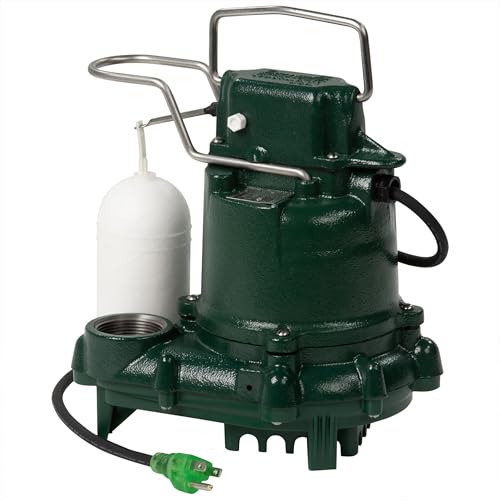
Zoeller M53 Mighty-Mate Submersible Sump Pump
A 1/3 HP motor paired with a cast iron housing handles moderate basement water intrusion while dissipating heat better than plastic pump bodies during long run cycles. A mechanical float switch triggers reliably for basements that flood periodically rather than constantly. Decades of production history keep replacement parts widely available.
Pros
- Cast iron housing dissipates heat better than plastic during long run cycles
- Mechanical float switch is simple and reliable for moderate water intrusion
- Widely available replacement parts due to long production history
Cons
- 1/3 HP motor may struggle with very high water volume
- Mechanical float switch takes up more vertical clearance than a vertical switch design

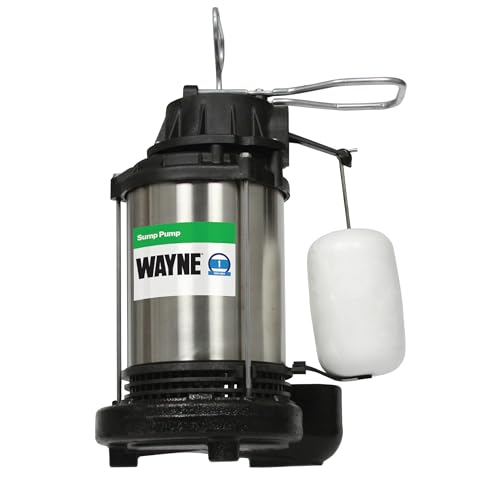
WAYNE CDU980E Submersible Sump Pump
A 3/4 HP motor moves up to 4600 gallons per hour, handling larger water volume than the smaller motors on this list. An integrated vertical float switch needs less basin clearance than a tethered design, useful in a narrow sump pit. Cast iron construction dissipates heat during the longer run cycles higher flow rates create.
Pros
- Higher 3/4 HP motor handles larger water volume than smaller pumps
- Vertical float switch design needs less basin clearance than tethered switches
- Cast iron construction dissipates heat during long pumping cycles
Cons
- Higher flow rate pump draws more electrical current than smaller models
- Larger pump body may not fit shallow or narrow sump basins

Superior Pump 91250 Submersible Sump Pump
A 1/4 HP motor keeps cost down, suited to basements with light to moderate water intrusion rather than frequent heavy flooding. Thermoplastic housing resists the rust that can eventually affect metal pump bodies in a wet sump basin. A tethered float switch handles basic automatic operation without added electronics.
Pros
- Lower cost than cast iron or higher horsepower pumps
- Thermoplastic housing resists rust compared to metal pump bodies
- Suits basements with light to moderate water intrusion
Cons
- Lower 1/4 HP motor limits it to smaller water volumes
- Tethered float switch needs more basin clearance to operate properly

Liberty Pumps 237 Automatic Submersible Sump Pump
Cast iron construction is built for continuous duty cycles across many years of basement service rather than occasional light use. A consistent flow rate of up to 45 gallons per minute suits basements with regular moderate water intrusion. The mechanical float switch design carries a long service history across similar Liberty Pumps models.
Pros
- Cast iron construction built for continuous duty cycles over many years
- Consistent flow rate suits basements with regular moderate water intrusion
- Reliable mechanical float switch design with a long service history
Cons
- Costs more than thermoplastic pumps of similar horsepower
- Mechanical float switch needs adequate basin clearance to avoid sticking

WAYNE WSS30VN Battery Backup Combination Sump Pump System
A battery backup pump continues running during a power outage, which often coincides with the same storms that cause basement flooding in the first place. The combined primary and backup system handles up to 5100 gallons per hour between both pumps. A cast iron primary pump dissipates heat during long cycles the same way standalone cast iron pumps do.
Pros
- Battery backup pump continues operating during a power outage
- Combined system handles higher flow rate than a single pump alone
- Cast iron primary pump dissipates heat during long cycles
Cons
- Battery backup requires a separate deep cycle battery, sold separately in some kits
- Higher upfront cost than a single pump without backup
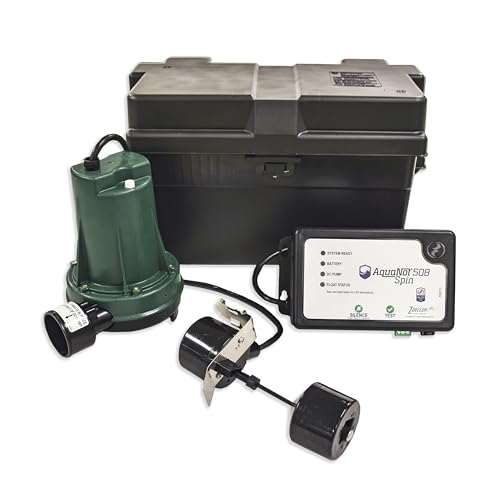
Zoeller Aquanot 508 Battery Backup Sump Pump System
This system installs alongside most existing primary pumps rather than requiring a full pump replacement, useful for homeowners who already have a working primary pump. A dual float switch setup activates the battery backup only once the primary pump cannot keep up. Battery power moves up to 2100 gallons per hour specifically during outages.
Pros
- Installs alongside an existing primary pump rather than requiring a full system replacement
- Dual float switch system activates backup only when needed
- Battery power keeps the basement protected specifically during outages
Cons
- Requires a separate deep cycle battery, sold separately
- Backup flow rate is lower than a full-powered primary pump

Flotec FPZS50T Submersible Sump Pump
Thermoplastic housing resists the corrosion that can eventually affect cast iron pumps left sitting in a wet sump basin for years. A mid-range 1/2 HP motor moves up to 3000 gallons per hour, suited to moderate to heavy water intrusion. Lower cost than a comparable cast iron pump at the same horsepower makes it a practical mid-tier pick.
Pros
- Thermoplastic housing resists corrosion better than cast iron over years in a wet basin
- Mid-range 1/2 HP motor suits moderate to heavy water intrusion
- Lower cost than comparable cast iron pumps at the same horsepower
Cons
- Tethered float switch needs more basin clearance than a vertical switch design
- Plastic housing dissipates heat less effectively than cast iron during very long cycles
How they stack up
| # | Model | Horsepower | Best for | Score | Price |
|---|---|---|---|---|---|
| 1 | Zoeller M53 Mighty-Mate Submersible Sump Pump | 1/3 HP | Best Overall | 9.0 | Check price |
| 2 | WAYNE CDU980E Submersible Sump Pump | 3/4 HP | Best for High Flow Rate | 8.8 | Check price |
| 3 | Superior Pump 91250 Submersible Sump Pump | 1/4 HP | Best Budget Pick | 7.9 | Check price |
| 4 | Liberty Pumps 237 Automatic Submersible Sump Pump | 1/3 HP | Best for Long-Term Durability | 8.6 | Check price |
| 5 | WAYNE WSS30VN Battery Backup Combination Sump Pump System | 1/2 HP primary pump | Best for Power Outage Protection | 8.9 | Check price |
| 6 | Zoeller Aquanot 508 Battery Backup Sump Pump System | Battery-powered backup pump | Best for Adding Backup to an Existing Pump | 8.4 | Check price |
| 7 | Flotec FPZS50T Submersible Sump Pump | 1/2 HP | Best Thermoplastic Housing for Corrosion Resistance | 8.3 | Check price |
Before you buy
What to look for in a sump pump Horsepower and flow rate together determine how much water the pump can move during a heavy rain event or rapid water intrusion. Switch type affects reliability and the basin clearance needed, with tethered, mechanical and vertical float switches each behaving differently. Housing material, either cast iron or thermoplastic, trades long-term heat dissipation against corrosion resistance.
Cast iron versus thermoplastic pump housings Cast iron pumps, like the Zoeller M53 and Liberty Pumps 237, dissipate heat more effectively during long run cycles, extending motor life under heavy use. Thermoplastic pumps, like the Superior Pump 91250 and Flotec FPZS50T, resist the corrosion that can eventually affect metal housings sitting in standing water. Basements with frequent, short pumping cycles often do fine with thermoplastic, while those running pumps for extended periods benefit more from cast iron.
Standard pumps versus battery backup systems A standard pump like the Zoeller M53 or WAYNE CDU980E only runs on household electrical power, stopping during an outage. A combination system like the WAYNE WSS30VN includes both a primary pump and a battery backup pump in one unit. A standalone backup system like the Zoeller Aquanot 508 adds that same protection to an existing primary pump without replacing it.
Matching pump horsepower to water intrusion level Basements with occasional, moderate water intrusion generally do well with a 1/3 HP pump like the Zoeller M53 or Liberty Pumps 237. Basements that flood more severely or frequently benefit from a 1/2 HP or 3/4 HP motor, like the Flotec FPZS50T or WAYNE CDU980E. Buyers unsure of their actual water volume should consider a mid-range horsepower pump rather than guessing too low and risking an overwhelmed sump basin.
Questions worth asking
How much horsepower does a sump pump need?
Most basements do well with 1/3 HP pumps like the Zoeller M53, while heavier water intrusion calls for 1/2 HP or 3/4 HP models like the Flotec FPZS50T or WAYNE CDU980E.
What is the difference between a tethered and vertical float switch?
A tethered switch, used on the Superior Pump 91250, needs more basin clearance to swing freely, while a vertical switch like the WAYNE CDU980E’s takes up less space in a narrow basin.
Does a sump pump still work during a power outage?
Only with battery backup. Standard pumps like the Zoeller M53 stop during an outage, while systems like the WAYNE WSS30VN or Zoeller Aquanot 508 keep running on battery power.
Is cast iron or thermoplastic better for a sump pump housing?
Cast iron, used in the Zoeller M53 and Liberty Pumps 237, dissipates heat better during long cycles, while thermoplastic, used in the Flotec FPZS50T, resists corrosion better over time.
Can a battery backup pump be added to an existing sump pump?
Yes, the Zoeller Aquanot 508 is designed to install alongside most existing primary pumps rather than replacing the whole system.
How is sump pump flow rate measured?
Flow rate is measured in gallons per hour or gallons per minute, with higher numbers like the WAYNE CDU980E’s 4600 gallons per hour indicating a pump that moves more water.
Does a higher horsepower pump always mean better performance?
Not necessarily. A 3/4 HP pump like the WAYNE CDU980E moves more water but also draws more electrical current, so matching horsepower to actual need matters more than buying the largest motor available.
How often should a sump pump be tested?
Testing a sump pump every few months, and especially before heavy rain seasons, helps confirm the float switch and motor still activate properly.
Can a sump pump basin be too small for certain pumps?
Yes, larger pumps like the WAYNE CDU980E may not fit shallow or narrow basins as easily as more compact pumps like the Zoeller M53.
Final word
Most basements with moderate, periodic water intrusion are well served by the Zoeller M53 Mighty-Mate, since its cast iron housing and mechanical float switch balance durability with reliability. Homes that lose power during the same storms that cause flooding should choose the WAYNE WSS30VN instead for its built-in battery backup. Basements already running a working primary pump that just need outage protection should skip a full replacement and add the Zoeller Aquanot 508 backup system.
Jake Monroe
Jake worked as a residential contractor for over a decade before shifting to full-time writing. He evaluates power tools, hand tools and workshop gear through the lens of someone who has actually used them on job sites, not just read the box.