Which Stud Finder Actually Finds a Stud First Try
Franklin Sensors ProSensor 710 wins overall for its 13-sensor array that lights the full stud width in one pass. Zircon MultiScanner adds metal and live-wire detection for kitchens and bathrooms. CH Hanson 03040 Magnetic works without batteries or calibration, making it the simplest backup option for quick jobs.
Framing nails and electrical boxes hide behind drywall, so most people need a stud finder that reads density changes correctly the first time. Franklin Sensors ProSensor 710 tops this list because its 13-sensor row lights the entire stud width in a single pass. Zircon MultiScanner switches between metal, AC wiring, and deep-scan modes for trickier walls. CH Hanson 03040 skips electronics entirely and locks onto screws with rare-earth magnets.
Plaster, lath, and thick double-layer drywall throw off cheap single-sensor tools, and a missed calibration step sends the drill into empty space. Live wiring near kitchens and bathrooms raises the stakes further. We compared multi-sensor accuracy, published scan-depth ratings, live-wire and metal detection, and how forgiving each tool is for a first attempt, based on manufacturer specifications and the patterns owners report after months of use.
Our top picks

Franklin Sensors ProSensor 710
Thirteen sensors run edge to edge, so the ProSensor 710 lights up a full stud width in one pass instead of a slow sweep. Owners report reliable readings on standard half-inch drywall without touching a calibration button. Thick plaster walls still challenge it, but everyday framing jobs are its strength.
Pros
- Lights up full stud width instantly
- Skips the calibration step entirely
- Stays accurate on standard drywall
Cons
- Loses accuracy on thick plaster
- Has no live-wire warning light
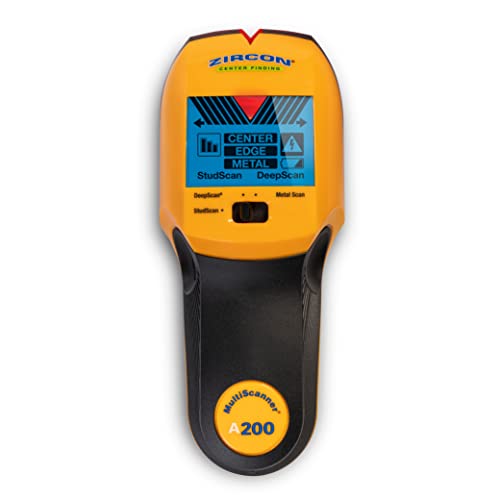
Zircon MultiScanner
Four modes cover wood studs, deep scanning, metal, and live AC wiring in one housing. Kitchen and bathroom walls benefit most from the AC-detection mode before drilling near outlets. Skipping calibration on each new wall section is the main way readings go wrong, based on owner feedback.
Pros
- Flags live AC wiring before drilling
- Reaches deeper into thick walls
- Shows direction on a clear LCD
Cons
- Needs recalibration for every wall
- Gives false edges if started over a stud

Bosch GMS120
Tradespeople use the GMS120 to locate wood, ferrous metal, non-ferrous metal, and live wiring with one detector. A center-find LED ring and audible signal confirm target position without checking a screen. Its price sits above hobby-grade tools, which pushes casual buyers toward cheaper options.
Pros
- Finds rebar and pipes up to 4.7 inches deep
- Switches between three detection modes
- Built with a durable pro-grade housing
Cons
- Costs more than DIY-focused models
- Takes practice to read all three modes

Tavool Stud Finder
A large HD screen on the Tavool shows scan depth and a center-find arrow for far less than pro-grade tools. Calibrating against a blank wall section first gives the most consistent results, according to the listing and owner reviews. Textured or uneven paint reduces accuracy, a common limit at this price point.
Pros
- Reads depth on a big HD screen
- Runs four scanning modes at low cost
- Powers off automatically to save battery
Cons
- Struggles on textured wall surfaces
- Requires precise calibration to work well

CH Hanson 03040 Magnetic Stud Finder
Rare-earth magnets pull the CH Hanson toward the screws and nails hidden inside a stud, with zero batteries or calibration. It hangs on the wall once it locks on, freeing both hands to mark the spot. Fastener-based detection is slower for mapping an entire wall, but it cannot produce a false electronic reading.
Pros
- Needs no batteries or calibration
- Cannot generate a false electronic reading
- Hangs hands-free while you mark the wall
Cons
- Locates fasteners rather than stud edges
- Takes longer to map a full wall

StudBuddy Magnetic Stud Finder
A flat, lightweight body lets the StudBuddy sit against drywall and grab onto nails or screws without power. Toolboxes and junk drawers are common homes for it between quick jobs like hanging a frame. Glue-set studs or thick plaster can hide the metal it depends on, so it can miss a target.
Pros
- Fits easily in a pocket or toolbox
- Needs no power source or calibration
- Works reliably on screwed drywall
Cons
- Depends entirely on metal fasteners
- Loses reliability behind thick plaster

Vivreal Stud Finder
Stud, metal, and AC-wire modes come packed into the Vivreal’s simple LCD screen for a first-time buyer’s budget. Clean, unpainted drywall gives it the most consistent center readings, according to owner reports. Slow, steady sweeping matters more here than on premium units, since technique affects results heavily.
Pros
- Costs less than most electronic rivals
- Covers three scan modes in one tool
- Runs with simple one-button operation
Cons
- Readings vary with user technique
- Built with basic, entry-level materials
How they compare
| # | Model | Sensors | Best for | Score | Price |
|---|---|---|---|---|---|
| 1 | Franklin Sensors ProSensor 710 | 13-sensor array | Best overall | 9.4 | Check price |
| 2 | Zircon MultiScanner | StudScan, DeepScan, Metal, AC | Best for metal and live-wire detection | 9.1 | Check price |
| 3 | Bosch GMS120 | Wood, metal, live wire | Best for professionals | 8.9 | Check price |
| 4 | Tavool Stud Finder | Stud, Deep, Metal, AC wire | Best value electronic | 8.6 | Check price |
| 5 | CH Hanson 03040 Magnetic Stud Finder | Magnetic, dual rare-earth | Best magnetic | 8.4 | Check price |
| 6 | StudBuddy Magnetic Stud Finder | Magnetic fastener finder | Best pocket carry | 8.2 | Check price |
| 7 | Vivreal Stud Finder | Stud, Metal, AC wire | Best budget entry-level | 8.0 | Check price |
What to look for
Magnetic vs electronic stud finders: which type wins Magnetic tools lock onto the metal screws and nails inside a stud, so battery life and calibration never become issues. Speed drops, though, since finding fasteners one at a time is slower than scanning a whole stud face. Electronic sensors read density changes across the wall to outline the entire stud in seconds. Skipping calibration on an electronic unit is the fastest way to get a wrong reading.
How wall type changes stud finder accuracy Standard half-inch drywall gives the clearest readings for almost any tool on this list. Plaster, lath, wallpaper, and double-layer walls confuse density sensors and produce false stud edges. Homes built before the 1950s often hide lath under plaster, so a deep-scan mode or magnetic tool works better there. Testing a reading against a known point, such as next to an outlet cover, catches errors before you drill.
Best stud finder for live wires and metal pipes Drilling near kitchens, bathrooms, and switch boxes raises the odds of hitting a live wire or pipe. Zircon MultiScanner and Bosch GMS120 both flag AC current and metal in their scan path. An alert from either tool is guidance, not proof, so cutting power at the breaker stays the safer step. Rebar and plumbing sit deeper than studs, which is why the Bosch reaches almost five inches in metal mode.
How we compared these stud finders We lined up multi-sensor accuracy, published scan-depth numbers, live-wire and metal detection, and how forgiving each tool is for a first attempt. Manufacturer specifications set the baseline, and patterns owners report over months of use filled in the real-world gaps. A quick picture hang and a full framing job call for different tools, so the list spans both ends. Ranking stayed tied to what a wall actually needs, not brand reputation alone.
Questions worth asking
Are magnetic or electronic stud finders more accurate?
It depends on the wall. Electronic tools map a full stud faster on clean drywall, while magnetic finders stay foolproof because they grab an actual screw or nail. Older homes with plaster often do better with a magnetic tool.
Why does my stud finder keep giving false readings?
Skipping calibration, starting a scan directly over a stud, or working across plaster and textured walls are the top causes. Calibrate on a blank patch first and sweep slowly for a steadier result.
What is the best stud finder for plaster walls?
Plaster and lath scatter the signal that density sensors rely on. A deep-scan electronic mode, like the one on Zircon MultiScanner, or a strong magnetic tool such as CH Hanson 03040 tends to hold up better in older homes.
How deep can a stud finder actually scan?
Most consumer models read studs up to about 1.5 inches deep. Metal-detection modes go further, with the Bosch GMS120 reaching close to 4.7 inches for pipes and rebar.
Can a stud finder detect wires or pipes?
Multi-mode tools with a metal or AC setting, including Zircon MultiScanner and Bosch GMS120, flag wiring and pipes. They cannot always tell a pipe from a nail plate, so treat any alert as a reason to slow down.
Do stud finders work through wallpaper or tile?
Thin paper rarely causes problems, but foil-backed wallpaper, tile, and heavy texture can distort electronic readings. A magnetic finder that locates fasteners directly sidesteps that issue.
How do you calibrate an electronic stud finder correctly?
Rest the tool flat on a wall section you believe is empty, then hold the power button until it signals ready. Starting that step directly over a stud is the single biggest cause of bad readings afterward.
Is a magnetic stud finder good enough for hanging pictures?
Yes, for light jobs a magnetic finder like StudBuddy or CH Hanson 03040 locates the screw or nail holding drywall to a stud in seconds. It skips batteries and calibration entirely, which fits quick, occasional use.
Is it worth paying more for a professional stud finder?
Occasional picture hanging rarely needs it. Framing, remodeling, or working near wiring regularly makes the wider detection range and live-wire alerts on tools like Bosch GMS120 pay off in avoided mistakes.
The bottom line
Franklin Sensors ProSensor 710 remains the best all-around pick since its sensor array shows a full stud without any calibration fuss. Reach for Zircon MultiScanner when metal pipes or live wiring are a real risk, and pick CH Hanson 03040 when a battery-free, foolproof tool matters more than speed.
Jake Monroe
Jake worked as a residential contractor for over a decade before shifting to full-time writing. He evaluates power tools, hand tools and workshop gear through the lens of someone who has actually used them on job sites, not just read the box.