Match Ball or Practice Ball? How to Pick a Soccer Ball
Adidas Tiro League suits players wanting a true match-style touch without a club price tag. Select Numero 10 fits technical training focused on first touch and control. Franklin Sports Competition 100 works for youth leagues on a tighter budget.
Adidas’ Tiro League uses a thermal-bonded cover that mimics the touch of a true match ball at a fraction of a premium club ball’s cost, though it will not last as many seasons as a stitched panel design. Select’s Numero 10 shifts focus toward technical training, with a slightly softer touch that helps players feel first touch and control during drills. Franklin Sports’ Competition 100 covers the same basic job for youth and recreational leagues at a noticeably lower price.
Soccer balls differ mainly in panel construction, bladder type and intended use, and a training ball feels and behaves differently than a true match ball once it is in play. We compared cover construction, bladder material, panel count and manufacturer level rating before ranking these seven.
How to choose
What to look for in a soccer ball Panel construction sets the biggest difference, with thermal-bonded covers giving the smoothest match-style touch and stitched covers trading some touch for durability under daily training. Bladder type affects air retention, with butyl holding pressure far longer than basic rubber. Intended use, whether match play, training or youth league, should guide the final decision more than brand alone.
Match balls versus training balls A thermal-bonded ball like the Adidas Tiro League gives the smoothest, most match-like touch but wears faster under constant practice contact. A stitched training ball like the Nike Pitch Training survives daily drills and shooting practice better, trading some touch refinement for durability. Teams often keep separate balls for match day and daily training for this reason.
Choosing a ball for youth and recreational leagues Youth and recreational programs rarely need a premium thermal-bonded match ball, since cost and durability across many players usually matter more than touch refinement. A ball like the Franklin Sports Competition 100 or Wilson Pentagon covers those needs at a lower price point than club-level options.
When ethical manufacturing matters to a buying decision Most soccer balls do not carry a specific ethical manufacturing certification, but the Senda Volante carries Fair Trade certification, which some clubs and leagues specifically look for. That certification adds cost but answers a question that mainstream brands generally leave unaddressed.
The top picks, ranked

Adidas Tiro League Soccer Ball
Adidas built the Tiro League around a thermal-bonded cover, which seals panels together with heat rather than stitching, giving a smoother surface closer to what premium match balls use. A butyl bladder holds air pressure longer between pumps than cheaper rubber bladders. It suits club and league play without the cost of a top-tier competition ball.
Pros
- Thermal-bonded cover gives a smoother, match-like touch
- Butyl bladder holds air pressure longer between pumps
- Reasonable cost for a near match-quality ball
Cons
- Less durable over time than a stitched panel ball
- Not officially licensed for professional competition

Nike Pitch Training Soccer Ball
Nike’s Pitch Training ball uses a machine-stitched cover designed to survive repeated drills, shooting practice and contact with cleats better than a thermal-bonded match ball. It trades a small amount of touch refinement for durability that holds up over a full season of daily training. Coaches running regular practice sessions get more mileage from this than a match-focused ball.
Pros
- Stitched construction survives repeated training use
- Consistent flight for shooting and passing drills
- Holds up well across a full practice season
Cons
- Touch feels slightly less refined than a match ball
- Heavier feel than lighter technical training balls
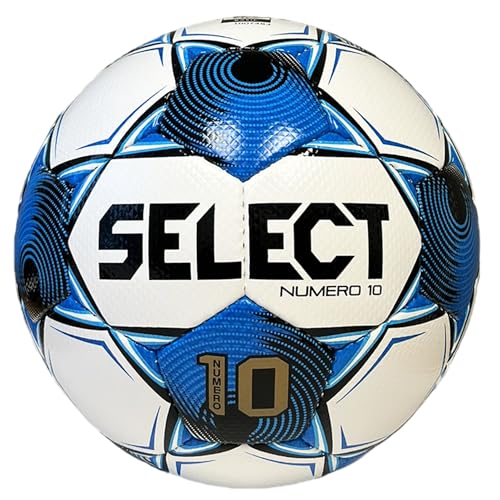
Select Numero 10
Select’s Numero 10 softens the cover slightly compared to a standard match ball, which helps players feel first touch and close control during technical drills. It is not built for maximum durability under constant shooting practice, since the focus sits on touch rather than toughness. Youth and technical skills programs often choose this over a harder, more durable training ball.
Pros
- Soft-touch cover improves first-touch feel
- Good fit for technical skills and control drills
- Available in multiple youth sizes
Cons
- Less durable under heavy shooting practice
- Not intended as a true match ball

Wilson Pentagon Soccer Ball
Wilson’s Pentagon keeps cost low with a basic machine-stitched cover and a simple rubber bladder rather than butyl. It holds air reasonably well for casual backyard or park play but will not match a training ball’s air retention over weeks. Families or beginners testing interest in the sport before investing more find reasonable value here.
Pros
- Low cost entry point for casual play
- Reasonable durability for backyard and park use
- Simple construction needs little maintenance
Cons
- Rubber bladder loses air pressure faster than butyl
- Not suited for serious training or league play
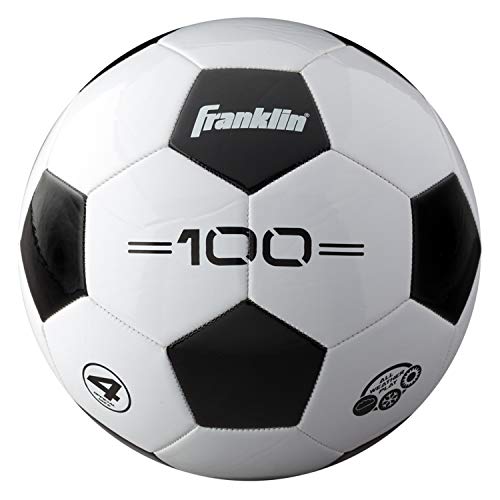
Franklin Sports Competition 100
Franklin Sports positions the Competition 100 for youth leagues that need a reasonably consistent match-style ball without a club-level price. A machine-stitched cover and butyl bladder cover the basics competently, even if touch refinement trails premium options. Recreational and youth league coordinators often standardize on a ball in this tier for cost reasons.
Pros
- Butyl bladder holds air better than basic rubber balls
- Reasonable cost for youth league programs
- Available in youth-appropriate sizes
Cons
- Touch trails thermal-bonded match balls like the Tiro League
- Cover shows wear faster than premium construction

Senda Volante Match Ball
Senda’s Volante uses hand-stitched panel construction and carries Fair Trade certification on its manufacturing, which sets it apart from the machine-stitched and thermal-bonded balls on this list. The hand-stitched cover holds its shape well over a long match schedule. Clubs and leagues interested in verified ethical manufacturing often choose Senda specifically for that certification.
Pros
- Fair Trade certification verifies ethical manufacturing
- Hand-stitched construction holds shape over a long season
- Butyl bladder maintains consistent air pressure
Cons
- Costs more than machine-stitched competitors
- Fewer size options than larger mainstream brands

Adidas Starlancer Club
Adidas positions the Starlancer Club between a basic training ball and the thermal-bonded Tiro League, using a machine-stitched cover that still carries Adidas’ typical panel shape and flight consistency. It suits club practice and lower-tier league matches without the cost of a thermal-bonded option. Players wanting a recognizable Adidas touch at a lower price than the Tiro League tend to land here.
Pros
- Consistent flight typical of Adidas panel design
- Lower cost than the thermal-bonded Tiro League
- Butyl bladder holds air well between sessions
Cons
- Touch trails the thermal-bonded Tiro League
- Not intended for top-tier competitive match play
How they compare
| # | Model | Construction | Best for | Score | Price |
|---|---|---|---|---|---|
| 1 | Adidas Tiro League Soccer Ball | Thermal-bonded panels | Best overall for match-style touch | 9.0 | Check price |
| 2 | Nike Pitch Training Soccer Ball | Machine-stitched panels | Best for everyday training durability | 8.7 | Check price |
| 3 | Select Numero 10 | Stitched panels, soft-touch cover | Best for technical skill and first-touch training | 8.6 | Check price |
| 4 | Wilson Pentagon Soccer Ball | Machine-stitched panels | Best budget recreational ball | 7.9 | Check price |
| 5 | Franklin Sports Competition 100 | Machine-stitched panels | Best for youth leagues on a budget | 8.1 | Check price |
| 6 | Senda Volante Match Ball | Hand-stitched panels | Best for match-day durability and construction | 8.8 | Check price |
| 7 | Adidas Starlancer Club | Machine-stitched panels | Best entry-level club ball | 8.4 | Check price |
Questions worth asking
What is the difference between a thermal-bonded and stitched soccer ball?
A thermal-bonded cover seals panels with heat for a smoother, more match-like touch, while a stitched cover sews panels together, which typically holds up better under repeated training contact.
What size soccer ball do adults use?
Adults typically use a size 5 soccer ball, while youth players use size 4 for ages eight to twelve and size 3 for players under eight.
Does bladder type affect how long a soccer ball holds air?
Yes, a butyl bladder holds air pressure noticeably longer between pumps than a basic rubber bladder, which is why most training and match balls use butyl.
Is a thermal-bonded ball good for daily training?
A thermal-bonded ball like the Adidas Tiro League can handle training, but it wears faster under constant shooting and drill contact than a stitched training ball built for that purpose.
What does Fair Trade certification mean for a soccer ball?
Fair Trade certification, found on the Senda Volante, verifies specific labor and manufacturing standards during production, which some buyers specifically seek out.
Do youth leagues need a premium match ball?
Most youth leagues do not need a premium thermal-bonded ball, since cost and durability across many players usually matter more than the touch refinement a match ball offers.
How often should a soccer ball be replaced?
A training ball used daily may need replacement within a season as the cover and bladder wear, while a match ball used only on game days can last several seasons.
What panel count is standard on a soccer ball?
Most modern soccer balls use between 6 and 32 panels depending on design, though panel count alone matters less for performance than bladder type and construction method.
Our pick
The Adidas Tiro League is the right choice for most players who want a genuine match-style touch without paying for a top-tier competition ball. Teams running daily practice sessions should pick the Nike Pitch Training instead, since its stitched cover survives repeated drills better. Youth and recreational leagues working with a tighter budget across many players should skip both and go with the Franklin Sports Competition 100.
Derek Holt
Derek has a background coaching recreational and amateur athletes and has worked the sales floor at specialty fitness retailers. He focuses on equipment durability, ergonomics and realistic use cases rather than marketing claims.


