Snowshoes That Grip Ice Without Sacrificing Powder Float
MSR Evo Trail Snowshoes lead for icy, packed trails thanks to full perimeter steel traction rails. Tubbs Flex VRT Snowshoes suit steep climbs with a flexible tail and strong crampons. Atlas Range-MTN Snowshoes add float for deep backcountry powder with loaded packs.
MSR Evo Trail Snowshoes top this list, since toothed steel rails bite into icy and packed trails better than smooth framed designs. Tubbs Flex VRT Snowshoes flex at the tail, following a natural stride on steep climbs. Atlas Range-MTN Snowshoes add extra float for backcountry powder where narrow decks sink.
Snowshoes fail buyers most often on traction and terrain match. A shoe built for flat groomed trails slides on an icy incline, and a narrow trail shoe sinks in deep backcountry powder. Binding type also matters, since some designs adjust faster with cold hands. We compared traction design, binding mechanism, deck size and rated terrain, then weighed owner reports of binding failure and traction wear.
The top picks, ranked

MSR Evo Trail Snowshoes
Molded steel rails run the full perimeter of the deck, biting into icy and hardpacked snow where framed designs slip. A single pull strap adjusts fast, even with gloves on. Day hikers and trail runners on moderate terrain suit this shoe better than deep backcountry trips.
Pros
- Strong grip on icy and packed snow
- Fast strap adjustment with gloves on
- Durable one piece deck construction
Cons
- Fixed size with no length extension
- Less float in deep powder

Tubbs Flex VRT Snowshoes
A flexible composite tail follows the natural motion of a hiking stride, cutting fatigue on long climbs. Aggressive crampons under the toe and heel bite into inclines. A boa style dial tightens evenly, avoiding the pressure points of strap systems.
Pros
- Flex tail reduces stride fatigue
- Strong crampons grip steep inclines
- Boa dial tightens without pressure points
Cons
- Costs more than standard trail shoes
- Boa mechanism needs occasional upkeep

Atlas Range-MTN Snowshoes
A larger 30 inch deck spreads weight over more surface area, keeping hikers from sinking in fresh powder. Atlas built this shoe for multi day trips with a loaded pack, where flotation outweighs agility. The tradeoff shows up as bulk on packed trails.
Pros
- Extra float in fresh, deep snow
- Rated for heavier loaded packs
- Aggressive crampons for backcountry terrain
Cons
- Bulkier and less nimble on packed trails
- Heavier than trail focused models
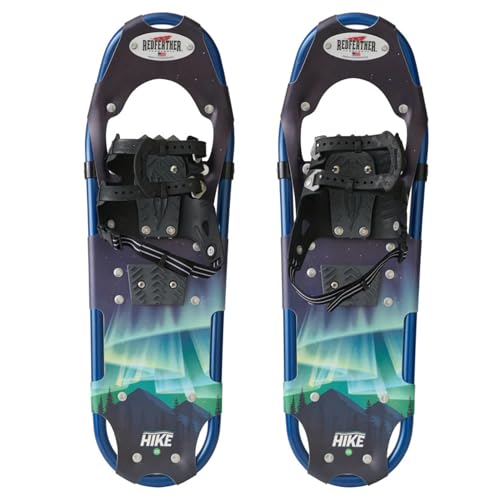
Redfeather Hike Snowshoes
Redfeather balances traction, weight and cost for hikers who want a capable all around shoe. Aluminum frames keep weight reasonable, and a ratchet binding suits beginners still learning fit. Steep ice trails favor dedicated mountaineering models over this one.
Pros
- Balances price and performance well
- Ratchet binding suits beginners
- Lightweight aluminum frame construction
Cons
- Traction lags on steep ice
- Not rated for heavy backcountry loads

Crescent Moon Gold 10 Snowshoes
A molded one piece composite deck skips the aluminum frame, shaving weight for a lighter step. Traction comes from a single underfoot crampon rather than full perimeter teeth. Smaller or lighter hikers benefit more than those carrying heavy multi day packs.
Pros
- Lightweight one piece deck design
- Comfortable fit for lighter hikers
- Simple strap adjustment system
Cons
- Less traction than full frame crampons
- Lower weight capacity than backcountry models

Yukon Charlie’s Advanced Spin Snowshoes
A rotating spin dial tightens evenly around the boot, skipping the strap fiddling that slows other designs in cold weather. Traction suits groomed and moderately hilly trails, though it falls short of mountaineering crampons. Recreational hikers benefit more than technical backcountry users here.
Pros
- Spin dial adjusts fast in cold weather
- Even pressure distribution on the boot
- Comfortable for recreational hiking
Cons
- Traction trails mountaineering models
- Dial mechanism adds a failure point

Chinook Trekker Snowshoes
Chinook’s Trekker line offers the lowest entry cost here, suited to occasional users trying the sport first. Aluminum frame construction holds up fine for casual outings. Traction and binding refinement fall behind pricier models on steep or icy terrain.
Pros
- Lowest cost option for beginners
- Durable aluminum frame construction
- Adequate grip for casual flat trails
Cons
- Weaker traction on steep or icy terrain
- Binding less refined than premium brands
Side by side
| # | Model | Deck size | Best for | Score | Price |
|---|---|---|---|---|---|
| 1 | MSR Evo Trail Snowshoes | 22 inches | Best overall | 9.3 | Check price |
| 2 | Tubbs Flex VRT Snowshoes | 25 inches | Best for steep terrain | 9.0 | Check price |
| 3 | Atlas Range-MTN Snowshoes | 30 inches | Best for deep powder | 8.8 | Check price |
| 4 | Redfeather Hike Snowshoes | 25 inches | Best value | 8.5 | Check price |
| 5 | Crescent Moon Gold 10 Snowshoes | 24 inches | Best for lightweight hikers | 8.3 | Check price |
| 6 | Yukon Charlie’s Advanced Spin Snowshoes | 25 inches | Best binding system | 8.1 | Check price |
| 7 | Chinook Trekker Snowshoes | 25 inches | Best budget entry option | 8.0 | Check price |
Before you buy
What traction type suits your terrain Full perimeter steel rails, like those on the MSR Evo Trail, grip icy and hardpacked snow far better than a single underfoot crampon. Toe and heel crampons suit steep climbs specifically. Underfoot only designs work fine on flat groomed trails but slip on inclines. Match traction to the steepest terrain you expect to cross.
Sizing deck for your weight and snow type Deck size determines flotation, or how much you sink in soft snow. Heavier hikers or those carrying a loaded pack need a larger deck, often 30 inches or more, to avoid post holing. Lighter hikers on packed trails do fine with a smaller, more agile 22 to 25 inch deck.
Binding types and cold weather handling Strap bindings stay simple and repairable in the field, but adjust slower with cold or gloved hands. Ratchet and spin dial bindings tighten faster and more evenly, though they add mechanical parts that can fail. Boa style dial closures split the difference, offering quick even tightening with fewer failure points than full ratchet systems.
Matching a snowshoe to your typical trip Day hikers on maintained trails do well with a mid sized shoe like the Redfeather Hike, balancing weight and traction. Backcountry multi day trips favor larger decks and aggressive crampons, as seen on the Atlas Range-MTN. Steep terrain specialists benefit most from a flexible tail design like the Tubbs Flex VRT.
Frequently asked questions
How do I choose the right snowshoe size?
Snowshoe size depends on body weight plus gear, and the snow conditions you expect. Heavier loads and deep powder call for larger decks around 30 inches. Lighter hikers on packed trails do fine with 22 to 25 inch decks.
What is the difference between trail and backcountry snowshoes?
Trail snowshoes stay lighter and more agile for maintained paths. Backcountry models add larger decks for flotation and more aggressive crampons for steep, ungroomed terrain and loaded packs.
Can snowshoes handle icy trails?
Snowshoes with full perimeter steel rails, like the MSR Evo Trail, handle icy patches reasonably well. Dedicated ice cleats still offer better grip on pure ice without any snow cover.
Are ratchet bindings better than strap bindings?
Ratchet and dial bindings adjust faster and more evenly, useful in cold weather with gloves on. Strap bindings stay simpler and easier to repair in the field if a buckle fails.
Which snowshoes work best for steep hills?
Models with a flexible tail and aggressive toe and heel crampons, like the Tubbs Flex VRT, perform best on steep terrain. The pivot reduces strain while the crampons bite into inclines.
Do heavier hikers need bigger snowshoes?
Yes, total weight including gear determines the deck size needed to avoid sinking in soft snow. Manufacturers list weight ranges per deck size, and exceeding that range causes post holing.
How much do snowshoes typically weigh?
Most pairs weigh between three and five pounds. Lighter one piece composite decks, like the Crescent Moon Gold 10, trend toward the lower end of that range.
Snowshoes vs microspikes, which is better for winter hiking?
Snowshoes suit soft, deep snow where flotation prevents sinking. Microspikes suit packed or icy trails with little snow depth, offering traction without the bulk of a full deck.
MSR Evo Trail vs Tubbs Flex VRT, which should I buy?
The MSR Evo Trail wins on packed and icy trails thanks to full perimeter steel rails. The Tubbs Flex VRT wins on steep climbs, where its flexible tail and crampons reduce fatigue.
The bottom line
Most hikers get the best all around grip from the MSR Evo Trail Snowshoes, since steel rails handle icy and packed conditions confidently. Anyone tackling steep terrain regularly should upgrade to the Tubbs Flex VRT for its flexible tail and crampon bite. Backcountry travelers carrying loaded packs into deep powder need the extra float of the Atlas Range-MTN instead of any trail focused shoe.
Derek Holt
Derek has a background coaching recreational and amateur athletes and has worked the sales floor at specialty fitness retailers. He focuses on equipment durability, ergonomics and realistic use cases rather than marketing claims.

