Snowboard Boots for Long Days in the Cold, Compared
Burton’s Ruler Snowboard Boot leads for its balanced medium flex and reliable warmth across mixed terrain. K2’s Maysis suits riders chasing steep, aggressive lines who need a stiffer build. Salomon’s Launch fits beginners or budget conscious riders starting their first season outdoors.
Cold feet end a mountain day faster than tired legs ever do. Burton’s Ruler balances that warmth against a medium flex built for groomed runs and light powder. Riders chasing steep or icy lines need the stiffer K2 Maysis instead. New riders on a budget still get a forgiving boot in Salomon’s Launch.
A boot built soft for park tricks packs out fast under hard carving. An overly stiff boot tires beginner legs within an hour on groomed runs. We compared these seven boots on stated flex rating, lacing type, insulation weight and owner reports on warmth and break in time.
The best picks, ranked

Burton Ruler Snowboard Boots
Medium flex handles groomed runs, moderate powder and light park laps without feeling too soft or too stiff. Traditional laces let a rider dial in precise, zone by zone pressure. Owners riding varied terrain in one day report the flex adapts well across conditions.
Pros
- Medium flex suits most terrain without major compromise
- Traditional laces allow a precise, adjustable fit
- Thermacore insulation keeps feet warm through long days
Cons
- Traditional laces take longer to tighten than Boa systems
- A break in period is needed before full comfort sets in
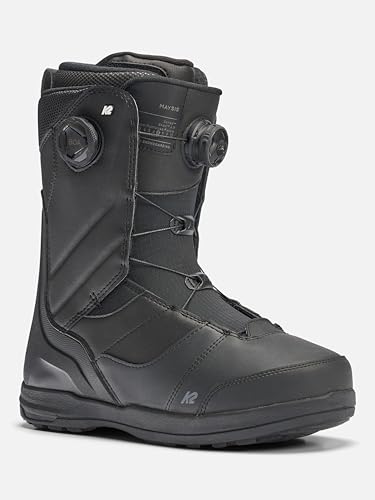
K2 Maysis Snowboard Boots
Stiffer flex holds its line under hard carving and steep terrain where a softer boot flexes out of control. Dual zone Boa lets a rider tune upper and lower fit separately for a locked in feel. Owners riding fast on icy or variable snow cite the added support as the reason they upgraded.
Pros
- Dual zone Boa fine tunes upper and lower fit separately
- Stiffer flex holds control at higher speeds
- Reinforced heel resists packing out over a season
Cons
- Too stiff for beginners still learning basic turns
- Boa dials sometimes need field replacement parts
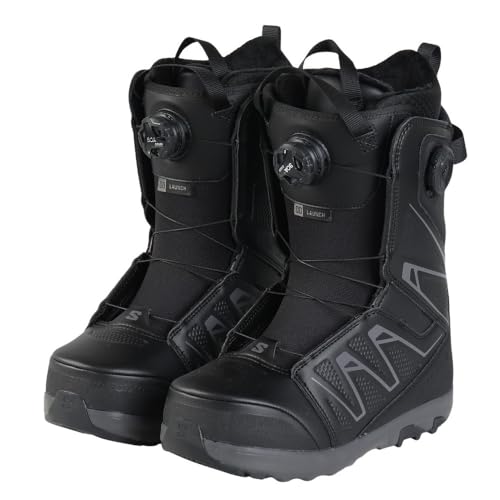
Salomon Launch Snowboard Boots
Softer flex forgives the small mistakes common during early season learning without punishing the ankles. Traditional lacing keeps cost down compared with Boa equipped boots. Riders buying their first outdoor setup mention this as an easy entry point before committing to pricier gear.
Pros
- Soft flex forgives beginner technique mistakes
- Costs less than premium Boa equipped boots
- Lightweight build reduces leg fatigue for new riders
Cons
- Lacks support for advanced or aggressive riding
- Insulation trails premium boots on the coldest days

DC Shoes Phase Boa Snowboard Boots
A single Boa dial tightens the whole boot in seconds, handy for adjusting fit on the lift line without removing gloves. Medium flex suits all mountain riding much like the Burton Ruler. Riders switching from traditional laces cite the quick adjustment as the biggest daily convenience.
Pros
- Single Boa dial adjusts fit in seconds with gloves on
- Medium flex suits a wide range of outdoor terrain
- Tread pattern grips well walking to and from lifts
Cons
- Single dial offers less zone specific fit than dual Boa
- Boa cable can freeze in extreme cold without maintenance

ThirtyTwo Lashed Snowboard Boots
Soft to medium flex gives new riders room for mistakes while still holding the foot secure inside the binding. Traditional lacing keeps the price reasonable for a first serious boot. Riders progressing from rental gear report this as a comfortable step up without overwhelming stiffness.
Pros
- EVA cushioned outsole adds comfort during long days
- Flex forgives technique errors during the learning phase
- Reasonable cost for a step up from rental boots
Cons
- Not stiff enough for advanced carving
- Traditional laces need more setup time each morning

Vans Aura Pro Snowboard Boots
Soft, lightweight construction suits jumps, rails and freestyle tricks where a stiff boot restricts the ankle movement those moves need. Dual Boa lacing keeps fit adjustable throughout a park session. Riders spending most days in the terrain park cite the flexibility as ideal for landing and absorbing impact.
Pros
- Soft flex suits park tricks and freestyle landings
- Dual Boa allows quick fit changes between runs
- Lightweight build reduces fatigue during park sessions
Cons
- Too soft for high speed all mountain carving
- Less warmth than boots built for all day cold exposure
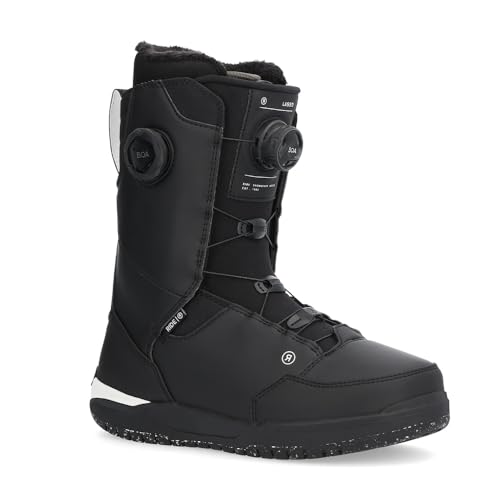
Ride Lasso Snowboard Boots
Medium flex and solid insulation match pricier all mountain boots at a lower cost. Traditional lacing keeps the build simple and reduces mechanical failure points. Riders comparing value against premium brands note the performance gap is smaller than the price gap suggests.
Pros
- Performance close to pricier all mountain boots
- Simple lacing means fewer mechanical parts to fail
- Solid insulation for the price point
Cons
- Less refined fit adjustment than Boa equipped boots
- Traction pattern wears faster on rocky approach trails
How they stack up
| # | Model | Flex rating | Best for | Score | Price |
|---|---|---|---|---|---|
| 1 | Burton Ruler Snowboard Boots | Medium, roughly 5 out of 10 | Best overall | 9.4 | Check price |
| 2 | K2 Maysis Snowboard Boots | Medium stiff, roughly 6 out of 10 | Best for aggressive riding | 9.1 | Check price |
| 3 | Salomon Launch Snowboard Boots | Soft, roughly 3 out of 10 | Best budget | 8.8 | Check price |
| 4 | DC Shoes Phase Boa Snowboard Boots | Medium, roughly 5 out of 10 | Best for quick lacing | 8.6 | Check price |
| 5 | ThirtyTwo Lashed Snowboard Boots | Soft medium, roughly 4 out of 10 | Best for beginners learning technique | 8.4 | Check price |
| 6 | Vans Aura Pro Snowboard Boots | Soft, roughly 3 out of 10 | Best for park and freestyle | 8.2 | Check price |
| 7 | Ride Lasso Snowboard Boots | Medium, roughly 5 out of 10 | Best value | 8.0 | Check price |
How to pick the right one
What flex rating means for outdoor riding Flex rating shows how much a boot resists bending forward and side to side, usually scored soft to stiff. Soft boots, like the Vans Aura Pro, suit park riding where ankle mobility matters most. Stiff boots, like the K2 Maysis, hold up under aggressive carving and high speed terrain. Beginners generally do best starting on a soft to medium flex before moving to stiffer boots.
Traditional laces vs Boa lacing systems Traditional laces cost less and give fine grained fit control, but take longer to tighten and can loosen mid run. Boa dials tighten instantly with one turn, useful for adjusting fit between lift rides without removing gloves. Dual zone Boa, found on the K2 Maysis and Vans Aura Pro, adjusts upper and lower zones separately for a more precise fit than a single dial.
How insulation affects warmth on full day outings Insulation weight and liner material decide how long feet stay warm in cold, wet conditions outdoors. Thermacore insulation, used in the Burton Ruler, generally outperforms basic synthetic fill on the coldest days. Moisture wicking liners matter as much as insulation thickness, since damp feet lose warmth faster than dry ones regardless of fill weight.
Best boot flex for your riding style All mountain riders do well with a medium flex boot, like the Burton Ruler or DC Phase Boa, that handles groomed runs and moderate powder without specializing too far either way. Park and freestyle riders should prioritize a softer flex for ankle mobility during tricks and landings. Riders focused on steep terrain and high speed carving need the added support of a stiffer boot like the K2 Maysis, even though it takes longer to break in.
Questions worth asking
How do I know if snowboard boots are too stiff or too soft?
Too stiff feels like your ankles cannot bend forward when flexing into a turn, and calves tire quickly. Too soft feels like your foot rolls inside the boot during hard carving, with little resistance. Match flex rating to riding style and skill level rather than judging from a quick in-store try-on.
What is the difference between traditional laces and Boa laces?
Traditional laces use a standard lace up closure tightened by hand, offering detailed control but a slower process. Boa systems use a dial that tightens a steel cable instantly, faster to adjust but with less zone by zone control unless the boot has dual dials.
Do snowboard boots run true to size?
Snowboard boots generally fit snugger than street shoes, with toes lightly touching the front when standing straight and pulling back slightly when flexed forward. Sizing varies by brand, so trying a boot on with the socks you plan to ride in beats guessing from shoe size.
How long does it take to break in new snowboard boots?
Traditional laced boots, like the Burton Ruler or Salomon Launch, often need three to five days of riding to fully mold to the foot. Boa equipped boots with heat moldable liners can break in within a day or two.
Are Boa snowboard boots better than lace up boots?
Neither wins outright, since the choice depends on priorities. Boa boots adjust faster between runs and suit riders who value convenience, while traditional laces offer finer fit control and usually cost less.
What flex is best for a beginner snowboarder?
A soft to medium flex, like the Salomon Launch or ThirtyTwo Lashed, forgives the small technique errors common while learning basic turns and stops. Stiffer boots can make early learning harder by resisting the ankle movement beginners naturally make.
How warm are snowboard boots for a full day outdoors?
Insulation weight varies by model, and boots with dedicated thermal insulation, like the Burton Ruler’s Thermacore lining, hold warmth longer through a full day outdoors than boots with basic synthetic fill. Moisture wicking liners also play a major role in keeping feet warm.
Can one pair of boots work for both park and all mountain riding?
A medium flex boot, like the Burton Ruler or DC Phase Boa, handles both reasonably well without excelling at either extreme. Riders who spend most days in one style benefit more from a flex tuned specifically to that terrain.
Is dual zone Boa worth the extra cost over single zone?
Dual zone Boa, found on the K2 Maysis and Vans Aura Pro, lets a rider tighten the upper cuff and lower foot separately for a closer fit. Single zone Boa, like the DC Phase Boa, tightens the whole boot with one dial and is quicker but less precise. Riders chasing a locked in fit for aggressive riding tend to value the dual zone version most.
Our take
Riders wanting one boot for varied outdoor terrain should pick the Burton Ruler for its balanced medium flex and dependable warmth. Anyone pushing into steep or icy terrain needs the added support of the stiffer K2 Maysis instead. New riders or those watching cost get a forgiving, capable start with the Salomon Launch.
Derek Holt
Derek has a background coaching recreational and amateur athletes and has worked the sales floor at specialty fitness retailers. He focuses on equipment durability, ergonomics and realistic use cases rather than marketing claims.


