How to Choose a Smartwatch That Matches Your Phone
Apple Watch Series 10 leads for iPhone owners through its display and app catalogue. Samsung Galaxy Watch 7 matches that for Android with a full Google stack. Garmin Forerunner 265 wins among runners who want multi day battery, multi band GPS and precise pace data without a subscription.
Apple Watch Series 10 remains the strongest all around pick for iPhone owners, backed by the deepest app library in the category. Samsung Galaxy Watch 7 plays the same role for Android, with Google Maps and Wallet built in. Runners and hikers who value battery over apps should look at the Garmin Forerunner 265 instead.
Smartwatch shopping gets confusing because the category covers two different products under one name: a phone extension for your wrist, and a training computer that also shows notifications. We compared published battery figures, sensor lists and platform compatibility, then weighted each pick by who actually wears that kind of watch, not by raw feature count.
The best picks, ranked

Apple Watch Series 10
Apple gave the Series 10 its largest, brightest display yet on a standard case. Owners report daily charging as the main tradeoff, since Apple quotes around 18 hours of typical use. iPhone pairing is mandatory, so Android shoppers should look elsewhere on this list.
Pros
- Largest third party app catalogue among smartwatches
- Bright, wide angle OLED screen readable in sunlight
- Fast charging restores a full day of power quickly
Cons
- Needs a charge almost every night
- Works only with an iPhone, never Android

Samsung Galaxy Watch 7
Wear OS plus Samsung’s One UI Watch layer brings Google Maps, Google Wallet and a full health stack together. Its BioActive sensor tracks heart rate, blood oxygen and body composition in one reading. Some integrations, including certain health features, still favor Galaxy phones over other Android brands, according to the listing.
Pros
- Full Google app ecosystem built into the wrist
- Super AMOLED always on display stays visible outdoors
- Broad sensor set covers heart rate, SpO2 and body composition
Cons
- Deepest features are tuned for Samsung phones specifically
- Battery life is measured in a day, not a week

Garmin Forerunner 265
Garmin replaced its older memory in pixel screen with AMOLED here, without shrinking runtime much. Training readiness, recovery time and multi band GPS ship standard, with no subscription required. Smart features stay thinner than Apple or Samsung offer, which funds the extra battery life.
Pros
- Multi day battery paired with a bright AMOLED screen
- Detailed training load and recovery metrics included free
- Multi band GNSS improves GPS accuracy near buildings and trees
Cons
- Third party app selection is limited compared to Apple or Samsung
- Sport styled case suits fewer everyday outfits

Google Pixel Watch 3
Fitbit’s health tracking meets Google’s assistant inside a compact round case. A new 45mm size finally fits larger wrists comfortably. Sleep and readiness scores stand out, though the deepest Fitbit analysis sits behind a Fitbit Premium subscription, based on the listing details.
Pros
- Strong sleep and daily readiness reporting
- 45mm case option suits larger wrists comfortably
- Clean Wear OS interface with native Google apps
Cons
- Deeper health insights require a paid Fitbit subscription
- Battery still needs charging every day

Garmin Venu 3
Venu 3 targets people who want Garmin’s battery life and health depth without the athlete look. Sleep coaching, nap detection and a wheelchair mode go beyond most rivals. A published two week battery figure is the main reason to pick it over Apple or Samsung.
Pros
- Two week battery claim in smartwatch mode
- Sleep coaching and nap detection built in
- Handles phone calls directly from the wrist
Cons
- Smaller third party app library than Apple or Samsung
- Plain bezel design draws mixed reactions from owners

Amazfit GTR 4
Amazfit undercuts bigger names while quoting battery life measured in weeks. Dual band GPS across six satellite systems and a 1.43 inch AMOLED panel headline the spec sheet. Software polish and notification handling lag behind, so treat it as a tracker with smart extras rather than a phone replacement.
Pros
- Battery claim measured in weeks, not days
- Dual band GPS across six satellite systems
- Large 1.43 inch AMOLED display
Cons
- Notification handling feels rough at times, per owner reports
- Third party app support stays minimal
Fitbit Versa 4
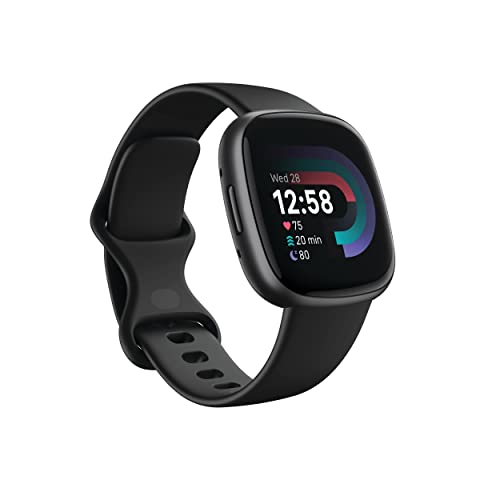
Versa 4 sticks to fundamentals: steps, heart rate, sleep stages and a six day battery claim. Both iPhone and Android pair with it, a rare trait on this list. Fitbit dropped third party apps in this generation, aiming the watch at people who want tracking without extra setup.
Pros
- Pairs with either iPhone or Android
- Six day battery claim beats most daily chargers
- Light case stays comfortable during overnight sleep tracking
Cons
- No third party app store available
- Advanced sleep and health insights need Fitbit Premium
What to look for
Which phone do you own? Compatibility narrows the field faster than any spec sheet. Apple Watch models pair only with an iPhone, with no workaround available. Samsung and Google watches run Wear OS and expect an Android phone, though switching between Android brands costs little. Garmin, Amazfit and Fitbit work across both platforms, trading some messaging and voice assistant depth for that flexibility. Settle this question first and the remaining list shrinks by half.
How much should you trust battery claims? Battery numbers come from different test conditions, so they rarely compare directly. An 18 hour figure usually assumes a dim screen and light GPS use. A 14 day figure usually assumes almost no GPS at all. Always on displays and continuous GPS workouts cut real world runtime well below the headline number. Owners consistently point to GPS tracking and always on screens as the biggest battery drains.
Which sensors are worth paying extra for? Optical heart rate sensors now ship on nearly every model, so differences sit elsewhere. Multi band GPS sharpens route accuracy in cities and under tree cover. ECG and blood oxygen features vary by country, since regulators must clear each one separately. Skin temperature and body composition readings work better as trend tools than precise instruments. None of these sensors replace medical equipment or a clinician’s advice.
What case size and strap fit your wrist? Comfort determines whether a watch gets worn at all. Smaller wrists usually suit 40mm to 42mm cases better than larger ones. Strap attachment matters too: standard quick release pins accept cheap third party bands, while proprietary systems lock you to one brand. Case weight affects sleep tracking directly, since a heavy watch is the top reason owners give for skipping overnight wear.
How they compare
| # | Model | Compatibility | Best for | Score | Price |
|---|---|---|---|---|---|
| 1 | Apple Watch Series 10 | iPhone only | Best overall | 9.4 | Check price |
| 2 | Samsung Galaxy Watch 7 | Android phones | Best for Android | 9.2 | Check price |
| 3 | Garmin Forerunner 265 | Up to 13 days stated | Best for runners | 9.0 | Check price |
| 4 | Google Pixel Watch 3 | Android phones | Best for Fitbit health tracking | 8.8 | Check price |
| 5 | Garmin Venu 3 | Up to 14 days stated | Best for everyday wellness | 8.6 | Check price |
| 6 | Amazfit GTR 4 | Up to 14 days stated | Best value | 8.3 | Check price |
| 7 | Fitbit Versa 4 | iPhone and Android | Best budget pick | 8.0 | Check price |
Good to know
Does a smartwatch need its own data plan?
Only cellular models need one, and only if you want calls and messages away from your phone. Bluetooth and Wi-Fi versions work fine as long as your phone stays nearby, and skipping cellular avoids an extra monthly line.
Can an Apple Watch pair with an Android phone?
No pairing method exists between Apple Watch and Android. Setup requires an iPhone from the first step. Android owners should compare the Samsung Galaxy Watch 7, Google Pixel Watch 3, or a cross platform pick like Garmin or Fitbit instead.
Apple Watch Series 10 vs Samsung Galaxy Watch 7: which one fits your phone?
Your phone decides this one. Series 10 pairs only with an iPhone, while Galaxy Watch 7 targets Android and works best on a Samsung handset. Both include similar sensor coverage, so platform lock in matters more than raw features here.
How accurate is heart rate tracking on a smartwatch?
Wrist sensors read reliably at rest and during steady cardio. Accuracy drops during fast interval training or heavy lifting, when wrist movement interferes with the optical signal. A paired chest strap over Bluetooth fixes this for serious training zones.
Which smartwatch has the best battery life for travel?
Garmin Venu 3 and Amazfit GTR 4 both claim roughly two weeks in smartwatch mode, well ahead of the one to two days typical for Apple or Samsung. Turning off always on displays and GPS logging extends any of these watches further.
Are smartwatches safe to wear while swimming?
Check the stated rating instead of marketing language. A 5ATM or 50m rating generally covers pool laps and showers. IP68 alone only addresses splashes and dust. None of these ratings cover diving, hot tubs, or high pressure water jets unless the manufacturer says so directly.
What is the best smartwatch for runners who skip subscriptions?
Garmin Forerunner 265 includes training readiness, recovery time, and multi band GPS with no subscription attached. Fitbit and Google Pixel Watch push their deepest analysis behind Fitbit Premium instead, so Garmin suits runners who want full data without an added fee.
Do smartwatch batteries wear out over time?
Lithium ion cells in wearables hold most of their capacity through roughly two years of daily charging, then decline gradually. Owners typically notice shorter runtime before any sudden failure. Avoiding extreme heat protects battery health more than any charging trick.
Is a basic fitness tracker enough instead of a full smartwatch?
For step counts, sleep stages, and heart rate alone, a band style tracker covers the essentials at a lower cost and often runs longer between charges. You lose the larger screen, wrist replies, contactless payments, and app support, which is why most people eventually upgrade.
Which case size should you pick?
Measure wrist circumference before choosing. Wrists under about 16cm usually suit 40mm to 42mm cases better. Larger wrists carry 44mm to 46mm comfortably, and those bigger cases also hold larger batteries for extra runtime.
Our take
Phone platform decides most of this list before battery or sensors matter: Apple Watch Series 10 for iPhone owners, Samsung Galaxy Watch 7 for Android. Anyone who wants multi day battery over nightly charging should choose the Garmin Forerunner 265 or Venu 3 instead. Amazfit GTR 4 delivers similar endurance for a smaller outlay.
Marcus Chen
Marcus covered consumer electronics for enthusiast tech publications for six years before joining ChoiceCrest. He specializes in translating manufacturer spec sheets into plain-language buying advice, with a focus on audio, computing accessories and smart-home gear.