Smart RV Inverters: App Monitoring vs Wattage Tradeoffs
The Victron Phoenix Smart 12/2000 leads for RV owners, combining pure sine output with built-in Bluetooth monitoring through the VictronConnect app. Renogy’s 3000W Inverter Charger suits full hookup rigs needing integrated charging, and the Renogy 2000W model offers app-ready monitoring at a lighter weight for smaller systems.
Real-time battery and load data on a phone screen is what sets the Phoenix Smart 12/2000 apart for RV owners. Full-time boondockers running mixed AC loads from a lithium or AGM bank fit this unit well. A built-in charger is missing, though, so a separate charging path is still required.
Wattage tiers, waveform type, and app connectivity pull buyers in different directions, which makes picking one inverter confusing fast. Continuous and surge ratings, input voltage compatibility, and whether Bluetooth was genuinely built in versus an optional add-on all factored into matching each unit to an RV use case.
The best picks, ranked

Victron Energy Phoenix Smart 12/2000 Inverter
Compressor startups are covered by a 4000 watt surge rating on top of 1600 watts of continuous pure sine output. Built-in Bluetooth pairs directly with the VictronConnect app, showing battery voltage, load percentage, and alarm history with no external dongle needed. Running on a 12V DC input, the unit reaches roughly 94 percent efficiency according to the listing, though it ships without an integrated battery charger.
Pros
- Real-time battery and load monitoring through the VictronConnect app
- Pure sine output rated near 94 percent efficiency for sensitive electronics
- Quiet operation with temperature-controlled cooling fan
Cons
- No built-in battery charger, so a separate charging source is still required
- Bluetooth range limited to typical cabin distances, not a remote cellular connection

Renogy 3000W 12V Pure Sine Wave Inverter Charger
A 3000 watt continuous pure sine inverter, a 50 amp battery charger, and an automatic transfer switch share one chassis on this combo unit. App based monitoring of battery state and load becomes available through the Renogy DC Home app once the optional Renogy BT-2 Bluetooth module is paired. Compressor startup loads from refrigerators and air conditioners get handled by a 9000 watt surge rating on a 12V DC system.
Pros
- Integrated 50A charger removes the need for a separate charging device
- Automatic transfer switch shifts between shore power and battery without manual input
- 9000 watt surge rating starts compressor-driven appliances reliably
Cons
- Bluetooth module (BT-2) sold separately rather than built in
- Larger chassis size needs more mounting space than standalone inverters

Renogy 2000W 12V Pure Sine Wave Inverter
Continuous output drops to 2000 watts on this lighter version, though pure sine wave quality stays intact for CPAP machines and laptop chargers. The same optional BT-2 Bluetooth module used on Renogy’s larger inverters adds app based load and voltage monitoring here too. Mounting gets easier in tight basement compartments thanks to the lighter build on a 12V DC input.
Pros
- Lighter weight than 3000W models eases mounting in tight compartments
- Pure sine output safe for CPAP machines and other sensitive electronics
- Compatible with the same BT-2 module for optional app monitoring
Cons
- 2000 watt ceiling cannot run a residential refrigerator plus an air conditioner together
- No built-in charger, so a separate converter is still needed

Go Power! GP-3000HD Pure Sine Wave Inverter
RV chassis mounting was the design target for the GP-3000HD, which pairs 3000 watts of continuous pure sine output with a hardwired remote display panel. Battery voltage and load percentage appear on an LCD screen inside the cabin, with no Bluetooth or app involved. GFCI protected outlets and a 6000 watt surge rating meet common RV electrical code requirements on a 12V DC system.
Pros
- Hardwired remote panel shows status without needing a phone
- Mounting brackets and layout designed specifically for RV installation
- GFCI protected outlets meet common RV electrical code
Cons
- No Bluetooth or app connectivity for remote monitoring
- Remote panel wiring must be run through cabin walls during install

Krieger 3000 Watt Pure Sine Wave Inverter
App connectivity is skipped entirely on this 3000 watt inverter, which relies on front panel LED indicators and an optional wired remote accessory for status. Dual AC outlets plus a USB port on the faceplate cover small electronics without extra wiring. Power tools and microwave startup loads get handled by a 6000 watt surge rating on a 12V DC input.
Pros
- Continuous 3000 watt rating handles microwaves and power tools without app dependency
- Dual AC outlets and a USB port cover small electronics directly on the faceplate
- Optional wired remote accessory available for cabin-side control
Cons
- No smartphone app or Bluetooth monitoring of any kind
- Cooling fan noise increases noticeably under sustained heavy loads
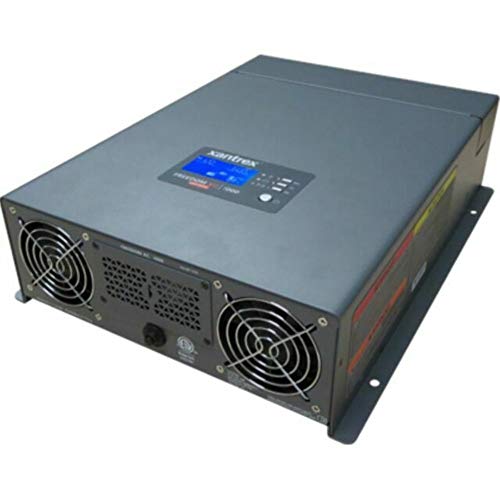
Xantrex Freedom XC 2000 Inverter Charger
One compact chassis houses a 2000 watt continuous pure sine inverter and a built-in battery charger, a combination commonly installed as OEM equipment in production travel trailers. LED indicators for charging and inverting modes replace any phone app for status reads. Typical startup loads for smaller appliances stay within a 4000 watt surge rating on a 12V DC input.
Pros
- Combined inverter and charger function reduces installation components
- LED status indicators give a simple readout without pairing to a phone
- Compact chassis fits common under-dinette or basement storage locations
Cons
- No Bluetooth or app monitoring on this standard model
- Remote control panel is a separate accessory purchase
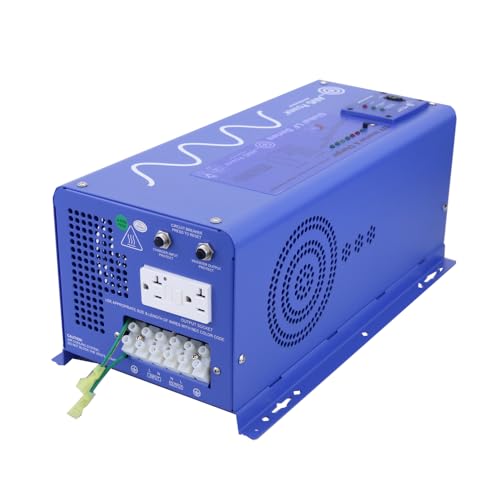
AIMS Power 3000 Watt Pure Sine Inverter Charger
Off-grid setups get a 9000 watt surge rating from this 3000 watt inverter charger, enough to start well pumps and RV air conditioner compressors. Large battery bank cabling connects through heavy gauge terminals, while a built-in transfer relay switches to shore power automatically. No Bluetooth or app connectivity exists here, so status shows only on the front panel display of this 12V DC system.
Pros
- 9000 watt surge rating supports well pumps and air conditioner startup
- Heavy gauge terminals rated for large battery bank cabling
- Built-in transfer relay switches to shore power automatically
Cons
- No Bluetooth or app connectivity for remote status checks
- Weight and footprint require a dedicated mounting bracket
Side by side
| # | Model | Continuous Power | Best for | Score | Price |
|---|---|---|---|---|---|
| 1 | Victron Energy Phoenix Smart 12/2000 Inverter | 1600W | Best overall | 9.4 | Check price |
| 2 | Renogy 3000W 12V Pure Sine Wave Inverter Charger | 3000W | Best for solar and shore power integration | 9.1 | Check price |
| 3 | Renogy 2000W 12V Pure Sine Wave Inverter | 2000W | Best value smart inverter | 8.8 | Check price |
| 4 | Go Power! GP-3000HD Pure Sine Wave Inverter | 3000W | Best for permanent RV installation | 8.5 | Check price |
| 5 | Krieger 3000 Watt Pure Sine Wave Inverter | 3000W | Best budget | 8.3 | Check price |
| 6 | Xantrex Freedom XC 2000 Inverter Charger | 2000W | Best for basic setups | 8.1 | Check price |
| 7 | AIMS Power 3000 Watt Pure Sine Inverter Charger | 3000W | Best for off-grid heavy loads | 8.0 | Check price |
Before you buy
How much inverter wattage does an RV actually need Laptops and CPAP machines pull under 300 watts, so a 1000W inverter often covers weekend camping needs. Microwaves, coffee makers, and hair dryers push continuous demand toward 1500 to 2000 watts. A residential refrigerator, induction cooktop, or window air conditioner running together typically calls for 3000 watts of continuous output. Surge wattage matters separately, since compressor-driven appliances draw two to three times their running wattage for a brief startup moment.
Pure sine wave vs modified sine wave for RV electronics Utility power gets mimicked by pure sine wave output, which runs sensitive electronics like CPAP machines, laptop chargers, and variable-speed refrigerator compressors without noise or damage. Modified sine wave units cost less but can cause humming in speakers, flickering in LED lights, or overheating in microwave transformers. Every inverter in this roundup outputs pure sine wave, since modified sine has become uncommon in current RV specific listings. Digital displays and motors generally run more reliably on the pure sine waveform.
What Bluetooth and app monitoring add to a smart inverter Battery voltage, load percentage, and fault alarms show up directly on a phone with app connected inverters, instead of requiring a walk to the electrical bay. Victron’s VictronConnect app and Renogy’s optional BT-2 module both fall into this category, letting owners check status from inside the cabin or a campsite chair. Power conversion still works identically on standard inverters without Bluetooth, they just rely on a physical LED panel or wired remote for status. Boondockers who monitor battery state daily tend to get the most practical use from app connectivity.
Installing for full-time boondocking vs occasional camping A large lithium battery bank typically gets wired to an inverter charger with heavy gauge cable and a dedicated transfer switch on full-time boondocking rigs. Shorter cable runs and a basic on off switch often suffice for occasional campers running a smaller inverter off a single battery. Inverter chargers that combine charging and inverting in one chassis, like the Renogy and AIMS models here, reduce the number of separate components to mount. Owners planning to keep the same RV setup for years, rather than swap components often, tend to prefer permanent installs with hardwired remote panels, such as Go Power!’s design.
Good to know
What size inverter do I need for a travel trailer?
Most travel trailers running lights, chargers, and a microwave need 2000 to 3000 watts of continuous output. Larger fifth wheels with residential refrigerators or air conditioners often need the full 3000 watt tier with high surge capacity.
Is pure sine wave necessary for RV electronics?
Pure sine wave is necessary for CPAP machines, variable-speed refrigerator compressors, and most modern electronics with digital displays. Modified sine wave can cause humming, flickering, or premature failure in these devices, which is why current RV inverter listings favor pure sine almost exclusively.
Can an RV air conditioner run on an inverter?
A 3000 watt continuous inverter with at least 6000 watts of surge capacity can start and run most 13,500 BTU RV air conditioners on their own. Smaller inverters under 2000 watts typically cannot handle the compressor startup surge without a soft start device.
Which RV inverter has Bluetooth app monitoring?
The Victron Phoenix Smart 12/2000 has built-in Bluetooth monitored through the VictronConnect app. Renogy’s 3000W and 2000W pure sine inverters support app monitoring when paired with the optional BT-2 Bluetooth module.
How does an inverter charger differ from a standalone inverter?
An inverter charger converts DC battery power to AC and also recharges the battery bank from shore power or a generator in one chassis. A standalone inverter only handles the DC to AC conversion, so a separate converter or charger is still needed to recharge batteries.
Is a 2000 watt inverter enough for boondocking?
A 2000 watt inverter covers lighting, laptop charging, a CPAP machine, and small kitchen appliances during boondocking. It falls short for a residential refrigerator, microwave, and air conditioner running at the same time, which calls for a 3000 watt unit instead.
What does surge wattage mean on an RV inverter?
Surge wattage is the momentary output an inverter can supply when a compressor or motor first starts, typically two to three times the continuous rating. A 3000 watt inverter with a 9000 watt surge rating can start a refrigerator compressor or air conditioner that a lower surge unit would trip on.
Can an RV inverter be installed without a professional?
Owners comfortable working with heavy gauge DC cable, fuses, and a transfer switch can install a standalone inverter in an afternoon. Inverter chargers with automatic transfer switches and remote panel wiring, like the Go Power! and Renogy models here, involve more wiring steps and benefit from following the included installation diagram closely.
Inverter charger vs separate inverter and converter, which is better for RVs?
A combined inverter charger, like the Renogy 3000W or Xantrex Freedom XC 2000, cuts down on mounting space and wiring compared to running two separate devices. Owners who already have a working converter sometimes prefer a standalone inverter instead, since it avoids replacing equipment that still functions.
The verdict
The Victron Phoenix Smart 12/2000 earns the top recommendation for RV owners who already track battery performance and want that same visibility extended to their inverter. Owners who want inverting and battery charging combined in one chassis should pick the Renogy 3000W Inverter Charger instead, since it skips the need for a separate charger entirely. Budget-focused campers running smaller loads without any app requirement will get solid value from the Krieger 3000 Watt Pure Sine Wave Inverter.
Tony Russo
Tony trained as an automotive technician and spent years in service and parts retail before moving into writing. He focuses on garage tools, car care products and accessories from a hands-on maintenance perspective.