Smart Litter Boxes That Cut Down on Daily Scooping
Litter-Robot 4 leads this group for interior space, sensor coverage, and per cat weight tracking. Casa Leo Leo’s Loo Too matches most of that design for less outlay, and PetSafe ScoopFree Smart suits owners who want a simpler crystal litter system with no scooping at all.
Litter-Robot 4 fits large cats and logs weight per cat, which makes it the strongest all-round pick here. Casa Leo Leo’s Loo Too offers a similar globe design for less outlay, while PetSafe ScoopFree Smart drops scooping entirely through disposable crystal litter trays. Each option below suits a different cat size, litter preference, or household size.
Marketed capacity usually describes the litter chamber, not the room a cat has to turn around in, so two boxes with the same listed size can feel very different in person. Waste drawer size determines how often manual emptying still happens, and litter compatibility can lock you into one brand’s supplies. We compared interior dimensions, sensor types, drawer capacity, and owner feedback on long term reliability to rank the seven boxes below.
The top picks, ranked

Litter-Robot 4
A rotating globe design gives this box a wide entry and room for large cats to turn around fully. Multiple sensors detect a cat’s presence, litter level, and drawer fullness before each cycle starts. Onboard weighing logs each cat’s visits and weight through a companion app, which owners use to spot early health changes.
Pros
- Interior fits cats over fifteen pounds
- Weight logs flag health changes early
- Cycle runs quieter than earlier generations
Cons
- Costs more than most boxes in this group
- Waste drawer liners add an ongoing cost

PetSafe ScoopFree Smart Self-Cleaning Litter Box
A raking arm sweeps waste into a covered compartment inside a disposable tray. Crystal litter absorbs liquid and controls odor without clumping, so there is no scooping between tray changes. Owners report this is the simplest system to live with, provided the cat accepts the texture underfoot.
Pros
- No direct contact with litter between changes
- Crystal litter controls odor well
- Low entry suits older or arthritic cats
Cons
- Disposable trays are a recurring cost
- Some cats reject the crystal litter texture

Casa Leo Leo’s Loo Too
This globe box pairs anti pinch sensors with an included odor control system at a lower outlay than the category leader. Standard clumping clay litter works in the sifting mechanism, so no proprietary litter is required. Owners report the interior suits average sized cats better than very large breeds.
Pros
- Globe convenience at a lower outlay
- Works with ordinary clumping litter
- Odor control included rather than sold separately
Cons
- Interior feels tight for cats over fifteen pounds
- Cycle runs louder than the top pick
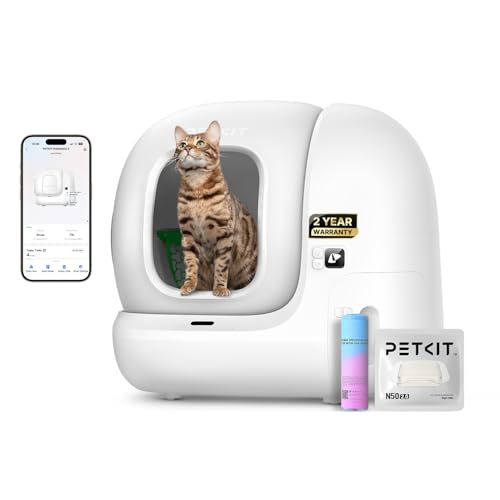
PETKIT PuraMax Self-Cleaning Cat Litter Box
A wide rotating drum and a large waste bin target households where several cats share one appliance. Weight detection records usage per cat and flags irregular visit patterns in the app. Emptying the waste bin remains the main manual task, but its size stretches the interval between trips.
Pros
- Large waste bin reduces emptying frequency
- Wide entry accommodates several cats
- Detailed usage logs in the app
Cons
- Large footprint needs floor space planning
- Assembly takes longer than rival boxes

Neakasa M1 Open-Top Self-Cleaning Litter Box
An open top removes the enclosed chamber that makes some cats refuse an automatic box entirely. Waste sifts through a tilting mechanism instead of a rotating globe, and a stainless steel basin wipes clean easily. Owners report this design wins over cats that previously rejected an enclosed automatic box.
Pros
- Open design accepted by enclosure averse cats
- Stainless basin wipes clean quickly
- Handles tofu litter as well as clay
Cons
- Open top contains odor less effectively
- Litter tracks outside the box more often
Litter-Robot 3 Connect
This earlier generation globe box still ships new and carries the same sifting principle as its successor. A smaller entry and a simpler sensor set keep the design straightforward. Parts and service stay widely available, which matters for an appliance that cycles multiple times a day.
Pros
- Lower cost than the current generation
- Parts and service are easy to find
- App sends reliable cycle notifications
Cons
- Entry is smaller than the newer model
- Sensor set is more limited

CatLink Scooper Pro Self-Cleaning Litter Box
A sealed waste compartment and a deodorizing system target apartments where the box shares a room with people. Each cycle pauses behind a delay timer until the cat clears the basin. Based on specifications, odor containment is the priority this model addresses more directly than most rivals here.
Pros
- Sealed bin contains odor in small rooms
- Delay timer adds a safety margin
- App records usage alongside cycle control
Cons
- Tall housing needs clearance above
- Fewer service outlets than major brands
Before you buy
What actually separates one smart litter box from another Four factors decide whether an automatic box works for your home: interior size, sensor coverage, waste drawer capacity, and litter type. Marketed capacity usually describes the litter chamber, not the room a cat needs to turn around in. Waste drawer size sets how often you still empty it by hand. Litter type determines which brand’s supplies you end up buying repeatedly. Compare these four factors before comparing app features.
Which box suits multiple cats or heavy daily use Multiple cats push a box through many more cycles per day, so waste bin size matters more than in a single cat home. A bin under an average size fills within two or three days once three or four cats share it. Wider drums also handle overlapping visits better than tighter globe interiors. General guidance still applies: budget one box per cat plus one spare, even when the primary unit is automatic.
Introducing a nervous or older cat to an automatic box Cats that avoid enclosed spaces often reject a globe design outright, no matter how well it cleans. An open top box removes that barrier while still automating the sifting step. Older or arthritic cats benefit from a lower entry that avoids a high step over. Leave the old box in place during the transition, and let a hesitant cat investigate the new box switched off first.
Why litter type locks you into one system Globe and drum designs generally need clumping clay litter to sift correctly. Rake based systems built around disposable trays typically require crystal litter instead. Lightweight and tofu litters only work in a handful of models, so check compatibility before ordering one. A cat that dislikes the litter itself will not use the appliance, regardless of its sensors or app.
Side by side
| # | Model | Design | Best for | Score | Price |
|---|---|---|---|---|---|
| 1 | Litter-Robot 4 | Rotating globe with sifting screen | Best overall | 9.5 | Check price |
| 2 | PetSafe ScoopFree Smart Self-Cleaning Litter Box | Raking arm with covered waste compartment | Best for low maintenance | 9.2 | Check price |
| 3 | Casa Leo Leo’s Loo Too | Rotating globe with sifting | Best value | 9.0 | Check price |
| 4 | PETKIT PuraMax Self-Cleaning Cat Litter Box | Rotating drum with sifting | Best for multiple cats | 8.7 | Check price |
| 5 | Neakasa M1 Open-Top Self-Cleaning Litter Box | Open top with tilting sift mechanism | Best for nervous cats | 8.4 | Check price |
| 6 | Litter-Robot 3 Connect | Rotating globe with sifting screen | Best budget | 8.2 | Check price |
| 7 | CatLink Scooper Pro Self-Cleaning Litter Box | Rotating drum with sealed waste bin | Best for odor control in small spaces | 8.0 | Check price |
Common questions
Are automatic litter boxes safe for cats?
Most current models combine weight sensing with infrared detection and a delay timer before each cycle starts. That combination protects adult cats in normal use. Very light kittens may not register on a weight sensor, so manufacturers set a minimum weight for use. Keep sensors free of litter dust, since dust is the usual cause of a missed detection.
How often do I still need to empty the waste drawer?
One cat typically needs the drawer emptied once or twice a week. Three or four cats can fill it every two to three days regardless of what the box is rated for. Drawer capacity, not the litter chamber size, is the number to compare if you own several cats.
Can I use any litter in a smart litter box?
No, and litter choice causes most disappointment with these appliances. Globe and drum designs need clumping clay litter to sift correctly. Rake based systems are usually built around crystal litter in disposable trays. Lightweight and tofu litters work in only some models, so check the manual first.
Which smart litter box is best for multiple cats?
Boxes with a large waste bin and a wide entry handle multiple cats best, since they go through far more cycles per day. PETKIT PuraMax targets this exact use case with a large capacity bin and per cat weight logging. Litter-Robot 4 also suits multi cat homes thanks to its wider interior.
Is an automatic litter box worth it for one cat?
For one cat, a simpler and less expensive option often covers the same need. PetSafe ScoopFree Smart removes scooping through disposable crystal litter trays without the outlay of a full globe design. A single cat also fills any waste drawer far more slowly, so drawer capacity matters less.
What is the difference between a globe design and a rake design?
A globe design rotates the entire chamber to sift waste through a screen into a drawer below. Rake designs instead drag a comb across the surface of a disposable tray. Globe boxes generally use clumping clay litter, while rake systems are built around crystal litter.
Will my cat actually use an automatic litter box?
Most cats adapt within one or two weeks when introduced gradually. Leaving the old box available at first, and letting the new box run switched off during introduction, both help. Cats that dislike enclosed spaces often do better with an open top design instead of a globe.
Does a smart litter box control odor better than manual scooping?
Generally yes, because waste moves into a sealed compartment within minutes rather than sitting until the next manual scoop. Carbon filters and deodorizing systems in some models add further control. An open top design trades some of that odor control for cats that refuse enclosed boxes.
How many automatic boxes do I need for multiple cats?
Guidance still points to one box per cat plus one spare. An automatic box being cleaned after every visit does ease the pressure somewhat. Many multi cat households still keep one conventional box as a backup in case the automatic unit needs servicing.
How do I clean an automatic litter box?
Most globe designs disassemble for washing with mild soap and water. A full clean roughly once a month keeps the mechanism running smoothly. Avoid strongly scented cleaners, since citrus and ammonia smells can put cats off the box. Wipe sensors with a dry cloth instead of soaking them.
Our pick
Litter-Robot 4 remains the box to buy when interior space and health tracking matter most, since its sensors and weight logs justify the higher cost. Casa Leo Leo’s Loo Too delivers a similar globe experience for less outlay if your cat is average sized. Households with a nervous cat or several cats should match the box to that specific need first, and keep one manual box as a backup regardless of which automatic model gets chosen.
Olivia Hartley
Olivia spent several years working at an animal shelter and a pet-supply retailer before joining the editorial team. She researches pet gear with an emphasis on safety, comfort and the fine print that owners often miss.