Smart Air Purifiers With Monitors Worth Trusting
The Levoit Core 600S is the top all-around pick, combining a laser particle sensor with app control and a True HEPA filter rated for larger rooms. The GermGuardian AC9630WCA adds a built-in air quality display at a lower cost, and the Coway Airmega 200S suits buyers who want app automation for bigger spaces.
Levoit’s Core 600S leads this group with a laser particle sensor that adjusts fan speed automatically and reports readings through its app. It covers larger rooms than most compact smart purifiers but costs more than basic models without a laser sensor. Shoppers who just want an on-unit display instead of app dependence should consider the GermGuardian AC9630WCA.
We compared sensor technology, coverage area ratings, filter type, and app or display functionality across current listings, then weighed that against common patterns in owner feedback for noise and real-world coverage.
What we recommend

Levoit Core 600S Smart True HEPA Air Purifier
The Core 600S uses a laser sensor rather than the simpler infrared sensors found on cheaper purifiers, which reads smaller particles more precisely. Its app shows real-time PM2.5 readings and lets the fan switch to auto mode based on those numbers. Coverage up to 635 square feet puts it ahead of most compact smart purifiers in this group.
Pros
- Laser sensor detects finer particles than basic infrared sensors
- Covers larger rooms than most competitors in this price range
- Auto mode adjusts fan speed without manual input
Cons
- Replacement filters cost more than basic HEPA cartridges
- App requires a stable Wi-Fi connection for remote control

Dyson Purifier Cool TP07
Dyson’s TP07 adds a formaldehyde sensor most purifiers in this group skip entirely, which matters in homes with new furniture or recent renovations. It doubles as a bladeless fan, so it runs year round instead of sitting unused outside allergy season. The combination of features comes with the highest price point in this comparison.
Pros
- Formaldehyde sensor catches pollutants basic particle sensors miss
- Doubles as a cooling fan, extending use beyond allergy season
- HEPA H13 filter rating exceeds standard True HEPA in filtration efficiency
Cons
- Highest price in this group by a wide margin
- Replacement filter and carbon cartridge add ongoing cost

Coway Airmega 200S Smart Air Purifier
Coway rates the Airmega 200S for up to 1,560 square feet when run through two air changes per hour, well beyond the single-room coverage most competitors list. An odor sensor supplements the particle sensor, which helps in kitchens or homes with pets. Eco mode powers the unit down automatically when air quality stays clean for a set period.
Pros
- Highest coverage rating in this group for open floor plans
- Odor sensor adds detection beyond particles alone
- Eco mode reduces energy use during clean-air stretches
Cons
- Larger footprint than compact purifiers built for single rooms
- App setup process takes longer than simpler competitors

GermGuardian AC9630WCA Smart Air Purifier with Air Quality Monitor
GermGuardian pairs a True HEPA filter with a UV-C light stage, aimed at allergy and asthma triggers like dust mites and pet dander. An on-unit display shows air quality readings directly, so owners who prefer not to rely on an app still get real-time feedback. Coverage tops out around 167 square feet, which fits a bedroom better than an open living area.
Pros
- UV-C stage targets airborne allergens beyond HEPA filtration alone
- On-unit display works without pairing to an app
- True HEPA filter captures allergy triggers like dust mites and dander
Cons
- Coverage area is the smallest in this comparison
- No remote app control for scheduling or away-from-home monitoring

Winix AM90 Smart Air Purifier
Winix includes its PlasmaWave ionizing feature alongside a standard particle sensor, with an option to disable the ionizer for households concerned about ozone byproducts. Coverage up to 450 square feet suits a mid-size living room. Pricing sits below Levoit’s and Coway’s app-connected models while still including Wi-Fi control.
Pros
- Lower cost than other app-connected purifiers in this group
- PlasmaWave feature can be switched off if unwanted
- Alexa compatibility adds voice control without a separate hub
Cons
- Coverage area trails the Core 600S and Airmega 200S
- PlasmaWave ionizer is a point of concern for some ozone-sensitive buyers

Blueair Blue Pure 311i Max
Blueair’s compact cylindrical design takes up less floor space than boxier purifiers in this group, which suits apartments and smaller bedrooms. Its HEPASilent filter combines mechanical and electrostatic filtration in one washable-shell cartridge. Coverage around 387 square feet still handles a mid-size room despite the smaller unit footprint.
Pros
- Compact cylindrical shape fits tighter spaces than boxier units
- Washable outer filter shell extends cartridge life
- Quieter operation reported at lower fan speeds than boxier competitors
Cons
- Lower max coverage than Levoit, Coway, or Dyson models
- Fabric pre-filter needs regular vacuuming to maintain airflow

Molekule Air Pro RX
Molekule’s app breaks down air quality into separate PM2.5, VOC, and allergen readings rather than one combined number, giving a more detailed picture than most competitors. Its PECO-HEPA filter technology is designed to break down some pollutants rather than only trapping them. Coverage up to 1,000 square feet puts it near Coway’s Airmega for larger rooms.
Pros
- Separate pollutant readings give more detail than a single air quality score
- PECO-HEPA filtration targets pollutants beyond standard HEPA trapping
- Strong coverage rating for an app-first smart purifier
Cons
- Replacement filter cartridges cost more than standard HEPA filters
- Subscription filter replacement program adds a recurring cost if enrolled
What to look for
What smart actually means on an air purifier A smart air purifier pairs a sensor with Wi-Fi or an on-unit display, so fan speed adjusts based on real air quality readings instead of a fixed manual setting. Some, like GermGuardian’s AC9630WCA, show readings on the unit itself without needing an app. Others, including Levoit’s and Molekule’s models, push detailed data to a phone and allow scheduling from anywhere. Either approach beats a purifier with no feedback loop at all, since fan speed then reacts to the room instead of running at a guess.
Sensor types and why they matter Infrared sensors, common on budget purifiers, detect general particle presence but miss finer distinctions. Laser sensors, used in Levoit’s Core 600S, read smaller particle sizes more precisely. Dyson’s TP07 goes further by adding a formaldehyde sensor, useful after painting or new furniture delivery. Molekule separates its readings into PM2.5, VOC, and allergen categories instead of one blended score, which helps pinpoint the actual pollutant causing a reading spike.
Best for allergies and pet dander Allergy sufferers benefit most from a True HEPA filter paired with a UV-C stage, which GermGuardian’s AC9630WCA includes specifically for dust mites and dander. Pet owners should also weigh odor sensing, since Coway’s Airmega 200S adds that on top of particle detection. PlasmaWave ionization, found on the Winix AM90, is worth disabling for households sensitive to ozone byproducts, even though the feature can help with odor on its own.
How much coverage area do I actually need? Manufacturer coverage ratings usually assume a set number of air changes per hour, often two to five, so a room at the high end of a unit’s rated range gets cleaned more slowly than one near the low end. A 400 square foot bedroom fits comfortably within the Blueair 311i Max’s 387 square foot rating, while an open living and dining combo closer to 800 square feet needs something like Dyson’s TP07 or Coway’s Airmega 200S. Buying slightly above a room’s actual square footage gives faster clean air delivery than buying to the exact number.
The lineup, side by side
| # | Model | Sensor | Best for | Score | Price |
|---|---|---|---|---|---|
| 1 | Levoit Core 600S Smart True HEPA Air Purifier | Laser particle sensor | Best Overall | 9.3 | Check price |
| 2 | Dyson Purifier Cool TP07 | Formaldehyde + particle sensor | Best Premium | 9.4 | Check price |
| 3 | Coway Airmega 200S Smart Air Purifier | Particle + odor sensor | Best for Large Rooms | 9.0 | Check price |
| 4 | GermGuardian AC9630WCA Smart Air Purifier with Air Quality Monitor | Built-in air quality monitor display | Best for Allergies | 8.8 | Check price |
| 5 | Winix AM90 Smart Air Purifier | PlasmaWave + particle sensor | Best Value | 8.7 | Check price |
| 6 | Blueair Blue Pure 311i Max | Particle sensor with auto mode | Best for Small Spaces | 8.6 | Check price |
| 7 | Molekule Air Pro RX | PM2.5, VOC, and allergen sensors | Best for Air Quality Monitoring | 8.9 | Check price |
Questions worth asking
What makes an air purifier smart?
A smart air purifier includes a sensor that reads air quality and adjusts fan speed automatically, usually paired with an app or on-unit display for real-time readings.
Do smart air purifiers need Wi-Fi to work?
Most need Wi-Fi for remote app control and scheduling, but models like GermGuardian’s AC9630WCA show readings on a built-in display without any app connection.
Which smart air purifier covers the largest room?
Coway’s Airmega 200S rates up to 1,560 square feet at a higher air-change rate, the largest coverage figure in this comparison.
Are smart air purifiers good for allergies?
Yes, particularly models with a True HEPA filter and UV-C stage, such as GermGuardian’s AC9630WCA, which targets dust mites and pet dander directly.
What is the difference between a laser sensor and an infrared sensor?
Laser sensors, used in Levoit’s Core 600S, detect smaller particle sizes more precisely than the infrared sensors found on many budget purifiers.
Do air purifiers remove odors as well as particles?
Models with activated carbon filters or odor sensors, including Coway’s Airmega 200S and Winix’s AM90, target odors in addition to airborne particles.
Is a formaldehyde sensor necessary in an air purifier?
It helps most after renovations or new furniture delivery, since formaldehyde off-gasses from certain materials. Dyson’s TP07 is the only model here with that specific sensor.
How often do smart air purifier filters need replacing?
Replacement schedules vary by brand and usage, generally every six to twelve months, with app-connected models like Levoit’s and Molekule’s often tracking filter life automatically.
Can a smart air purifier work with Alexa or Google Assistant?
Several models support voice control, including Winix’s AM90 with Alexa and Levoit’s Core 600S with broader voice assistant support.
What size room does a smart air purifier need?
It depends on the unit’s coverage rating. Compact models like Blueair’s 311i Max suit bedrooms, while larger-rated purifiers like Coway’s Airmega 200S handle open living spaces.
Our take
The Levoit Core 600S is the strongest overall pick for most homes, balancing laser-sensor accuracy with coverage that handles a mid-size living room. Buyers focused specifically on allergies should choose GermGuardian’s AC9630WCA for its UV-C stage, even though its coverage area is smaller. Anyone purifying a large open floor plan is better served by Coway’s Airmega 200S or Dyson’s TP07 instead.
Dana Whitfield
Dana spent eight years buying and merchandising for a regional kitchenware retailer before moving into editorial work. She has handled thousands of SKUs across cookware, small appliances and kitchen organization, and focuses on the practical differences that matter once a product is actually in daily use.
You might also need

Air Purifiers That Actually Trap Mold Spores at Home
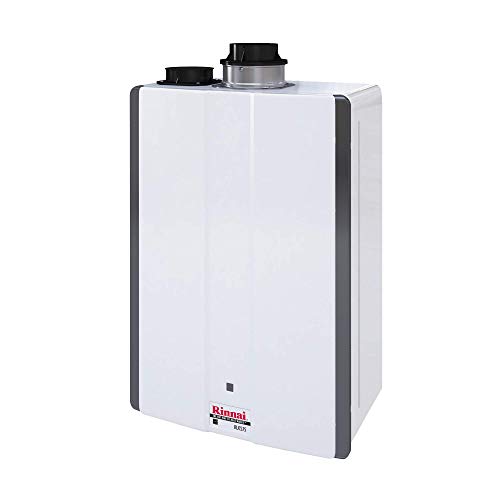
Is a Tankless Water Heater Actually Worth the Install Cost Over a Tank Model?

Seven Wingback Chairs for Reading Nooks and Living Rooms
