12 Small Animal Toys Rabbits and Guinea Pigs Actually Use
Kaytee’s Chew and Treat Toy Assortment leads this list because it mixes textures so owners can find what their pet prefers. Oxbow’s Apple Stick Bundle covers daily dental wear at a lower cost, and the Living World Teach N Treat Toy solves boredom rather than tooth length.
Kaytee’s Chew and Treat Toy Assortment tops this list for covering multiple chewing styles at once. Oxbow’s apple sticks follow for dependable daily dental wear, while the Living World Teach N Treat Toy answers boredom rather than tooth growth. Every listing below suits a specific mix of rabbits, guinea pigs, hamsters, rats or chinchillas.
Small pets chew whatever sits inside their cage, including glue, dye and thin plastic that should never reach a stomach. We compared listed materials, species guidance from each manufacturer and owner reports on how quickly a toy gets destroyed or ignored. Construction and safety mattered more than novelty shapes or bright colors.
What to look for
Why do small pets need constant access to chew toys Rabbit, guinea pig, chinchilla and rodent teeth grow for life. Hay covers most of that wear, but safe chew material fills the rest. Skip the toys and an animal turns to cage bars, plastic fittings or wooden furniture instead. Treat rotation of chews as basic care, not an accessory.
What toy materials are actually safe for small pets Anything inside an enclosure eventually gets eaten. Untreated wood, seagrass, loofah, willow and apple sticks work without glue, varnish or added dye. Soft plastics, painted parts and small detachable pieces belong outside the cage. Hard plastic puzzle feeders are fine, since the animal works for food rather than gnawing the shell.
Which chew toy fits your pet’s species and size A rabbit grade chew wastes its bulk on a dwarf hamster. Reverse the pairing and a determined rabbit shreds a hamster sized loofah within minutes. Read the species guidance printed on each listing, then check it against your own animal’s size and bite strength. Chinchillas and rabbits need the densest material, guinea pigs sit in the middle, and hamsters, gerbils and mice do best with lighter pieces they can carry.
How often should chew toys be rotated or replaced Interest in a fixed toy fades within a couple of weeks. Keep three or four items active and swap two each week, storing the rest out of sight. Combine one chew, one foraging item and one puzzle so teeth and curiosity both get exercised. Replace anything that has splintered into sharp fragments right away.
What we recommend

Kaytee Chew and Treat Toy Assortment
Wood blocks, woven grass shapes and edible pieces ship together in one box. Buying each texture separately costs more and takes longer to find a favorite. Owners report rabbits and guinea pigs settle on one piece within a day, then the spares rotate in later to renew interest.
Pros
- Mixes several chew textures in one purchase
- Helps identify a new pet’s preferred texture fast
- Spare pieces rotate in to renew interest
Cons
- A few pieces in the mix go untouched
- Softer loofah and grass pieces wear out fast

Oxbow Enriched Life Apple Stick Bundle
Untreated apple wood forms the entire stick, with no glue or dye added. Since most small pets swallow what they gnaw, edible material removes that risk entirely. Guinea pigs and rabbits typically accept these faster than harder wood blocks, based on owner reports, making them a reliable daily chew.
Pros
- Wears down continuously growing teeth daily
- Safe to swallow in small amounts
- Accepted quickly even by picky chewers
Cons
- Determined rabbits finish a stick within days
- Individual stick thickness varies inside the bundle

Living World Teach N Treat Toy
Sliding covers and rotating discs hide food across three difficulty settings. Difficulty rises as the animal learns, so the challenge does not disappear after week one. Rats, hamsters and confident guinea pigs engage with it fastest, and owners report it slows down animals that normally eat too quickly.
Pros
- Three levels adjust as the animal gets smarter
- Turns feeding time into mental exercise
- Removable parts wipe clean between uses
Cons
- Hard plastic body is not meant for chewing
- Shy animals may need coaxing before they engage

Niteangel Natural Small Animal Chew Toys
Pieces here are scaled for hamsters, gerbils and mice, not full sized rabbits. Oversized chews often sit untouched in a small cage, so sizing matters more than material variety. Each set typically mixes wood, seagrass and loofah, and owners report smaller pieces get gnawed instead of pushed into a corner.
Pros
- Sized correctly for dwarf and Syrian hamsters
- No plastic parts in the natural material mix
- Light enough for small pets to carry around
Cons
- Too small to hold a rabbit’s interest
- Loofah pieces shed fibers as they wear down
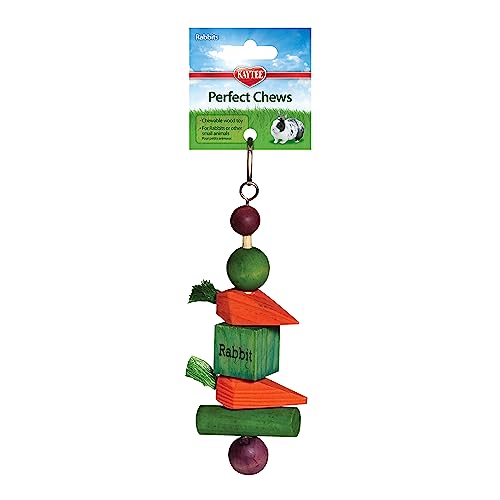
Kaytee Perfect Chews for Rabbits
Dense wood forms these chews, built for rabbits that shred softer toys in an afternoon. Continuously growing incisors need that extra resistance to wear down properly. Acceptance takes longer than with apple sticks, since some rabbits need several days before committing to a harder texture.
Pros
- Outlasts woven or grass toys by weeks
- Lower cost per week of actual use
- Encourages proper incisor wear over time
Cons
- Slower acceptance than softer edible chews
- Too hard for very young or elderly animals

Ware Pet Products Willow Barbell Chew Toy
Woven willow strands form a barbell shape with hollow ends for stuffing hay or greens. Stuffing turns a simple chew into a foraging puzzle. Willow’s soft texture suits guinea pigs and smaller rabbits better than dedicated destroyers, and hanging it from cage bars encourages stretching, according to owner reports.
Pros
- Doubles as a chew and a foraging toy
- Made entirely from edible natural material
- Hanging it encourages movement and stretching
Cons
- Strong rabbits shred it within days
- Woven ends leave loose fibers to clean up

Trixie Snack Ball for Small Animals
Pellets or dried greens drop out as the animal rolls this ball across the cage floor. Spreading a meal over time slows down fast eaters and adds movement to a static enclosure. Loading and cleaning stay simple since the ball opens fully, though rabbits and guinea pigs take to it quicker than shy hamsters.
Pros
- Slows down animals that eat too fast
- Adds physical activity to routine feeding
- Opens fully for quick refilling and rinsing
Cons
- Rattles loudly on hard cage flooring
- Plastic shell is not intended for chewing
The lineup, side by side
| # | Model | Materials | Best for | Score | Price |
|---|---|---|---|---|---|
| 1 | Kaytee Chew and Treat Toy Assortment | Untreated wood, loofah and woven grass | Best overall | 9.4 | Check price |
| 2 | Oxbow Enriched Life Apple Stick Bundle | Untreated apple wood | Best value | 9.2 | Check price |
| 3 | Living World Teach N Treat Toy | Three level food puzzle | Best for enrichment | 9.0 | Check price |
| 4 | Niteangel Natural Small Animal Chew Toys | Natural wood, seagrass, loofah | Best for hamsters | 8.8 | Check price |
| 5 | Kaytee Perfect Chews for Rabbits | Hard wood chews | Best for heavy chewers | 8.6 | Check price |
| 6 | Ware Pet Products Willow Barbell Chew Toy | Woven natural willow | Best for foraging | 8.3 | Check price |
| 7 | Trixie Snack Ball for Small Animals | Rolling treat dispenser | Best for slow feeding | 8.0 | Check price |
Good to know
How many toys does a rabbit or guinea pig need at once?
Three or four items work well together: a hard chew, an edible stick or woven chew, and something to forage in or hide under. Rotate a couple weekly instead of leaving the same set out permanently. Static toys are what usually get ignored.
Are wooden chew toys safe for small pets?
Untreated apple, willow, kiln dried pine and aspen are widely used without issue. Avoid cedar, fresh pine shavings, painted or varnished wood, and anything glued together. Dry fruit tree branches before offering them rather than cutting fresh ones from the garden.
Why is my pet ignoring its new toy?
Prey animals treat new objects with suspicion by default. Place the toy near hay or a favorite corner, and rub a little familiar bedding scent on it. Give the toy several days before calling it a failure, since hard wood chews especially can take a week to catch on.
Do hamsters need chew toys as much as rabbits do?
Yes, hamster incisors grow continuously too. Scale matters more than intensity here: hamsters do best with small, light pieces they can carry and stash. That is why rodent sized sets get used while rabbit sized chews sit untouched in a hamster cage.
How often should chew toys be replaced?
Swap a toy once it splinters into sharp pieces, breaks into swallowable chunks, or gets soiled with urine. Edible chews like apple sticks get consumed and simply restocked. Hard wood blocks and puzzle feeders, by contrast, last months with regular cleaning.
Are cardboard tubes and boxes good enrichment toys?
Plain cardboard without glossy print, tape or staples makes genuinely good free enrichment, especially stuffed with hay. It will not wear teeth down the way a hard chew does. Shredding and hiding instincts still benefit, and replacements cost nothing.
Can dog or cat toys work for small animals?
No. Dog and cat toys use rubber, soft plastic and stitched fabric never meant to be swallowed, and squeakers hide small parts. Small animal toys assume the material will end up in the pet’s stomach eventually. Stick to products made for that assumption.
Do puzzle feeders actually help with boredom?
They help animals that eat their ration too fast and ones that seem understimulated. Working for food mimics natural foraging behavior and draws shy pets out of hiding. A puzzle feeder does not replace a chew toy, since gnawing the plastic body offers no dental benefit.
Chew toy or puzzle feeder: which should you buy first?
Buy the chew toy first, since dental wear is a physical need every rabbit, guinea pig and rodent has. Add a puzzle feeder once basic chewing needs are covered, particularly for a fast eater or a bored, confident animal. Most owners end up needing both within the first few months.
The verdict
Kaytee’s Chew and Treat Toy Assortment remains the easiest first purchase, since it reveals a pet’s real preference before you commit to one chew style. Oxbow apple sticks deserve permanent shelf space for daily dental wear, while the Living World Teach N Treat Toy solves boredom in a way no chew can. Heavy chewers should skip ahead to the harder Kaytee blocks instead of starting soft.
Olivia Hartley
Olivia spent several years working at an animal shelter and a pet-supply retailer before joining the editorial team. She researches pet gear with an emphasis on safety, comfort and the fine print that owners often miss.