How Ski Goggle Lens Tint Determines Fogging on the Lift
Smith’s 4D MAG tops this ranking for its extended downward view and fast magnetic lens swaps. Oakley’s Flight Deck M delivers close optical performance for less outlay. OutdoorMaster’s PRO goggles suit skiers who hit the slopes only a few days each winter without sacrificing anti fog performance.
Flat light and sudden overcast turn moguls invisible without the right lens. The Smith 4D MAG leads this list for its curved lower lens and fast magnetic swaps. Oakley’s Flight Deck M gets close to that clarity for less, while the OutdoorMaster PRO suits occasional days on snow.
Visible light transmission, the figure that actually predicts terrain clarity in flat light, rarely appears on the box. We compared VLT, lens tint, field of view and venting across seven current models. Owner feedback on anti fog performance, helmet fit and lens change systems rounded out the picture.
The shortlist, ranked

Smith 4D MAG Snow Goggle
A curved lower lens extends the downward field of view, which counts most when reading moguls right in front of your ski tips. ChromaPop lensing sharpens contrast rather than simply darkening the world. Magnetic lens changes take seconds with gloves on, and a spare low light lens ships in the box.
Pros
- Widest downward field of view here
- Magnetic swaps stay fast with gloves on
- ChromaPop lens boosts flat light contrast
Cons
- Highest score also means highest outlay
- Large frame can overwhelm narrow faces

Oakley Flight Deck M Snow Goggles
Removing the rim pulls the frame out of peripheral vision, so the Flight Deck feels more open than its size suggests. Prizm lenses separate snow texture from shadow on overcast days, a genuine improvement over plain tinted lenses. Swapping lenses means flexing the frame by hand, slower than a magnetic system.
Pros
- Rimless frame widens peripheral vision
- Prizm lens separates texture from shadow
- F3 anti fog coating resists misting
Cons
- Lens swaps take more effort than magnets
- Spare lenses sold as a separate purchase
Anon M4 Toric Goggles
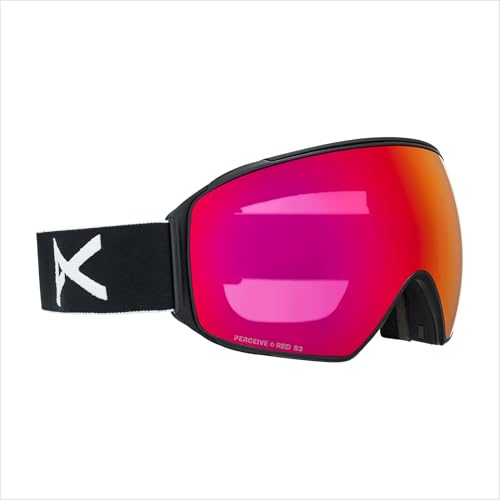
Anon’s magnetic ring holds the lens in place and releases it in roughly two seconds without touching the optical surface. Included in the box are a bright light lens, a low light lens and a magnetic face mask. Toric shaping curves the lens in two directions, cutting edge distortion that cylindrical lenses show.
Pros
- Fastest lens change of the seven
- Two lenses and a face mask included
- Toric shape reduces edge distortion
Cons
- Magnets attract loose snow and grit
- Bulkier than rivals inside a jacket pocket

Smith Squad XL ChromaPop Goggles
Cylindrical lens shaping trades a slice of peripheral clarity for a lower price while keeping ChromaPop contrast intact. Oversized construction suits wider faces and seals against most helmets without a gap. A bonus low light lens comes included, though changing it means pulling the lens fully from its frame channel.
Pros
- ChromaPop contrast at a lower price point
- Oversized frame fits larger faces and helmets
- AirEvac venting pairs with Smith helmets
Cons
- Cylindrical shape adds edge distortion
- Lens changes require more fiddling than magnets

Giro Contour RS Snow Goggles
Extra internal volume lets the Contour RS clear most eyeglass frames without pressing on the temples. VIVID lens technology by Zeiss sharpens definition on flat light days. That roomier interior also takes longer to clear once it fogs on a slow lift ride.
Pros
- Comfortable fit over most eyeglasses
- VIVID lens sharpens flat light definition
- Quick change magnetic lens system
Cons
- Takes longer to clear once fogged
- Frame profile sits larger on the face

OutdoorMaster PRO Ski Goggles
Spherical dual layer construction with anti fog coating brings interchangeable lenses within reach of occasional skiers. Optical clarity sits a step below Prizm or ChromaPop in flat light conditions. Owners report the strap adjustment holds firm over a helmet through a full day.
Pros
- Spherical optics at a low price point
- Lenses swap out for changing light
- Strap grips helmets through a full day
Cons
- Contrast trails premium lens technology
- Anti fog coating wears sooner than rivals

ZIONOR X4 Ski Goggles
Magnetic lens changes reach a budget price point here, unusual among goggles at this cost. Venting and anti fog performance handle moderate exertion without much trouble. Based on specifications the lens coating is simpler than premium models, so bright hardpack days bring more glare.
Pros
- Magnetic lens swaps at the lowest price here
- Fits comfortably over most eyeglasses
- Adequate venting for moderate exertion
Cons
- More glare shows on bright sunny days
- Foam quality trails the premium models
How they compare
| # | Model | Lens | Best for | Score | Price |
|---|---|---|---|---|---|
| 1 | Smith 4D MAG Snow Goggle | ChromaPop with 5D spherical carbonic-x | Best overall | 9.4 | Check price |
| 2 | Oakley Flight Deck M Snow Goggles | Prizm spherical | Best optics for the price | 9.2 | Check price |
| 3 | Anon M4 Toric Goggles | Toric PERCEIVE | Best lens change system | 9.0 | Check price |
| 4 | Smith Squad XL ChromaPop Goggles | Cylindrical ChromaPop | Best for larger faces | 8.8 | Check price |
| 5 | Giro Contour RS Snow Goggles | VIVID by Zeiss, toric | Best for glasses wearers | 8.6 | Check price |
| 6 | OutdoorMaster PRO Ski Goggles | Spherical dual layer with anti fog | Best value | 8.3 | Check price |
| 7 | ZIONOR X4 Ski Goggles | Detachable magnetic spherical | Best budget | 8.0 | Check price |
How to choose
What should you look for in ski goggles? Visible light transmission decides what a goggle actually shows you, not the tint color on the box. VLT near 10 to 25 percent suits bright bare sun, 25 to 50 percent covers mixed weather, and above 50 percent handles flat light, snowfall and night laps. Contrast lenses like ChromaPop and Prizm earn their price mainly in flat light, where they separate bumps from shadow that plain lenses blur together. Field of view and lens change speed matter next, especially on days when weather flips within an hour.
How do you stop ski goggles fogging up? Fogging happens when warm moist air from your face meets a cold lens surface. Dual pane lenses with a sealed air gap fix most of that, paired with top and bottom vents that let airflow escape. A helmet that traps heat under the goggle frame undoes that design fast. Resting goggles on your forehead between runs pushes warm damp air straight into the frame, according to owner reports. Never wipe a wet lens on the inside, since that strips the anti fog treatment for good.
Which ski goggles fit over glasses or under a helmet? A goggle should seal continuously around the face, with no gap at the nose bridge or between the frame and helmet brim. Trying both together before buying helps, since brim shapes vary between helmet brands. Eyeglass wearers need extra internal volume and side channels for the temple arms. Contact lenses still give a more comfortable fit than glasses under goggles on cold, long days.
Spherical vs cylindrical vs toric lenses: does shape matter? Spherical lenses curve in two directions at once, cutting distortion and glare while adding interior room. Cylindrical lenses curve only side to side, which costs less to manufacture but sacrifices some edge clarity. Toric lenses sit between the two, curving in both directions but with different radii on each axis. For most skiers, lens tint and fit change the experience more than lens shape does.
Questions worth asking
What VLT is best for flat light skiing?
Look for VLT above 50 percent in a rose, amber or yellow lens. Contrast enhancing coatings make terrain edges genuinely easier to read in overcast conditions.
Are interchangeable ski goggle lenses worth buying?
For skiers on the hill more than a handful of days a year, yes. Conditions shift through a single day, and a low light lens after lunch beats guessing at terrain.
How do I keep my ski goggles from fogging?
Keep goggles on your face rather than your forehead between runs. Use the vents, skip stuffing them under a jacket, and never wipe a wet inner lens.
Can you wear glasses under ski goggles?
Yes, with goggles built for it that offer deeper internal volume and side channels. Contact lenses still tend to feel more comfortable across a full day.
Do ski goggles wear out or expire?
Lens coatings and foam padding degrade with use, and most makers suggest replacing goggles after several regular seasons. Fading anti fog performance is usually the first warning sign.
Spherical vs cylindrical ski goggle lenses, which is better?
Spherical lenses curve in two directions for less distortion and more interior room. Cylindrical lenses cost less but show more glare at the edges.
How should ski goggles fit with a helmet?
No gap should show between the goggle frame and the helmet brim. The strap should sit flat around the outside of the helmet shell with the buckle fastened.
What is the best way to clean ski goggles?
Shake off loose snow, then let the goggles air dry completely before storing them. Wipe only the outer lens with the supplied microfiber bag, and leave a wet inner lens alone.
Are magnetic lens change systems better than clip in lenses?
Magnetic systems swap lenses in seconds without touching the optical surface, which clip systems cannot match. They add weight and attract loose grit, a tradeoff most skiers accept for the speed.
The verdict
The Smith 4D MAG leads this list because its extended downward view and fast magnetic swaps solve the two problems flat light skiers actually face. Anyone chasing comparable clarity for less should look at the Oakley Flight Deck M. For a handful of days on snow each season, the OutdoorMaster PRO covers the essentials without pretending to match premium lens tech.
Derek Holt
Derek has a background coaching recreational and amateur athletes and has worked the sales floor at specialty fitness retailers. He focuses on equipment durability, ergonomics and realistic use cases rather than marketing claims.
You might also need

Weighted Vests Compared for Rucking, Walking and Lifting
How to Keep Your Exercise Bike Running Smoothly

How to Choose a Foam Roller for Sore Muscles and Tight Spots