Youth Ski Boots: Matching Flex and Fit to a Growing Kid
The Rossignol Comp J4 suits most intermediate young skiers, pairing a balanced flex with a secure three-buckle closure. Wide-footed kids fit better in the roomier Nordica Speedmachine J4. Beginners fresh out of ski school often start with the easier-entry Salomon Team T4 instead.
Ability level matters more than age when picking a youth ski boot, since a stiff race boot fights every turn a beginner makes. The Rossignol Comp J4 fits most kids progressing past their first season. Wide feet do better in the Nordica Speedmachine J4, while the Salomon Team T4’s simpler entry suits a child fresh out of group lessons.
Kids’ feet grow roughly a size a year, so fit and buckle adjustability matter as much as flex rating does. We compared flex, closure style, liner insulation and the sizing range each boot covers, along with owner notes on break-in time and warmth.
What we recommend
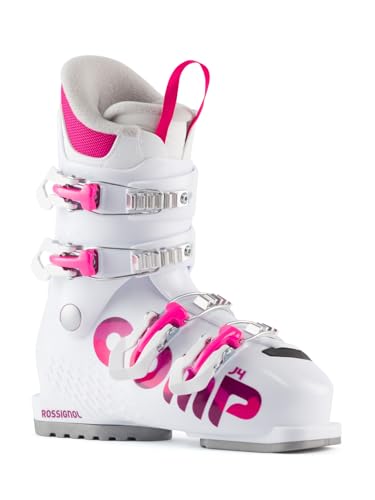
Rossignol Comp J4
A moderate flex keeps this boot responsive enough for blue and easier black runs without punishing a still-developing technique. Three buckles hold a secure, adjustable fit as feet change shape through the season. Parents report the liner holds warmth through full-day resort trips better than softer beginner boots.
Pros
- Balanced flex suits progressing intermediate skiers
- Adjustable buckles accommodate growing feet within a size
- Warm liner for full day resort use
Cons
- Too stiff for a first-time beginner
- Runs narrow for wider foot shapes

Nordica Speedmachine J4
A wider last than most junior race-styled boots reduces pressure points, a common complaint parents raise about narrower competitors. Mid-range flex still suits intermediate skiing without feeling sluggish. Owners note less break-in discomfort in the first few days than narrower boots at a similar flex.
Pros
- Wider last reduces pressure on broad feet
- Shorter break-in period reported by owners
- Consistent mid-flex for intermediate skiing
Cons
- Wider fit feels loose on narrow feet without extra socks
- Slightly heavier than narrower competitors

Head Edge J4
Core features families need, adjustable buckles, a moldable liner and a workable mid-flex, come without the cost of Rossignol or Nordica’s junior lines. It suits a kid skiing a handful of trips per season rather than every weekend. Parents buying a boot they expect to outgrow within a year cite the lower cost as the deciding factor.
Pros
- Lower price than most junior boots with similar features
- Adjustable buckles fit a range of foot volumes
- Reasonable choice for occasional weekend skiers
Cons
- Liner insulation trails pricier competitors in very cold conditions
- Shorter expected lifespan of the buckle hardware
Atomic Hawx JR 4
A fourth buckle and a stiffer flex than most junior boots here give more precise edge control on steeper terrain and faster turns. It suits a child who has outgrown a true beginner boot and skis multiple days a season. Parents note it demands correct sizing, since the stiffer flex punishes a boot that fits loosely.
Pros
- Extra buckle improves precision on steeper terrain
- Stiffer flex suits advancing intermediate to advanced kids
- Moldable liner improves fit over the season
Cons
- Too stiff and demanding for true beginners
- Requires a snug fit to perform as intended

Salomon Team T4
A simplified entry design lets younger or less coordinated kids get boots on and off with less parent help than a standard front-buckle boot needs. Softer flex forgives the wobbly, knock-kneed stance common in early skiers. Parents of kids just past their first lessons cite the easier on-off as the main reason they chose it.
Pros
- Easier for young kids to put on independently
- Soft flex forgives early-stage technique
- Warm liner suits cold beginner lesson days
Cons
- Too soft for a kid progressing past green and easy blue runs
- Less precise edge control than a standard buckle boot

Lange RSJ 60
A narrower, race-oriented last and stiffer flex give this boot a locked-in feel suited to a training program rather than casual skiing. Edge pressure transmits more directly than in the roomier boots in this group. Parents of racing kids note it needs a thinner sock and precise fit to avoid pressure points during long training days.
Pros
- Direct power transfer suits race training
- Narrower last improves precision for narrow feet
- Durable buckle hardware for frequent use
Cons
- Narrow fit uncomfortable for wide or high volume feet
- Too stiff and precise for casual recreational skiing

Tecnica JT 4
Lowest price point in the group, this boot covers the basics with a soft to mid flex and a standard buckle closure suited to early progression. It works well as a first real buckle boot after a rental or entry-level rear-entry model. Parents buying for a kid who may lose interest in skiing after a season or two lean toward this option.
Pros
- Lowest cost buckle boot in this comparison
- Suitable first step up from a rental or beginner boot
- Standard buckles are easy for kids to learn
Cons
- Liner runs cooler than pricier insulated options
- Softer flex limits growth room before a kid outgrows its ability match
How to choose
Matching flex to ability, not age Soft flex forgives the wobbly stance of a first or second season skier, while a stiffer flex rewards a kid who already carves confident turns. Buying stiff for future growth backfires, since an overly stiff boot fights a beginner’s technique and slows progress. Flex should track current skill level, leaving sizing to handle growth room.
How much growth room is actually safe Roughly half a size of extra room lets a foot grow through a season without the heel lifting inside on turns. Too much extra space causes exactly that heel lift, which hurts control and can cause blisters. A proper boot fitter measuring both length and volume beats guessing from a shoe size chart.
Buckle count and closure style Three buckles cover most recreational junior boots adequately, while four buckles add precision for kids skiing more aggressive terrain. Simplified rear-entry designs, like the Salomon Team T4, trade some precision for kids managing their own boots without help. Closure style should match how independently the child can manage getting boots on and off.
Keeping feet warm on long resort days A thermo-moldable liner packs out to match foot shape over the first several days, improving both warmth and fit versus a basic liner. Thin, moisture-wicking ski socks trap heat better than thick cotton socks, which compress and reduce circulation. Boots that fit correctly retain warmth better than an oversized boot with dead air space inside.
Compared at a glance
| # | Model | Flex rating | Best for | Score | Price |
|---|---|---|---|---|---|
| 1 | Rossignol Comp J4 | Mid-range junior flex | Best overall | 9.2 | Check price |
| 2 | Nordica Speedmachine J4 | Mid-range junior flex | Best for wide feet | 9.0 | Check price |
| 3 | Head Edge J4 | Mid-range junior flex | Best value | 8.7 | Check price |
| 4 | Atomic Hawx JR 4 | Stiffer junior flex | Best for progressing skiers | 8.8 | Check price |
| 5 | Salomon Team T4 | Soft junior flex | Best easy entry for younger kids | 8.5 | Check price |
| 6 | Lange RSJ 60 | Stiffer, race-oriented junior flex | Best for racing-oriented youth | 8.6 | Check price |
| 7 | Tecnica JT 4 | Soft to mid junior flex | Best budget | 8.3 | Check price |
Common questions
What is the best ski boot for a beginner kid?
The Salomon Team T4 suits beginners well, with a soft flex and simplified entry that a young or newly independent skier can manage with less parent help.
How do you know what flex rating a kid needs?
Match flex to current ability rather than buying stiff for the future. A first or second season skier needs a soft flex, while an intermediate skier handling blue runs benefits from a mid-range flex like the Rossignol Comp J4.
How much should you size up ski boots for growing feet?
About half a size of extra room is standard, enough for a season of growth without causing heel lift inside the boot during turns. A proper fitting at a ski shop is more reliable than estimating from shoe size alone.
Can kids reuse ski boots from a sibling?
Yes, as long as the flex and size still suit the current child’s ability and foot size. A boot too stiff or too large for a younger or less experienced sibling will hinder progress rather than help it.
How often do youth ski boots need replacing?
Most kids outgrow boots within one to two seasons given typical foot growth rates, well before the boot itself wears out. Buckle hardware and liner insulation are the parts most likely to fail first on a heavily used boot.
What is the difference between a 3-buckle and 4-buckle junior boot?
A fourth buckle, usually at the top cuff, adds precision and support for kids skiing more advanced terrain. Three buckles cover most recreational skiing adequately without the added stiffness a fourth buckle brings.
Are rear-entry ski boots good for kids?
Rear-entry and simplified-entry boots make it easier for younger kids to get boots on independently, at some cost to precision versus a standard front-buckle design. They suit beginners more than kids skiing advanced terrain.
Do youth ski boots need a liner that molds to the foot?
A thermo-moldable liner improves fit and warmth over a basic liner, especially over a season of regular use. It matters more for kids skiing full days regularly than for occasional weekend trips.
Rossignol Comp J4 vs Atomic Hawx JR 4: which suits a progressing skier better?
The Atomic Hawx JR 4’s fourth buckle and stiffer flex suit a kid already skiing steeper terrain confidently. The Rossignol Comp J4 fits a broader range of intermediate skiers still building that confidence.
Final word
The Rossignol Comp J4 is the strongest overall pick for an intermediate young skier, balancing flex, warmth and adjustability as feet grow. Kids with wider feet should choose the Nordica Speedmachine J4 instead to avoid pressure point discomfort. Beginners fresh out of lessons are better served by the softer, easier-entry Salomon Team T4.
Derek Holt
Derek has a background coaching recreational and amateur athletes and has worked the sales floor at specialty fitness retailers. He focuses on equipment durability, ergonomics and realistic use cases rather than marketing claims.