Which small frying pan cooks a single egg best?
Cuisinart 622-16 fits one egg best at 6.5 inches, with hard anodized aluminium spreading heat evenly. Lodge L3SK3 cast iron delivers the crisp lacy edge fried egg fans want. GreenPan Rio covers anyone avoiding PFAS coatings, though its oven limit stops at 350 F.
Cuisinart 622-16 Chef’s Classic fits most households frying one or two eggs. Its 6.5 inch base keeps the white thick instead of thin and tearing. Hard anodized aluminium carries heat across that small floor without hot spots. Induction owners need another pan, since the base is not magnetic.
Coating choice decides how hot you can cook and how long the pan lasts. Traditional nonstick releases eggs easily yet degrades above medium heat. Cast iron and carbon steel ask for seasoning first and reward patience later. We compared diameters, coating chemistry, stated oven limits, hob compatibility and handle design. Owner reports on coating wear after a year of daily use settled the close calls.
The top picks, ranked
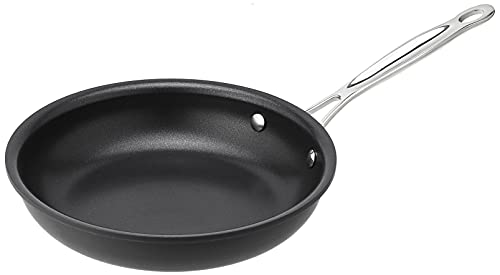
Cuisinart 622-16 Chef’s Classic Nonstick Hard Anodized 6.5-Inch Skillet
Six and a half inches is the sweet spot for one egg. A spatula still fits under the white, yet the white never spreads thin enough to tear. Hard anodized aluminium moves heat evenly across that small floor, so edges and centre set together. Riveted stainless keeps the handle cool on gas, and the pan takes 500 F in the oven.
Pros
- Correct diameter for one egg without spreading
- Even heat across a small cooking floor
- 500 F rating allows a finish under the broiler
Cons
- Aluminium base will not work on induction
- Hand wash only to protect the coating

Lodge L3SK3 6.5 Inch Cast Iron Skillet
Iron holds its heat when a cold egg lands, rather than dropping the way thin aluminium does. That stability produces the lacy brown edge with a soft yolk. Lodge ships the pan pre-seasoned, and the surface keeps improving with oil over months. Gas, electric, induction, oven, grill and open flame are all fair game.
Pros
- Heat retention gives a properly crisp egg edge
- Outlasts every coated pan on this list
- No temperature ceiling to work around
Cons
- Heavy for a one handed flip
- Eggs stick until the seasoning builds up

GreenPan Rio Ceramic Nonstick 7-Inch Frying Pan
Thermolon ceramic is the draw here, made without PFAS, PFOA, lead or cadmium. Seven inches leaves room for an egg plus a rasher beside it. Dishwasher approval is rare on coated cookware and worth noting. Keep the pan away from the broiler, because the oven rating stops at 350 F.
Pros
- Ceramic coating made without PFAS or PFOA
- Rated dishwasher safe unlike most nonstick pans
- Light enough to shake one handed
Cons
- 350 F oven limit rules out broiler finishing
- Ceramic release fades sooner than traditional nonstick
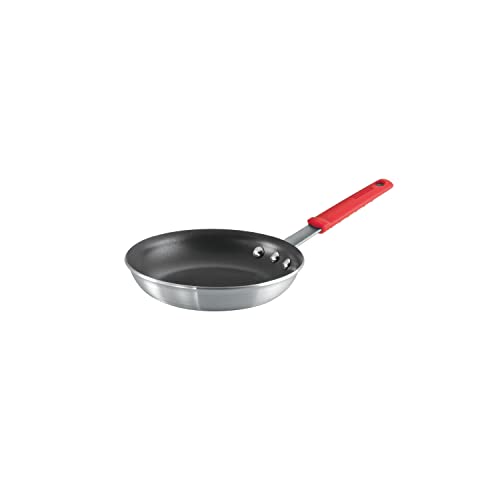
Tramontina Professional Nonstick 8-Inch Fry Pan
Heavy gauge aluminium built to commercial spec absorbs abuse a thin home skillet cannot. Eight inches handles two eggs, or one egg with room to fold an omelette. Slide the silicone sleeve onto the riveted steel handle for hob work, then pull it off before the pan goes in the oven at up to 400 F.
Pros
- Commercial grade construction at home cookware money
- Thick base resists warping on high heat
- Handle sleeve comes off for oven use
Cons
- Eight inches is oversized for a single egg
- Flat aluminium base skips induction hobs

de Buyer Mineral B Carbon Steel 8-Inch Fry Pan
Carbon steel behaves like cast iron while weighing considerably less, so flipping an egg one handed stays realistic. A beeswax finish protects the pan in transit and scrubs off before your first seasoning. Once that layer sets, eggs release cleanly and the steel tolerates heat that would wreck any coating.
Pros
- Lighter than cast iron with similar heat retention
- No coating that can scratch or wear through
- Runs on induction and in a very hot oven
Cons
- Needs seasoning before eggs release well
- Acidic ingredients strip the seasoning back
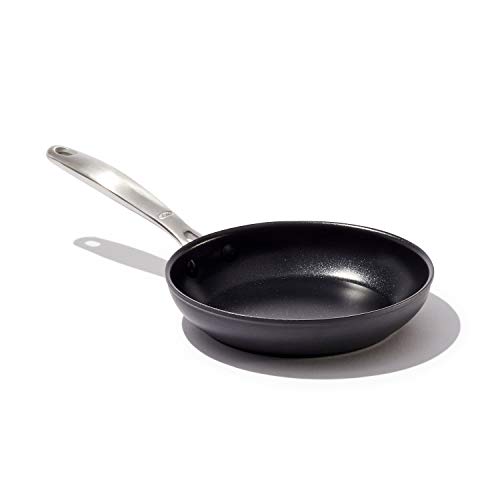
OXO Good Grips Pro Nonstick 8-Inch Frying Pan
Three coats of German nonstick sit over a hard anodized base, and the combination is rated dishwasher safe. A rolled rim pours without dribbling down the outside, which helps when a runny egg meets toast. Oven use runs to 430 F, enough to finish a small frittata under a low broiler.
Pros
- Coated surface rated for the dishwasher
- Rolled rim pours cleanly onto a plate
- Squeeze resistant handle stays comfortable when hot
Cons
- Aluminium base is not induction compatible
- Larger than one egg really needs
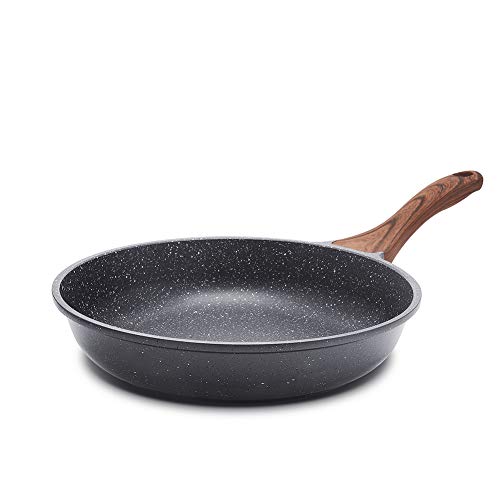
SENSARTE Nonstick Frying Pan Skillet, 8 Inch
A granite effect nonstick covers die cast aluminium, and a magnetic plate bonded underneath opens up induction hobs. Few pans this cheap manage that combination. Bakelite in a woodgrain finish keeps the handle cool without a sleeve. Oven use is out, so plan on hob cooking only.
Pros
- Cheapest induction compatible pan in this group
- Thick cast base resists warping over time
- Handle stays cool with no sleeve needed
Cons
- Bakelite handle rules out oven finishing
- Coating life falls short of the premium pans
What to look for
What size pan a single egg actually needs A cracked egg spreads to roughly five inches on a flat surface. Drop it into a 12 inch skillet and the white runs thin, sets at the rim instantly and tears on lifting. Six to seven inches keeps that white contained and thick enough to stay whole. Both the Cuisinart 622-16 and the Lodge L3SK3 measure 6.5 inches for this reason. Eight inch pans still cook one egg fine, and they leave room for a second or a folded omelette.
Nonstick, ceramic, cast iron or carbon steel Traditional nonstick offers the easiest release and the lowest heat ceiling. It fits people who cook eggs over a medium flame with butter. Ceramic coatings such as GreenPan’s Thermolon avoid PFAS entirely, trading away oven range and long term slipperiness. Cast iron and carbon steel carry no coating that can fail, which is why a Lodge or de Buyer pan lasts decades. Both demand seasoning and a little technique before eggs stop sticking.
Induction hobs, ovens and dishwashers Check your hob before anything else. Plain aluminium bases, including the Cuisinart, Tramontina and OXO pans, sit dead on induction because they are not magnetic. Lodge cast iron, de Buyer carbon steel and the Sensarte skillet all heat properly. Oven limits range from 350 F on the GreenPan Rio to no practical ceiling on bare iron. Dishwasher claims narrow the field too, since only the GreenPan and OXO pans here are rated for a machine.
Why eggs stick, and how to stop it Most sticking traces back to heat, not to the pan. On coated surfaces, warm the pan gently over medium and add fat before the egg. Running a dry nonstick pan hot degrades the coating quickly, which is how a good pan turns useless inside a year. Seasoned iron and carbon steel work the opposite way: heat the metal properly, add fat, then the egg. Metal utensils finish off coatings, so park a silicone or wooden spatula beside any nonstick pan.
Side by side
| # | Model | Diameter | Best for | Score | Price |
|---|---|---|---|---|---|
| 1 | Cuisinart 622-16 Chef’s Classic Nonstick Hard Anodized 6.5-Inch Skillet | 6.5 in | Best overall | 9.4 | Check price |
| 2 | Lodge L3SK3 6.5 Inch Cast Iron Skillet | 6.5 in | Best for crisp fried eggs | 9.2 | Check price |
| 3 | GreenPan Rio Ceramic Nonstick 7-Inch Frying Pan | 7 in | Best ceramic nonstick | 9.0 | Check price |
| 4 | Tramontina Professional Nonstick 8-Inch Fry Pan | 8 in | Best value | 8.8 | Check price |
| 5 | de Buyer Mineral B Carbon Steel 8-Inch Fry Pan | 8 in | Best for high heat | 8.6 | Check price |
| 6 | OXO Good Grips Pro Nonstick 8-Inch Frying Pan | 8 in | Best for dishwasher use | 8.3 | Check price |
| 7 | SENSARTE Nonstick Frying Pan Skillet, 8 Inch | 8 in | Best budget | 8.0 | Check price |
Questions worth asking
What size pan is best for one egg?
Six to seven inches. An egg spreads to about five inches, so a 6.5 inch base keeps the white thick and liftable. Eight inch pans work too and leave space for a second egg.
Is cast iron or nonstick better for fried eggs?
Nonstick forgives mistakes and releases an egg every time. Cast iron holds heat better, producing the crisp lacy edge some cooks want. Iron only behaves once the seasoning has built up, so it asks for more commitment.
Why do eggs stick to a nonstick pan?
Usually too little fat, too much heat, or a coating already worn by metal utensils. Preheat over medium, add butter or oil before the egg, and switch to silicone or wooden tools.
Can you put a small egg pan in the dishwasher?
Only when the maker says so. GreenPan Rio and OXO Good Grips Pro are both rated for it. Cuisinart advises hand washing, and cast iron or carbon steel must stay out, since detergent strips seasoning.
Do egg pans work on induction hobs?
Only those with a magnetic base. Lodge cast iron, de Buyer carbon steel and the Sensarte skillet all work. Plain aluminium pans such as the Cuisinart, Tramontina and OXO will not heat at all.
Is ceramic nonstick worth it for eggs?
Choose it if avoiding PFAS and PFOA matters to you. Release is excellent when new, though owners report ceramic losing its slipperiness sooner than traditional coatings. Low oven limits are the other trade off.
How long does a nonstick egg pan last?
Daily use with gentle heat and soft utensils should give a few years of clean release. Overheating an empty pan destroys a coating fastest. Bare iron and carbon steel have nothing to wear off.
Carbon steel vs cast iron for eggs: which should you choose?
Carbon steel heats faster and weighs less, making it easier to tilt and flip one handed. Cast iron holds heat longer, which helps crisp the edges. Both need seasoning and both dislike acidic ingredients.
Which small pan suits an omelette rather than a fried egg?
An eight inch pan with sloped sides. Tramontina Professional gives room to fold two eggs, and its 400 F rating covers a brief oven finish. A 6.5 inch pan is too tight for folding.
Our pick
Pick the Cuisinart 622-16 if you fry one or two eggs most mornings on gas or electric, because 6.5 inches is the right diameter and the hard anodized base heats evenly. Induction households should take the Lodge L3SK3, which also crisps edges in a way nonstick never manages. Anyone avoiding PFAS coatings should buy the GreenPan Rio and simply keep it below 350 F.
Dana Whitfield
Dana spent eight years buying and merchandising for a regional kitchenware retailer before moving into editorial work. She has handled thousands of SKUs across cookware, small appliances and kitchen organization, and focuses on the practical differences that matter once a product is actually in daily use.


