Which Shooting Ear Protection Actually Blocks Range Noise?
The Howard Leight Impact Sport Electronic Earmuff leads with NRR 22 dB and clear amplification for range commands. Walker’s Razor Slim Electronic Muffs sit lower against the head for rifle stock use. For maximum passive protection at loud indoor ranges, the 3M Peltor Optime 105 rates NRR 30 dB.
Three options stand out for range use. Howard Leight’s Impact Sport pairs NRR 22 dB with directional microphones that amplify commands and cut out the instant a shot fires. Walker’s Razor Slim sits lower against the head for shooters mounting a rifle stock. Shooters wanting maximum passive protection without batteries do well with the 3M Peltor Optime 105, rated NRR 30 dB.
Higher NRR is not automatically better once electronics enter the picture, since amplification changes how a shooter hears commands between shots. A high passive NRR suits a loud indoor range, while an electronic model with a lower NRR but good amplification suits someone who needs to hear an instructor. We compared published NRR ratings, amplification and cutoff response, battery type and stated fit, then weighed owner reports of comfort during long sessions.
What we recommend

Howard Leight by Honeywell Impact Sport Electronic Earmuff
Directional microphones amplify ambient sound, including range commands and footsteps, then cut output the instant gunfire crosses a safe threshold. NRR 22 dB suits outdoor ranges better than the loudest indoor bays. Two AAA batteries power the electronics, and auto shutoff after four hours of inactivity preserves battery life.
Pros
- Amplifies range commands and conversation clearly
- Auto shutoff saves battery between range trips
- Widely stocked, easy to find replacement parts
Cons
- NRR 22 dB is lower than top passive options
- Foam ear cushions wear out with heavy use

Walker’s Razor Slim Electronic Muffs
Low-profile cups sit closer to the head than bulkier electronic muffs, reducing interference when mounting a rifle stock against the cheek. Omnidirectional microphones amplify low-level sound and mute automatically above 85 decibels. NRR 23 dB, running on two AAA batteries.
Pros
- Low-profile cups clear a rifle stock better than bulky muffs
- Affordable relative to other electronic models
- Sound amplification helps with range commands
Cons
- Cushions sit tighter, less comfortable for glasses wearers
- Battery door can be fiddly to open

Peltor Sport Tactical 500
Bluetooth 4.1 pairs with a phone for calls or music between strings, layered on standard amplification and gunshot suppression. NRR 26 dB rates higher than most electronic models with amplification features. A rechargeable battery pack cuts the ongoing cost of disposable batteries at a busy range.
Pros
- Bluetooth adds phone audio without removing muffs
- NRR 26 dB is high for an electronic model
- Rechargeable battery cuts long-term cost
Cons
- Higher price than non-Bluetooth electronic muffs
- Bluetooth pairing adds a learning curve
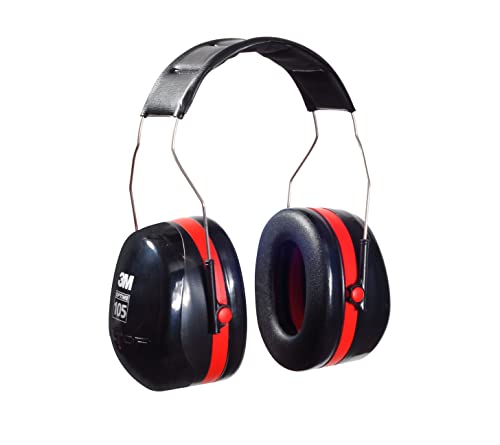
3M Peltor Optime 105
No batteries or electronics are involved, just dense foam-filled cups rated NRR 30 dB, among the highest passive ratings sold for range use. That suits loud indoor ranges or large-caliber rifles where hearing commands through the muff matters less. Ambient sound, including instructions, gets blocked along with gunfire.
Pros
- Highest passive NRR in this comparison
- No batteries to manage or replace
- Simple, durable design with no electronics to fail
Cons
- Blocks range commands along with gunfire
- Bulkier fit than slim electronic models

Axil GS Extreme Electronic Earplugs
In-ear plugs amplify ambient sound through a small microphone and speaker in each earpiece, then suppress output above safe gunfire levels. A low profile clears a rifle stock and eyewear without the bulk of over-ear muffs. NRR 25 dB, running on small replaceable batteries in each earpiece.
Pros
- Low profile clears rifle stocks and safety glasses easily
- Comfortable for long sessions compared to over-ear muffs
- Amplification helps hear range commands
Cons
- Smaller batteries need more frequent replacement
- Fit varies more by ear shape than over-ear muffs

Howard Leight Impact Pro Earmuffs
A higher-volume cup and dual-pivot headband combine electronic amplification with NRR 30 dB, among the highest ratings on an electronic model. That fills the gap where a straight NRR 22 dB muff falls short at a loud indoor range. Two AAA batteries power the amplification circuit.
Pros
- NRR 30 dB combines high passive and electronic protection
- Suited to loud indoor range environments
- Dual-pivot headband improves seal around ears
Cons
- Bulkier cups than slim-profile electronic muffs
- Higher price than base Impact Sport model

Howard Leight Leightning L3 Passive Earmuffs
Foam-lined cups rate NRR 30 dB with no batteries or electronics to manage. A lightweight headband suits shooters who want reliable protection without paying for amplification features they may not use. It also works well as a backup pair kept in a range bag.
Pros
- Lowest cost option with a high NRR rating
- No batteries needed
- Lightweight and simple to store as a backup
Cons
- Blocks range commands with no amplification
- Less premium fit than higher-priced passive models
Before you buy
What does NRR actually measure? Noise Reduction Rating estimates, in decibels, how much sound a hearing protector blocks under laboratory conditions. Real-world reduction usually falls short of the labeled NRR due to fit and consistency of wear, but a higher NRR still generally means more blocked sound.
Electronic vs passive protection for different range settings Electronic muffs like the Howard Leight Impact Sport amplify ambient sound and cut it during gunfire, useful where hearing an instructor matters. Passive muffs like the 3M Peltor Optime 105 skip electronics entirely and rely on dense foam for a higher raw NRR, suited to loud indoor bays where communication matters less.
Best low-profile options for rifle shooters A rifle stock pressed against a bulky earmuff cup can break the cheek weld needed for a consistent sight picture. Slimmer designs such as Walker’s Razor Slim or in-ear options like the Axil GS Extreme clear the stock without sacrificing much protection.
Stacking earplugs with earmuffs, and hunting use Combining foam earplugs under electronic earmuffs adds several more decibels of protection for indoor ranges with large-caliber rifles, though it also mutes amplification features. For hunting, electronic models such as the Axil GS Extreme or Howard Leight Impact Sport let a hunter hear game movement between shots in a way passive muffs cannot.
The lineup, side by side
| # | Model | NRR rating | Best for | Score | Price |
|---|---|---|---|---|---|
| 1 | Howard Leight by Honeywell Impact Sport Electronic Earmuff | 22 dB | Best overall | 9.4 | Check price |
| 2 | Walker’s Razor Slim Electronic Muffs | 23 dB | Best value | 9.1 | Check price |
| 3 | Peltor Sport Tactical 500 | 26 dB | Best for Bluetooth connectivity | 8.8 | Check price |
| 4 | 3M Peltor Optime 105 | 30 dB | Best for highest passive protection | 8.5 | Check price |
| 5 | Axil GS Extreme Electronic Earplugs | 25 dB | Best electronic earplugs | 8.2 | Check price |
| 6 | Howard Leight Impact Pro Earmuffs | 30 dB | Best for indoor ranges | 8.1 | Check price |
| 7 | Howard Leight Leightning L3 Passive Earmuffs | 30 dB | Best budget | 8.0 | Check price |
Frequently asked questions
What NRR is good for shooting ear protection?
Most published shooting guidance points to NRR 22 dB or higher for outdoor ranges, and NRR 28 to 30 dB for louder indoor ranges or large-caliber rifles.
Electronic earmuffs vs earplugs, which is better for shooting?
Over-ear electronic muffs like the Howard Leight Impact Sport go on and off quickly between strings, while electronic plugs like the Axil GS Extreme clear a rifle stock and safety glasses more easily.
Can you wear earplugs and earmuffs together at the range?
Yes. Stacking foam plugs under earmuffs adds extra decibels of reduction and is common at loud indoor ranges, though it can muffle electronic amplification features.
Do electronic earmuffs let you hear range commands?
Yes. Models like the Howard Leight Impact Sport and Peltor Sport Tactical 500 use microphones to amplify ambient sound, then cut output the instant a gunshot is detected.
What is the highest NRR rated ear protection for shooting?
Among common options, the 3M Peltor Optime 105 and Howard Leight Leightning L3 both carry NRR 30 dB, near the top of what is commonly sold for range use.
Is Bluetooth ear protection worth it for shooting?
The Peltor Sport Tactical 500 adds Bluetooth for calls and audio between strings, a convenience feature rather than a protection upgrade, since NRR still comes from the cup and foam design.
What ear protection works best for indoor ranges?
Indoor ranges amplify gunfire in an enclosed space, so higher-NRR options like the Howard Leight Impact Pro or 3M Peltor Optime 105 suit that environment better than lower-NRR outdoor-focused muffs.
How long do batteries last in electronic shooting earmuffs?
Battery life depends on the model and usage, but AAA-powered muffs like the Howard Leight Impact Sport include an auto shutoff after inactivity specifically to extend battery life between range trips.
What is the best ear protection for a beginner going to an indoor range for the first time?
A high-NRR electronic model like the Howard Leight Impact Pro covers both the loud environment and the need to hear an instructor’s corrections.
Do electronic earmuffs work as well as passive muffs for pure noise blocking?
Not always. Passive muffs like the 3M Peltor Optime 105 or Leightning L3 reach NRR 30 dB with simple foam, while most electronic models trade a few decibels of NRR for the ability to amplify range commands.
The bottom line
For most range trips, the Howard Leight Impact Sport Electronic Earmuff balances NRR 22 dB protection with clear amplification of range commands. Shooters at loud indoor ranges should lean toward the higher NRR of the 3M Peltor Optime 105 or Howard Leight Impact Pro, while rifle shooters needing a low profile do best with Walker’s Razor Slim or the Axil GS Extreme plugs.
Sierra Daniels
Sierra's background is in landscape design and nursery retail. She focuses on lawn and garden equipment, outdoor furniture and gear durability, weighing published specs against how materials actually hold up outside.