Which Sewing Machine Should a First-Timer Buy?
Brother CS7000X suits most beginners best, pairing 70 stitches with a wide table for larger projects. Singer Heavy Duty 4423 handles denim and canvas better than any machine here. Brother XM2701 costs less and still covers basic garment repairs for occasional sewists.
Brother CS7000X fits new sewists who want room to grow, since 70 built-in stitches and a wide extension table handle projects beyond basic hems. Threading takes less effort thanks to the drop-in bobbin. The LCD menu does add a small learning curve compared with a dial machine.
Stitch count, bobbin type, and frame material separate these machines more than price does. We compared listed specifications and owner feedback against common use cases like repairs, quilting, and heavier fabric.
The best picks, ranked
Brother CS7000X
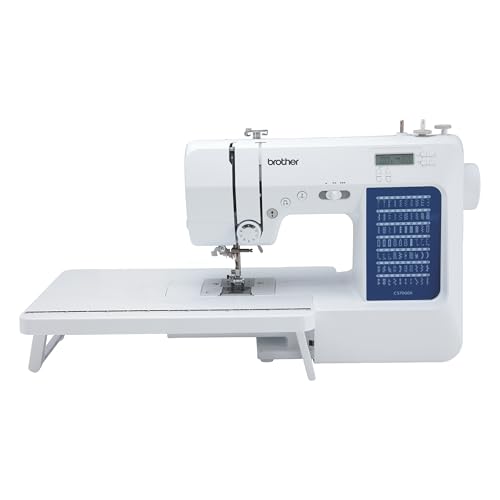
CS7000X packs 70 built-in stitches and 9 presser feet into a computerized frame with a backlit LCD screen for stitch selection. A wide table attachment snaps on for quilts and larger garments, and the drop-in bobbin simplifies threading. An automatic needle threader also speeds up setup.
Pros
- Wide table supports quilting and larger fabric pieces
- LCD screen simplifies stitch and length selection
- Automatic needle threader speeds up setup
Cons
- More buttons and menus than a beginner may expect
- Heavier than basic mechanical models

Singer Heavy Duty 4423
Singer built the 4423 around a stainless steel bedplate and a metal interior frame rated for 1,100 stitches per minute. It handles denim, canvas, and multiple fabric layers that can jam lighter machines. A simple turn dial handles stitch selection instead of a digital menu.
Pros
- Metal frame reduces vibration on thick seams
- High top speed for a mechanical machine
- Simple dial controls with no menus to learn
Cons
- Fewer decorative stitch options than computerized models
- Louder operation than lighter machines

Brother XM2701
At roughly 12 pounds, XM2701 is light enough to carry between a sewing table and a storage closet. It includes 27 stitch functions, 8 presser feet, and a free arm for cuffs and sleeves. A see-through cover over the top drop-in bobbin makes thread checks quick.
Pros
- Lightweight and easy to store or transport
- Free arm helps with sleeves and pant hems
- Clear bobbin cover makes thread level easy to check
Cons
- Plastic housing feels less sturdy than metal-frame machines
- Basic buttonhole style compared to higher-end models

Janome HD3000
Janome reinforces the HD3000 with an aluminum body and a heavy-duty interior frame built for repeated use on denim and upholstery fabric. It offers 18 stitches, a top-loading bobbin, and an extra-high presser foot lift for bulky seams. A hard case cover comes included for storage.
Pros
- Aluminum body withstands heavy, repeated sewing sessions
- Extra-high presser foot lift clears thick seams
- Hard case protects the machine during storage
Cons
- Stitch variety is limited next to computerized options
- Bobbin winding takes an extra manual step
Singer Start 1304
Start 1304 strips sewing down to 6 built-in stitches and a preset stitch length, aimed at people who mainly need basic hems and repairs. Its lightweight plastic housing and built-in carrying handle make it easy to move around a small apartment. A free arm accommodates cuffs and pant legs.
Pros
- Minimal controls suit someone sewing for the first time
- Compact and light enough to store in a closet
- Free arm handles cuffs and hems
Cons
- No adjustable stitch length limits fabric versatility
- Not built for denim or multiple fabric layers
Brother CS6000i
CS6000i pairs 60 built-in stitches with a wide table and 9 presser feet, including a quilting foot for guided straight lines. It runs up to 850 stitches per minute and includes an automatic needle threader. An LCD panel displays stitch width and length settings while sewing.
Pros
- Wide table and quilting foot suit larger quilting projects
- Automatic needle threader saves setup time
- LCD panel shows current stitch settings
Cons
- Slower top speed than the CS7000X
- Extension table adds bulk when packing the machine away
Janome 2212
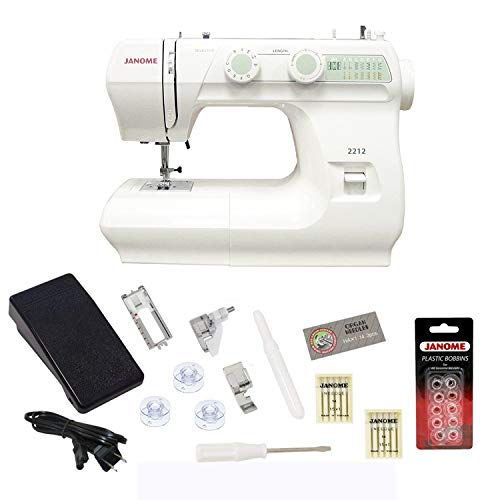
Janome keeps the 2212 to 12 built-in stitches and a single dial for stitch selection, making it approachable for a first-time sewist or a supervised child. It weighs about 14 pounds and uses a front-loading bobbin case. A free arm handles small cylindrical items like sleeves.
Pros
- Single dial keeps stitch selection simple for new users
- Lightweight build suits younger or first-time sewists
- Free arm works well for sleeves and cuffs
Cons
- Front-loading bobbin requires more manual handling
- Limited stitch count for advanced projects later on
How to pick the right one
What Makes a Sewing Machine Beginner-Friendly A beginner-friendly machine keeps controls simple without cutting basic project variety. Stitch count matters less than how easily you reach the stitches you actually use, like straight, zigzag, and buttonhole. Bobbin systems split into two types, top drop-in and front-loading, and drop-in versions are easier to thread by sight. Frame material affects vibration, since a metal interior frame stays steadier on thick fabric than an all-plastic housing. Weight matters too if the machine moves between a table and a closet shelf.
Mechanical vs Computerized Machines Dials handle stitch length and width on mechanical machines like the Singer Heavy Duty 4423, which keeps the learning curve short. An LCD screen and automatic needle threading come standard on computerized models such as the Brother CS7000X and CS6000i. Those models also pack in more built-in stitches, useful once decorative work or garment construction goes beyond hems. More buttons and occasional menu navigation are the tradeoff, which can slow down a first project. Owners comparing both types often say dial machines feel more intuitive at first, while screen-based models pay off once stitch variety becomes useful.
Choosing a Machine for Denim, Canvas, or Quilting Denim, canvas, and stacked fabric layers strain a needle and motor more than cotton quilting fabric does. A metal interior frame, like the one inside the Singer 4423 and Janome HD3000, resists skipped stitches and vibration under that strain. Quilting rewards table space over raw power, so a wide extension table, included with the Brother CS6000i, matters more than stitch count. Presser foot lift height also decides how easily a machine clears bulky, overlapping seams. Checking both frame material and table size before buying avoids a mismatch once a heavier project starts.
Best Machines for Kids and First-Time Sewists Fewer stitch options, not more, suit a child or an absolute beginner, since a single dial is easier to explain than a stitch menu. Models under 15 pounds, like the Janome 2212 and Singer Start 1304, fit better on a small desk and are easier for a child to carry with supervision. Basic repairs and hemming rarely need more than a handful of stitch types, so extra features often go unused early on. Renters or occasional sewists in small apartments may value a compact footprint over speed or stitch count. Starting simple also lowers the odds of feeling overwhelmed before thread tension and seam allowance become familiar.
How they compare
| # | Model | Stitch count | Best for | Score | Price |
|---|---|---|---|---|---|
| 1 | Brother CS7000X | 70 built-in stitches | Best overall | 9.4 | Check price |
| 2 | Singer Heavy Duty 4423 | 23 built-in stitches | Best for denim and heavy fabrics | 9.1 | Check price |
| 3 | Brother XM2701 | 27 built-in stitch functions | Best value | 8.9 | Check price |
| 4 | Janome HD3000 | 18 built-in stitches | Best for heavy-duty durability | 8.7 | Check price |
| 5 | Singer Start 1304 | 6 built-in stitches | Best budget | 8.5 | Check price |
| 6 | Brother CS6000i | 60 built-in stitches | Best for quilting | 8.2 | Check price |
| 7 | Janome 2212 | 12 built-in stitches | Best for first-time sewists | 8.0 | Check price |
Common questions
What is the best sewing machine for a beginner?
Brother CS7000X suits most beginners, thanks to 70 stitches and a wide table for larger projects. Owners who only need basic repairs may prefer a simpler mechanical model instead.
How many stitches does a beginner actually need?
Straight stitch, zigzag, and buttonhole cover most early projects, so 12 to 27 stitches is plenty for a first machine. Extra stitch counts become useful later for decorative or garment work.
Is a mechanical or computerized machine better for beginners?
Mechanical machines like the Singer Heavy Duty 4423 have a shorter learning curve, since dials replace on-screen menus. Computerized machines add convenience features like automatic threading once the basics feel familiar.
Can the Singer Heavy Duty 4423 sew denim and canvas?
Yes, its metal interior frame and stainless steel bedplate are built for denim, canvas, and multiple fabric layers. Top speed reaches 1,100 stitches per minute, faster than most beginner mechanical machines.
What is a good sewing machine for a kid or first-timer?
Janome 2212 keeps stitch selection to a single dial and 12 stitches, which is easier for a child to follow under supervision. Its lightweight build also makes it simple to carry and store.
Brother CS6000i vs Brother CS7000X, which is better for beginners?
CS7000X has more built-in stitches and a similarly wide table, making it the stronger all-around pick. CS6000i sits earlier in Brother’s lineup, with a lower top speed but a dedicated quilting foot included as standard.
Does a beginner machine need a wide table for quilting?
A wide table supports the extra fabric bulk in quilting projects, which is why the Brother CS6000i and CS7000X both include one. Machines without an extension table, like the Janome 2212, work fine for garments and repairs but feel cramped on quilt-sized pieces.
How much does a beginner sewing machine weigh?
Lightweight models like the Brother XM2701 weigh around 12 pounds, while metal-frame machines like the Janome HD3000 weigh noticeably more. Weight is worth checking if the machine needs to move between a table and storage regularly.
What is the best sewing machine for quilting on a budget?
Brother CS6000i offers a wide table and a dedicated quilting foot at a lower price than the CS7000X. Its 850 stitch-per-minute top speed is slower, but that rarely matters for guided quilting seams.
Our take
Brother CS7000X earns the top spot for most new sewists, pairing 70 stitches with a wide table and an automatic needle threader that speeds up setup on every project. Anyone sewing mostly denim or canvas should look at the Singer Heavy Duty 4423 instead, since its metal frame and higher top speed handle thick fabric more reliably. Sewists on a tight budget who only need basic hems will find the Singer Start 1304 sufficient without paying for features they won’t use.
Dana Whitfield
Dana spent eight years buying and merchandising for a regional kitchenware retailer before moving into editorial work. She has handled thousands of SKUs across cookware, small appliances and kitchen organization, and focuses on the practical differences that matter once a product is actually in daily use.