Running Belts That Carry Gear Without Sliding Around
The SPIbelt Running Belt is the strongest overall pick, with a no-bounce pouch that holds a phone securely without sliding. The FlipBelt Zipper Running Belt suits runners who want more structured phone storage across the whole waist, while the Nathan Zephyr Fire Hydration Belt fits anyone who wants water bottles built into the same belt.
The SPIbelt Running Belt leads this list for an expandable pouch design that holds a phone securely without the bounce common on looser belts. Its single pouch offers less total storage than a full zippered belt that wraps the entire waist. Runners who want more capacity or built-in hydration should check the alternatives further down this list.
We compared bounce control, pocket capacity, hydration compatibility and closure style across seven running belts rather than ranking by brand recognition.
How to pick the right one
What actually stops a running belt from bouncing A flat, snug fit against the body reduces bounce more than a loose waistband ever will, regardless of brand. Pocket structure, whether an expandable pouch, a full zippered wrap or a flat panel, affects how items settle during movement. Hydration-equipped belts add convenience but also add weight that increases bounce compared to hydration-free designs. Closure hardware like buckles can dig into skin on longer runs if the fit is not dialed in correctly.
Storage-focused belts versus hydration belts The SPIbelt, FlipBelt and Naked Running Band all skip hydration entirely, focusing instead on secure, low-bounce storage for a phone and small items. Nathan’s Zephyr Fire and CamelBak’s Flash Belt add bottles directly to the belt, removing the need for a separate hydration vest on shorter runs. Choosing between these depends on run distance and climate, since hydration-free belts work fine for most runs under an hour.
Single bottle versus dual bottle hydration CamelBak’s Flash Belt uses one larger 17 ounce bottle, while Nathan’s Zephyr Fire splits a similar general capacity across two smaller 10 ounce bottles. A single bottle can feel less balanced on one side of the waist, while dual bottles distribute weight more evenly but add slightly more total bounce. Runners should try both styles loaded with water, not empty, before deciding which fits their stride best.
Race day versus daily training belts UltrAspire’s Comrade 2.0 organizes race-specific gear like bibs and gels into separate small pockets rather than one large pouch. Everyday training belts like the SPIbelt or FlipBelt prioritize simple, single-pocket storage for a phone and keys instead. Runners who race occasionally may want a dedicated race belt separate from the belt used for daily training runs.
Our top picks

SPIbelt Running Belt
An expandable pouch stretches to fit a phone, keys and a gel without feeling bulky when empty. An adjustable elastic waistband sits flat against the body to reduce bounce during faster running. A reflective logo adds minor visibility in low light without needing a separate safety light.
Pros
- Expandable pouch fits a phone without excess bulk
- Flat waistband design reduces bounce at a run
- Reflective logo adds minor low-light visibility
Cons
- Single pouch offers less total storage than full zippered belts
- No hydration capability built in

FlipBelt Zipper Running Belt
A tubular design wraps a zippered pocket around the entire waist rather than concentrating storage in one spot. This spreads the weight of a phone, keys and cards more evenly than a single front pouch. Moisture-wicking fabric sits directly against skin without a separate liner.
Pros
- Full-wrap design spreads weight more evenly than a single pouch
- Moisture-wicking fabric stays comfortable against skin
- Zippered closure keeps items secure during movement
Cons
- Takes slightly longer to access items than an open pouch
- No hydration capability built in

Nathan Zephyr Fire Hydration Belt
Two included 10 ounce bottles sit in angled holsters positioned to reduce bounce during running. A center pouch holds a phone or gels between the two bottles. Reflective accents on the bottle holsters add visibility similar to a dedicated safety light.
Pros
- Included bottles remove the need for a separate hydration pack
- Angled holsters reduce bottle bounce while running
- Reflective accents add some low-light visibility
Cons
- Bulkier than hydration-free belts like the SPIbelt or FlipBelt
- Bottle weight adds more bounce than a flasks-only design

Amphipod AirFlow Micro-Pack Belt
A mesh-backed pouch allows more airflow against the lower back than a solid fabric pouch design. A ventilated waistband reduces sweat buildup during longer runs in warm weather. Reflective trim along the edges adds visibility without a separate accessory.
Pros
- Mesh backing improves airflow in warm weather
- Ventilated waistband reduces sweat buildup on long runs
- Reflective trim adds visibility without extra gear
Cons
- Storage capacity is smaller than full-wrap belts like the FlipBelt
- No hydration capability built in
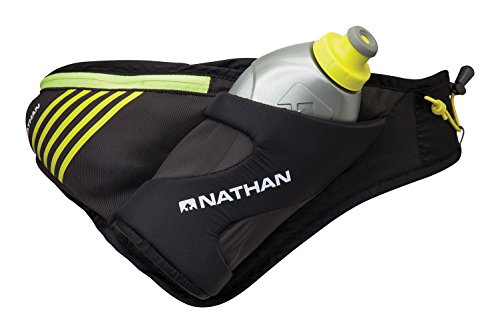
CamelBak Flash Belt
A single 17 ounce Podium bottle holds more water per bottle than the two smaller bottles on the Nathan Zephyr Fire belt. A front pocket balances the bottle’s weight on the opposite side of the waist. The bottle’s valve allows one-handed drinking without needing to stop and unscrew a cap.
Pros
- Single larger bottle holds more total water than dual small bottles
- One-handed valve allows drinking without stopping
- Front pocket balances bottle weight across the waist
Cons
- Single-side bottle placement can feel less balanced than dual bottles
- Bulkier than a hydration-free belt for shorter runs
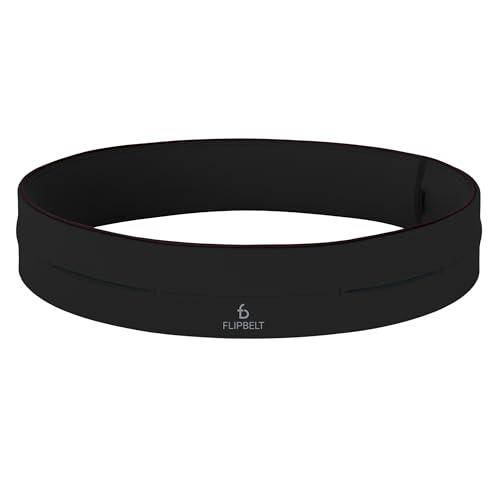
Naked Running Band
A flat pocket panel replaces the bulkier pouch or zippered designs used elsewhere on this list. No buckles or zippers means nothing to dig into the skin during a long run. The minimalist design holds a phone, gels and a key without adding noticeable bulk.
Pros
- Flat design avoids hardware digging into the skin
- Minimalist build adds very little bulk at the waist
- Holds essentials without the structure of a zippered belt
Cons
- Less structured than a zippered belt for organizing multiple items
- No hydration capability built in
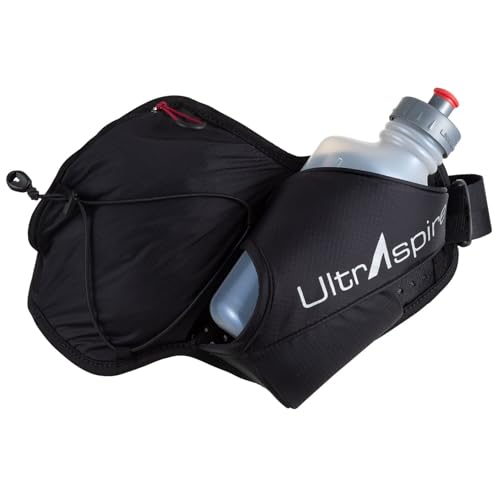
UltrAspire Comrade 2.0 Race Belt
Multiple small pockets organize gels, a race bib and a key separately rather than tossing everything into one pouch. A lightweight build keeps the belt from adding noticeable weight during a race. Race bib loops attach a number directly to the belt instead of pinning it to a shirt.
Pros
- Multiple pockets keep race gear organized separately
- Bib loop attachment skips pinning a number to a shirt
- Lightweight build suits race-day minimalism
Cons
- Less everyday storage than training-focused belts like the FlipBelt
- Smaller pockets fit less than a single large expandable pouch
Compared at a glance
| # | Model | Storage | Best for | Score | Price |
|---|---|---|---|---|---|
| 1 | SPIbelt Running Belt | 1 expandable pouch | Best Overall/No-Bounce | 9.0 | Check price |
| 2 | FlipBelt Zipper Running Belt | Full-wrap zippered pocket | Best for Phone Storage | 8.8 | Check price |
| 3 | Nathan Zephyr Fire Hydration Belt | 2 included, 10 ounces each | Best Hydration with Bottles | 8.6 | Check price |
| 4 | Amphipod AirFlow Micro-Pack Belt | 1 mesh-backed pouch | Best Breathable Mesh | 8.4 | Check price |
| 5 | CamelBak Flash Belt | 1 included, 17 ounces | Best Single-Bottle Hydration | 8.5 | Check price |
| 6 | Naked Running Band | Flat pocket panel | Best Minimalist Flat-Pocket Design | 8.3 | Check price |
| 7 | UltrAspire Comrade 2.0 Race Belt | Multiple small pockets | Best Race Day Gear Storage | 8.4 | Check price |
Frequently asked questions
Do running belts bounce during a run?
A well-fitted belt with a flat panel or expandable pouch, like the SPIbelt or Naked Running Band, bounces far less than a loose, poorly adjusted belt regardless of brand.
Can a running belt hold a large phone?
Most expandable pouches, like the one on the SPIbelt, stretch to fit larger phones, though checking the stated pocket dimensions against a specific phone model avoids a tight fit.
What is the difference between a running belt and a hydration belt?
A standard running belt, like the FlipBelt, stores items without water, while a hydration belt, like the Nathan Zephyr Fire or CamelBak Flash Belt, includes one or more water bottles.
How many ounces of water do running hydration belts hold?
The CamelBak Flash Belt includes one 17 ounce bottle, while the Nathan Zephyr Fire splits a similar total across two 10 ounce bottles.
Are zippered running belts more secure than open pouches?
A zippered design, like the FlipBelt, generally secures items more firmly than an open or snap-closure pouch, though it can take slightly longer to access items mid-run.
What should I look for in a race day belt?
A race belt like the UltrAspire Comrade 2.0 should include a bib attachment loop and separate small pockets for gels, keeping race gear organized without bulk.
Do running belts work for activities besides running?
Yes. Belts like the SPIbelt or FlipBelt work equally well for hiking, cycling or travel, since their storage and bounce control apply beyond running specifically.
Is a minimalist running belt enough for daily training?
A minimalist belt like the Naked Running Band covers phone and key storage for most daily training runs, though longer runs may call for added hydration capacity.
How tight should a running belt fit?
A running belt should sit snug enough to stay flat against the body without bouncing, but not so tight that it restricts breathing during harder efforts.
The verdict
For most runners who want secure phone storage without bounce, the SPIbelt Running Belt is the strongest overall pick. Runners who need more structured storage across the whole waist should choose the FlipBelt Zipper Running Belt instead, and anyone running longer distances without a water source nearby should go with the Nathan Zephyr Fire Hydration Belt.
Derek Holt
Derek has a background coaching recreational and amateur athletes and has worked the sales floor at specialty fitness retailers. He focuses on equipment durability, ergonomics and realistic use cases rather than marketing claims.

