Running Backpacks Built to Carry Gear Without Bouncing
The Osprey Daylite Plus 20 is the strongest all-around pick, with a stable harness and enough capacity for a commute or training run. The Salomon Trailblazer 10 suits trail runners who need a closer, bounce-free fit, while the CamelBak Octane 10 fits anyone who wants a built-in hydration reservoir.
The Osprey Daylite Plus 20 leads this list for balancing enough capacity for a commute or gym bag with a harness stable enough for a light run. Its 20 liter size runs larger than a minimalist trail vest, which can feel like excess bulk on shorter runs. Trail runners and anyone who wants hydration built in should check the options further down this list.
We compared stated capacity, harness and strap design, hydration compatibility and the activity each pack is built around rather than ranking by brand recognition.
The shortlist, ranked

Osprey Daylite Plus 20
A 20 liter main compartment fits a change of clothes, a light jacket and daily essentials for a run commute. A padded, ventilated back panel reduces sweat buildup against the back during movement. External compression straps cinch the load down so it rides closer to the body at a run.
Pros
- Enough capacity for a run commute with a change of clothes
- Ventilated back panel reduces sweat buildup
- Compression straps keep the load from bouncing
Cons
- Larger and heavier than minimalist trail running packs
- No included hydration reservoir

Salomon Trailblazer 10
A vest-style harness wraps closer to the torso than a standard backpack strap system, cutting down on bounce over technical trail terrain. Front shoulder pockets hold a phone and soft flasks within reach without stopping. A 10 liter capacity covers a long trail run without the bulk of a commuter pack.
Pros
- Vest-style fit reduces bounce on technical trails
- Front pockets keep flasks and a phone accessible mid-run
- Lighter and more compact than commuter-style backpacks
Cons
- Lower capacity than the Osprey Daylite Plus for carrying extra gear
- Less structured storage for non-running use

CamelBak Octane 10
A 1.5 liter Crux hydration reservoir ships included rather than sold separately, unlike several packs on this list. A hip belt with a zippered pocket holds gels or a key without opening the main compartment. Exterior straps secure trekking poles or a light jacket during longer training runs.
Pros
- Hydration reservoir ships included, unlike most competitors here
- Hip belt pocket keeps gels and small items accessible
- Exterior straps secure poles or a light jacket
Cons
- Less structured main compartment than commuter-style packs
- Fit runs closer to a vest than a traditional backpack
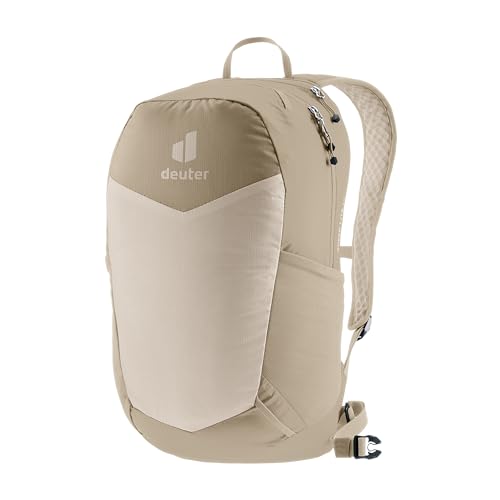
Deuter Speed Lite 13
An empty weight under 1 pound keeps this pack from adding noticeable bulk during long runs or fast hikes. A 13 liter capacity splits the difference between a minimalist vest and a full commuter bag. Mesh shoulder straps breathe better than the padded foam straps on heavier packs.
Pros
- Very light empty weight for its capacity class
- Mesh straps breathe better than foam-padded alternatives
- Capacity works for both trail runs and day hikes
Cons
- Less padding than commuter packs for a laptop or heavy loads
- Fewer external pockets than vest-style running packs

The North Face Jester
A padded laptop sleeve and structured main compartment suit runners who commute to an office rather than a trailhead. A 27 liter capacity holds a change of clothes, shoes and work items in one bag. Mesh back panel venting helps on warmer commute days even without a running-specific harness.
Pros
- Large capacity fits a full change of clothes and work gear
- Padded laptop sleeve suits a run-to-office commute
- Structured shape holds items steadier than a soft vest pack
Cons
- No hydration reservoir compatibility
- Bulkier and heavier than any running-specific pack here

High Sierra Pathway 2.0 30L
A 30 liter capacity gives this pack the most storage on this list, suited to longer trips rather than a quick training run. An adjustable torso length helps it fit a range of body sizes without a specialty running cut. Padded shoulder straps and a hip belt distribute weight for longer carries.
Pros
- Lowest cost pack on this list with real capacity
- Adjustable torso fit suits a range of body sizes
- Hip belt helps distribute weight on longer carries
Cons
- Bulkiest option here for a typical training run
- Less streamlined fit than running-specific vests and packs

Osprey Tempest 20
A women’s-specific harness shapes the shoulder straps and hip belt differently than the unisex Daylite Plus, improving fit for a narrower frame. A 20 liter capacity matches the Daylite Plus for commuting or day-trip use. A rain cover stows in a dedicated pocket for unpredictable weather.
Pros
- Harness shape fits a narrower frame more securely
- Included rain cover handles unpredictable weather
- Capacity matches larger commuter packs on this list
Cons
- Not available in a men’s-specific equivalent fit
- No included hydration reservoir
Compared at a glance
| # | Model | Capacity | Best for | Score | Price |
|---|---|---|---|---|---|
| 1 | Osprey Daylite Plus 20 | 20 liters | Best Overall | 9.0 | Check price |
| 2 | Salomon Trailblazer 10 | 10 liters | Best for Trail Running | 8.8 | Check price |
| 3 | CamelBak Octane 10 | 10 liters, plus reservoir | Best Hydration Capacity | 8.7 | Check price |
| 4 | Deuter Speed Lite 13 | 13 liters | Best Lightweight | 8.5 | Check price |
| 5 | The North Face Jester | 27 liters | Best for Commuting | 8.3 | Check price |
| 6 | High Sierra Pathway 2.0 30L | 30 liters | Best Budget | 8.0 | Check price |
| 7 | Osprey Tempest 20 | 20 liters | Best Women’s Fit | 8.6 | Check price |
What to look for
What makes a backpack actually work for running Harness and strap design decide how much a pack bounces at a run, which matters more than total capacity for most buyers. Capacity needs vary widely, from a 10 liter trail vest to a 30 liter commuter bag carrying a change of clothes. Hydration compatibility, whether a sleeve, included reservoir or none at all, should match how far and how often someone trains. Breathable back panels and straps cut down on sweat buildup during longer efforts.
Trail-focused packs versus commuter backpacks Salomon’s Trailblazer 10 and CamelBak’s Octane 10 use a closer, vest-like fit built for technical trail movement rather than carrying a laptop. The North Face Jester and High Sierra Pathway 2.0 trade that close fit for real capacity and structure suited to a run commute or office day. Picking between these two styles comes down to whether the pack needs to move with a runner or simply get gear from one place to another.
Best for hydration-focused training CamelBak’s Octane 10 stands out by including a reservoir rather than selling it as a separate accessory, which matters for buyers who do not already own one. Salomon’s Trailblazer and Deuter’s Speed Lite both accept a bladder but require buying one separately. Runners training in hot climates or on long unsupported routes should weigh reservoir capacity alongside pack capacity before choosing.
Fit considerations for different body types Osprey’s Tempest 20 uses a women’s-specific harness shape that differs from the unisex Daylite Plus in shoulder strap curve and hip belt placement. High Sierra’s Pathway 2.0 relies on an adjustable torso length instead of a gender-specific cut to fit more bodies with one design. Trying a pack loaded with some weight, not just empty, gives a far more accurate read on fit than trying it on bare.
Questions worth asking
What capacity running backpack do I need for a daily run commute?
A 20 to 27 liter pack, like the Osprey Daylite Plus 20 or The North Face Jester, generally fits a change of clothes, shoes and work items for a run commute.
Are trail running vests the same as running backpacks?
Not exactly. Vest-style packs like the Salomon Trailblazer 10 hug the torso closer than a traditional backpack, trading some capacity for reduced bounce on technical terrain.
Do I need a hydration reservoir included or can I buy one separately?
Some packs, like the CamelBak Octane 10, include a reservoir, while others like the Salomon Trailblazer 10 or Deuter Speed Lite 13 are reservoir compatible but sold without one.
How much does a running backpack typically weigh empty?
Lightweight packs like the Deuter Speed Lite 13 weigh under 1 pound empty, while larger commuter packs like The North Face Jester weigh noticeably more due to their structured frame and padding.
Is a women’s-specific running backpack necessary?
Not strictly necessary, but a women’s-specific harness, like the one on the Osprey Tempest 20, often fits a narrower frame more securely than a unisex design.
Can a running backpack carry a laptop for a work commute?
Only packs with a padded laptop sleeve, like The North Face Jester, are built for that. Minimalist trail packs like the Salomon Trailblazer generally are not.
What is the most affordable running backpack with real capacity?
The High Sierra Pathway 2.0 30L offers the lowest cost option on this list while still including a padded hip belt and adjustable torso fit.
Do running backpacks bounce less than regular daypacks?
Packs with a vest-style or compression-strap design, like the Salomon Trailblazer 10 or Osprey Daylite Plus 20, generally bounce less at a run than an unstructured daypack.
How do I know what size running backpack fits my torso?
Measuring torso length and checking it against each brand’s size chart is more reliable than guessing by overall height, especially for adjustable-fit packs like the High Sierra Pathway 2.0.
Final word
For most runners who need one pack that handles a commute and an occasional training run, the Osprey Daylite Plus 20 offers the strongest balance of capacity and stability. Trail runners chasing a closer, bounce-free fit should choose the Salomon Trailblazer 10 instead, and anyone who wants hydration built in without buying a separate reservoir should go with the CamelBak Octane 10.
Derek Holt
Derek has a background coaching recreational and amateur athletes and has worked the sales floor at specialty fitness retailers. He focuses on equipment durability, ergonomics and realistic use cases rather than marketing claims.


