Which Indoor Cycling Bike Fits Your Space and Budget?
Peloton leads with its class library and quiet magnetic resistance, Schwinn’s IC4 and Bowflex’s C6 pair that same resistance type with any fitness app, and Yosuda covers subscription-free budgets with friction resistance. Resistance type and subscription requirements shape the right pick more than brand name.
Peloton suits riders who want a built-in touchscreen, a deep class library, and resale value, even though core features sit behind a monthly subscription. Riders who want that same magnetic-resistance feel without a subscription lock should look at Schwinn’s IC4 or Bowflex’s C6 instead, and Yosuda covers a subscription-free budget setup.
Indoor cycling bikes split mainly between subscription-gated smart bikes and screen-free models built around third-party apps, and that split changes both the upfront and ongoing cost. We compared resistance type, flywheel weight, display and connectivity, and subscription requirements across all seven.
What we recommend

Peloton Bike
A 21.5-inch touchscreen anchors the Peloton Bike, streaming live and on-demand classes through a required monthly subscription. Magnetic resistance keeps pedal noise low compared to friction-based flywheels. Toe cages and a road-style saddle ship standard, though many owners swap the saddle within the first few rides.
Pros
- Large touchscreen streams live and on-demand classes
- Magnetic resistance stays quiet in shared living spaces
- Strong resale value compared to rival smart bikes
Cons
- Monthly subscription required to unlock the full class library
- Stock saddle feels uncomfortable to many riders past week one

Schwinn IC4 Indoor Cycling Bike
A 40-pound flywheel gives Schwinn’s IC4 a road-like pedal feel, paired with magnetic resistance instead of a built-in screen. Bluetooth connects it to Peloton’s app, Zwift, and other platforms, so no single subscription is required. Dual-link pedals accept SPD cleats or standard cycling shoes.
Pros
- Works across multiple apps instead of one locked subscription
- Dual-link pedals fit SPD cleats or standard shoes
- Heavier flywheel smooths out the pedal stroke
Cons
- No built-in screen, so a tablet or phone mount is needed
- Setup and calibration take longer than plug-and-play bikes
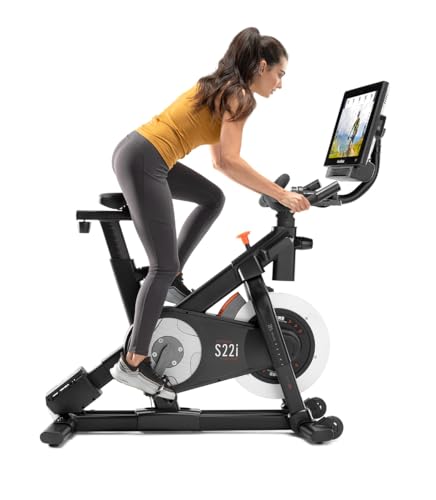
NordicTrack Commercial S22i Studio Cycle
Motorized incline lets the S22i simulate outdoor grades from negative 10 percent up to 20 percent. A rotating 22-inch touchscreen streams iFit classes filmed on real outdoor routes. Resistance adjusts automatically during trainer-led workouts, without manual button presses.
Pros
- Motorized incline mimics real outdoor road grades
- Rotating screen doubles for off-bike workouts too
- Auto-adjusting resistance follows instructor-led rides
Cons
- iFit subscription needed to unlock incline and class features
- Footprint runs larger than standard indoor bikes

Yosuda Indoor Cycling Bike
A friction knob handles resistance on Yosuda’s bike instead of a magnetic or motorized system. Time, speed, distance, and calories show on a basic LCD monitor with no app requirement. Its 35-pound flywheel and adjustable seat suit riders new to indoor cycling on a smaller budget.
Pros
- No subscription or app needed to start riding
- Friction knob gives simple, direct resistance control
- Costs less than magnetic or smart bike options
Cons
- Friction pads wear down and need eventual replacement
- Resistance adjustment feels less precise than magnetic systems
Bowflex C6 Bike
Magnetic resistance drives the Bowflex C6, built without a screen so it pairs instead with Peloton’s app, Zwift, and Explore the World. A digital display shows cadence, resistance, and power output mid-ride. The frame folds slightly, letting it lean against a wall between sessions.
Pros
- Runs Peloton’s app without needing Peloton’s own hardware
- Power and cadence sensors are built into the frame
- Folds down for easier storage in smaller rooms
Cons
- No built-in screen for classes without a separate device
- Console software reads as basic compared to some rivals

Echelon Connect Bike EX3
A manual dial adjusts the EX3’s magnetic resistance across 32 levels instead of motorized control. No touchscreen ships with the bike, so a phone or tablet mount runs the Echelon app over Bluetooth. Transport wheels and a folding frame make it easier to move between rooms.
Pros
- Folding frame with wheels eases indoor storage moves
- Lower upfront cost than screen-equipped smart bikes
- Manual dial allows quick resistance changes mid-ride
Cons
- Full class library still needs a separate Echelon subscription
- 32 resistance levels trail some magnetic competitors

Sunny Health & Fitness SF-B1002
No app, Bluetooth, or touchscreen ships with the SF-B1002, just a 40-pound flywheel and friction resistance. A basic LCD display tracks the essentials for riders who want a stationary road-bike feel without extras. Seat and handlebars adjust to fit a range of rider heights.
Pros
- Straightforward setup with no app or subscription needed
- Heavier 40-pound flywheel smooths the pedal stroke
- Costs less than magnetic or smart bike options
Cons
- Lower max user weight than most bikes on this list
- Friction pads need periodic replacement under heavy use
What to look for
What to look for in an indoor road-style bike Magnetic resistance runs quieter than friction pads and needs less upkeep over months of use. Flywheel weight, 35 to 40 pounds across this group, shapes how smooth the pedal stroke feels at speed. Bluetooth lets a bike pair with apps like Zwift or Peloton’s standalone app, opening options beyond one built-in platform. Max user weight ratings span from 220 to 330 pounds here.
Screen-equipped vs bring-your-own-device bikes Large touchscreens ship built into Peloton’s Bike and the NordicTrack S22i, tied to each brand’s own class library. Schwinn’s IC4, Bowflex’s C6, and Echelon’s EX3 skip the screen and pair with a phone or tablet over Bluetooth instead. That approach costs less upfront but adds a device mount to the setup. Riders who already own a tablet often prefer the app-agnostic route.
Subscription-free options worth considering Yosuda and the Sunny SF-B1002 both use friction resistance with a basic LCD display, needing no app or monthly fee to ride. Echelon’s EX3 works for basic use without a subscription, though its full class library sits behind a paid tier. Peloton and the NordicTrack S22i need an active subscription just to unlock core class features, not just extras.
Fit, frame, and storage in a small room Seat height and handlebar reach adjust on every bike here, which matters for riders outside an average height range. Echelon’s EX3 folds down with transport wheels, useful in an apartment without a dedicated workout room. Heavier smart bikes like the S22i and Peloton stay put once assembled, given their size. Max user weight ranges from 220 pounds on the Sunny SF-B1002 up to 330 on the Schwinn IC4 and Bowflex C6.
Compared at a glance
| # | Model | Resistance | Best for | Score | Price |
|---|---|---|---|---|---|
| 1 | Peloton Bike | Magnetic, 100 levels | Best overall | 9.4 | Check price |
| 2 | Schwinn IC4 Indoor Cycling Bike | Magnetic, 100 levels | Best for app flexibility | 9.1 | Check price |
| 3 | NordicTrack Commercial S22i Studio Cycle | Motorized, auto-adjusts with iFit | Best for incline simulation | 8.9 | Check price |
| 4 | Yosuda Indoor Cycling Bike | Friction, manual knob | Best budget | 8.6 | Check price |
| 5 | Bowflex C6 Bike | Magnetic, 100 levels | Best for third-party app compatibility | 8.4 | Check price |
| 6 | Echelon Connect Bike EX3 | Magnetic, 32 levels, manual dial | Best for compact storage | 8.2 | Check price |
| 7 | Sunny Health & Fitness SF-B1002 | Friction, manual knob | Best no-frills option | 8.0 | Check price |
Good to know
How is an indoor cycling bike different from a real road bike?
Indoor cycling bikes copy a road bike’s riding position, with drop-style or forward-leaning handlebars and a narrow saddle. They carry no gears and don’t move forward, relying on resistance dials or magnets to simulate effort instead. Pedal feel varies mainly by flywheel weight, which ranges from 35 to 40 pounds across this group.
Do all indoor cycling bikes need a subscription?
It depends on the model. Peloton and the NordicTrack S22i require an active subscription to unlock their core class libraries, not just bonus content. Yosuda, the Sunny SF-B1002, and to a lesser extent Echelon’s EX3 work without any subscription, relying on basic on-bike metrics instead of streamed classes.
What’s the difference between magnetic and friction resistance?
Magnetic resistance uses magnets near the flywheel to create resistance without physical contact, so it runs quieter and doesn’t wear down over time. Friction resistance presses a pad directly against the flywheel, which wears the pad gradually and eventually needs replacement. Schwinn’s IC4 and the Bowflex C6 use magnetic systems, while Yosuda and the Sunny SF-B1002 use friction.
Can a screen-free bike like the Echelon EX3 run a tablet app?
Yes, bikes like Schwinn’s IC4, Bowflex’s C6, and Echelon’s EX3 are built around a phone or tablet mount instead of an integrated screen. Bluetooth connects them to apps such as Zwift, Peloton’s standalone app, or the bike maker’s own app. This setup usually costs less than a screen-equipped smart bike.
How much floor space does an indoor cycling bike need?
Most indoor cycling bikes need roughly two by four feet of floor space, plus clearance in front for mounting and dismounting. Larger smart bikes with big touchscreens, like the NordicTrack S22i, take up more room than screen-free models. Echelon’s EX3 folds down with transport wheels for easier storage between rides.
Does a heavier flywheel actually make indoor cycling smoother?
A heavier flywheel, generally 35 to 40 pounds among the bikes compared here, produces a smoother, more momentum-driven pedal stroke closer to riding outdoors. Lighter flywheels can feel choppier, especially at higher cadences. Resistance type still matters too, since it shapes feel independently of flywheel weight.
Can Peloton’s app run on a Schwinn or Bowflex bike?
Yes, Peloton’s standalone app runs on compatible third-party bikes like Schwinn’s IC4 and the Bowflex C6, streaming the same class library without Peloton’s own hardware. A separate Peloton app subscription is still required. Not every indoor bike supports the Bluetooth cadence and resistance syncing the app expects, so checking compatibility first matters.
What flywheel weight is considered good for indoor cycling?
Most indoor cycling bikes fall between 30 and 40 pounds, with 35 to 40 pounds common among the bikes compared here. Heavier flywheels smooth out the pedal stroke but make the bike harder to move once assembled. Lighter flywheels suit smaller spaces where portability matters more than outdoor-like momentum.
Is the NordicTrack S22i worth it over a standard indoor bike?
The S22i earns its price mainly through motorized incline and decline, a feature none of the other six bikes here offer. That matters for riders training for hilly outdoor routes, less so for flat-road interval work. Its larger footprint and required iFit subscription make it a harder sell for a small apartment or a subscription-free budget.
Our pick
Peloton fits riders who want a built-in class library and don’t mind the subscription cost that comes with it. Buyers wanting app flexibility without being locked to one platform should choose Schwinn’s IC4 or the Bowflex C6, and anyone skipping subscriptions entirely fits better with Yosuda or the Sunny SF-B1002. Skip the NordicTrack S22i unless incline simulation specifically matters, since its size and subscription cost outweigh the benefit for flat-road training.
Derek Holt
Derek has a background coaching recreational and amateur athletes and has worked the sales floor at specialty fitness retailers. He focuses on equipment durability, ergonomics and realistic use cases rather than marketing claims.


