Which Vacuum Chamber Setup Actually Degasses Resin Well?
VEVOR’s 3 Gallon Vacuum Chamber Kit leads this list because its 3.5 CFM pump matches chamber volume closely and the acrylic lid shows foam rising in real time. BACOENG’s 3 Gallon Kit offers nearly identical specs for less outlay, while the Best Value Vacs 1.5 Gallon suits small jewelry and dice pours.
VEVOR’s 3 Gallon Vacuum Chamber Kit covers most resin work, pairing a 3.5 CFM pump with a three gallon stainless body sized for silicone moulds and pressure pot prep. BACOENG’s 3 Gallon Kit does the same job for less outlay when stock allows. Best Value Vacs’ 1.5 Gallon chamber fits jewelry, dice and other small pours that do not need the larger volume.
Chamber and pump are two separate purchases that only work well together, so a large chamber paired with a weak pump crawls toward vacuum while resin keeps curing. We compared published chamber volumes, pump CFM ratings, lid thickness and gasket design across seven current kits, then weighed what owners report about gauge accuracy and lid crazing over months of use.
The top picks, ranked
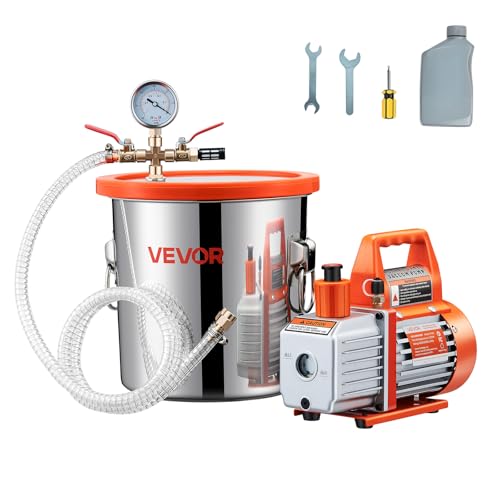
VEVOR 3 Gallon Vacuum Chamber Kit with 3.5 CFM Pump
A 3.5 CFM single stage pump matches the three gallon stainless chamber closely enough that vacuum builds within a minute or two. Owners can watch resin foam rise and collapse through the clear acrylic lid, the clearest sign a batch is finished degassing. Hose, oil and fittings ship in the same box, so the kit runs the first time it is unpacked.
Pros
- Pump size fits the chamber volume without excess wait
- Clear acrylic lid shows foam rise in real time
- Hose, oil and fittings included for immediate use
Cons
- Pump exhaust needs a ventilated spot nearby
- Included gauge reads approximate rather than exact

BACOENG 3 Gallon Vacuum Chamber Kit with 3.5 CFM Pump
Chamber volume and pump specs mirror the VEVOR kit above, three gallons paired with a 3.5 CFM single stage pump. Stock and pricing shift often between the two brands, making this the practical substitute when one sells out. Owners report the acrylic lid seals evenly once factory residue is wiped from the gasket before first use.
Pros
- Matches a pricier competitor’s pump and volume
- Gasket seals well after an initial wipe down
- Mouth is wide enough for standard mixing cups
Cons
- Fitting threads sometimes need tape to stop leaks
- Pump runs louder than higher end single stage units
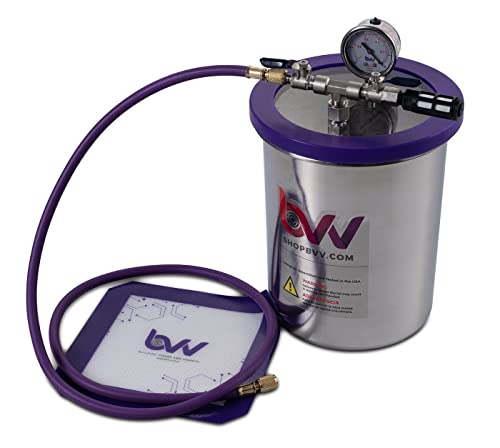
Best Value Vacs 1.5 Gallon Vacuum Chamber
At 1.5 gallons, this stainless chamber reaches working vacuum faster than any three gallon kit on this list. Jewelry casters, dice makers and single mould pours benefit most from that shorter cycle. Machining on the lip and lid feels a step above typical budget imports, though a pump must be bought separately.
Pros
- Small volume means vacuum builds in under a minute
- Lid and lip machining exceeds typical budget chambers
- Compact footprint fits a crowded workbench
Cons
- Pump is not included in most listings
- Too small for tall or multi cavity silicone moulds

Mophorn 5 Gallon Vacuum Chamber Kit
Five gallons of usable space fits tall silicone moulds and several cups in a single cycle. That capacity slows evacuation, so pairing it with a strong pump matters more here than on smaller chambers. Reinforced acrylic and a stainless body hold up through repeated cycles without visible wear.
Pros
- Tall internal height fits moulds smaller chambers cannot
- Batches multiple cups in one degassing cycle
- Reinforced lid and stainless body resist repeated use
Cons
- Reaches working vacuum slower than three gallon kits
- Weight makes repositioning awkward once filled

HFS 2 Gallon Vacuum Degassing Chamber
Two gallons splits the difference between a jewelry sized chamber and a full three gallon kit. The gasket sits in a machined groove instead of resting loose on the rim, which owners say holds a seal longer between cleanings. Stainless walls wipe clean quickly after the inevitable resin drip.
Pros
- Grooved gasket seat resists shifting during use
- Stainless body cleans up fast after spills
- Fits most casting cups without dominating a shelf
Cons
- Pump is typically purchased as a separate item
- Gauge markings are coarse rather than fine grained

YaeTek 3 Gallon Vacuum Chamber Kit with Pump
This bundle pairs a three gallon chamber with a 3 CFM pump, hose, oil and gauge in one box. Buying every part together removes the guesswork of matching a pump to a chamber separately. Owners report checking fittings for leaks on arrival, after which the seal holds through normal use.
Pros
- Every part needed ships in a single kit
- Three gallon size suits most everyday resin pours
- Reasonable outlay for a pump plus chamber bundle
Cons
- Fittings often need resealing straight out of the box
- 3 CFM pump is modest for a three gallon volume
TMS 5 Gallon Vacuum Chamber Degassing Kit
Continuous duty pump ratings separate this kit from occasional weekend setups. Five gallons of stainless chamber and a pump built for sustained running suit repeated production batches rather than a single pour. Bench space and a plan for pump noise both need consideration before buying.
Pros
- Pump is rated for back to back duty cycles
- Large chamber cuts the total number of pours needed
- Stainless construction holds up under frequent use
Cons
- Demands dedicated bench and floor space
- Runs loud enough that ear protection helps
How they stack up
| # | Model | Chamber volume | Best for | Score | Price |
|---|---|---|---|---|---|
| 1 | VEVOR 3 Gallon Vacuum Chamber Kit with 3.5 CFM Pump | 3 gallons | Best overall | 9.4 | Check price |
| 2 | BACOENG 3 Gallon Vacuum Chamber Kit with 3.5 CFM Pump | 3 gallons | Best value | 9.2 | Check price |
| 3 | Best Value Vacs 1.5 Gallon Vacuum Chamber | 1.5 gallons | Best for small batches | 9.0 | Check price |
| 4 | Mophorn 5 Gallon Vacuum Chamber Kit | 5 gallons | Best for large moulds | 8.8 | Check price |
| 5 | HFS 2 Gallon Vacuum Degassing Chamber | 2 gallons | Best for tight benches | 8.6 | Check price |
| 6 | YaeTek 3 Gallon Vacuum Chamber Kit with Pump | 3 gallons | Best complete starter kit | 8.3 | Check price |
| 7 | TMS 5 Gallon Vacuum Chamber Degassing Kit | 5 gallons | Best for repeated production runs | 8.0 | Check price |
What to look for
How pump CFM and chamber volume work together Evacuation time follows a simple ratio: chamber volume divided by pump CFM. A five gallon chamber on a 2 CFM pump crawls toward vacuum while resin keeps curing regardless. Three to 3.5 CFM suits a three gallon chamber well, matching what VEVOR, BACOENG and YaeTek all bundle. Two stage pumps pull a deeper vacuum than single stage units, useful for stubborn silicone but rarely required for casting resin.
Why internal height matters more than gallon count Gallon figures hide the one dimension that decides whether a mould fits: internal height. Resin foams under vacuum, often tripling its poured level before settling. A cup filled halfway still needs headroom above it to avoid overflow. Measure the tallest mould first, then pick a chamber that clears it with room to spare.
Stopping leaks at the lid and gasket Most sealing complaints trace back to grit on the lid rim or factory residue left on a new gasket. Wiping both surfaces before each session solves the majority of cases. A thin film of vacuum grease on the gasket helps it seat consistently over time. Acrylic lids can craze if wiped with solvents, so a damp cloth works better than acetone.
Vacuum degassing versus pressure potting These two processes solve different problems and cannot substitute for each other. Vacuum pulls existing bubbles out of silicone or resin before it sets. Pressure instead shrinks any remaining bubbles until they become invisible to the eye. Many casters use a vacuum chamber for mould making and a separate pressure pot for the finished piece.
Frequently asked questions
Do I need a vacuum chamber for epoxy resin?
Not for every project. Thin, slow curing epoxies often release bubbles with gentle heat alone. A chamber earns its keep for silicone mould making and any pour where clarity matters most.
How long does resin degassing actually take?
Most mixes rise, peak and settle within two to five minutes at working vacuum. Watching through the lid beats timing it, since room temperature changes how fast bubbles clear.
Can a vacuum chamber double as a pressure pot?
No, and forcing it is unsafe. These chambers resist inward pressure, not outward force, and an acrylic lid can fail under positive pressure. A rated pressure pot is built for that job.
Why does my chamber lose vacuum after the pump shuts off?
A hose fitting leak or an unevenly seated gasket is the usual cause. Thread tape on fittings, a clean gasket and rim, and a fully closed valve before shutdown fix most cases.
What kind of oil does a vacuum pump need?
Vacuum pump oil, not automotive motor oil, since it is formulated for low vapor pressure. Cloudy oil limits how deep a pump can pull, so swap it once it discolors.
Will vacuum degassing remove bubbles from resin that already cured?
No, degassing only works on material that is still liquid. Once curing starts, a pressure pot is the tool for trapped bubbles, not a vacuum chamber.
How much headroom does resin foam need inside the chamber?
Plan on roughly triple the poured volume. Filling a mixing cup past one third full is the most common reason resin overflows during a cycle.
Do resin vacuum chambers need ventilation?
Yes. Pump exhaust carries oil mist, and resin itself releases vapor during degassing. Run the setup near an extractor or open window, with the pump outlet pointed away from you.
Best resin vacuum chamber for small jewelry batches?
A 1.5 to 2 gallon chamber, like the Best Value Vacs or HFS models, evacuates fast enough for single mould pours without wasted cycle time.
3 gallon vs 5 gallon vacuum chamber: which size fits most resin work?
Three gallons covers cups, small silicone moulds and pressure pot prep for most hobbyists. Five gallons only pays off with tall moulds or multiple simultaneous pours.
Final word
VEVOR’s 3 Gallon Vacuum Chamber Kit suits the widest range of resin work, since its 3.5 CFM pump matches the chamber size and the acrylic lid keeps foam visible throughout the cycle. Tall silicone moulds call for the extra headroom in Mophorn’s 5 gallon kit instead. Jewelry, dice and other small pours are better served by the Best Value Vacs 1.5 gallon chamber, which reaches vacuum in a fraction of the time.
Jake Monroe
Jake worked as a residential contractor for over a decade before shifting to full-time writing. He evaluates power tools, hand tools and workshop gear through the lens of someone who has actually used them on job sites, not just read the box.


