Reptile Hides Built for Large Snakes and Lizards
Zoo Med’s Repti Shelter Large offers the most interior room for bearded dragons and monitors. Exo Terra’s Reptile Cave holds humidity longest for tropical species that need help shedding. Budget-focused keepers running multiple tanks get a secure, low-cost option from the Zilla Rock Den.
Zoo Med’s Repti Shelter Large tops this list for adult bearded dragons and monitors that need to turn fully around inside. Its resin shell resists odor in both humid and dry enclosures. Species needing extra humidity for shedding settle better into the enclosed Exo Terra Reptile Cave instead.
Package sizing on reptile hides misleads more buyers than almost any other terrarium item, since a hide labeled large for a bearded dragon can cramp a ball python. We compared interior dimensions, material and owner reports on how full-grown reptiles actually fit before ranking these seven.
What we recommend

Zoo Med Repti Shelter (Large)
Rock-textured resin gives large bearded dragons and monitors room to turn fully around inside. An open back allows cleaning without disturbing the surrounding substrate. Resin does not absorb moisture or odor, so owners use it across both humid and arid setups.
Pros
- Interior room fits fully grown bearded dragons
- Resin will not absorb odor or moisture
- Textured surface allows some climbing and rubbing
Cons
- Heavier than foam or cork options
- Rough texture can catch on shedding skin

Exo Terra Reptile Cave (Large)
Shedding reptiles rub against the textured interior to loosen old skin more easily. An enclosed dome shape traps humidity better than open rock shelters, which suits species from tropical habitats. Placing a moist substrate patch inside boosts local humidity even further.
Pros
- Enclosed shape holds humidity better than open hides
- Textured interior helps with shedding
- Stable base resists tipping
Cons
- Smaller interior than fully open rock shelters
- Single entrance limits airflow for arid species

Zilla Rock Den (Large)
Basics are covered here for snakes and lizards that need a secure retreat without a premium price tag. Its low profile suits enclosures with limited vertical clearance. Keepers running multiple enclosures buy several without a large outlay.
Pros
- Lower cost makes multiples affordable
- Low profile fits shorter enclosures
- Stable and does not tip easily
Cons
- Smaller interior than premium large hides
- Texture looks less realistic than pricier options

Fluker’s Repta-Cave Rock Hideout
Open airflow suits desert species like bearded dragons and leopard geckos that need dry retreats rather than humid ones. A rock-textured exterior blends into arid terrarium decor. Larger bearded dragons climb and dig around its base without damaging it, according to owner reports.
Pros
- Open design suits dry, arid enclosures
- Withstands digging and climbing around the base
- Blends naturally into desert-style decor
Cons
- Offers little humidity retention
- Open front gives less enclosed security than a cave
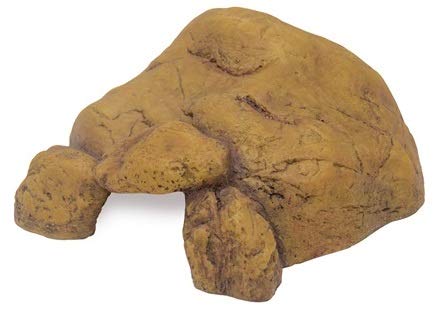
Exo Terra Snake Cave (Large)
A rounded interior mimics the burrow shape that ball pythons and corn snakes coil into naturally. Dual entry points let a snake choose its exposure to enclosure lighting. Owners of larger constrictors size up to this from hides originally meant for lizards.
Pros
- Burrow shape suits snake coiling behavior naturally
- Dual entrances give the snake lighting choice
- Sized specifically for larger constrictor snakes
Cons
- Less suited to lizards needing flat basking room
- Narrower interior than open rock shelters

Fluker’s Cork Bark Round
Hollow natural cork bark forms an irregular shape reptiles use for both climbing and shelter. Cork resists rot and mold better than untreated wood in humid enclosures. Bioactive setups with live plants tend to favor this over molded resin for its natural look.
Pros
- Natural material suits bioactive and planted terrariums
- Resists rot better than untreated wood
- Doubles as a climbing surface
Cons
- Interior size varies piece to piece
- Harder to clean thoroughly than resin hides

Zoo Med Turtle Hut
A half-dome shape works as both a basking platform and a hide for turtles and semi-aquatic lizards. Textured surface gives claws grip when climbing out of water. Large aquatic turtles use it as the main basking spot inside a tank, per owner reports.
Pros
- Doubles as a basking platform and hide
- Textured surface gives good climbing grip
- Stable in water without floating
Cons
- Not suited to fully terrestrial reptiles
- Smaller interior than land-based hides on this list
How they compare
| # | Model | Interior size | Best for | Score | Price |
|---|---|---|---|---|---|
| 1 | Zoo Med Repti Shelter (Large) | Fits reptiles up to 24 inches | Best overall | 9.4 | Check price |
| 2 | Exo Terra Reptile Cave (Large) | Fits reptiles up to 20 inches | Best for humidity retention | 9.1 | Check price |
| 3 | Zilla Rock Den (Large) | Fits reptiles up to 18 inches | Best value | 8.9 | Check price |
| 4 | Fluker’s Repta-Cave Rock Hideout | Fits reptiles up to 20 inches | Best for arid species | 8.6 | Check price |
| 5 | Exo Terra Snake Cave (Large) | Fits snakes up to 5 feet | Best for large snakes | 8.4 | Check price |
| 6 | Fluker’s Cork Bark Round | Varies by piece, fits medium to large reptiles | Best natural material hide | 8.2 | Check price |
| 7 | Zoo Med Turtle Hut | Fits shells up to 8 inches | Best for aquatic and semi-aquatic species | 8.0 | Check price |
What matters most
What to look for in a reptile hide Interior floor space matters more than the outer dimensions printed on the box. A reptile needs room to turn fully around and coil without a tail or limb poking out. Material affects both humidity retention and cleaning, since resin wipes clean while cork bark absorbs moisture. Match a hide to the species’ natural habitat, arid or humid, before worrying about appearance.
Hides for humid versus arid species Tropical species like many snakes and geckos need enclosed hides that trap humidity, such as the Exo Terra Reptile Cave. Desert species like bearded dragons do better in open designs like the Fluker’s Repta-Cave that let moisture escape. A humid hide placed in a dry enclosure encourages mold, while an open hide in a humid tank dries out too fast to help with shedding.
Sizing a hide for large snakes versus lizards Snakes want a hide pressing against their body from multiple sides, unlike lizards that prefer open floor room to turn around. The Exo Terra Snake Cave is shaped specifically for that coiling behavior. A hide too large leaves a snake feeling exposed even when it technically fits, so size closer to snug than to spacious.
Hides for bioactive, planted or aquatic setups Natural cork bark like the Fluker’s Cork Bark Round blends into live plant setups better than molded resin. Bioactive tanks also benefit from a hide doubling as a climbing surface, since natural texture supports beneficial insects and root growth underneath. Aquatic and semi-aquatic keepers need a different shape entirely, since a basking hut like the Zoo Med Turtle Hut has to work both in and out of water. Resin hides stay easier to disinfect, so mixing natural and resin hides by zone keeps sterilization simple where it matters.
Questions worth asking
How big should a reptile hide be?
The reptile should fit inside with its body touching the walls, not stretched flat with room to spare. A hide too large fails to give the pressed-in security reptiles seek, while one too small forces a limb or tail outside.
Do reptiles need more than one hide?
Yes, most keepers provide a warm-side hide and a cool-side hide so the reptile can thermoregulate without giving up shelter. Humidity-sensitive species may need a third, moist hide for shedding support.
What material is best for a reptile hide?
Resin hides clean easily and resist mold, making them a common choice for both humid and arid setups. Natural cork bark suits bioactive tanks but takes more effort to sanitize thoroughly.
Can a hide be too small for a growing snake?
Yes, and it is a common mistake as snakes grow larger. A hide that no longer lets the snake coil fully inside should be replaced with a larger option like the Exo Terra Snake Cave.
Do bearded dragons need a humid hide?
Yes, even though they are a desert species. A humid hide placed in one corner supports smoother shedding while the rest of the enclosure stays dry for normal basking.
How do you clean a resin reptile hide?
Warm water with a reptile-safe disinfectant wipes resin hides clean without damaging the material. Rinse thoroughly and dry before returning it to the enclosure so no cleaning residue gets trapped.
Is cork bark safe for all reptile species?
Most terrestrial and climbing species do well with cork bark, though it holds moisture longer than resin. Species needing strictly dry conditions may do better with an open resin hide instead.
What is the best hide for a large monitor lizard?
Large monitors need a hide close to the Zoo Med Repti Shelter’s 24 inch capacity or a larger custom shelter, since most standard reptile hides undersize adult monitors.
Which hide works best for a large pet turtle?
The Zoo Med Turtle Hut is shaped for that job, doubling as a basking platform that supports shells up to about 8 inches.
Our take
Large bearded dragons and monitors get the most usable space from the Zoo Med Repti Shelter, and its resin build handles both humid and dry setups equally well. Owners of ball pythons and other large constrictors should choose the Exo Terra Snake Cave instead, since its shape matches natural coiling behavior. Multi-tank keepers on a tight budget can still cover the basics with the Zilla Rock Den.
Olivia Hartley
Olivia spent several years working at an animal shelter and a pet-supply retailer before joining the editorial team. She researches pet gear with an emphasis on safety, comfort and the fine print that owners often miss.


