Reading Starter Kits That Match Your Child’s Stage
LeapFrog Learning Friends 100 Words Book fits toddlers still building vocabulary. Osmo Little Genius Starter Kit covers letter shapes and phonics from ages 3 to 5. Educational Insights Hot Dots Jr. adds self-checking blending practice that runs without an adult sitting alongside.
LeapFrog’s Learning Friends 100 Words Book is the safest first buy for an 18 month old. Buttons trigger 100 labelled words in English or Spanish, which builds vocabulary and print awareness. Letter sounds and blending sit outside its scope, so a second toy becomes necessary near age three.
Early reading arrives in stages, yet most kits present themselves as complete. Vocabulary, letter names, letter sounds, blending and sight words each need a different tool. We compared stated age ranges against the skill each toy actually practises, plus screen requirements and supervision load. Parent feedback on durability and staying power settled the order.
The best picks, ranked
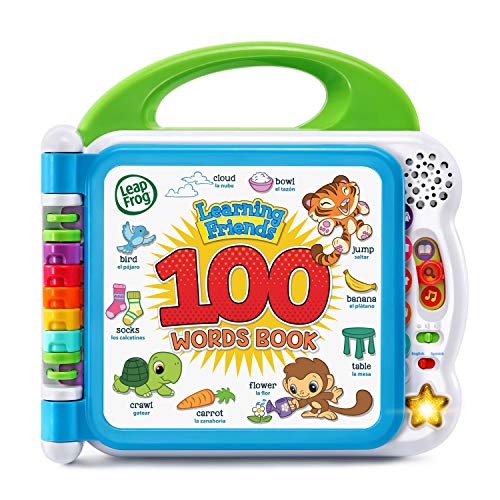
LeapFrog Learning Friends 100 Words Book
Twelve themed pages hold 100 pictures, each one named aloud when a toddler presses it. Audio switches between English and Spanish, doubling the vocabulary on offer. Board stock pages and a moulded handle survive being dragged around a room by the cover.
Pros
- Bilingual audio covers two vocabularies
- Board pages take toddler page turns
- Runs child-led with no adult alongside
Cons
- Covers words, not letter sounds or blending
- Volume offers only two levels

Osmo Little Genius Starter Kit for iPad
Silicone sticks and rings stay on the table while the iPad camera reads what a child builds with them. That physical step ties letter shape to letter sound better than tapping glass. Setup needs a compatible tablet plus the Osmo base, making it the fussiest kit in this group.
Pros
- Building letters by hand reinforces shapes
- Difficulty adapts as a child improves
- Silicone pieces wipe clean and resist snapping
Cons
- Requires a compatible tablet and reflector base
- Screen time comes built into the design

Educational Insights Hot Dots Jr. Let’s Master Reading Set
Touch the talking pen to an answer dot and it responds with a light and a sound for right or wrong. Immediate feedback keeps a child working through cards with nobody marking them. Workbooks in the set drill letter sounds, rhyming and early word building.
Pros
- Instant feedback supports unsupervised sessions
- Nothing in the set involves a screen
- Pen works with other Hot Dots workbooks
Cons
- Pen tip must land squarely on the dot
- Marked workbook pages cannot be reused
VTech Touch and Teach Word Book
Twelve plastic pages carry more than 100 words, plus a question mode that asks a toddler to find one. Searching for an item turns passive listening into a small comprehension task. Sound is thin, and the songs loop with no way to switch them off.
Pros
- Question mode prompts active searching
- Plastic pages handle rough turning
- Slim enough for a changing bag
Cons
- Songs repeat and cannot be disabled
- Speaker struggles in a noisy room

Tonies Toniebox Starter Set
Place a character figure on the padded box and its story plays; lift the figure off and playback stops. Listening stamina and story structure grow here, and both underpin reading later. Every new story arrives as another figure, so a collection keeps expanding.
Pros
- Runs entirely child-operated with no screen
- Padded shell survives drops and throws
- Longer stories build listening stamina
Cons
- Each extra story needs its own figure
- Teaches no letters or decoding

Learning Resources Sight Word Swat a Sight Word Game
Two plastic swatters and 110 cards turn sight word drilling into a race to slap the right word. Movement suits children who push back against flashcards. Forty-six high frequency words cover most of a kindergarten list, and blank cards take words sent home from school.
Pros
- Physical race holds reluctant readers
- Blank cards accept school word lists
- Mixed ages can play the same round
Cons
- Needs a second player every time
- Gets loud, so quiet time is out
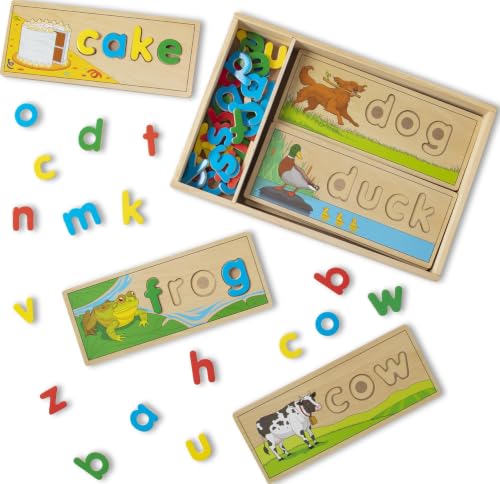
Melissa & Doug See & Spell Learning Toy
Eight double-sided boards show picture cutouts, and 64 wooden letter tiles slot in to spell each word. Placing letters one at a time slows a child down enough to notice every sound. No audio exists, so an adult confirms pronunciation during the first few weeks.
Pros
- No batteries, apps or software updates
- Loose tiles support free spelling play
- Wood holds up across several children
Cons
- Small tiles vanish without a storage box
- Adult must model letter sounds early on
How to pick the right one
What early reading skills these kits actually teach Literacy builds in a rough order: spoken vocabulary, print awareness, letter names, letter sounds, blending, then sight words. Target the wrong rung and a toy gets abandoned inside a week. Talking word books cover the first two stages. Phonics tools such as Osmo and Hot Dots Jr. handle sounds and blending. Read the skill list on a box before the age range, since ranges run wide on purpose.
Which kit suits a toddler, a preschooler or a kindergartener From 18 months to 3 years, a talking word book matches where most toddlers already are. Ages 3 to 5 is when letter shapes and sounds land, which is Osmo and See & Spell territory. Kindergarten shifts to sight words and short sentences, so Sight Word Swat fits there. Audio players like the Toniebox sit outside that ladder and build listening at any of those ages.
Screen-based kits vs physical toys Tablet systems adapt difficulty and track progress, which no wooden set manages. They also need a compatible iPad, the Osmo reflector base, and a household rule about screen time. Physical sets work differently: a child slotting letter tiles says each sound out loud, and nothing times out. Running both, with the tablet limited to a set window, stops it becoming the default toy. Skipping screens entirely costs adaptivity but nothing essential.
How to get more out of a reading kit at home Read aloud daily alongside any kit, because books carry vocabulary no device matches. Store letter tiles and word books somewhere visible, since accessibility drives use more than novelty. When helping with phonics, say the sound rather than the letter name; blending collapses if a child hears cee ay tee. Ten minutes counts as a full session at preschool age. Stop while interest remains and the toy keeps getting picked up.
Compared at a glance
| # | Model | Age range | Best for | Score | Price |
|---|---|---|---|---|---|
| 1 | LeapFrog Learning Friends 100 Words Book | 18 months to 4 years | Best overall starter | 9.4 | Check price |
| 2 | Osmo Little Genius Starter Kit for iPad | 3 to 5 years | Best for letter formation and phonics | 9.2 | Check price |
| 3 | Educational Insights Hot Dots Jr. Let’s Master Reading Set | Around 4 to 6 years | Best for independent practice | 9.0 | Check price |
| 4 | VTech Touch and Teach Word Book | 18 months to 3 years | Best for toddlers under two | 8.8 | Check price |
| 5 | Tonies Toniebox Starter Set | 3 years and up | Best screen-free listening | 8.6 | Check price |
| 6 | Learning Resources Sight Word Swat a Sight Word Game | 5 years and up | Best for sight words and siblings | 8.3 | Check price |
| 7 | Melissa & Doug See & Spell Learning Toy | 4 to 6 years | Best hands-on budget pick | 8.0 | Check price |
Frequently asked questions
What age should a child start using reading toys?
Vocabulary toys suit 18 months upward. Letter recognition and phonics tools land best between 3 and 5. Sight word games belong around kindergarten, roughly 5 and up. Pushing phonics too early tends to produce frustration instead of progress.
Which reading toy is best for a 3 year old?
Osmo Little Genius Starter Kit targets this age directly, pairing letter shapes with phonics games. Avoiding tablets? The VTech Touch and Teach Word Book plus daily reading aloud covers the same stage with no screen.
Do reading toys actually teach phonics?
Some do. Hot Dots Jr. and Osmo both work on letter sounds and blending explicitly. Word books and audio players build vocabulary and listening instead, which supports reading without teaching decoding.
Are screen-free reading toys better for early readers?
Not automatically, though they drop the supervision burden and any time limit. See & Spell and the pen-based Hot Dots set cover core skills with no device. Tablet kits answer back with adaptive difficulty that physical pieces cannot match.
Toniebox vs LeapFrog word book: which suits a preschooler?
Toniebox builds listening comprehension through full stories and no screen. LeapFrog books build labelled vocabulary a child controls page by page. For a preschooler already sitting through long stories, the LeapFrog book adds more early literacy value.
Which reading kit works for a child who will not sit still?
Sight Word Swat replaces flashcards with a race across the table. Hot Dots Jr. helps for a different reason: the pen answers instantly, so momentum never stalls waiting for approval. Both beat any seated worksheet routine.
How long should a child use a reading toy each day?
Ten to fifteen minutes at preschool age, ideally split into short bursts. Attention span sets the ceiling, not interest. Ending a session early keeps a child coming back to the toy.
Can reading toys replace reading books together?
No. Shared reading exposes a child to more varied vocabulary and sentence structure than any toy. Treat these kits as targeted practice that sits beside daily reading aloud.
What should I buy first for a toddler learning letters?
A talking word book. It matches the vocabulary stage most toddlers occupy, needs no adult sitting alongside, and survives rough handling. Add a phonics tool once the child starts asking what letters say.
Is Osmo worth it if you already own an iPad?
Yes, provided the tablet model appears on Osmo’s compatibility list and you still need the reflector base. Households without a tablet get closer value from Hot Dots Jr. or See & Spell, which teach the same stage with no device.
Our take
Start a toddler on the LeapFrog Learning Friends 100 Words Book, since vocabulary and print awareness carry everything that follows. Around age three, move to the Osmo Little Genius Starter Kit if a tablet already lives in the house, or Melissa & Doug See & Spell if screens are off the table. Buying for a five year old? Skip both and take Hot Dots Jr., which drills blending without an adult sitting in.
Rachel Simmons
Rachel previously worked in child-product retail and brings a practical, detail-first eye to gear reviews, focusing on safety standards, ease of use and the fine print that matters most for new caregivers.


