Engineering Starter Kits That Kids Keep Building
LEGO Technic Bulldozer leads the pack with working gears that teach real mechanical motion. Snap Circuits Jr. suits kids drawn to electronics instead of moving parts. Learning Resources Gears! Gears! Gears! fits preschoolers just starting to build, with oversized pieces sized for small hands.
Working gears set LEGO Technic Bulldozer apart from static brick sets, since kids can watch motion transfer through connected parts as they build. That mechanical payoff is why it holds attention longer than a kit that only snaps into one fixed shape.
We compared piece variety, mechanism type, and age fit across current Amazon listings and parent feedback, since a kit that builds only one model tends to get shelved within weeks.
The best picks, ranked

LEGO Technic Bulldozer
Working gears drive the bulldozer’s blade and tracks, showing kids how motion transfers between connected parts. Pieces snap into the wider LEGO Technic system, so the set expands beyond its single default build. Parents report the 163-piece kit suits children who have outgrown basic brick sets.
Pros
- Working gears teach real mechanical motion
- Expands with other LEGO Technic sets
- Durable pieces hold up to repeated builds
Cons
- Base instructions build only one model
- Small pieces call for supervision with younger kids

K’NEX Imagine 35-Model Building Set
Over 700 rods and connectors snap into 35 preset models, ranging from simple vehicles to small machines with moving parts. The connector system also supports freeform designs beyond the included instructions. Kids who tire of rebuilding one model tend to stay engaged with this set longer.
Pros
- High piece count supports many different builds
- Open connector system enables freeform design
- Strong value per piece versus branded sets
Cons
- Small connectors challenge younger hands
- Instructions booklet is easy to lose

Snap Circuits Jr. SC-100
Thirty color-coded components snap onto a plastic baseboard to build over 100 working circuits, including fans, alarms, and lights. No soldering is required, so mistakes are easy to undo and retry. This kit suits kids more curious about electricity than mechanical motion.
Pros
- No soldering required for any project
- Over 100 buildable circuit projects included
- Color-coded parts simplify correct assembly
Cons
- Needs AA batteries not included in the box
- Limited mechanical building compared to gear kits
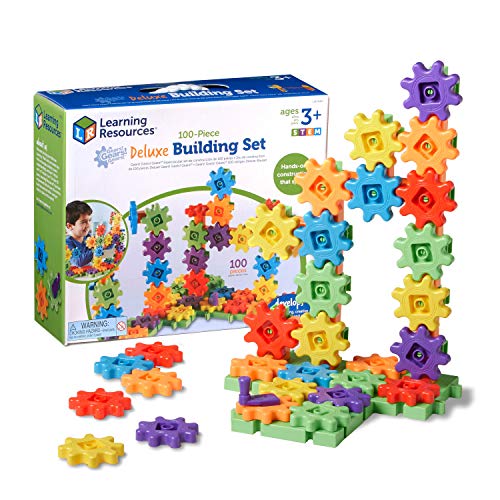
Learning Resources Gears! Gears! Gears! Beginner Building Set
Oversized, easy-grip gears click onto a base without the small connectors that pose choking risks for younger kids. Turning one gear sets a connected chain moving, introducing cause and effect before formal engineering terms. Preschool teachers use similar sets for early motor skill development.
Pros
- Large pieces reduce choking risk for young kids
- Simple cause-and-effect play for early learners
- Builds fine motor skills at a young age
Cons
- Too simple for children over age 7
- Plastic base can crack under rough handling

Thames & Kosmos Ball Track Racing Rally
Angled tracks and ramps let kids race marbles while adjusting slope and curve to test speed and momentum. An included guide explains the physics behind each design without reading like a textbook. It pairs well alongside a mechanical kit rather than replacing one.
Pros
- Hands-on introduction to physics concepts
- Guide explains the science in plain terms
- Encourages trial-and-error problem solving
Cons
- Fewer pieces than mechanical building sets
- Track connectors loosen with frequent rebuilding

Engino STEM Mechanics: Simple Machines Kit
This 170-piece kit walks through levers, pulleys, and gears one concept at a time, pairing each build with a short explanation. Schools use similar Engino kits for classroom science units. It fits kids who prefer structured learning over open-ended building.
Pros
- Clear structure tied to real science concepts
- Covers multiple types of simple machines
- Compact case keeps pieces organized for storage
Cons
- Less freeform building than K’NEX or LEGO
- Smaller piece count limits complex builds

Tinkertoy 100th Anniversary Classic Set
Wooden spools and rods use the original Tinkertoy design, largely unchanged after a century of open-ended building. A lower, 150-piece count keeps this set simpler than gear-based kits. It works best as an introduction before moving to more mechanical builds.
Pros
- Lower cost than most STEM starter kits
- Simple connectors suit younger builders
- Durable wood pieces resist breaking
Cons
- No mechanical motion like gears or wheels
- Less engaging for kids over age 8
Compared at a glance
| # | Model | Age range | Best for | Score | Price |
|---|---|---|---|---|---|
| 1 | LEGO Technic Bulldozer | 7 to 12 years | Best overall | 9.3 | Check price |
| 2 | K’NEX Imagine 35-Model Building Set | 7 to 12 years | Best for variety | 9.0 | Check price |
| 3 | Snap Circuits Jr. SC-100 | 8 years and up | Best for electronics | 8.9 | Check price |
| 4 | Learning Resources Gears! Gears! Gears! Beginner Building Set | 3 to 6 years | Best for young kids | 8.7 | Check price |
| 5 | Thames & Kosmos Ball Track Racing Rally | 6 to 12 years | Best for physics concepts | 8.6 | Check price |
| 6 | Engino STEM Mechanics: Simple Machines Kit | 8 years and up | Best for structured curriculum | 8.5 | Check price |
| 7 | Tinkertoy 100th Anniversary Classic Set | 4 years and up | Best budget | 8.3 | Check price |
What to look for
What separates an engineering kit from a toy A kit that snaps into a single fixed shape teaches assembly, not engineering. Moving gears, adjustable ramps, and reusable connectors let a child test a design, then change one part and see the result. Packaging that says reconfigurable, open-ended, or multiple models signals that kind of kit.
Mechanical, electronic, or physics-focused builds LEGO Technic and K’NEX teach mechanical motion through gears, rods, and connectors. Snap Circuits Jr. swaps gears for wiring, building working fans and alarms without a single moving mechanical part. Thames & Kosmos leans into physics, using angled tracks and marbles to show momentum and gravity in action.
Matching piece size to a child’s age Sets built for ages 3 to 6, like Learning Resources Gears! Gears! Gears!, use oversized pieces that reduce choking risk and fit smaller hands. Kits for 7 and up shrink connector size and add gear ratios, which demands more fine motor control. A kit bought above a child’s real skill level usually ends up frustrating rather than educational.
Kits that expand as a child grows LEGO Technic and K’NEX both belong to larger product lines, so a starter set can grow into a bigger collection later. Tinkertoy uses a proprietary rod-and-spool design that stays simple but does not connect to other systems. Families expecting to buy more pieces down the road should favor a kit tied to an ongoing product line.
Questions worth asking
What age should a kid start with engineering toys?
Simple gear kits work for kids as young as 3 or 4. Circuit and complex mechanical kits fit better once a child turns 7 or 8.
Are engineering kits better than regular building blocks?
Engineering kits add moving mechanisms like gears, pulleys, or circuits. That teaches cause and effect in a way static blocks cannot.
Do STEM building kits need batteries?
Some do. Snap Circuits Jr. needs AA batteries that are not included in the box. Gear and rod kits like LEGO Technic run without power.
Can a starter kit grow into a bigger collection later?
Yes, if it belongs to a larger system. LEGO Technic and K’NEX both let families buy add-on sets as a child’s skills grow.
Is LEGO Technic harder to build than regular LEGO sets?
Yes. Technic sets use smaller connectors and working gear mechanisms, which take more precision than standard brick building.
K’NEX vs LEGO Technic: which one is more open-ended?
K’NEX uses rods and connectors for freeform building beyond the instructions. LEGO Technic focuses on tighter, gear-driven mechanisms with less improvisation.
What is the best engineering kit for a first-time builder?
LEGO Technic Bulldozer suits most first-time builders age 7 and up, since its gears and pistons teach real mechanical motion without overwhelming piece counts.
Which starter kit suits kids under 6 years old?
Learning Resources Gears! Gears! Gears! fits kids under 6 best, since its oversized pieces avoid the choking risk smaller connectors pose.
What skills do kids build with a starter engineering kit?
Starter kits build fine motor skills, spatial reasoning, and early problem-solving through trial and error with moving parts.
Our pick
LEGO Technic Bulldozer remains the strongest first engineering kit for kids age 7 and up, thanks to gears that demonstrate real mechanical motion. Parents of younger children should reach for Learning Resources Gears! Gears! Gears! instead, since its oversized pieces suit smaller hands safely. Kids who gravitate toward electronics over mechanics will get more long-term use from Snap Circuits Jr.
Rachel Simmons
Rachel previously worked in child-product retail and brings a practical, detail-first eye to gear reviews, focusing on safety standards, ease of use and the fine print that matters most for new caregivers.