Beginner and Advanced RC Helicopters Compared
Most beginners do best with the Blade Nano S2, since its stabilization system makes indoor hovering learnable within an hour. The Syma S107G costs less for a first try, and the Blade 230 S V2 suits pilots ready for collective pitch aerobatics.
Learning indoors without wrecking the helicopter on day one points to the Blade Nano S2, thanks to its stabilization system. The Syma S107G stays the cheapest sensible way to test whether the hobby sticks. Pilots who already want real aerobatics should go straight to the Blade 230 S V2.
Choosing an RC helicopter is harder than choosing a drone. A coaxial toy and a collective pitch machine sit at opposite ends of a skill curve that takes months to climb. We compared seven currently sold models on published specifications, channel count, rotor design, stabilization modes and flight times, and weighed what owners report about durability and parts supply.
The best picks, ranked

Blade Nano S2 RTF RC Helicopter
SAFE stabilization holds the helicopter level the moment you release the sticks, turning an unforgiving machine into something a beginner can actually fly. Light weight lets it survive typical indoor crashes into walls and furniture. Spare parts stay in stock, which matters more than any spec while you are still learning.
Pros
- Stabilization makes learning realistic
- Durable in typical indoor crashes
- Excellent spare parts availability
Cons
- Too light for anything but still air outdoors
- Short flight time per battery
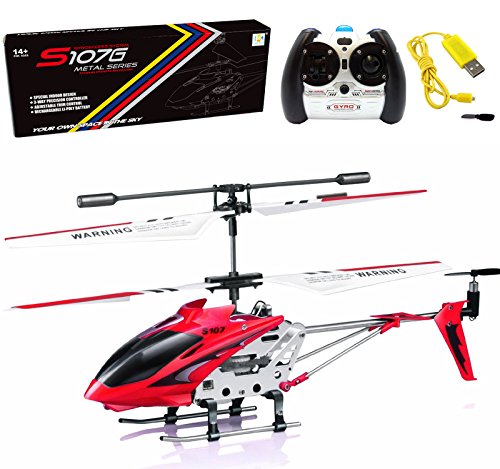
Syma S107G Phantom RC Helicopter
Coaxial twin rotors cancel each other’s torque, which is why this model has stayed a standard first helicopter for years. Only three channels are active, so there is no sideways movement to fight. That limitation teaches throttle and yaw control before real money gets spent.
Pros
- Extremely stable and forgiving
- Very low cost to replace
- Robust for a toy grade model
Cons
- No sideways control to learn from
- Unflyable in even light wind
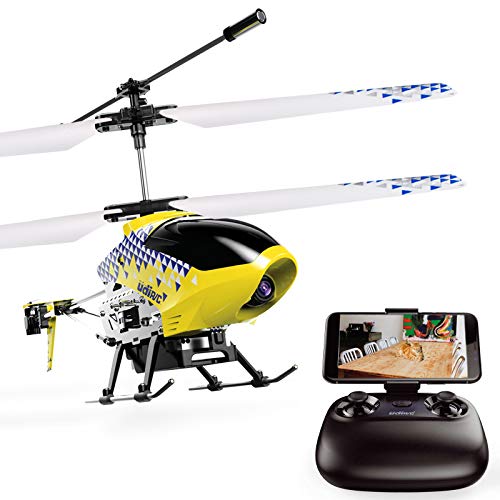
Cheerwing U12S Mini RC Helicopter
A built in camera gives a younger pilot something to chase besides a clean hover. Altitude hold removes throttle management from the equation entirely, so a child only has to steer. Flight performance stays basic, which fits the intended pilot rather than limiting a serious hobbyist.
Pros
- Altitude hold simplifies flying
- Camera adds interest for children
- Durable plastic construction
Cons
- Camera quality is very basic
- Limited flight time

RC ERA C127 Sentinel Helicopter
A swashplateless single rotor gives this a real helicopter silhouette instead of the stacked look of a coaxial toy. Altitude hold and one key takeoff cut the learning curve without removing single rotor handling entirely. It sits neatly between toy grade and hobby grade equipment.
Pros
- Convincing scale appearance
- Easier than a true single rotor design
- Good value for the features
Cons
- Less durable than dedicated trainers
- Parts are harder to source

Eachine E119 RC Helicopter
Extra weight and power let this hold position in a light breeze that would push a Blade Nano across the garden. Single rotor control feels closer to a full size helicopter than any coaxial here. Owners moving past indoor trainers typically land on this as the next step.
Pros
- Copes with light outdoor conditions
- More realistic single rotor handling
- Reasonable flight time
Cons
- Less forgiving than a coaxial
- Crashes cost more to repair

Haktoys HAK303 RC Helicopter
A flexible frame and protected rotors absorb the wall strikes that come standard with an inexperienced indoor pilot. Gyro stabilization keeps the hover level despite the modest hardware. Performance never impresses, yet it keeps flying long after fragile rivals crack.
Pros
- Very resilient in crashes
- Stable hover for beginners
- Simple, low cost operation
Cons
- Slow and limited in capability
- Indoor use only

Blade 230 S V2 RC Helicopter
Collective pitch control opens up inverted flight and full aerobatics, and it demands the skill that comes with it. Selectable SAFE modes soften the transition for pilots stepping up from fixed pitch models. This is not equipment for a first flight under any circumstances.
Pros
- Full aerobatic capability
- Selectable assistance while learning
- Strong hobby parts support
Cons
- Steep learning curve and costly crashes
- Requires a proper transmitter setup
Before you buy
What kind of RC helicopter should a beginner buy first? Coaxial helicopters use two counter rotating rotors that cancel torque, which makes them stable and nearly self leveling. Fixed pitch single rotor models fly more like a real aircraft and need more constant input. Collective pitch machines change blade angle mid flight, enabling inverted maneuvers after months of practice. Skipping this order is the single most common reason a first purchase disappoints.
How many channels does an RC helicopter need? Three channels give throttle, yaw and forward or backward movement, nothing sideways. Four channels add sideways drift, which is when flying starts to feel real rather than mechanical. Six channel collective pitch models hand over full control of every axis at once. Match the channel count to real experience, not to how capable a spec sheet sounds.
Can the same helicopter fly indoors and outdoors? Rarely. Light indoor trainers such as the Blade Nano S2 get pushed sideways by the smallest draft. Heavier outdoor models carry enough mass and power to hold position in wind, but a crash outdoors costs more and needs open space to fly safely. Decide where flights will happen before buying, since no single model covers both settings well.
Why does spare parts availability matter so much? Crashes happen repeatedly while learning, and a helicopter without replacement blades or a tail motor becomes scrap the first time something snaps. Hobby brands such as Blade stock full parts catalogues, while many toy grade lines offer nothing beyond the original box. Confirm parts availability before buying anything past the cheapest entry level model.
How they stack up
| # | Model | Channels | Best for | Score | Price |
|---|---|---|---|---|---|
| 1 | Blade Nano S2 RTF RC Helicopter | 4 channel | Best overall | 9.4 | Check price |
| 2 | Syma S107G Phantom RC Helicopter | 3 channel | Best budget | 9.2 | Check price |
| 3 | Cheerwing U12S Mini RC Helicopter | 3.5 channel | Best for kids | 9.0 | Check price |
| 4 | RC ERA C127 Sentinel Helicopter | 4 channel | Best scale look | 8.7 | Check price |
| 5 | Eachine E119 RC Helicopter | 4 channel | Best for outdoor practice | 8.5 | Check price |
| 6 | Haktoys HAK303 RC Helicopter | 3.5 channel | Best durability | 8.2 | Check price |
| 7 | Blade 230 S V2 RC Helicopter | 6 channel | Best for experienced pilots | 8.0 | Check price |
Common questions
Are RC helicopters harder to fly than drones?
Considerably harder. Multirotor drones use onboard software to hold position automatically, while helicopters need constant manual correction across several axes at once. Stabilized models like the Blade Nano S2 close part of that gap, not all of it.
What is the best RC helicopter for a complete beginner?
A coaxial three channel model such as the Syma S107G, flown indoors. It teaches throttle and yaw control without punishing small mistakes, and it costs little enough that crashing does not sting.
How long do RC helicopters fly on one charge?
Small indoor models typically manage five to ten minutes, and larger outdoor helicopters run somewhat longer. Charging usually takes far longer than flying, so a spare battery or two becomes the standard first upgrade.
Can RC helicopters be flown outside in wind?
Only models built with enough mass and power for the conditions. Light indoor helicopters become unusable in even a gentle breeze, while heavier models like the Eachine E119 handle light wind without much drama.
What age is appropriate for an RC helicopter?
Stable coaxial models with altitude hold suit older children under supervision. Fast single rotor and collective pitch machines carry exposed blades that can cause injury, so treat them as adult equipment.
RC helicopter vs drone, which is easier to learn?
Drones win on ease, since GPS and barometric sensors hold position without pilot input. Helicopters demand active correction on every axis, which is exactly why hobbyists who master them value the skill more.
What parts break most often on RC helicopters?
Main blades, the tail rotor assembly and landing skids break most, roughly in that order. Keeping a spare set of blades on hand turns a crash into an evening fix rather than a week of waiting.
Do RC helicopters need a separate transmitter?
Ready to fly models include one in the box. Bind and fly versions of hobby helicopters, including some Blade models, assume a compatible transmitter is already owned, so check which version is being ordered.
Is a flight simulator worth using before real flights?
For collective pitch helicopters, most experienced pilots treat it as essential. Simulator crashes cost nothing, and the practice shortens the real world learning curve significantly.
Our pick
Most people learning should start with the Blade Nano S2, since stabilization and cheap spare parts turn early practice into steady progress instead of frustration. Anyone unsure about the hobby should risk very little on a Syma S107G first. Pilots who already have hovering under control should move straight to the Blade 230 S V2.
Rachel Simmons
Rachel previously worked in child-product retail and brings a practical, detail-first eye to gear reviews, focusing on safety standards, ease of use and the fine print that matters most for new caregivers.