How to Choose Pruning Shears for Cleaner Cuts
Felco’s F-2 Classic remains the reference bypass pruner, thanks to fully replaceable parts and a consistently clean cut. ARS’s HP-VS8Z cuts with less hand effort for the same grip strength. Fiskars’ PowerGear2 suits gardeners with weak or painful grip best, using a geared pivot to cut the force needed.
Felco’s F-2 is the pruner most experienced gardeners end up owning, since every part can be replaced and cuts stay consistently clean. ARS’s HP-VS8Z arrives sharper out of the box and feels lighter in hand. Fiskars’ PowerGear2 uses a geared pivot that meaningfully reduces effort for arthritic hands.
Specification sheets barely mention what actually matters here. How far your hand has to open and how the tool feels after fifty cuts decide daily comfort. We compared blade type, steel hardness, published cutting capacity, handle span and parts support. Owner feedback on hand fatigue and long term sharpening rounded out the picture.
The top picks, ranked

Felco F-2 Classic Manual Hand Pruner
Felco built its reputation on the fact that nothing here is disposable. Blades, springs, anvils and bumpers all ship as separate replacement parts. Forged aluminum handles carry a rubber cushion that softens the closing shock.
Pros
- Every wear part ships as a replacement option
- Clean bypass cut works well on live wood
- Rubber cushion reduces shock on each closing
Cons
- Handle span runs wide for small hands
- Heavier overall than Japanese made rivals

ARS HP-VS8Z Signature Heavy Duty Pruner
ARS blades arrive noticeably sharper than most and hold that edge through a full pruning season. The lighter build shows after an hour of continuous work. A narrow head slips into tight growth where bulkier pruners cannot reach.
Pros
- Exceptionally sharp cutting edge from the box
- Light weight suits long pruning sessions
- Slim head reaches into dense shrub growth
Cons
- Carbon steel needs drying to prevent rust
- Fewer replacement parts available than Felco offers
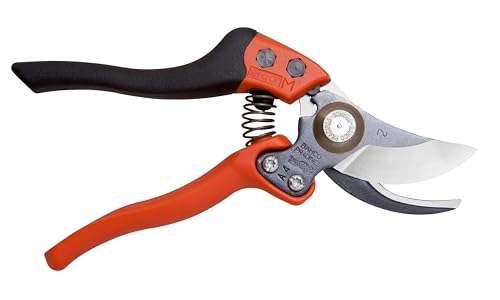
Bahco PX-M2 Ergo Bypass Pruner
Bahco angles the cutting head so your wrist stays straighter through each cut. Repetitive strain tends to build exactly at that joint. The Ergo range ships in several sizes, matching the tool to your hand instead of the reverse.
Pros
- Angled head keeps the wrist in a neutral position
- Multiple handle sizes fit different hand shapes
- Tool free adjustment works without extra hardware
Cons
- Size choice confuses first time buyers
- Less common on typical hardware store shelves

Fiskars PowerGear2 Pruner
A gear mechanism multiplies force through the toughest part of each cut. Owners with arthritis consistently single this feature out as the deciding factor. A slightly rolling handle spreads pressure across the palm instead of one spot.
Pros
- Noticeably less hand force needed per cut
- Rolling handle spreads pressure across the palm
- Widely stocked and easy to replace
Cons
- Blade is not user replaceable when it dulls
- Bulkier head than slim Japanese made pruners

Corona ClassicCUT Forged Bypass Pruner
Corona has supplied working growers for decades, and the ClassicCUT reflects that history. Forged construction pairs with a sap groove that stops the blade gumming up mid cut. Replacement blades stay available, which is unusual at this price point.
Pros
- Tough enough for daily orchard style work
- Sap groove keeps the cutting action smooth
- Replacement blade costs little to swap in
Cons
- Heavier than similar capacity rival pruners
- Grip design is plainer than ergonomic competitors

Okatsune 103 Bypass Pruners
Okatsune keeps its design deliberately simple, using hard Japanese steel blades and bright red handles. Cuts stay exceptionally clean on live stems, which matters for shaping and dieback prone plants. No cushioning softens the stop, so feel takes priority over comfort.
Pros
- Extremely clean cuts on live stem wood
- Bright red handles are easy to spot
- Few moving parts means less to fail
Cons
- No shock cushion softens the closing stop
- Hard steel can chip if twisted mid cut
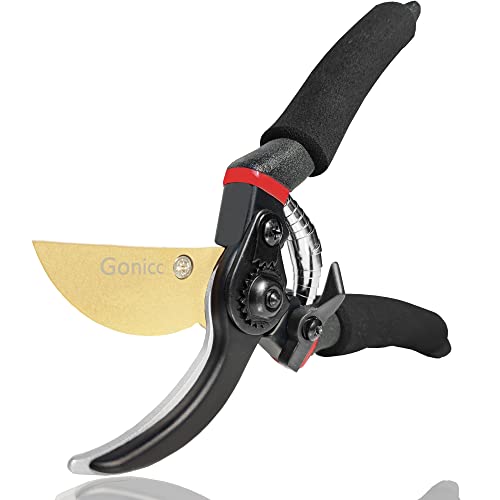
Gonicc 8 Inch Professional Bypass Pruning Shears
For occasional deadheading and light shrub work, these need little thought to use well. A sap groove and safety lock appear here despite the low price point. Softer steel means more frequent sharpening than premium options require.
Pros
- Very affordable entry point for casual gardeners
- Comfortable grips suit light pruning work
- Safety lock operates easily with one hand
Cons
- Softer steel dulls sooner than premium blades
- Struggles with thick or dead wood branches
Compared at a glance
| # | Model | Type | Best for | Score | Price |
|---|---|---|---|---|---|
| 1 | Felco F-2 Classic Manual Hand Pruner | Bypass | Best overall | 9.4 | Check price |
| 2 | ARS HP-VS8Z Signature Heavy Duty Pruner | Bypass | Best cutting action | 9.2 | Check price |
| 3 | Bahco PX-M2 Ergo Bypass Pruner | Bypass with angled head | Best ergonomics | 9.0 | Check price |
| 4 | Fiskars PowerGear2 Pruner | Bypass with gear mechanism | Best for weak grip | 8.8 | Check price |
| 5 | Corona ClassicCUT Forged Bypass Pruner | Bypass | Best value | 8.6 | Check price |
| 6 | Okatsune 103 Bypass Pruners | Bypass | Best for precision work | 8.3 | Check price |
| 7 | Gonicc 8 Inch Professional Bypass Pruning Shears | Bypass | Best budget | 8.0 | Check price |
How to choose
Bypass or anvil: which pruning shears do you need? Bypass pruners work like scissors, giving a clean cut that heals well on living stems. Anvil pruners crush the stem against a flat plate instead. That crushing action suits dead wood and cuts faster through tough material. It also damages live tissue, so a bypass pruner should be your first and often only purchase for general garden work.
What handle span actually means for hand comfort Cutting capacity gets all the attention, while handle span decides whether your hand hurts. Handles that open wider than your grip can comfortably span put every cut at a mechanical disadvantage. Smaller hands do better with compact models, like the shorter Bahco sizes. Anyone with grip weakness should try a geared design instead, like the Fiskars PowerGear2.
How thick a branch can hand pruners actually cut? Most quality pruners handle stems up to around three quarters of an inch. Forcing a thicker branch bends blades, loosens pivots and risks wrist injury. Step up to loppers or a pruning saw once a stem resists cutting. Twisting the pruner to finish a cut ruins good blades faster than almost anything else.
How do you maintain pruning shears so they last? Sap and moisture cause more damage than cutting ever does. Wipe the blade after each session and keep the pivot lightly oiled. Touch up the edge with a small file or diamond hone every few uses. Tools with replaceable parts, like the Felco and ARS models, come back to nearly new condition for a fraction of replacement cost.
Questions worth asking
What is the difference between bypass and anvil pruners?
Bypass pruners slice past each other like scissors, leaving a clean cut that heals fast on live stems. Anvil pruners press a single blade against a flat surface, crushing the stem instead. Use bypass for living growth, and save anvil designs for dead wood where crushing does not matter.
How thick a branch can hand pruners cut?
Most quality pruners rate up to around three quarters of an inch, though soft green growth cuts easier than dry hardwood. Treat that rating as a limit, not a target. Anything needing real force or a twist to finish belongs with loppers or a saw instead.
How often should I sharpen pruning shears?
A few passes with a diamond hone every two or three sessions keeps a good edge going indefinitely. That is far easier than restoring a badly dulled blade later. A pruner that tears rather than slices, or leaves a ragged stub, is overdue. Softer steel, like the budget models here, needs more frequent attention.
Are expensive pruning shears worth the extra cost?
Not for occasional deadheading. For regular pruning, yes, since replaceable parts mean the tool lasts decades with a consistent cutting action. Owners report the biggest practical differences are out of box sharpness and hour by hour comfort, not raw cutting capacity.
Which pruning shears work best for arthritic hands?
Geared designs, like the Fiskars PowerGear2, reduce the force needed at the hardest part of each cut. Rolling handles spread pressure across the palm rather than concentrating it. Look for a narrow handle span and a lock that operates with one thumb. Ratchet pruners are another option worth trying.
Should I disinfect pruning shears between plants?
Yes, when working on plants showing disease, since blades transfer pathogens readily between cuts. Isopropyl alcohol on a cloth works quickly and does not corrode blades the way bleach can. A simple wipe down at session’s end covers routine pruning of healthy plants.
Can left handed gardeners use standard pruning shears?
Most bypass pruners work in either hand, but the catch and blade geometry favor right handed use, and cuts can feel less controlled. Felco and a few other makers offer dedicated left handed versions. Anyone pruning for hours at a time should seek out a proper left handed model.
What causes pruning shears to become stiff?
Usually dried sap in the pivot and on the blade faces, sometimes combined with an overtightened pivot bolt. Clean the blade with alcohol or a sap solvent, then add a drop of light oil at the pivot. Adjust the bolt until the blade closes smoothly with no side play. Rust in the joint needs a full strip down.
Bypass pruners vs anvil pruners: which should a beginner buy?
Beginners should start with bypass pruners, since most garden work involves cutting live stems that need a clean, healing cut. Anvil pruners only make sense as a second tool for cutting dead or woody material where crushing is fine.
Our pick
Felco’s F-2 remains the pruner to buy for a working lifetime, since every wear part can be replaced. ARS’s HP-VS8Z cuts more sweetly and weighs less when outright feel matters most. Gardeners limited by hand strength will garden longer with the Fiskars PowerGear2 than with any premium blade.
Sierra Daniels
Sierra's background is in landscape design and nursery retail. She focuses on lawn and garden equipment, outdoor furniture and gear durability, weighing published specs against how materials actually hold up outside.