How to Choose a Yoga Mat That Won’t Tear or Thin Out
For most practitioners, the Manduka PRO Yoga Mat leads on durability and cushioning. The Gorilla Mats Premium Extra Thick Yoga Mat offers the most joint support at 12mm, and the Jade Yoga Harmony Mat brings the stickiest natural rubber grip, based on specifications and owner feedback.
Durability, cushioning, and grip put the Manduka PRO Yoga Mat, Gorilla Mats Premium Extra Thick Yoga Mat, and Jade Yoga Harmony Mat ahead of the rest among heavy duty options. Thickness across the group spans 4.2mm to 13mm, and material choices range from closed-cell PVC to NBR foam to natural rubber.
Picking a heavy duty mat gets tricky because thicker padding improves joint comfort while making balance poses less stable underfoot. We compared listed thickness, material type, dimensions, and weight, then weighed that against owner feedback on wear over time and grip once hands and feet start to sweat.
How to choose
What Makes a Yoga Mat Heavy Duty Heavy duty yoga mats typically measure 5mm to 13mm thick, compared with the 3mm standard mats sold for studio classes. Materials fall into three main categories: closed-cell PVC, NBR foam, and natural rubber, each affecting grip, cushioning, and long-term wear differently. Dense closed-cell mats like the Manduka PRO resist moisture and denting, while foam options like the BalanceFrom GoYoga trade some durability for a lighter carry weight. Widths also vary, running 24 to 32 inches depending on how much floor space a practitioner wants.
Closed-Cell vs Open-Cell Cushioning A sealed surface on closed-cell mats, including the Manduka PRO and Gorilla Mats Premium, keeps sweat and bacteria from soaking into the foam. Open-cell natural rubber mats like the Jade Yoga Harmony absorb moisture into the material itself, improving grip as a session gets sweatier but calling for more frequent cleaning. NBR foam, used in the Heathyoga and ProsourceFit mats, sits between the two, offering soft cushioning without rubber’s tackiness. Wiping down closed-cell surfaces takes less time, while open-cell rubber needs air drying after hot or intense sessions.
Matching Mat Thickness to Your Joints and Floor Type Hardwood and tile floors transmit more impact, so mats in the 10mm to 13mm range, such as the Gorilla Mats Premium or ProsourceFit, cushion knees and hips during kneeling poses. Carpeted floors already absorb some shock, so a thinner 4mm to 6mm mat like the Liforme Original or Manduka PRO can offer more stability for standing balance work. Thicker padding makes it harder to feel the floor underfoot, which throws off single-leg poses for some practitioners. Pilates or floor-based strength work alongside yoga often favors a firmer mat under 6mm.
Sizing Up for Tall or Larger Practitioners Standard yoga mats run about 68 to 71 inches long and 24 inches wide, which can feel cramped for taller users during downward dog or lunges. The Heathyoga Extra Thick Yoga Mat extends to 72 by 32 inches, giving several extra inches of width for wider stances. Jade Yoga also sells a 74-inch long version of the Harmony Mat for practitioners over six feet tall. Checking listed dimensions before buying avoids the common problem of hands or feet landing off the mat’s edge mid-pose.
The top picks, ranked

Manduka PRO Yoga Mat
A 6mm closed-cell PVC build holds up through years of daily practice without denting, according to owner reports. At 7.5 pounds it sits heavier than most travel mats, which keeps it flat and grounded during floor work. Moisture stays on the closed-cell surface instead of soaking in, so it wipes clean rather than absorbing sweat.
Pros
- Closed-cell surface resists sweat absorption and odor buildup
- Dense cushioning holds up under years of daily use
- Backed by a lifetime guarantee against wear
Cons
- Heavier to roll and carry than foam mats
- Needs a short break-in period before grip fully develops

Gorilla Mats Premium Extra Thick Yoga Mat
This mat measures 12mm thick, roughly double the padding of a standard studio mat, cushioning knees and hips during kneeling poses. Closed-cell NBR foam keeps its shape instead of flattening under repeated pressure. Texture on both sides adds grip whether the mat sits foam-side or fabric-side down.
Pros
- Thick NBR padding cushions knees and hips on hard floors
- Textured surface on both sides resists slipping in wide poses
- Includes a carrying strap for transport
Cons
- Extra thickness can make single-leg balance poses feel less stable
- Bulkier to store than thinner travel mats

Jade Yoga Harmony Mat
Open-cell natural rubber tapped from trees, not synthetic foam, makes up the Harmony Mat. At 5mm thick it offers moderate cushioning while staying light enough to carry to a studio. Owners report the surface grips harder as hands and feet perspire, since the open-cell rubber absorbs moisture rather than letting it pool.
Pros
- Natural rubber surface grips more as hands and feet perspire
- Open-cell rubber cushions without adding excess bulk
- Made in the USA from renewable rubber, with a tree planted per mat sold
Cons
- Open-cell material can hold odor without regular cleaning
- Rubber scent is noticeable when the mat is new

Liforme Original Yoga Mat
AlignForMe guide lines print directly onto the mat, helping square hands and feet in standing poses. A natural rubber base sits under a polyurethane top layer, which owners say stays grippy even during hot, sweaty sessions. At 4.2mm it runs thinner than most mats here, trading bulk for a more stable standing surface.
Pros
- Printed alignment guides help position hands and feet in poses
- Polyurethane top layer grips well during hot, sweaty sessions
- Natural rubber base adds stability without excess thickness
Cons
- Thinner profile offers less cushioning than foam-heavy mats
- Printed alignment lines can fade slightly with frequent machine washing
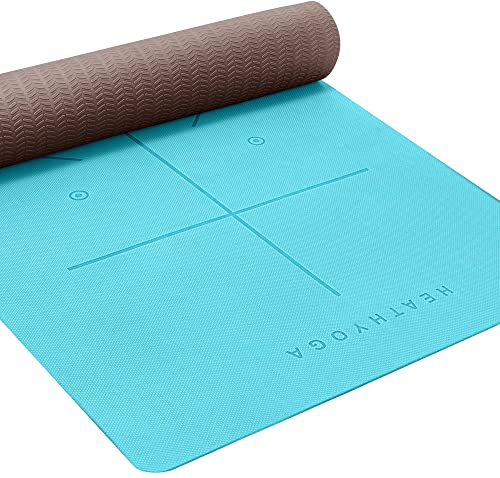
Heathyoga Extra Thick Yoga Mat
At 72 by 32 inches, this mat runs 8 inches wider than most standard mats, giving taller practitioners more room during lunges and wide-arm poses. A 12mm NBR foam layer softens impact on hard floors, and a textured pattern on both sides helps hands and feet stay put. A carrying strap and mesh bag come included.
Pros
- Extra 32-inch width gives taller users more room to move
- Textured non-slip surface on both sides
- Includes a carrying strap and mesh storage bag
Cons
- Wider size takes up more storage and floor space
- NBR foam compresses faster than rubber under heavy daily use

ProsourceFit Extra Thick Yoga and Pilates Mat
13mm of NBR foam cushions floor exercises like crunches and stretches, and the mat is marketed for both yoga and pilates use. At 2.4 pounds it is one of the lighter mats here despite its thickness, easy to roll and carry. Several color options suit home setups or a shared studio.
Pros
- Dual-use padding works for yoga, pilates, and floor exercises
- Lightweight NBR foam is easy to roll and carry
- Available in multiple colors for different setups
Cons
- Standard 24-inch width feels narrow for wide-arm poses
- Grip is less tacky than rubber-based mats once hands sweat

BalanceFrom GoYoga All-Purpose Extra Thick Yoga Mat
Half an inch of NBR foam packs into a mat that weighs just 2 pounds, one of the lightest on this list. Owners use it for yoga, general floor exercise, and even kids’ play mats given the low cost of entry. A basic carrying strap comes included, though the fabric shows wear marks sooner than denser materials.
Pros
- Budget price point for a half-inch thick cushioned mat
- Includes a carrying strap for transport
- Lightweight foam is easy to fold and pack
Cons
- Foam surface shows wear marks sooner than rubber mats
- Less tacky grip than natural rubber options when hands sweat
How they stack up
| # | Model | Thickness | Best for | Score | Price |
|---|---|---|---|---|---|
| 1 | Manduka PRO Yoga Mat | 6mm (0.24 in) | Best overall | 9.4 | Check price |
| 2 | Gorilla Mats Premium Extra Thick Yoga Mat | 12mm (0.5 in) | Best for joint support and cushioning | 9.1 | Check price |
| 3 | Jade Yoga Harmony Mat | 5mm (0.19 in) | Best for natural rubber grip | 8.8 | Check price |
| 4 | Liforme Original Yoga Mat | 4.2mm (0.17 in) | Best for alignment guides | 8.5 | Check price |
| 5 | Heathyoga Extra Thick Yoga Mat | 12mm (0.5 in) | Best for large and tall users | 8.3 | Check price |
| 6 | ProsourceFit Extra Thick Yoga and Pilates Mat | 13mm (0.5 in) | Best for pilates and multi-purpose exercise | 8.1 | Check price |
| 7 | BalanceFrom GoYoga All-Purpose Extra Thick Yoga Mat | 13mm (0.5 in) | Best budget | 8.0 | Check price |
Good to know
How thick is a heavy duty yoga mat?
Heavy duty yoga mats typically range from 5mm to 13mm thick, compared with 3mm for standard studio mats. Extra-thick options like the Gorilla Mats Premium Extra Thick Yoga Mat measure 12mm for added cushioning on hard floors.
What is the best yoga mat for bad knees?
Mats with 10mm or more of NBR foam or closed-cell padding, such as the Gorilla Mats Premium or ProsourceFit Extra Thick, cushion kneeling poses best. Thinner mats under 5mm transmit more floor pressure into the joints.
Are thicker yoga mats better for beginners?
Thicker mats can make standing balance poses harder since the surface compresses unevenly underfoot. Many beginners start with a 4mm to 6mm mat like the Manduka PRO or Liforme Original, then add thickness later if joint comfort matters more.
NBR foam vs PVC yoga mat: which holds up longer?
NBR foam, used in mats like the BalanceFrom GoYoga and Heathyoga, is lighter and softer but compresses faster under daily use. Closed-cell PVC, as in the Manduka PRO, is denser and holds its shape longer, though it weighs more per mat.
Can heavy duty yoga mats double as pilates mats?
Yes, extra-thick mats like the ProsourceFit Extra Thick Yoga and Pilates Mat are built for both practices and cushion floor exercises well. Firmer, thinner mats under 6mm still work for pilates moves that need more floor contact.
Do extra thick yoga mats hurt balance poses?
Mats over 10mm thick can make single-leg poses like tree pose feel less stable since the foam gives more under the standing foot. Practitioners who prioritize balance work often choose a mat closer to 4mm to 6mm instead.
How do you clean a heavy duty yoga mat?
Closed-cell mats like the Manduka PRO wipe down with a damp cloth after each use since moisture stays on the surface. Open-cell natural rubber mats such as the Jade Yoga Harmony need air drying after cleaning since the material absorbs moisture.
Is natural rubber better than foam for grip?
Natural rubber mats like the Jade Yoga Harmony and Liforme Original tend to grip harder as hands and feet perspire during a session. NBR foam mats start grippier when dry but can feel slicker once sweat builds up.
What size yoga mat fits a tall person?
Practitioners over six feet tall generally need a mat past 72 inches long, like the Heathyoga Extra Thick at 72 by 32 inches or the 74-inch Jade Yoga Harmony option. Standard 68-inch mats often leave feet hanging off the end.
Do heavy duty yoga mats smell when new?
Natural rubber mats like the Jade Yoga Harmony carry a noticeable rubber scent out of the packaging, which fades with airing and use. NBR foam and PVC mats typically carry less odor from the start.
The verdict
Daily practice on hard floors holds up best on the Manduka PRO Yoga Mat across thickness, material, and dimensions. Joint cushioning peaks with the Gorilla Mats Premium Extra Thick Yoga Mat. Budget shoppers still get solid half-inch padding from the BalanceFrom GoYoga mat without paying for premium materials.
Derek Holt
Derek has a background coaching recreational and amateur athletes and has worked the sales floor at specialty fitness retailers. He focuses on equipment durability, ergonomics and realistic use cases rather than marketing claims.