Regulation Outdoor Games Built for Weekly League Play
Spikeball Pro Kit leads for competitive play, pairing reinforced legs with tunable net tension. GoSports Regulation Size Cornhole Set matches the official 48 by 24 inch board. KanJam Original Disc Game travels best, since two goals and a disc drop into a car boot.
Spikeball Pro Kit is the set for groups that keep score, because stiffer legs and adjustable net tension survive the diving play that folds a starter kit. Weight is the tradeoff. Pro rim and balls carry more heft than the basic version, and anyone playing twice a summer will never feel the upgrade.
Party toys and tournament gear share the same photos and the same marketing words, which makes them hard to separate online. Regulation dimensions, hardware weight and replaceable parts are the real dividing lines. We compared governing body dimensions where they exist, board and frame materials, included accessories and carry solutions, then weighed owner reports on warping, bola fraying and season long wear.
The shortlist, ranked

Spikeball Pro Kit
Competitive players choose the Pro Kit for stiffer legs and a net whose tension gets tuned before the first serve. Two pro balls ship in the box, grippier and truer off the rim than the standard ball. Broken down, the 36 in rim rides in the included backpack.
Pros
- Net tension sets rebound speed per match
- Reinforced legs absorb diving returns
- Rim and net pack into a carry backpack
Cons
- Carries more weight than the beginner kit
- Uneven ground skews the rebound

GoSports Regulation Size Cornhole Set
Boards hit the official 48 by 24 inches, and practice on anything shorter drills the wrong arc. Eight duck cloth bags arrive in two colours, four per side. Folding legs plus a carry case make the walk from car to tailgate realistic.
Pros
- Regulation footprint matches league boards
- Bags included rather than sold separately
- Folded boards store flat against a wall
Cons
- Full size boards are awkward for one person
- Paint scuffs where bags land repeatedly
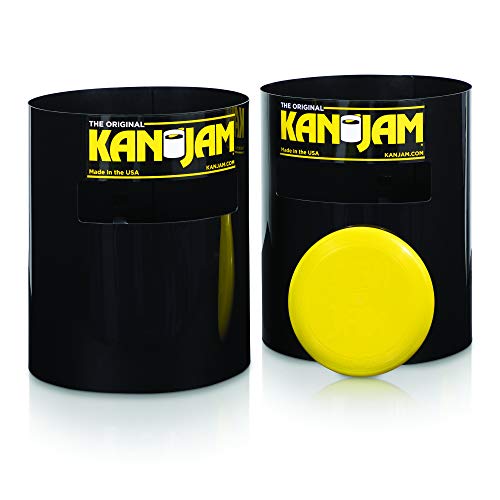
KanJam Original Disc Game Set
Two goals and a flying disc leave room to spare in a car boot, which explains the beach and campsite popularity. Panels snap together without tools and stay upright in soft sand. Official spacing is 50 feet, so open sand or a long lawn beats a small yard.
Pros
- Sets up in minutes and weighs very little
- Plays on sand, grass or a hard court
- Two versus two suits groups of four
Cons
- Fifty feet of clear ground is mandatory
- Empty goals tip over in strong wind

Yard Games Giant Tumbling Timbers
Fifty six sanded pine blocks start the tower around two and a half feet, then push past five as play goes on. Nobody has to throw anything, so mixed groups stay involved. Blocks travel in a nylon bag that keeps them dry between events.
Pros
- Large mixed age groups all get a turn
- No throwing accuracy required to join in
- Bare pine takes stain or custom lettering
Cons
- Rain warps pine blocks quickly
- Stacking demands a hard level surface

GoSports Pro Grade Ladder Toss
Heavier gauge tubing stops the flex that kills budget ladders when a bola wraps hard. Six bolas in two colours cover a standard match between two players. Frames break down flat into the supplied case, so a league night rides in one bag.
Pros
- Frame resists flex better than entry sets
- Packs small enough for a car boot
- New players learn the rules in a minute
Cons
- Bola rope frays across a heavy season
- Light frames drift on windy days without stakes
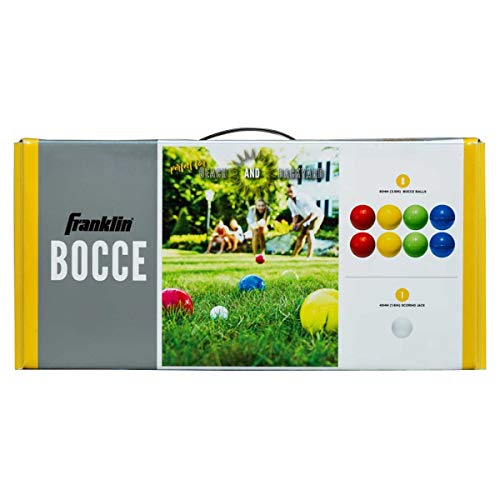
Franklin Sports Bocce Ball Set
Eight resin balls and a pallino give grandparents and teenagers an even match. Ground condition barely matters, since bocce has always run on grass, gravel and packed sand. A moulded case keeps the set together on a garage shelf.
Pros
- Uneven ground becomes part of the game
- Low impact enough for older players
- Resin shrugs off rain and sun
Cons
- Resin balls weigh less than tournament sets
- Gravel courts scuff the colour finish
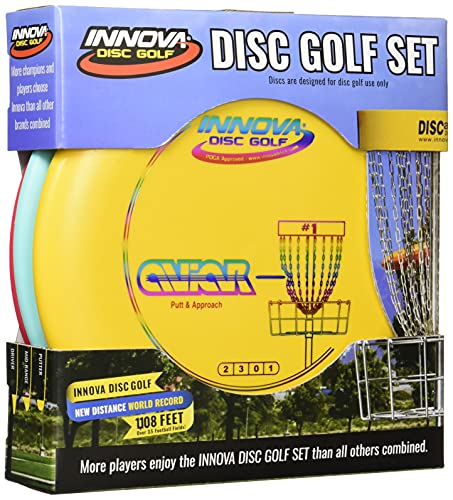
Innova Disc Golf Starter Set
Three discs cover a whole round: distance driver, midrange and putter. DX plastic grips well in the hand and turns more understable as it wears in. Public courses are usually free to play, so nothing else needs buying.
Pros
- One set covers every shot a beginner throws
- Free public courses replace yard space
- Discs slide into a backpack side pocket
Cons
- DX plastic wears faster than premium blends
- A lawn is far too short for a driver
How to pick the right one
What separates tournament sets from party versions Regulation dimensions come first, because undersized equipment builds the wrong muscle memory. Cornhole boards should measure 48 by 24 inches and sit 27 feet apart, front edge to front edge. Hardware weight is the second tell. Thicker tubing, stiffer legs and denser bags all outlast the light versions. Replaceable parts matter for anything played weekly, whether that means bolas, bags or a net. Carry cases sound like a marketing extra until a set moves every weekend, at which point they decide whether it gets used.
Matching a game to your yard size and surface Measure the longest clear line in your yard before ordering anything. KanJam wants 50 feet between goals. Cornhole needs roughly 33 feet of total run once throwers are included. Spikeball fits a much smaller circle, though level ground is non negotiable for fair rebounds. Bocce forgives the most, since slopes and patchy grass turn into part of the challenge. On a small patio, stacking games and short throw sets are the only honest options.
Best outdoor games for beaches and tailgates Pack size and weight decide what actually reaches the car. KanJam goals and a disc weigh almost nothing and stand up in sand without stakes. Spikeball collapses into a backpack, though the ball needs its pump. Cornhole boards stay heavy and awkward, so tailgaters tend to buy a folding set with handles for that job alone. Wooden block towers travel worst, because beaches and fields rarely offer the hard flat base they need.
Running a backyard league and keeping gear alive Leagues live on consistent distances, so mark pitching lines with lawn paint or stakes instead of guessing weekly. Rotate two sets of bags or bolas when play is weekly, since wear concentrates on whatever gets used most. Store wooden components indoors. Pine blocks and untreated boards warp after one wet weekend outside. Check that replacement parts are published before buying, because a single frayed bola can otherwise retire an entire set. Playing a few times a summer? Ignore pro gear and put the difference toward a second game for variety.
Side by side
| # | Model | Rim diameter | Best for | Score | Price |
|---|---|---|---|---|---|
| 1 | Spikeball Pro Kit | 36 in | Best overall | 9.4 | Check price |
| 2 | GoSports Regulation Size Cornhole Set | 48 x 24 in, regulation | Best for tournament cornhole | 9.2 | Check price |
| 3 | KanJam Original Disc Game Set | 2 goals and 1 flying disc | Best for beach and travel | 8.9 | Check price |
| 4 | Yard Games Giant Tumbling Timbers | 56 sanded pine | Best for large parties | 8.7 | Check price |
| 5 | GoSports Pro Grade Ladder Toss | 2 ladders and 6 bolas | Best for backyard leagues | 8.5 | Check price |
| 6 | Franklin Sports Bocce Ball Set | 8 balls and 1 pallino | Best for mixed ages | 8.3 | Check price |
| 7 | Innova Disc Golf Starter Set | Driver, midrange, putter | Best for open parks | 8.0 | Check price |
Frequently asked questions
What are the official cornhole board dimensions?
Regulation boards run 48 inches long by 24 inches wide. Front edges sit 27 feet apart for adult play. Each hole measures 6 inches across, centred 9 inches from the top edge.
Which outdoor game is best for a small yard?
Spikeball asks for the least room, since play circles the net rather than crossing a field. Bocce also adapts to short or uneven ground. KanJam and disc golf both need far more space than a small lawn offers.
Is the Spikeball Pro Kit worth it over the standard set?
Yes for competitive play, where stiffer legs and a firmer rim hold shape under diving returns. Adjustable tension lets you dial rebound speed before a match. Casual players get the same afternoon out of the standard kit.
How far apart should KanJam goals be?
Official play sets them 50 feet apart. Shorter gaps work fine for children or cramped spaces. Teams of two stand at opposite goals and alternate throws.
Can lawn games be played on sand at the beach?
KanJam, Spikeball and bocce all handle sand. Cornhole boards need level footing and tend to sink at the legs. Wooden stacking towers will not work there at all.
What outdoor games work for mixed ages?
Bocce and giant stacking towers keep everyone involved regardless of athleticism. Ladder toss is learnable in about a minute. Faster games like Spikeball tilt toward younger players.
How do you stop lawn games from weathering?
Bring wooden pieces indoors and keep boards out of standing water. Nylon bags and carry cases stop small parts disappearing between games. Resin and moulded plastic tolerate being left outside far better than pine.
Do you need a course to play disc golf with a starter set?
Public courses are the usual venue and most charge nothing. A large park works for practice throws. Yards almost never give a driver enough room.
Cornhole vs ladder toss: which is better for a backyard league?
Cornhole has the deeper league structure and published regulation dimensions. Ladder toss sets up faster and packs smaller for away nights. Groups that rotate venues often keep both and travel with the ladders.
Final word
Spikeball Pro Kit takes the recommendation for groups that keep score, since tunable tension and reinforced legs turn a picnic game into a genuine match. Anyone working toward league cornhole should buy the GoSports regulation set instead, because throwing at a board under 48 by 24 inches teaches habits you later have to unlearn. For a family gathering where half the group will not chase a ball, Franklin bocce gets more people playing than anything else here.
Rachel Simmons
Rachel previously worked in child-product retail and brings a practical, detail-first eye to gear reviews, focusing on safety standards, ease of use and the fine print that matters most for new caregivers.


