Bulk Math Manipulatives Built to Survive a Full School Year
Learning Resources Counting Bears Bulk Set leads for classroom scale counting and sorting that survives daily handling. hand2mind Unifix Cubes suit teachers building number sense through interlocking towers. Learning Resources Fraction Tower Equivalency Cubes fit older students moving into fractions, decimals and percentages within one bulk kit.
Learning Resources Counting Bears Bulk Set holds up best for a full classroom, thanks to thick plastic that resists years of dropping. Its main tradeoff is bear size, small enough to pose a choking risk for toddlers. hand2mind Unifix Cubes take over once a teacher’s focus shifts to number sense and early addition.
A bulk math set gets dropped, chewed on by younger students and passed between dozens of hands every week. Piece count alone does not predict survival, since thin plastic cracks faster than reinforced pieces regardless of quantity. We compared piece count, plastic thickness, age range and the specific skill each set targets. Then we checked owner reports of cracked pieces, faded colors and lost parts after a full school year.
How to pick the right one
What makes a bulk math set classroom ready Piece count needs to match class size, with spares for pieces that go missing mid lesson. Material thickness predicts durability, since thick plastic often outlasts thin dollar store equivalents by several school years. Age range on the package reflects choking hazard testing, not just skill difficulty.
Which manipulative fits which math skill Counting bears and linking cubes suit early counting, sorting and patterning for preschool through early elementary grades. Fraction tiles and towers target upper elementary and middle school students working with parts of a whole. Base ten blocks focus narrowly on place value and multi digit operations, so most classrooms pair them with a broader set.
Best bulk size for a whole classroom versus small groups A classroom of twenty five to thirty students needs enough pieces for one set per student, often 100 pieces or more. Small group interventions work fine with fifty to seventy five pieces, freeing budget for a second manipulative type. Homeschool co-ops usually fall between these two counts depending on group size.
How to store manipulatives without losing pieces Sets with sorting cups, buckets or trays keep pieces organized between uses and speed up cleanup time. Loose bulk bags cost less but need a separate bin or drawer to stop pieces from scattering across a floor. A five minute count back routine at the end of each lesson catches missing pieces before they disappear for good.
What we recommend

Learning Resources Counting Bears Bulk Set
This set packs 102 colored bears, sorting cups and a die into one classroom bundle. Thick plastic resists cracking through repeated drops better than thin dollar store bears. Sorting cups turn simple counting into graphing and probability practice within the same set.
Pros
- Thick plastic withstands years of daily handling
- Bulk count of 102 bears covers a full classroom
- Sorting cups and die add graphing and probability games
Cons
- Small bear size poses a choking risk for toddlers
- Bright colors fade after years of window sunlight

hand2mind Unifix Cubes
A 500 cube bucket gives every student interlocking pieces for counting and early addition. Cubes snap into towers that model place value without extra worksheets. The connection points stay snug even after years of daily snapping and pulling apart.
Pros
- 500 cube bucket suits whole class number sense lessons
- Interlocking towers model addition and place value visually
- Connection points stay tight after years of use
Cons
- Storage bucket takes up notable shelf space
- Cubes scatter quickly if the bucket lid stays open
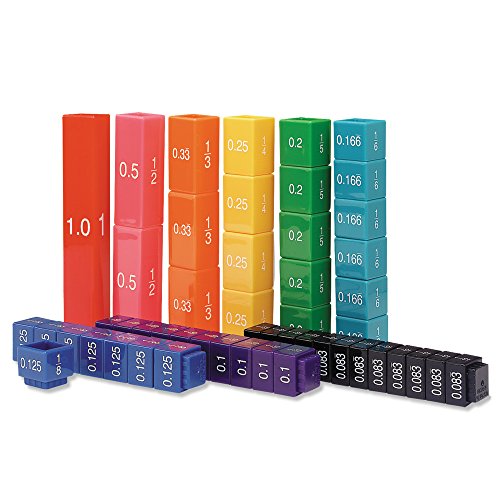
Learning Resources Fraction Tower Equivalency Cubes
Fifty one color coded cubes stack by height to show fraction, decimal and percentage equivalency at a glance. Upper elementary and middle school students compare values without converting numbers on paper first. Cubes snap together securely, avoiding the wobble common in cheaper stacking sets.
Pros
- Height comparison makes fraction equivalency visible instantly
- Secure snapping keeps stacked towers from wobbling
- Covers fractions, decimals and percentages in one kit
Cons
- Skips early counting and sorting skills entirely
- Piece count runs lower than basic counting sets
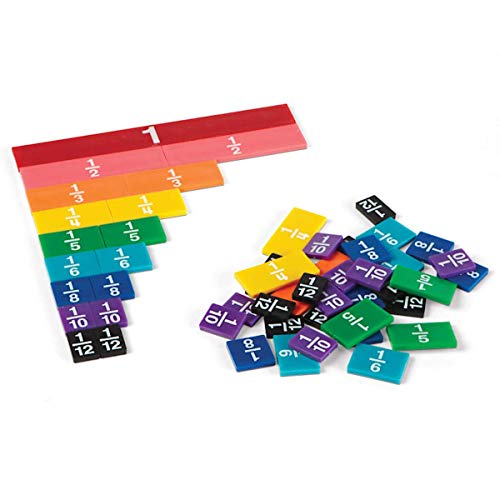
hand2mind Rainbow Fraction Tiles
Flat tiles lay fraction parts side by side, from whole pieces down to twelfths. Lower cost per set helps schools equip several classrooms without stretching a supply budget. Thinner material than cube based sets means rough handling shows wear sooner.
Pros
- Lower cost per set than cube based fraction kits
- Flat tiles store compactly in a supply closet
- Color coding by fraction size aids quick comparison
Cons
- Thinner tiles wear faster under rough handling
- Less durable than cubes for younger students

Learning Resources MathLink Cubes
Cubes link end to end instead of stacking, so small hands connect them during early counting practice. A 100 cube set gives every young student enough pieces for group activities. The simpler linking mechanism suits preschool and kindergarten fine motor skills better than Unifix style stacking.
Pros
- End to end linking suits small hands and beginners
- Set size supports group activities across a class
- Bright colors make sorting tasks easy to follow
Cons
- Less versatile for advanced math than Unifix cubes
- Set size trails the largest bear counting bulk packs

hand2mind Base Ten Blocks
Ones, tens, hundreds and a thousands cube let students build numbers by hand to grasp place value concretely. Plastic construction resists chipping better than wooden base ten sets under daily classroom use. This set targets one specific skill, so pair it with a broader counting manipulative.
Pros
- Physical blocks make place value concrete for students
- Plastic resists chipping better than wooden alternatives
- Includes ones through thousands cube in one set
Cons
- Narrow focus limits use to place value lessons
- Fewer total pieces than general counting sets

Learning Resources Three Bear Family Counters
Ninety six bear counters cover sorting and counting basics at a lower price than the largest classroom sets. Three sizes per color let students compare size alongside counting practice. A single classroom, rather than a full grade level, fits this set best.
Pros
- Lower price than larger bulk counting sets
- Three sizes per color add size comparison practice
- Right sized for one classroom’s daily counting needs
Cons
- Smaller total count than premium bulk sets
- No included cups or dice for extra activities
Side by side
| # | Model | Piece count | Best for | Score | Price |
|---|---|---|---|---|---|
| 1 | Learning Resources Counting Bears Bulk Set | 102 bears plus cups and die | Best overall | 9.3 | Check price |
| 2 | hand2mind Unifix Cubes | 500 cubes per bucket | Best for number sense | 9.1 | Check price |
| 3 | Learning Resources Fraction Tower Equivalency Cubes | 51 cubes with activity guide | Best for fractions | 8.9 | Check price |
| 4 | hand2mind Rainbow Fraction Tiles | 51 tiles per set | Best value fractions | 8.6 | Check price |
| 5 | Learning Resources MathLink Cubes | 100 cubes per set | Best for early learners | 8.7 | Check price |
| 6 | hand2mind Base Ten Blocks | 121 pieces per set | Best for place value | 8.4 | Check price |
| 7 | Learning Resources Three Bear Family Counters | 96 bears per set | Best budget | 8.1 | Check price |
Questions worth asking
What age is right for math manipulatives?
Basic counting toys like bears and linking cubes suit children as young as three. Fraction and place value manipulatives generally target students six years and older who are ready for abstract concepts.
How many math manipulatives does a classroom need?
A common guideline is one full set per student during small group work. That often means 100 pieces or more for a class of twenty five to thirty students.
Is plastic or wood more durable for math manipulatives?
Quality plastic resists chipping and cracking better than wood under daily classroom use. Wood can still look more attractive for display purposes in a home or specialty setting.
What is the difference between counting bears and linking cubes?
Counting bears are separate pieces used for sorting, counting and simple graphing. Linking cubes connect into towers, which helps demonstrate addition and place value visually.
Can fraction manipulatives help students who struggle with fractions?
Yes, tools like fraction towers or tiles let students physically compare sizes side by side. Many students grasp equivalency faster this way than from numbers alone on paper.
How do you stop small manipulative pieces from getting lost?
Labeled sorting cups, buckets or trays cut losses significantly compared to loose bags. A routine of counting pieces back in before storage catches missing items right away.
What math skills do base ten blocks teach?
Base ten blocks build a concrete understanding of place value across ones, tens, hundreds and thousands. That foundation supports multi digit addition, subtraction and eventually multiplication.
Are bulk math toy packs cheaper than buying individual sets?
Generally yes, since bulk packs lower the cost per piece versus several smaller sets. That makes them a better value for classrooms or homeschool co-ops needing larger quantities.
What is the best bulk math toy for a homeschool co-op?
Groups with mixed ages often start with a bear or cube counting set, then add fraction tiles as older kids advance. Splitting one large bulk set across two smaller co-op groups can stretch the budget further.
Our take
Learning Resources Counting Bears Bulk Set is the strongest pick for a full classroom that needs durable counting and sorting tools at scale. Teachers building number sense before counting skills should choose hand2mind Unifix Cubes instead, since interlocking towers model addition and place value directly. Upper elementary classrooms tackling fractions get the clearest visual teaching tool from Learning Resources Fraction Tower Equivalency Cubes.
Rachel Simmons
Rachel previously worked in child-product retail and brings a practical, detail-first eye to gear reviews, focusing on safety standards, ease of use and the fine print that matters most for new caregivers.