Which Science Kits Actually Keep Kids Engaged?
Thames and Kosmos Chem C1000 wins overall for real chemistry with glassware and a proper manual. Snap Circuits Jr. SC-100 teaches electronics through reusable snap together parts. Learning Resources Primary Science Lab Activity Set suits toddlers and preschoolers with chemical free tools sized for small hands.
Chem C1000 leads for genuine chemistry, Snap Circuits Jr. wins for electronics, and the Primary Science Lab set fits toddlers best. Each kit targets a different age band, so match age first and features second.
Box copy rarely says whether a kit gets used once or for years. We compared how many experiments are truly repeatable, whether consumables have refill packs, manual clarity, supervision demands and how honest each stated age range is based on specifications and owner feedback.
Before you buy
What to check before choosing a science kit Box art rarely reveals how long a kit stays interesting. Compare four things first: how many experiments are genuinely repeatable, whether the manual explains reasoning or just lists steps, how much adult supervision each activity needs, and whether the stated age range matches your child’s reading level. A kit that nails these four criteria gets reused for years instead of one weekend.
Reusable kits versus single use kits Chemistry sets, crystal kits and geode kits get consumed as kids use them. Snap Circuits and the Primary Science Lab tools get rebuilt or reused indefinitely. Neither approach is wrong, but a consumable kit suits a single project while a reusable one can occupy a child on and off for years. Check whether refill packs exist before buying a consumable set as a long term gift.
Matching the kit to your child’s age Toddlers and preschoolers do best with chemical free tools like the Primary Science Lab set. Early readers around five benefit from a bridge kit such as the Kids First Science Laboratory, which pairs real equipment with illustrated steps. Kids eight and up handle Snap Circuits independently, and the Chem C1000 suits ten and up once reading comprehension supports the fuller manual.
Supervision, mess and extra supplies to plan for Hammers, hot water, plaster dust and open flame all show up somewhere in this category. Snap Circuits needs AA batteries that are not included, and geode kits need a hammer plus a cloth to catch fragments. Setting up on a covered table or outdoors cuts down cleanup considerably. Goggles are worth wearing for anything involving heating, mixing or breaking, and several kits here include a pair.
What we recommend

Thames & Kosmos Chem C1000 Chemistry Set
This chemistry set includes real glassware, a spirit burner and chemicals for over 100 experiments. Its manual explains the reasoning behind each reaction rather than just listing steps. Owners report older kids work through it start to finish because the explanations hold their attention.
Pros
- Manual teaches the chemistry, not just the steps
- Includes real glassware and a spirit burner
- Chemical refill packs sold separately
Cons
- Needs close adult supervision throughout
- Reading level suits ten and up, not younger kids

Snap Circuits Jr. SC-100 by Elenco
Snap Circuits swaps wires and soldering for colour coded parts that click onto a plastic grid. A child builds a working circuit in minutes and can see what each part does. Based on specifications the project book covers 100 builds, and expansion sets add more.
Pros
- Reusable indefinitely, nothing gets consumed
- Concepts carry over to real electronics
- Expandable with additional Snap Circuits sets
Cons
- AA batteries not included
- Small pieces need a storage system
Learning Resources Primary Science Lab Activity Set
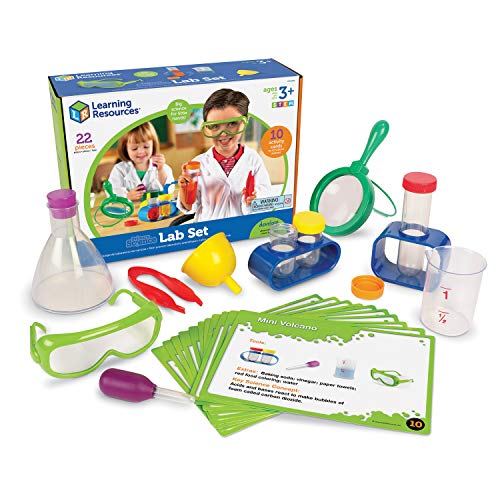
Small hands get chunky, working lab tools here, including beakers, a magnifier, tweezers and goggles. No chemicals ship in the box, which fits this age group. Owners report kitchen items like water and food colouring become full experiments once paired with this gear.
Pros
- Tools are scaled for toddler and preschool hands
- No chemicals to store or supervise
- Works with household items you already own
Cons
- Parent needs to supply the actual experiments
- Too basic for kids past about age seven

National Geographic Mega Fossil Dig Kit
A moulded plaster block hides 15 real fossil specimens that kids chip free with the included chisel and brush. Identification becomes a genuine reward rather than a guess. Based on specifications the illustrated guide explains what each fossil is and how it formed.
Pros
- Real fossils, not plastic replicas
- Keeps focus for an entire afternoon
- Finds become a display worthy collection
Cons
- Plaster block is single use and cannot reset
- Excavation creates noticeable dust and mess

Thames & Kosmos Kids First Science Laboratory
Safe household materials meet real laboratory equipment in this bridge kit. Its illustrated manual suits kids still building reading confidence. Owners report it works as a stepping stone before a child moves on to the Chem C1000.
Pros
- Introduces lab equipment without hazardous chemicals
- Illustrated steps suit early readers
- Uses materials most households already stock
Cons
- Fewer experiments than the larger Chem sets
- Some components feel light duty

4M Crystal Growing Kit
Crystals form over several days, teaching patience alongside supersaturation and nucleation. Finished pieces come in multiple colours and hold up well as keepsakes. Based on specifications, this remains one of the lowest cost ways to cover real chemistry concepts.
Pros
- Teaches observation and patience across days
- Results look good enough to display
- Low cost relative to the concepts covered
Cons
- Chemicals are consumed with no refill option
- Hot water step needs adult handling

National Geographic Break Open 10 Geodes Kit
Cracking a geode open reveals crystals in seconds, which suits kids who lose patience with longer projects. Ten real geodes ship in the box, no two alike. Owners report it doubles as a party activity since every child opens their own.
Pros
- Instant, satisfying result with no waiting
- Ten real geodes, each unique inside
- Doubles as a group or party activity
Cons
- Finished once every geode is opened
- Requires a hammer and adult supervision
How they stack up
| # | Model | Age range | Best for | Score | Price |
|---|---|---|---|---|---|
| 1 | Thames & Kosmos Chem C1000 Chemistry Set | 10 and up | Best overall | 9.4 | Check price |
| 2 | Snap Circuits Jr. SC-100 by Elenco | 8 and up | Best for electronics | 9.2 | Check price |
| 3 | Learning Resources Primary Science Lab Activity Set | 3 and up | Best for young children | 9.0 | Check price |
| 4 | National Geographic Mega Fossil Dig Kit | 6 and up | Best for discovery play | 8.7 | Check price |
| 5 | Thames & Kosmos Kids First Science Laboratory | 5 and up | Best first chemistry set | 8.5 | Check price |
| 6 | 4M Crystal Growing Kit | 10 and up | Best value | 8.2 | Check price |
| 7 | National Geographic Break Open 10 Geodes Kit | 6 and up | Best gift kit | 8.0 | Check price |
Common questions
What age is right for a first real chemistry set?
Around ten works well for a set with real glassware and a burner, like the Chem C1000. Younger kids get more from a bridge kit using household materials, such as the Kids First Science Laboratory, which introduces the same equipment without the hazards.
Are science kits safe for younger siblings in the house?
Kits here suit home use within their stated age range, but several need adult supervision for chemicals, heat or hammering. Store chemistry and geode kits out of reach between sessions, and read the manual before the first attempt.
Do science kits run out after one use?
Some do. Crystal growing kits and geode kits get consumed completely. Chemistry sets use up chemicals but often sell refill packs. Snap Circuits and basic lab tool sets stay reusable, which is why they tend to hold attention longer.
Which kit works best for a child with a short attention span?
Pick something with an immediate payoff. The Break Open Geodes kit rewards effort within minutes, and Snap Circuits produces a working circuit almost instantly. Crystal growing suits kids who already enjoy waiting for a result.
Snap Circuits or Chem C1000 for a nine year old?
Snap Circuits fits a nine year old comfortably and stays reusable for years. The Chem C1000 targets ten and up, so a strong reader might manage it early, but the manual assumes slightly more independence.
Can a science kit actually help with schoolwork?
Mostly it builds intuition rather than covering a curriculum. A kid who has wired a series circuit or watched a reaction change colour has a mental picture to attach to the classroom explanation later. Kits with strong explanatory manuals contribute the most here.
Do I need to buy extra supplies before the first session?
Sometimes. Snap Circuits needs AA batteries, geode kits need a hammer and a cloth, and the Primary Science Lab set relies on household items you supply yourself. Check the included contents list before wrapping a kit as a gift.
Are refill packs available for chemistry sets?
Thames and Kosmos sells replacement chemical packs for its chemistry sets, which extends the kit’s life considerably. Smaller consumable kits like the crystal and geode sets generally do not offer refills.
Is a single use kit like a geode or crystal set worth buying?
It depends on what you want from it. A geode or crystal kit delivers a strong one time experience for a low cost, which suits a gift or party activity. For repeated use over months, a reusable kit like Snap Circuits gives more value per session.
The verdict
Chem C1000 remains the strongest pick here for kids ready to handle real chemistry, mainly because its manual teaches reasoning instead of just steps. Snap Circuits Jr. SC-100 offers the better long term value for younger kids since nothing gets consumed and the system expands. For toddlers and early preschoolers, the Primary Science Lab Activity Set turns ordinary curiosity into structured play.
Rachel Simmons
Rachel previously worked in child-product retail and brings a practical, detail-first eye to gear reviews, focusing on safety standards, ease of use and the fine print that matters most for new caregivers.