Seven Premium Party Games Worth Unboxing Twice
Wavelength leads on table presence, since its physical dial and spectrum screen pull people into the argument. Codenames returns the deepest replay from 400 double sided word cards. Telestrations Party Pack seats twelve players with a sketch book each, which matters when the extended family arrives.
Wavelength is the premium party game to buy first. Its hidden dial turns an abstract guess into something physical, and the debate around each clue card carries the evening. Four players split into two teams is the floor, so a trio needs a different box.
Premium here means components worth putting on a table and rules that survive a hundred plays, not a heavier box. We compared published player ranges, age ratings, round lengths, component materials and owner feedback on how quickly each deck repeats. Titles that only work at one specific group size ranked lower.
The shortlist, ranked
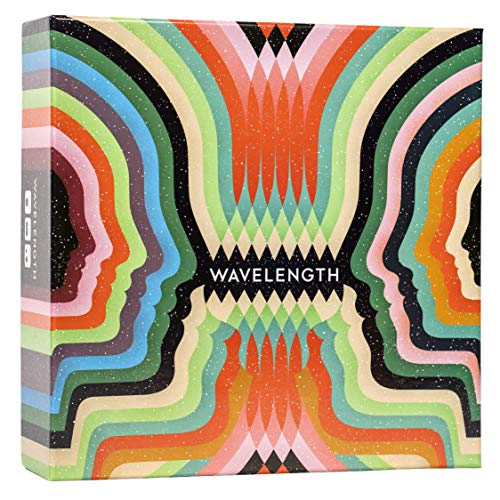
Wavelength by Palm Court
Teams place a concept on a spectrum between two opposites, guessing where a teammate hid the dial behind a screen. That dial is what makes it feel premium, because turning it is an event people watch instead of a card being flipped. Teaching runs about two minutes, and arguing over where hot sauce sits on mild to spicy does the rest.
Pros
- Dial mechanism gives table presence a card deck cannot match
- Plays as competitive teams or a cooperative variant
- Fun comes from group debate, so clue cards stay fresh for years
Cons
- Falls apart below four players and two teams
- Certain clue cards assume shared cultural reference points

Codenames by Czech Games Edition
Two spymasters give one word clues so their team can pick the right agents from a 5 by 5 word grid. With 400 double sided cards, grid combinations outlast any group that plays weekly for a decade. Under three minutes of explanation makes it the safe opener whenever a new face joins the night.
Pros
- Double sided cards yield effectively unlimited board setups
- Fifteen minute games absorb latecomers without restarting anything
- Spymaster role gives sharp players a job without sidelining casual ones
Cons
- Card stock feels plainer than other premium boxes here
- Listed two player mode is far weaker than team play

Telestrations Party Pack 12 Player by USAopoly
Sketch a word, pass the book, guess what the drawing shows, then pass again until the original meaning is unrecognisable. Twelve dry erase books mean nobody watches from the sofa at a holiday gathering. Reading the finished books aloud is the payoff, and bad drawing improves the result.
Pros
- Seats twelve straight out of the box with no house rules
- Dry erase books wipe clean and reuse indefinitely
- Drawing skill is irrelevant to whether the game lands
Cons
- Markers dry out and need replacing over time
- Twelve people sketching at once demands real table space
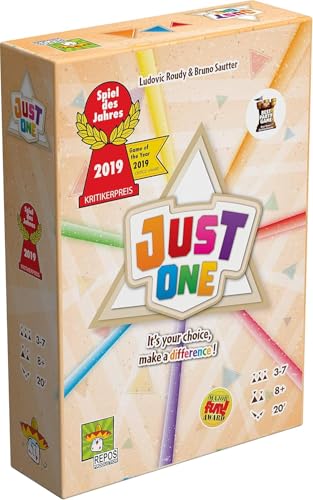
Just One by Repos Production
Everyone writes a one word clue on a wipeable easel, and duplicate clues get removed before the guesser looks up. One rule builds the whole puzzle: help the guesser without writing the obvious word somebody else will pick. It took the Spiel des Jahres in 2019, and nobody is ever eliminated from a round.
Pros
- Cooperative scoring stops competitive friends from souring an evening
- Age 8 rating puts children and adults on the same team
- Wipeable easels avoid paper waste across hundreds of rounds
Cons
- Caps at seven players, so bigger groups must sit out or rotate
- Twenty minute sessions feel slight straight after Wavelength

Monikers by CMYK
Same cards run through three rounds: describe freely, then one word only, then charades with no words at all. Repetition is the design, so whoever listened in round one cleans up in round three. Card references lean adult and internet literate, which suits a peer group far better than a mixed family table.
Pros
- Three round structure compounds instead of repeating itself
- Scales past twenty players with simple team splitting
- Four difficulty tiers let you build a deck to suit the room
Cons
- Adult and online culture references limit who can play
- Charades round needs standing room, not just seats

Herd Mentality by Big Potato Games
Answer a simple question and score only by matching the majority, which inverts every quiz instinct players arrive with. A wooden pink cow token marks whoever answered alone, and that one piece earns more laughs than an elaborate board would. Questions stay clean, so grandparents, teenagers and children share the same table.
Pros
- No general knowledge needed, so age gaps stop mattering
- Whiteboard answers keep every player active each round
- Short questions make pausing and resuming painless
Cons
- Question deck repeats sooner than word based games
- Thin strategy limits it as the main event of a night

Poetry for Neanderthals by Exploding Kittens
Clue givers may use single syllable words only, and any slip earns a whack from a foam no stick. That inflatable club is the component people remember, turning a word game into physical comedy. Rounds last a couple of minutes, which fits the first twenty minutes of a gathering while people are still arriving.
Pros
- Teaches in under a minute with no setup at all
- Foam club makes mistakes funny instead of frustrating
- Age 7 rating brings children into an adult game night
Cons
- Shallow depth wears thin across a long evening
- Inflatable club loses air and needs reinflating
How to choose
What makes a party game feel premium Components are the visible part. A hidden dial, wooden tokens or dry erase books read differently on a table than a stack of thin cards. Content depth decides long term value, and 400 double sided Codenames cards outlast a small deck by years. Teaching time is the quiet third factor. Anything needing more than three minutes of rules loses half the room before the first round starts, which is why heavier boxes often stay shrink wrapped.
Matching a game to your group size Player count is where most purchases go wrong. Just One stops at seven, fine for a dinner party and useless at a holiday. Telestrations Party Pack seats twelve out of the box, while Monikers scales past twenty once you split teams. Wavelength needs four minimum because it runs on two teams. Owners who host varied crowds tend to keep one small group title and one large group title, rather than hunting for a single box that covers both ends.
Party games for family and mixed ages Age ratings describe content and reading level more than difficulty. Just One at 8 and Poetry for Neanderthals at 7 both handle a table with children at it. Herd Mentality drops general knowledge entirely, so a ten year old competes evenly with an adult. Codenames and Wavelength sit near 14 because clues lean on wider cultural knowledge. Monikers holds the far end at 17 and belongs in a peer group night, not a Thanksgiving table.
Building a shelf that keeps getting used One title rarely fills an evening on its own. Shelves that stay in rotation usually pair a fast icebreaker such as Poetry for Neanderthals with a longer main event like Wavelength or Monikers. Round length shapes that pairing: fifteen minute games let people join between rounds, while a 45 minute game wants everyone seated from the start. Buying only one box? Choose by your most common group size, since a game that cannot seat your usual crowd never leaves the shelf.
How they compare
| # | Model | Players | Best for | Score | Price |
|---|---|---|---|---|---|
| 1 | Wavelength by Palm Court | 2 to 12, best with 4 or more | Best overall | 9.4 | Check price |
| 2 | Codenames by Czech Games Edition | 2 to 8 or more with teams | Best value | 9.2 | Check price |
| 3 | Telestrations Party Pack 12 Player by USAopoly | 4 to 12 | Best for large groups | 9.0 | Check price |
| 4 | Just One by Repos Production | 3 to 7 | Best cooperative party game | 8.8 | Check price |
| 5 | Monikers by CMYK | 4 to 20 plus | Best for adult game nights | 8.6 | Check price |
| 6 | Herd Mentality by Big Potato Games | 4 to 20 | Best for mixed ages | 8.3 | Check price |
| 7 | Poetry for Neanderthals by Exploding Kittens | 2 to 12 plus | Best short icebreaker | 8.0 | Check price |
Frequently asked questions
What is the best party game for large groups?
Telestrations Party Pack gives twelve players a sketch book each, and Monikers scales past twenty using teams. Neither creates downtime, because everybody acts every round. Anything capped at seven, Just One included, leaves people spectating at a big gathering.
Which party games work with kids and adults together?
Just One is rated age 8 and Poetry for Neanderthals age 7, so both suit a mixed table. Herd Mentality removes the knowledge advantage adults normally hold. Keep Monikers off the list for family nights, since its references target adults.
How long does a premium party game take to play?
Most sit between 15 and 45 minutes per game. Codenames wraps in about 15, while Monikers runs its three rounds across roughly 45. Shorter titles fit gatherings where guests arrive and leave at different times.
Is Wavelength better than Codenames?
Wavelength wins on table presence and generates louder discussion, thanks to the dial. Codenames plays faster and offers deeper replay from 400 double sided cards. Groups that enjoy arguing lean Wavelength, while word puzzle fans stay with Codenames.
Do premium party games actually last longer?
Sturdier components survive handling, and the dry erase materials in Just One and Telestrations remove any consumable paper. Longevity really comes from content depth, though. A beautifully made box with a shallow deck still stops hitting the table after a month.
Can party games be played with only three people?
Just One starts at three and is the strongest small group option here. Codenames lists a two player mode that plays weakly below four. Wavelength and Telestrations both need a crowd to work as designed.
What should I buy for a work or office gathering?
Herd Mentality and Just One keep content clean and assume no shared background, which matters across mixed colleagues. Codenames splits into teams neatly and suits a larger room. Skip Monikers, since its adult card references land badly at work.
Which party game is easiest to teach?
Poetry for Neanderthals explains in one sentence: single syllable words only. Codenames takes about three minutes once the spymaster role is clear. Wavelength lands nearly as fast after one demonstration of the dial.
Are party games worth it for a couple or a duo?
Most titles here assume a group, and their two player modes are compromises. Just One at three players is the nearest fit for a small household. A couple hosting occasionally gets more from a game that seats six, since it covers both nights.
How much table space do these games need?
Codenames occupies about the area of a placemat for its 5 by 5 grid. Telestrations asks for elbow room for twelve people sketching at once. Monikers wants floor space rather than table space, because its final round is charades.
The bottom line
Pick Wavelength if you want one premium party game that drags people to the table, since its dial creates the debate an evening is remembered for. Groups that regularly hit ten or more should buy Telestrations Party Pack instead, because twelve sketch books beat a clever game nobody can join. Add Codenames as the opener either way, and treat Poetry for Neanderthals as the filler while guests are still arriving.
Rachel Simmons
Rachel previously worked in child-product retail and brings a practical, detail-first eye to gear reviews, focusing on safety standards, ease of use and the fine print that matters most for new caregivers.


