Which Premium Kite Suits Your Wind and Skill Level
Prism Quantum 2.0 Dual-Line Stunt Kite is the all-round premium pick, combining pultruded carbon spars with a broad usable wind range. Prism Zenith 5 Delta Kite launches in breezes that ground sport kites. HQ Kites Symphony Beach III 1.3 Power Kite introduces traction pull without a full buggy setup.
Prism Quantum 2.0 fits the flyer who wants one kite for most days out. Pultruded carbon spars and a ripstop nylon sail hold shape in gusts yet still launch in moderate breeze. Wingspan is the catch, since a small park leaves no room to turn. Light morning wind and beach traction each call for a different design.
Three measurable things separate premium kites from toy shop versions. Sails use ripstop nylon or polyester rather than thin film. Spars are pultruded or wrapped carbon instead of plain fibreglass rod. Bridles arrive pre-tuned to a published wind range. We compared those specifications against line count, wingspan and packed size, then weighed owner reports on spar breakage, sail stretch and how quickly a beginner gets airborne.
The shortlist, ranked

Prism Quantum 2.0 Dual-Line Stunt Kite
Quantum 2.0 is the kite many flyers settle on after outgrowing entry sport models. Large wingspan plus a pultruded carbon frame gives steady tracking through hard turns. Prism packs flying line on a winder, wrist straps and a zipped sleeve, so nothing else is needed on day one.
Pros
- Wind range covers most flyable days of the year
- Carbon absorbs crash loads better than fibreglass
- Arrives complete with lines and wrist straps
Cons
- Wingspan needs an open field, not a small park
- Assembled frame is bulky for hand luggage

Prism Zenith 5 Delta Kite
Zenith 5 is a single line delta tuned to climb when other kites stay flat on the grass. Five foot wingspan and a long tail hold it steady enough to stake out and walk away from. Folded, it slides into a beach bag beside the supplied winder.
Pros
- Flies in wind too soft for sport kites
- Stable enough to anchor and leave unattended
- Folds down small for travel
Cons
- No steering, so attention fades faster
- Long tail knots if packed carelessly

HQ Kites Symphony Beach III 1.3 Power Kite
Symphony Beach III carries no spars at all, so a hard landing cannot snap anything. At 1.3 metres the foil pulls enough to teach traction without dragging an adult down the beach. Two line control keeps the step up from a conventional sport kite small.
Pros
- Nothing rigid to break on a bad landing
- Stuffs into a small bag for travel
- Pull level suits a first traction kite
Cons
- Sand works into the cells after beach sessions
- Larger sizes needed for real traction later
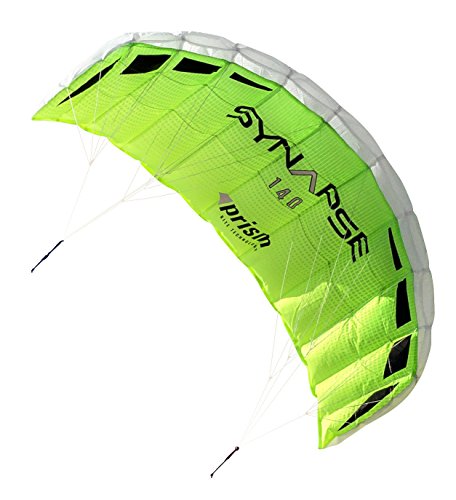
Prism Snapshot 1.9 Foil Kite
Snapshot 1.9 sits between a beach toy and a proper traction foil. No frame means it compresses into a pouch small enough for a suitcase corner. Padded control straps and a safety leash come in the box, and the cells inflate within seconds of catching wind.
Pros
- Packs down for carry-on luggage
- Safety leash depowers it in one movement
- 1.9 m pulls noticeably harder than smaller foils
Cons
- Top of its wind range surprises beginners
- Cells deflate and fold if the wind drops
HQ Kites Bebop Sport Kite
Bebop delivers genuine dual line steering with a bridle that forgives clumsy input. Fibreglass spars weigh more than carbon but shrug off the nose-first landings that come with learning. HQ includes lines, wrist straps and a bag, so flying starts minutes after unpacking.
Pros
- Bridle tolerates beginner overcorrection
- Fibreglass survives repeated learning crashes
- Complete flying kit supplied in the box
Cons
- Heavier frame needs more wind to fly well
- Tracking wanders next to carbon framed kites
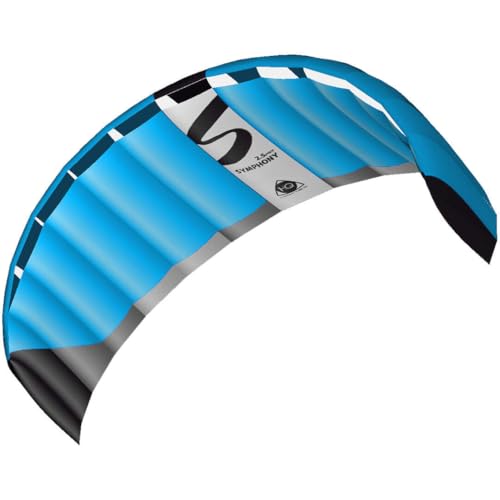
HQ Kites Flow Quad Line Kite
Four lines running to two handles let each wing change pitch independently. That unlocks reverse flight, hovering and spinning on the spot, moves no dual line can copy. Flow is bridled as an introduction to the style rather than as a competition quad.
Pros
- Reverse and hover moves need four lines
- Handles and lines ship with the kite
- Flies inside a tighter window than a big dual line
Cons
- Learning curve runs far longer than two line kites
- Tangles happen more often and take longer to clear

Premier Kites Octopus Kite
Octopus is a single line show kite whose tentacles inflate and ripple once airborne. Purpose here is display: stake it out, then watch rather than fly. Premier builds body and tentacles from ripstop polyester, and the whole thing packs into one bag.
Pros
- Visible from across a crowded beach
- Stays up unattended once staked out
- Tentacles inflate without extra parts
Cons
- Drag demands a strong ground anchor
- Light or gusty wind brings it down
How to pick the right one
What makes a kite premium Three specifications carry most of the weight. Sail fabric should be ripstop nylon or polyester, both of which hold their cut through seasons of UV rather than stretching baggy. Spars come next. Pultruded or wrapped carbon is lighter and springier than fibreglass, so the kite flies in less wind and bounces back from crashes. Bridle tuning is the third marker, and premium kites ship pre-tuned to a published wind range with room to adjust as skill grows. Included lines, straps and a sleeve act as a useful secondary signal, since serious brands sell a complete flying package rather than a bare sail.
How many lines do you actually need Line count decides what flying feels like. Single line kites such as the Zenith 5 go up, sit there and can be staked out, which suits a lazy beach afternoon or a young child watching. Dual line sport kites steer, dive and loop, and Quantum 2.0 anchors the top of that group. Add two more lines and each wing gains independent pitch, so the HQ Flow can reverse and hover in place. Trade for that trick is a much longer learning period. Anyone choosing a first controllable kite should start with two lines.
Matching a kite to your wind and your space Wind range is the number buyers skim and later regret. Soft coastal mornings belong to a large single line delta like the Zenith 5, which climbs when a sport kite refuses to leave the ground. Steady afternoon sea breeze is where foils such as Symphony Beach III and Snapshot 1.9 come alive. Space counts just as much. A full size dual line kite wants clear ground roughly the length of its lines in every direction, well away from trees and power lines. Cramped parks favour a quad line, which works in a tighter box of sky.
Power kites, safety and progression Foils pull, and pull scales fast with sail area. A 1.3 metre Symphony Beach III makes a sensible first traction kite, while the 1.9 metre Snapshot can slide a light adult across wet sand in strong wind. Fit the supplied safety leash every single time and keep clear ground downwind. Typical progression runs Bebop first, then a carbon framed sport kite for precision, then foils or quads depending on whether pull or trickery appeals. Buyers who only want something beautiful overhead can skip that ladder entirely and anchor the Premier Octopus.
How they compare
| # | Model | Line configuration | Best for | Score | Price |
|---|---|---|---|---|---|
| 1 | Prism Quantum 2.0 Dual-Line Stunt Kite | Dual line sport kite | Best overall | 9.4 | Check price |
| 2 | Prism Zenith 5 Delta Kite | Single line delta | Best for light wind | 9.2 | Check price |
| 3 | HQ Kites Symphony Beach III 1.3 Power Kite | Dual line foil | Best for power kiting | 9.0 | Check price |
| 4 | Prism Snapshot 1.9 Foil Kite | Dual line foil | Best for travel and packing | 8.8 | Check price |
| 5 | HQ Kites Bebop Sport Kite | Dual line sport kite | Best value dual line | 8.6 | Check price |
| 6 | HQ Kites Flow Quad Line Kite | Quad line | Best for quad line flying | 8.3 | Check price |
| 7 | Premier Kites Octopus Kite | Single line show kite | Best for beach display | 8.0 | Check price |
Questions worth asking
What is the difference between a premium kite and a toy kite?
Premium kites use ripstop nylon or polyester sails, carbon or quality fibreglass spars, and a bridle tuned to a published wind range. Toy kites rely on thin film and plain rod, which stretch out of shape quickly. That gap shows most in light wind and after the first few crashes.
Which premium kite is best for a beginner adult?
A forgiving dual line such as the HQ Bebop teaches steering without punishing every mistake. Anyone who would rather relax than concentrate should take the Prism Zenith 5 single line delta instead. Leave quad line kites until two line flying feels automatic.
How much wind do you need to fly a kite?
Most sport kites want a steady breeze you can feel on your face and see moving the leaves. Large light wind deltas like the Zenith 5 launch below that threshold. Foil power kites need more, because the cells must stay inflated to hold their aerofoil shape.
Are carbon spars worth it over fibreglass?
For regular flying, yes. Carbon weighs less, so the kite launches in softer wind, and it springs straight rather than taking a permanent bend. Fibreglass tolerates learning crashes well, which is exactly why entry sport kites like the Bebop use it.
What is a quad line kite used for?
Four lines run to two handles and control the pitch of each wing separately. Reverse flight, hovering and spinning on the spot become possible, none of which a dual line kite can manage. Expect a longer learning period and more frequent line tangles in return.
How dangerous is a power kite?
Pull rises with sail area and wind speed, and a 1.9 metre foil in strong wind can drag a light adult. Always fly with the safety leash fitted and open ground downwind. Start at a smaller size such as the 1.3 metre Symphony Beach III.
Can you fly a premium kite on the beach?
Beaches give the cleanest, most consistent wind available, which is why so many premium kites are designed around them. Rinse and dry foil kites afterwards, since sand settles in the cells and adds weight. Keep well clear of swimmers, dogs and other beach users.
When should you replace kite lines?
Dacron and Spectra lines last years but abrade where they cross each other during turns. Swap a set once you see fuzzing, a knot that will not come out, or uneven length between the pair. Mismatched lines ruin tracking on any dual line kite.
Is a single line or dual line kite better for kids?
Younger children do better with a single line delta, because it flies itself and needs no coordination. Older kids with patience enjoy a forgiving dual line like the Bebop far more. Either way, an adult should handle launching a power foil.
Our take
Prism Quantum 2.0 is the buy for anyone who wants one premium kite that keeps rewarding practice, thanks to its carbon frame and wide wind range. Flyers stuck with soft morning breezes should choose the Zenith 5 instead, because a sport kite will simply sit on the grass. Start power kiting at the 1.3 metre HQ Symphony Beach III rather than jumping to a bigger foil.
Rachel Simmons
Rachel previously worked in child-product retail and brings a practical, detail-first eye to gear reviews, focusing on safety standards, ease of use and the fine print that matters most for new caregivers.


