Premium 3D puzzles: foam, plywood or laser steel
Wrebbit 3D Harry Potter Hogwarts Great Hall leads on build quality, since 850 foam backed pieces lock by friction alone. Ravensburger Harry Potter Hogwarts Castle finishes more rigid thanks to click fit plastic tabs. Want a model that moves once built? Choose the Ugears Grand Prix Car.
Wrebbit 3D Harry Potter Hogwarts Great Hall suits builders who want the finished model on display. Foam backing gives each piece enough body to grip its neighbour, so walls stay square without adhesive. Eight hundred and fifty pieces spread the work across several evenings. Shelf space is the catch, since the completed hall runs deeper than most bookcases allow.
Premium here means material thickness, cut tolerance and whether you can lift the model afterwards. We compared substrate type, piece counts, glue requirements, published build times and finished dimensions across sets currently sold. Builder feedback about warped panels, pictorial only instructions and pieces sagging under their own weight shaped the order.
Our top picks
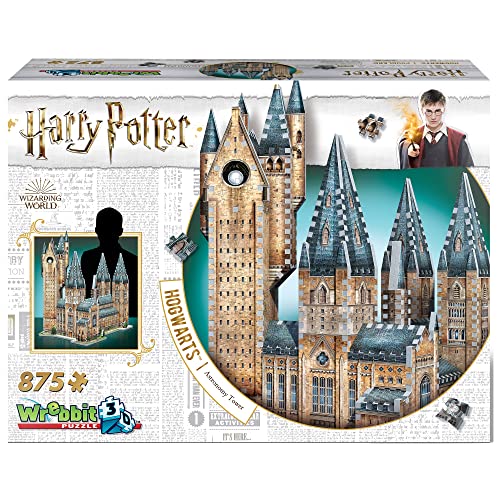
Wrebbit 3D Harry Potter Hogwarts Great Hall
Foam backing gives every piece real body, so joints grip and the walls stand unaided. Printed detail carries across the seams, which is exactly where thin castle kits look obviously tiled. Curved tower sections come last and test patience, and 850 pieces makes this a multi session project.
Pros
- Foam thickness keeps joints tight for years
- Artwork aligns across panel seams
- Links up with other Wrebbit Hogwarts sets
Cons
- Curved tower sections are fiddly to seat
- Finished hall claims a lot of shelf depth

Ravensburger Harry Potter Hogwarts Castle 3D Puzzle
Plastic backed pieces click positively, leaving a castle rigid enough to carry between rooms. Numbered backs cut the searching, so the middle of the build stays enjoyable rather than turning into sorting. Around 540 pieces makes it shorter work than the Wrebbit hall, which may underwhelm seasoned builders.
Pros
- Rigid enough to pick up in one hand
- Numbering speeds the repetitive middle stretch
- Clean cut edges give a tidy display finish
Cons
- Build ends sooner than the count suggests
- Click tabs scuff if pushed at the wrong angle

Ugears Grand Prix Car Mechanical Model
Laser cut birch plywood parts press out of their sheets and assemble into a rubber band powered car. Roughly 350 parts include a working transmission, the real reason to pick this over a static model. Press each piece straight out, because twisting snaps the thin spokes.
Pros
- Rolls under its own power once finished
- Bare wood finish suits a desk or office shelf
- Needs no glue, paint or extra tools
Cons
- Thin spokes break if twisted from the sheet
- Instructions run on pictures with no text

ROKR Marble Night City 3D Wooden Puzzle
A hand crank lifts marbles to the top of the tower and switchable tracks carry them back down. Assembling it demonstrates gears, cams and levers with no lesson attached. Alignment is unforgiving, since a track set a millimeter off drops marbles on the floor every lap.
Pros
- Stays interactive instead of becoming an ornament
- Shows gear and lever basics through building
- Structure holds up to repeated cranking
Cons
- Track alignment needs care to run reliably
- Crank stiffens without an occasional wax rub

Metal Earth ICONX Star Wars Millennium Falcon
Three etched steel sheets fold into a hull carrying panel lines no paper kit can reach. Tabs twist into slots with needle nose pliers, making this slow precision work rather than a family evening. Sharp edges and pinhead parts place the set firmly in adult territory.
Pros
- Etched detail outclasses any cardboard kit
- Bare metal finish reads as a scale model
- Takes up little shelf space when done
Cons
- Cut edges are sharp and parts are tiny
- A bent tab rarely straightens out cleanly

CubicFun National Geographic Egyptian Pyramid 3D Puzzle
Paper foam pieces build a cutaway pyramid with the burial chambers visible inside the slope. A National Geographic booklet covers the real construction history, giving the model a point beyond its shape. Board thickness sits below the Wrebbit stock, so the finished piece wants gentle handling.
Pros
- Finishes inside a single evening
- Booklet ties the model to real history
- Sensible first kit for younger builders
Cons
- Board is thinner than premium castle kits
- Fifty odd pieces limit the challenge

BePuzzled 3D Crystal Puzzle Disney Cinderella Castle
About 71 translucent plastic pieces stack into a castle that catches lamplight like cut glass. Numbered parts and a printed sequence keep the hour long build straightforward. Knock the finished model and sections slide apart, so a shelf beats a coffee table.
Pros
- Catches light well under a lamp or spot
- Finishes in one sitting, useful as a gift
- Clear numbering keeps the order obvious
Cons
- Sections separate when the model is bumped
- Too easy for builders used to big castles
How they compare
| # | Model | Pieces | Best for | Score | Price |
|---|---|---|---|---|---|
| 1 | Wrebbit 3D Harry Potter Hogwarts Great Hall | 850 | Best overall | 9.4 | Check price |
| 2 | Ravensburger Harry Potter Hogwarts Castle 3D Puzzle | 540 | Best for display | 9.2 | Check price |
| 3 | Ugears Grand Prix Car Mechanical Model | About 350 plywood pieces | Best mechanical build | 9.0 | Check price |
| 4 | ROKR Marble Night City 3D Wooden Puzzle | Around 290 wooden pieces | Best for teens | 8.8 | Check price |
| 5 | Metal Earth ICONX Star Wars Millennium Falcon | Laser etched steel sheets | Best for fine detail | 8.6 | Check price |
| 6 | CubicFun National Geographic Egyptian Pyramid 3D Puzzle | Around 51 | Best value | 8.3 | Check price |
| 7 | BePuzzled 3D Crystal Puzzle Disney Cinderella Castle | About 71 | Best gift | 8.0 | Check price |
Before you buy
What makes a 3D puzzle premium Material thickness does most of the work. Foam and plastic backed pieces hold a friction fit for years; thin cardboard loses grip and the model sags. Cut tolerance comes second, since a good kit pushes together under thumb pressure while a poor one needs force that creases the print. Numbered backs and a printed booklet matter more than buyers expect, because hunting for the next piece turns a relaxing build into a chore. Piece count alone tells you little: 300 plywood parts can outlast 800 foam ones on the clock.
Foam, plywood, plastic or steel: which material to pick Foam backed board suits architecture and takes surface printing best. Laser cut plywood adds mechanics, so the finished object does something instead of standing still. Plastic click systems give the most rigid result, which counts if the model gets dusted or moved between rooms. Etched steel reaches the finest detail but demands pliers, tweezers and steady adult hands. Match the material to the builder rather than to the photograph on the box.
How long a 3D puzzle takes and who each set suits Around 50 paper foam pieces fill one evening and suit ages 8 and up. Sets between 300 and 500 parts fit teenagers and adults over two or three sessions. Past 800 pieces you are booking a week of evenings plus a table nobody needs to clear. Mechanical wooden kits sit mid range on count but high on difficulty, because parts must align precisely to move. Metal kits run slowest of all per piece, by a wide margin.
Displaying a finished model without it sagging Dust settles into every textured build, so keep the shelf away from a kitchen or fireplace. Humidity softens foam and cardboard; bathrooms and unheated garages are the worst spots. A light spray of puzzle fixative stabilizes seams on a cardboard build, at the cost of ever taking it apart again. Measure shelf depth first, since castle kits often run deeper than a standard bookcase. Wooden mechanical models keep running smoothly after an occasional wax rub on the moving joints.
Common questions
What is the hardest 3D puzzle to build?
Etched metal kits such as the Metal Earth ICONX sets take the longest per piece, because every tab is twisted with pliers. Among paper kits, the 850 piece Wrebbit castles are the bigger commitment.
Do 3D puzzles need glue?
None of the sets here do. Foam, plastic and plywood kits all rely on friction fits, and adhesive would remove the option of taking the model apart later.
What age are 3D puzzles suitable for?
Simple foam kits of roughly 50 pieces suit ages 8 and up. Mechanical wooden models fit 12 and up, while metal kits stay adult projects thanks to sharp edges and pinhead parts.
Wrebbit vs Ravensburger 3D puzzles: which is better?
Wrebbit uses thicker foam backing and builds larger models with more pieces. Ravensburger clicks into a stiffer structure that survives being carried to another room.
How long does a premium 3D puzzle take to build?
Expect one evening for a 50 piece foam set and three to six hours for a 300 piece wooden model. An 850 piece castle spreads across several sessions.
Can you take a 3D puzzle apart and rebuild it?
Yes, provided you skip glue and fixative. Foam and plastic pieces handle several rebuilds; thin cardboard tabs wear out much sooner.
Are wooden mechanical models worth it over static kits?
For a builder who likes how things work, yes. A Ugears or ROKR model still does something a month later, which a display piece cannot claim.
Which 3D puzzle is best for a first build?
Start with the CubicFun National Geographic pyramid or the BePuzzled crystal castle. Both are short, clearly numbered, and teach the assembly logic before a large castle.
Is a 3D metal puzzle safe for kids?
Not really. Cut steel edges and parts smaller than a fingernail make these adult builds, and pliers are needed for nearly every join.
The bottom line
Go with the Wrebbit 3D Harry Potter Hogwarts Great Hall if you want a long project that ends in a model worth keeping on show. Anyone who plans to move the finished castle around should take the Ravensburger Hogwarts Castle instead, since its click fit survives handling. Builders who lose interest in static models get far more from the Ugears Grand Prix Car, which drives once assembled.
Rachel Simmons
Rachel previously worked in child-product retail and brings a practical, detail-first eye to gear reviews, focusing on safety standards, ease of use and the fine print that matters most for new caregivers.