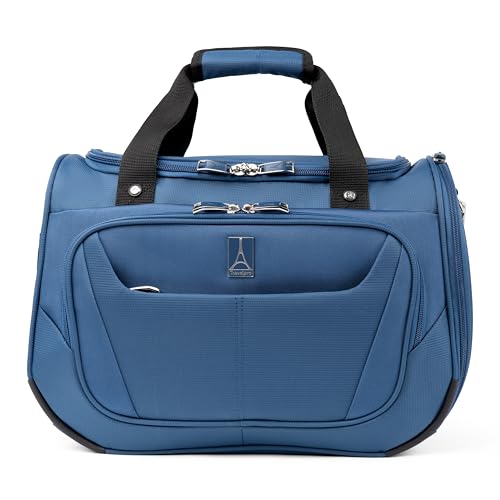
Which Luggage Tracker Actually Keeps Up With Your Bag?
Apple AirTag wins for iPhone owners thanks to the largest crowd finding network of any tracker here. Households mixing iPhone and Android do better with the Tile Pro, which pairs a loud alarm with full cross platform support. Travelers who need a flat profile should choose the Chipolo CARD Spot.
Pack an Apple AirTag if everyone at home carries an iPhone. Mixed households do better with a Tile Pro, and travelers who need something flat enough for a document pocket should reach for a Chipolo CARD Spot. All seven picks below rely on crowd finding networks rather than live GPS, and that distinction shapes how well each one performs.
Marketing often implies real time tracking, yet these devices actually wait for a nearby phone on the same network to relay a location. We compared network coverage, battery type, thickness, alarm volume, water resistance and platform support, then checked owner reports about airport pickup, long haul flights and how securely each tag stays attached to a bag.
The shortlist, ranked
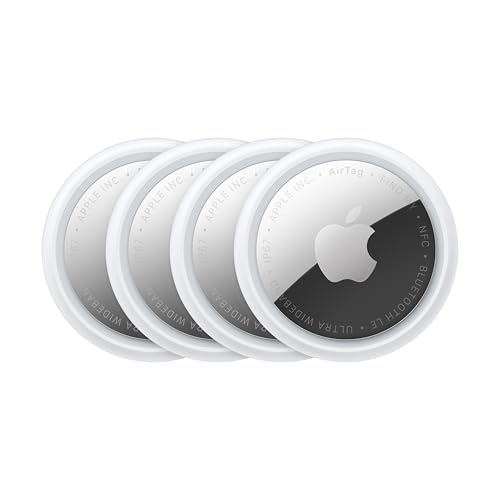
Apple AirTag
Millions of iPhones quietly relay an AirTag’s position, giving it the largest crowd finding network available. Ultra wideband narrows the last few meters once you are near your bag. A replaceable CR2032 cell means no yearly disposal, though setup stays iPhone only.
Pros
- Largest crowd finding network by a wide margin
- Precision Finding narrows the final approach
- Coin cell battery is user replaceable
Cons
- No Android support for setup or finding
- Needs a separate holder to attach to a bag

Tile Pro
Both iPhone and Android owners can set up and locate a Tile Pro, which matters when the person collecting a bag differs from who packed it. Its ring is the loudest in this comparison, useful across a crowded carousel. A built in keyring hole skips the need for an extra holder.
Pros
- Works fully on iPhone and Android
- Loudest alarm among the trackers compared here
- Built in hole means no separate holder
Cons
- Smaller finding network than Apple’s
- Some features sit behind a paid subscription
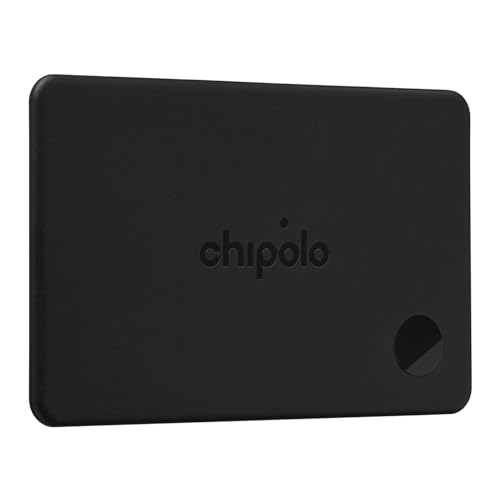
Chipolo CARD Spot
Shaped like a credit card, the CARD Spot slips into a passport wallet or a suitcase’s flat pocket where a disc tracker would rattle. It runs on Apple’s Find My network, so coverage matches an AirTag while the shape suits documents better. A sealed battery is the main tradeoff, since it cannot be swapped.
Pros
- Flat profile fits wallets and document pockets
- Taps into the wide Apple Find My network
- Sealed battery lasts roughly two years
Cons
- Battery cannot be replaced when it dies
- Setup and finding require an iPhone

Samsung Galaxy SmartTag2
Galaxy owners get an AirTag equivalent in the SmartTag2, tapping Samsung’s SmartThings Find network. Power saving mode stretches battery life well beyond a typical coin cell tracker. An integrated loop clips straight to a zip pull, skipping the need for a separate holder.
Pros
- Long battery life in power saving mode
- Integrated loop skips buying a holder
- Ultra wideband finding on supported Galaxy phones
Cons
- Requires a Samsung Galaxy phone to use
- Network density varies a lot by country

Eufy SmartTrack Link
A built in keyring hole lets the SmartTrack Link attach to a bag without a case, at the lowest cost route onto Apple’s Find My network. It skips ultra wideband, so the final few meters rely on the alarm rather than directional guidance. For a spare tracker in a second suitcase, that tradeoff rarely matters.
Pros
- Cheapest way onto the Find My network
- Keyring hole avoids buying a separate holder
- Battery is user replaceable
Cons
- No precision finding hardware onboard
- Alarm is quieter than the Tile Pro’s

Pebblebee Clip Universal
USB charging replaces coin cells on the Clip Universal, and owners can register it on either Apple’s or Google’s finding network at setup. That flexibility suits households that switch phones or share luggage between trips. A built in carabiner style clip attaches straight to a zip pull.
Pros
- Rechargeable instead of disposable coin cells
- Choice of finding network at setup
- Integrated clip skips extra accessories
Cons
- Recharging on schedule is on the owner
- Bulkier than card style trackers

Tile Mate
Entry level pricing brings the same cross platform app as the Tile Pro, though Bluetooth range and alarm volume both drop. Its small, light body disappears into a day pack or carry on without adding bulk. Owners report it works best paired with a stronger tracker in the main checked bag.
Pros
- Light and unobtrusive in a carry on
- Works across both iPhone and Android
- Replaceable CR1632 battery
Cons
- Shorter Bluetooth range than the Tile Pro
- Quieter alarm in noisy terminals
How they compare
| # | Model | Network | Best for | Score | Price |
|---|---|---|---|---|---|
| 1 | Apple AirTag | Apple Find My | Best overall | 9.4 | Check price |
| 2 | Tile Pro | Tile community find | Best value | 9.2 | Check price |
| 3 | Chipolo CARD Spot | Apple Find My | Best slim design | 9.0 | Check price |
| 4 | Samsung Galaxy SmartTag2 | Samsung SmartThings Find | Best for Samsung phones | 8.8 | Check price |
| 5 | Eufy SmartTrack Link | Apple Find My | Best budget option | 8.5 | Check price |
| 6 | Pebblebee Clip Universal | Apple Find My or Google Find Hub | Best rechargeable | 8.2 | Check price |
| 7 | Tile Mate | Tile community find | Best lightweight pick | 8.0 | Check price |
How to pick the right one
How do luggage trackers actually work? None of these trackers broadcast live GPS coordinates. Instead, each one waits for a nearby phone on the same finding network to relay its last known spot. That system works brilliantly in airports, train stations and cities, where phones are everywhere. Rural roads and remote baggage areas see far fewer updates. Knowing this in advance prevents the disappointment of a bag shown at a sorting facility hours ago.
Which network covers the most airports? Apple’s Find My network relies on the sheer number of iPhones in circulation, so it usually delivers the most frequent updates worldwide. Tile’s community is smaller but genuinely cross platform, covering both iPhone and Android owners. Samsung’s SmartThings Find network depends heavily on Galaxy phone density in whichever countries you fly through. Match the network to the phones actually carried by fellow travelers, not just your own.
How long do luggage tracker batteries last? Coin cell trackers such as the AirTag and Tile Pro run for roughly a year before a cheap swap. Sealed units like the Chipolo CARD Spot last close to two years, then become disposable. Rechargeable options such as the Pebblebee Clip Universal avoid battery waste but need a reminder to plug in. Checked luggage that sits unused for months favors a long life replaceable cell over a rechargeable one.
Where should you put a tracker inside your bag? Bluetooth range drops noticeably once a tracker is buried under soft clothing, and a metal framed case can block the signal further. An outer lining pocket or a top compartment gives the clearest signal path. Larger suitcases benefit from a second tracker placed in a different section. Airlines generally allow these devices in checked luggage, though confirming current carrier policy before departure is worth the extra minute.
Frequently asked questions
Can you pack a luggage tracker in checked baggage?
Yes, small trackers running on coin cell batteries are generally permitted in checked luggage. Rules shift occasionally, so confirm your airline’s current policy before flying, especially for rechargeable lithium models like the Pebblebee Clip Universal.
Do luggage trackers work internationally?
They do, since location updates come from nearby phones rather than a mobile data plan. Airports and city centers produce frequent updates, while remote areas see far fewer compatible phones nearby.
Which luggage tracker works best for Android users?
The Tile Pro runs fully on Android, and the Samsung Galaxy SmartTag2 is the strongest choice specifically for Galaxy owners. The Pebblebee Clip Universal can also register on Google’s Find Hub network.
How long do luggage tracker batteries actually last?
Most coin cell models run for around a year. Samsung’s SmartTag2 stretches further in power saving mode, and the Chipolo CARD Spot lasts close to two years before its sealed cell needs replacing entirely.
Can someone else use a tracker to follow me?
Every major network includes unwanted tracking alerts that flag an unfamiliar tag traveling with you. Both iPhone and Android will notify you and help locate the device.
Will a tracker survive rough baggage handling?
IP67 rated models like the Apple AirTag and Samsung Galaxy SmartTag2 shrug off rain and rough handling. Owners report the bigger risk is a tag working loose, so secure it rather than tossing it into a side pocket.
Should I put more than one tracker in a bag?
Two trackers placed in different sections improve the odds of a signal escaping, especially in metal framed luggage. Frequent flyers often pair one network’s tracker with a second from a different network.
Do luggage trackers need a paid subscription?
Apple and Samsung trackers work without any subscription. Tile offers optional paid tiers for extras like item reimbursement, though basic finding needs no payment.
Final word
An Apple AirTag remains the tracker worth packing first, since the Find My network updates more often on more routes than any rival here. Choose the Tile Pro when an Android user might collect the bag, or the Chipolo CARD Spot for something flat enough to slip into a document wallet. Wherever you land, tuck the tracker into an outer pocket rather than the middle of folded clothes.
Sierra Daniels
Sierra's background is in landscape design and nursery retail. She focuses on lawn and garden equipment, outdoor furniture and gear durability, weighing published specs against how materials actually hold up outside.