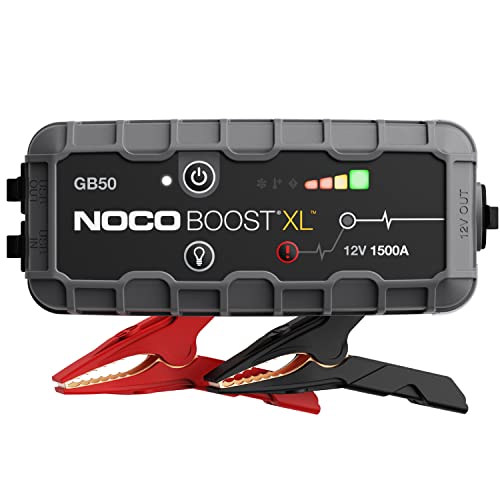
Jump Starters With Built-In Air Compressors Save Trunk Space
DEWALT’s DXAEJ14 combines the strongest cranking power with a compressor that actually reinflates a flat tyre. Stanley’s J5C09 remains the long running value pick. VTOMAN’s lithium unit trades some cranking headroom for a size that fits a glovebox and holds charge for months in storage.
DEWALT’s DXAEJ14, Stanley’s J5C09, and the VTOMAN jump starter with air compressor lead this comparison. Each pairs a starting battery with an onboard compressor, covering the two most common roadside failures in one box. That combination matters more than raw cranking power alone.
Comparing these units is harder than comparing plain jump starters. Manufacturers quote peak amps that last a fraction of a second and compressor pressures that ignore how long the pump can actually run before it needs to cool. We compared cranking figures against realistic duty cycles, checked battery capacity and recharge method, and weighed each unit, since one too heavy to keep in the boot never gets used.
What matters most
What peak amps actually tell you Peak amps describe a brief maximum surge, not what a unit sustains while the starter motor turns over. Cranking amps, where a listing states them, are the more honest figure. A small petrol car needs far less headroom than a six litre diesel, and cold weather raises the demand on both. Buy more capacity than seems necessary if you drive a diesel or live somewhere cold.
Lithium or lead acid Lithium cells stay light, compact, and hold charge for months, which raises the odds a unit still works when you need it. Lead acid units such as the DEWALT and Stanley weigh more but sustain cranking longer and cope better in deep cold. Lead acid also needs recharging every few months in storage, the most common reason these units fail when called on.
Judging the compressor honestly A maximum pressure figure means little without a duty cycle attached to it. Most compact compressors run for only a few minutes before needing to cool, fine for topping up a soft tyre and slow for filling a flat one. Preset pressure with automatic shut off stops overinflation at a roadside where attention is already split.
Keeping it ready when you actually need it A jump starter left uncharged in the boot for two years is dead weight. Check the charge every few months, more often for lead acid models. Store it away from extreme heat, keep the clamps clean, and confirm cables are not crushed under other boot contents. Ten minutes a year separates a rescue from a call out.
Our top picks

DEWALT DXAEJ14 Portable Power Station Jump Starter
DEWALT’s DXAEJ14 uses sealed lead acid cells rather than lithium, which sustains cranking current instead of delivering one brief burst. Owners report this matters most on cold mornings and larger engines. Its compressor reaches 120 psi and can bring a fully flat car tyre back up, while USB ports and a 12 volt outlet turn the unit into a backup power source.
Pros
- Sustained cranking suits larger engines
- Compressor reinflates a fully flat tyre
- USB and 12 volt outlets add backup power
Cons
- Heavier than lithium competitors
- Needs recharging every few months in storage

Stanley J5C09 Jump Starter with Compressor
Stanley’s J5C09 has stayed a garage staple for years by doing one job without complication. A 1000 peak amp rating covers most petrol engines, and its compressor keeps pace with seasonal tyre top ups. Long service life follows as long as the battery stays charged, according to owner reports.
Pros
- Long track record of reliable service
- Simple controls with no learning curve
- Strong value for a full size unit
Cons
- Bulky and heavy to carry
- Compressor struggles with a fully flat tyre

VTOMAN Jump Starter with Air Compressor
VTOMAN’s lithium jump starter fits inside a glovebox yet still carries a compressor rated to 150 psi, enough to inflate a car tyre. Charge holds for months in storage, which suits a car that sits unused for weeks. Around 2500 peak amps gives it headroom most compact units lack.
Pros
- Small enough to always keep in the car
- Holds charge for months without topping up
- High peak amps for petrol and diesel engines
Cons
- Compressor duty cycle limits continuous use
- Lithium performance drops in extreme cold

AVAPOW Jump Starter with Air Compressor
Diesel pickups and vans need more cranking headroom than a compact unit provides, and AVAPOW targets exactly that buyer. A digital display shows battery state and tyre pressure together, cutting out guesswork on a cold roadside. Auto shut off on the compressor prevents overinflation.
Pros
- Cranking headroom for larger diesel engines
- Preset pressure with automatic stop
- Combined display shows battery and tyre readings
Cons
- Larger than glovebox sized rivals
- Compressor runs noisy in use

Audew Jump Starter with Air Compressor
Audew leans harder on the compressor than most rivals here, filling tyres faster and reaching pressures suited to vans and light trucks. Nozzle adapters ship with the unit for balls and inflatables. Jump starting performance stays competent rather than exceptional.
Pros
- Faster inflation than most combo units
- Higher pressure suits van tyres
- Ball and inflatable nozzles included
Cons
- Cranking output trails dedicated starters
- Case is bulkier than the battery needs

TYPE S 12V Jump Starter with Air Compressor
Clear connection guidance and a preset inflation mode define the TYPE S experience. Reverse polarity protection adds a safety net for drivers unfamiliar with jump starting. Automatic shut off on the compressor removes another decision at the roadside.
Pros
- Approachable for occasional users
- Automatic inflation shut off
- Reverse polarity protection built in
Cons
- Limited headroom for large diesels
- Slower inflation than dedicated pumps

Halo Bolt Air Plus Portable Charger and Jump Starter
Everyday drivers rather than mechanics are the target for the Halo Bolt, which pairs modest jump starting with a compressor and a household style outlet. Cranking power trails every other unit here. Coverage still extends to a small car and a soft tyre, which is enough for most casual use.
Pros
- Slim and easy to store in the car
- Household style outlet beyond car starting
- Lowest outlay for a combination unit
Cons
- Not suited to large or diesel engines
- Compressor fills a flat tyre slowly
How they compare
| # | Model | Peak amps | Best for | Score | Price |
|---|---|---|---|---|---|
| 1 | DEWALT DXAEJ14 Portable Power Station Jump Starter | 1400 peak amps | Best overall | 9.4 | Check price |
| 2 | Stanley J5C09 Jump Starter with Compressor | 1000 peak amps | Best value | 9.1 | Check price |
| 3 | VTOMAN Jump Starter with Air Compressor | Around 2500 peak amps | Best portable option | 8.9 | Check price |
| 4 | AVAPOW Jump Starter with Air Compressor | High output for diesel engines | Best for large engines | 8.7 | Check price |
| 5 | Audew Jump Starter with Air Compressor | 150 pounds per square inch with preset | Best for tyre inflation | 8.4 | Check price |
| 6 | TYPE S 12V Jump Starter with Air Compressor | Suitable for most cars and small SUVs | Best for everyday convenience | 8.2 | Check price |
| 7 | Halo Bolt Air Plus Portable Charger and Jump Starter | Modest output for small engines | Best budget option | 8.0 | Check price |
Common questions
How many amps do I need to jump start my car?
Small petrol engines typically start with 400 to 600 cranking amps of real output. Larger diesels need considerably more, which is why high peak figures matter most for trucks and vans.
Can a jump starter with a compressor inflate a completely flat tyre?
Most can, though slowly, and the compressor may need a cool down partway through. Full size units such as the DEWALT handle a flat tyre better than glovebox sized rivals.
How often should I recharge a jump starter?
Lithium units generally hold usable charge for several months. Lead acid units need a top up every two to three months. Neglect, not age, causes most failures.
Is it safe to use a jump starter in cold weather?
Yes, though lithium capacity drops in freezing conditions. Lead acid units cope better with extreme cold, which is why they remain common in northern climates.
Can a jump starter damage my car’s electronics?
Modern units include reverse polarity and spark protection, making them safer than traditional jump leads. Follow the connection order in the manual and attach the negative clamp to a bare metal ground point.
Do I still need jump leads if I own a jump starter?
Not necessarily, but leads weigh little and work even when the jump starter itself is flat. Many drivers keep both in the boot.
How long does a jump starter with a compressor last?
Lithium units typically give several years of occasional use. A well maintained lead acid unit can last longer still. Both degrade faster stored flat or in high heat.
What tyre pressure should I inflate to?
Use the figure on the sticker inside the driver’s door frame or in the handbook, not the maximum printed on the tyre sidewall. Check pressure while tyres are cold for an accurate reading.
Is a combo jump starter worth it over separate devices?
A combined unit saves space and cost compared to buying a jump starter and an air compressor separately. Dedicated devices usually beat a combo unit at either single task, so buy separate tools if you need heavy duty performance in one area.
Which jump starter with a compressor suits a diesel truck best?
AVAPOW targets diesel and van engines with extra cranking headroom over compact lithium units. DEWALT’s lead acid design also sustains larger loads better than glovebox sized rivals.
The verdict
DEWALT’s DXAEJ14 is the combination unit to buy for genuine dual duty, pairing sustained cranking power with a compressor that copes with a flat tyre. Stanley’s J5C09 remains the sensible value alternative. VTOMAN’s lithium unit is the one you will actually keep charged and in the car, since size and standby life matter as much as peak output.
Tony Russo
Tony trained as an automotive technician and spent years in service and parts retail before moving into writing. He focuses on garage tools, car care products and accessories from a hands-on maintenance perspective.