RV Battery Monitors That Keep Up With Heavy Use
The Victron Energy BMV-712 Smart stands out as the top pick for heavy-duty RVers who demand precise state of charge and Bluetooth monitoring. It handles large battery banks and provides a wealth of data. Its main limitation is the higher price and the need for a separate shunt installation.
Keeping track of your RV battery is crucial, especially when you are boondocking or running heavy appliances. A reliable battery monitor helps you avoid unexpected power loss. This guide compares top-rated models that handle the demands of heavy use.
We focused on portable or easily installed units that use shunts for accurate readings. We also considered Bluetooth features for convenient smartphone monitoring. Each product was evaluated based on specifications, owner reports, and value.
What matters most
The top picks, ranked
Victron Energy BMV-712 Smart
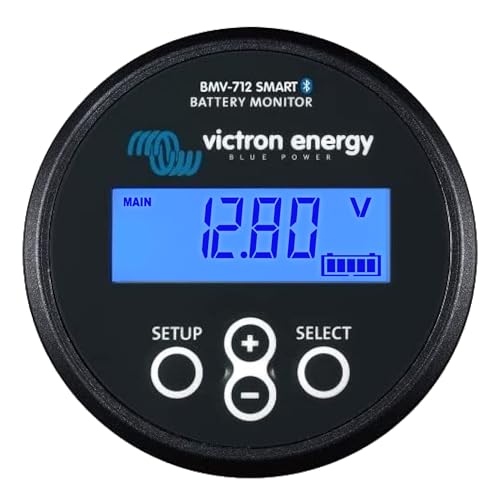
The Victron BMV-712 Smart is a high-end battery monitor that provides highly accurate state of charge and voltage readings. It features a large display and Bluetooth connectivity via the VictronConnect app. It is designed for 12V and 24V systems and can handle up to 10,000 amp hours. Users report that it is very reliable for monitoring large battery banks. It includes a shunt and can be programmed for custom alarms. The device is slightly more expensive but is considered a professional-grade tool.
Pros
- High accuracy with programmable alarms
- Bluetooth app is praised for its detail
- Handles very large battery banks
Cons
- Price is higher than many competitors
- Installation requires wiring expertise
Renogy 500A Battery Monitor with Shunt
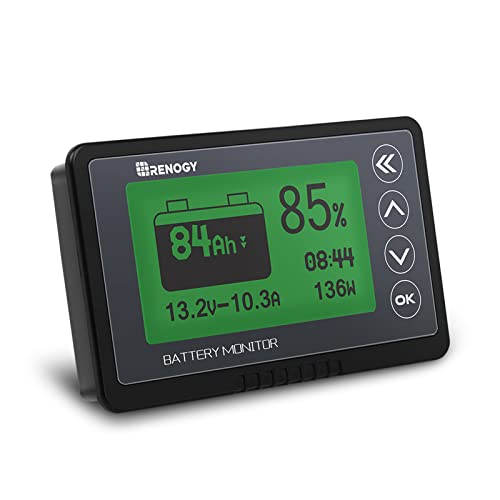
The Renogy 500A Battery Monitor is a popular choice for RV owners seeking an accurate, no-frills monitor. It features a shunt-based design and a clear display showing voltage, current, power, and state of charge. It supports 12V and 24V systems and is easy to install. Users report that it is reliable and provides consistent readings. The interface is simple, and setup is straightforward. It is a solid choice for those who do not need Bluetooth.
Pros
- Accurate readings with shunt
- Simple interface and easy setup
- Good value for the price
Cons
- No smartphone connectivity
- Display is not as detailed as some
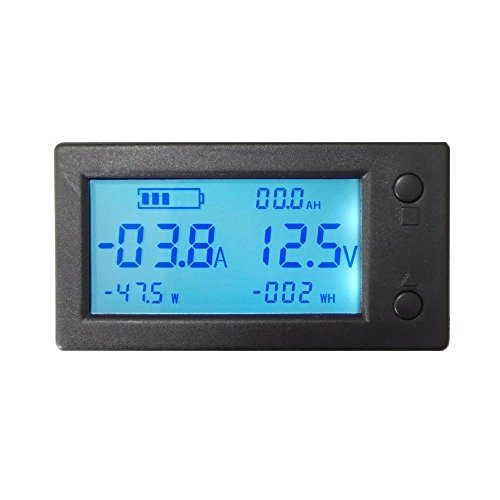
AiLi Voltmeter Ammeter Battery Monitor
The AiLi battery monitor is a compact and affordable option that measures voltage, current, power, and state of charge. It uses a 100A shunt and includes a small display. It is designed for 12V systems and is ideal for smaller RVs or as a temporary solution. While it lacks advanced features, it provides reliable basic monitoring. Some users note that the shunt is less robust for heavy loads. It is a good entry-level monitor.
Pros
- Very affordable
- Easy to install
- Sufficient for basic needs
Cons
- Limited to 100A loads
- No Bluetooth or advanced features
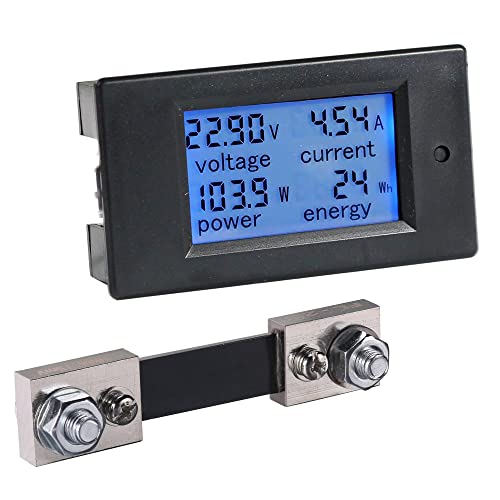
Bayite DC 6.5-100V 0-100A Battery Monitor
The Bayite battery monitor is a versatile device that supports DC systems from 6.5V to 100V. It can measure current up to 100A and includes a shunt. It features a bright LED display and has a low power consumption. This monitor is suitable for RVs with 24V or 48V electrical systems. Users appreciate its accuracy and the wide voltage range. However, the display is not detachable, and the shunt is less robust for heavy loads.
Pros
- Wide voltage range
- Clear display
- Accurate readings
Cons
- Shunt limited to 100A
- No Bluetooth

Simarine PICO Battery Monitor
The Simarine PICO is a sophisticated battery monitor with a color touchscreen and Bluetooth. It offers detailed analytics and can monitor multiple batteries and tanks. It includes a 500A shunt and is designed for harsh marine and RV environments. Users report that the app is very informative and the device is extremely accurate. The price is on the higher side, but the device is feature-rich. It is a favorite among tech-savvy RVers.
Pros
- Excellent app with detailed data
- Touchscreen interface
- Can monitor multiple batteries
Cons
- Premium price
- Setup can be complex

Muridea Battery Monitor with Shunt
The Muridea battery monitor is known for its simple installation and easy-to-read display. It includes a 100A shunt and works with 12V and 24V systems. The display shows voltage, current, and state of charge. Users appreciate the clear interface and quick setup. It lacks Bluetooth, but it is a reliable and straightforward option. The shunt is rated for 100A, which is adequate for many RVs but not for heavy-duty loads.
Pros
- Very easy to install
- Clear display
- Reliable readings
Cons
- Shunt limited to 100A
- No Bluetooth

DROK 0-200V 0-200A Battery Monitor
The DROK battery monitor is designed to handle higher currents up to 200A. It supports a wide voltage range from 0 to 200V, making it versatile for many RV setups. It includes a 200A shunt and features a bright display. Users report that it performs well for monitoring large battery banks. However, it does not have Bluetooth, and the interface is a bit basic. For those with high power demands, this is a solid choice.
Pros
- Handles high current loads
- Wide voltage range
- Sturdy construction
Cons
- No Bluetooth
- Interface is not intuitive
How they stack up
| # | Model | Display | Best for | Score | Price |
|---|---|---|---|---|---|
| 1 | Victron Energy BMV-712 Smart | LCD with backlight | Precision monitoring with Bluetooth | 9.4 | Check price |
| 2 | Renogy 500A Battery Monitor with Shunt | LCD with backlight | Budget-friendly with essential features | 9.0 | Check price |
| 3 | AiLi Voltmeter Ammeter Battery Monitor | Small LCD | Compact and low-cost monitoring | 8.2 | Check price |
| 4 | Bayite DC 6.5-100V 0-100A Battery Monitor | LED digital | Monitoring high-voltage systems | 8.0 | Check price |
| 5 | Simarine PICO Battery Monitor | Color touchscreen | Advanced monitoring with alarm system | 9.2 | Check price |
| 6 | Muridea Battery Monitor with Shunt | LCD with large digits | Simple installation and clear display | 8.5 | Check price |
| 7 | DROK 0-200V 0-200A Battery Monitor | LED display | Heavy loads up to 200A | 8.8 | Check price |
Common questions
What is the difference between a battery monitor and a voltmeter?
A voltmeter only shows voltage, which is not a reliable indicator of charge state under load. A battery monitor uses a shunt to measure current and calculates state of charge over time. It gives you a true percentage of remaining capacity. This is essential for managing deep-cycle batteries.
Can I use a portable battery monitor with lithium batteries?
Yes, most modern monitors support lithium batteries. Some have specific battery type settings. Ensure the monitor you choose has a voltage range that covers your system’s nominal voltage and that the shunt can handle the current. Lithium batteries have unique charging profiles, but the monitor just tracks current and voltage.
How accurate are shunt-based battery monitors?
Shunt-based monitors are very accurate, often within 1% to 2% of actual state of charge. Accuracy depends on the quality of the shunt and the monitor’s calibration. Some monitors allow you to adjust for efficiency or peukert factor. Regular calibration with a full charge improves accuracy.
Do I need a battery monitor if I have solar panels?
Yes, a battery monitor is even more important with solar. It helps you track how much energy your panels are producing and how much you are consuming. You can see if you are getting a net charge or net discharge. This is crucial for off-grid living.
Can I monitor multiple battery banks with one monitor?
Some advanced monitors, like the Simarine PICO, can monitor multiple battery banks. Most standard monitors only monitor one bank. If you have a chassis battery and a house battery, you need multiple shunts and a monitor that supports them. Check the product specifications for multi-bank capability.
What does the shunt rating mean?
The shunt rating, such as 100A or 500A, indicates the maximum continuous current it can measure. If you exceed this rating, the shunt may overheat or provide inaccurate readings. Choose a shunt rating that is at least equal to your maximum expected current draw, preferably higher for safety margin.
How do I calibrate my battery monitor?
Most monitors have a procedure for calibration. Typically, you fully charge your battery, then set the monitor to 100% state of charge. Some monitors allow you to adjust the peukert exponent or efficiency factor. Refer to the user manual for specific steps. It is recommended to calibrate periodically for accuracy.
Is Bluetooth monitoring worth the extra cost?
Bluetooth is convenient if you want to check your battery status from your phone without going outside. It also allows you to view historical data and set alerts. If you regularly monitor your system and want easy access, it is worth it. If you prefer a simple display and do not want to fiddle with apps, you can save money with a non-Bluetooth model.
Can a battery monitor prevent over-discharge?
A battery monitor itself does not cut off power, but many have alarm contacts that can trigger a relay to disconnect loads. Some models have programmable alarms for low voltage or state of charge. This can help you avoid damaging your battery by over-discharging. For full protection, you need a battery protection device or inverter with that feature.
What is the difference between a 100A and a 500A shunt?
The shunt rating determines the maximum current that can be measured. A 100A shunt is for smaller systems, while a 500A shunt is for larger battery banks with high current draws, such as powering an inverter. Using a shunt with too low of a rating can lead to inaccurate data or damage. Choose based on your maximum expected load.
Our take
For heavy-duty RV use, the Victron BMV-712 Smart is the clear winner due to its accuracy, Bluetooth, and ability to handle large battery banks. If you are on a budget, the Renogy 500A offers reliable monitoring without Bluetooth. For those with high current demands, consider the DROK 200A monitor. Avoid models with shunt ratings lower than your peak loads. Choose a monitor that matches your battery voltage and chemistry.
Tony Russo
Tony trained as an automotive technician and spent years in service and parts retail before moving into writing. He focuses on garage tools, car care products and accessories from a hands-on maintenance perspective.