Foot Pump, Propane or Battery: Picking a Camp Shower
The Nemo Helio Pressure Shower leads this roundup, since its foot pump builds real pressure without batteries. Quick backyard or tailgate rinses suit the RinseKit Pod better, with zero pumping required. Cold-weather campers should look at the Zodi Outback Gear Hot Tap 3, which heats water with a built-in propane burner.
Car campers who want real spray pressure without batteries should start with the Nemo Helio Pressure Shower. Its foot pump builds pressure on demand, so output never depends on sun, elevation, or charge level. Fill volume runs smaller than bucket-style systems, so a group may need a second round.
Four methods move water in a camp shower: gravity, foot pumps, battery pumps, or propane heaters, and that single choice drives weight, setup time, and whether the water ever gets warm. We compared listed capacity, power source, pump type, and weight across current Amazon listings to sort picks by actual use case rather than pure ranking.
The top picks, ranked
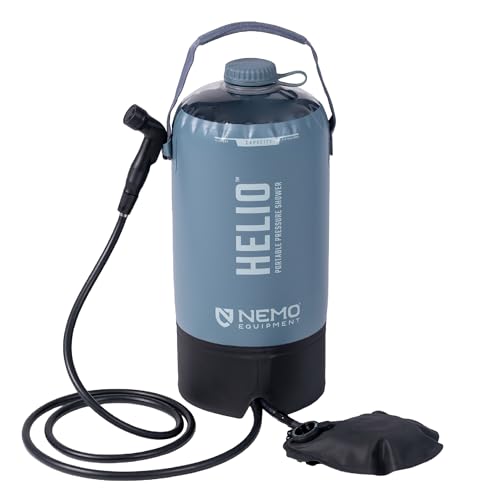
Nemo Helio Pressure Shower
A foot pump pressurizes this reservoir bag, so spray strength never depends on batteries or elevation. Owners report the nozzle holds a strong stream through a full rinse before another pumping round is needed. Folded size stays small enough for a door pocket in most vehicles.
Pros
- Builds pressure without batteries
- Compact packed size for a full shower bag
- Nozzle allows on/off control to save water
Cons
- Requires periodic foot pumping to maintain pressure
- Smaller capacity than bucket-style systems

RinseKit Pod
Filling from a hose or faucet pre-pressurizes this hard canister, skipping pumps and batteries at the campsite. A full charge delivers a stream close to garden-hose pressure for several minutes, according to the listing. Its rigid shell survives truck-bed tossing better than a soft bag.
Pros
- No pumping or battery charging required
- Rigid shell resists punctures in transit
- Steady flow similar to a garden hose
Cons
- Heavier empty than soft-bag alternatives
- Smaller water capacity limits total rinse time
Zodi Outback Gear Hot Tap 3
Propane heat meets a battery-driven pump in this unit, pulling water from a bucket, lake, or jug and warming it on demand. Specifications list a temperature rise near 40 degrees Fahrenheit above the source. Few camp showers deliver genuinely hot water once the air turns cold.
Pros
- Heats water instead of relying on sun or ambient temperature
- Works with almost any water source
- Portable design suits car camping and basecamp setups
Cons
- Needs both propane and batteries to operate
- Open flame requires ventilation and careful setup

Geyser Systems Portable Camp Shower
A rechargeable submersible pump pairs with an insulated bag here, and the same pump also fits into coolers or buckets. Owners report the battery covers multiple showers per charge for a group. Insulation keeps water warmer for longer than uninsulated bag designs.
Pros
- Insulated bag holds warmth better than plain bags
- Pump works in buckets or coolers, not just the included bag
- Rechargeable battery avoids disposable cell waste
Cons
- Higher cost than basic gravity-fed bags
- Battery needs charging before multi-day trips

Coleman Battery-Powered Camping Shower
Hanging from a tree branch or shower tent, this submersible pump drops into any 5-gallon bucket to draw water up. Two D batteries run it, and replacement cells are easy to find at a gas station. Flow stays steady but weaker than pressurized alternatives.
Pros
- Works with any standard 5-gallon bucket
- Batteries are widely available if they run out
- Simple hang-and-go setup
Cons
- Weaker spray pressure than pump or propane systems
- Water bucket sold separately from some kit versions

Ivation Portable Outdoor Shower
USB charging powers this compact pump, which fits a backpack side pocket and ranks among the lighter options here. A single charge runs roughly 40 minutes of continuous flow, per the listing. No water bag ships with it, so a bucket, dry bag, or stream supplies the source.
Pros
- Very light for backpacking or bikepacking trips
- USB charging avoids disposable batteries
- Long runtime per charge for its size
Cons
- No included water container
- Flow rate weaker than propane or pressurized tank systems

Advanced Elements Summer Shower
Direct sunlight heats water inside this black PVC bag, so no batteries, pump, or fuel are needed. Left in the sun for a few hours, a full bag reaches comfortably warm temperatures based on the specifications. Gravity alone drives flow, so hanging height controls spray strength.
Pros
- No power source needed at all
- Simple design with fewer parts to fail
- Lightweight and packs flat when empty
Cons
- Heating depends entirely on sun exposure and weather
- Gravity flow is gentle compared to pumped systems
How they compare
| # | Model | Water Capacity | Best for | Score | Price |
|---|---|---|---|---|---|
| 1 | Nemo Helio Pressure Shower | 2.9 gallons (11 liters) | Best overall for most campers | 9.4 | Check price |
| 2 | RinseKit Pod | 2 gallons (7.5 liters) | Best for quick setup with no pumping | 9.1 | Check price |
| 3 | Zodi Outback Gear Hot Tap 3 | Draws from any external source | Best for hot water in cold weather | 8.9 | Check price |
| 4 | Geyser Systems Portable Camp Shower | 4 gallons (other sizes available) | Best for extended group trips | 8.7 | Check price |
| 5 | Coleman Battery-Powered Camping Shower | 5 gallons (bucket or bag) | Best value for family camping | 8.5 | Check price |
| 6 | Ivation Portable Outdoor Shower | Works with any 5-gallon container | Best for backpacking and ultralight trips | 8.2 | Check price |
| 7 | Advanced Elements Summer Shower | 5 gallons (19 liters) | Best budget solar shower | 8.0 | Check price |
How to choose
How portable camp showers move water Four systems cover nearly every model on the market: gravity, foot pumps, battery pumps, and pressurized canisters. Gravity-fed bags like the Advanced Elements Summer Shower rely entirely on hanging height for pressure. Foot pumps such as the Nemo Helio store pressure that releases through a valve. Battery pumps, used in the Coleman, Ivation, and Geyser Systems models, push water continuously as long as charge or batteries last.
Matching water capacity to group size A solo backpacker rarely needs more than 2 gallons for a quick rinse, which fits the RinseKit Pod or a bucket-fed Ivation pump. Families and group campsites do better with 4 to 5 gallon bags like the Geyser Systems or Coleman setups. Bigger tanks mean more weight to carry or hang, so vehicle campers have more flexibility than hikers. A nearby tap or stream can offset a smaller tank when refilling stays easy.
Battery pump vs solar bag vs propane heater Consistent flow regardless of weather comes from battery pumps like the Ivation and Geyser Systems models, though both need charging between trips. Solar bags such as the Advanced Elements Summer Shower need hours of direct sun and fail on cloudy or cold days. Hot water on demand at any temperature comes from propane heaters like the Zodi Outback Gear Hot Tap 3, at the cost of fuel canisters and open-flame precautions.
Which shower style suits backpacking vs car camping? Weight should outrank capacity for backpackers, which favors the Ivation pump or a small gravity bag under 2 pounds. Bulkier gear like the Zodi Hot Tap 3 or Geyser Systems bag suits vehicle campers instead, since trunk space isn’t limited. Anyone showering during cold shoulder seasons should skip solar-only bags for a propane or battery-pumped option. Zero setup time matters most to tailgaters, who tend to prefer the RinseKit Pod’s pre-pressurized design.
Questions worth asking
How much water do I need for a camp shower?
Most solo trips use 2 to 3 gallons for a quick rinse, while families often go through 5 gallons or more per day. Listed water capacity on each bag or tank reflects the maximum before a refill.
Do portable camp showers heat the water?
Some do and some don’t. Solar bags like the Advanced Elements Summer Shower warm water passively in sunlight, while the Zodi Outback Gear Hot Tap 3 actively heats water with a propane burner. Battery-pump models generally deliver whatever temperature the source water already is.
What is the best portable camp shower for backpacking?
Lightweight battery pumps such as the Ivation Portable Outdoor Shower work well, since the unit weighs about a pound and packs into a side pocket. It depends on a separate water source like a stream or dry bag rather than an included tank.
Can you use a camp shower without batteries?
Yes. Gravity-fed bags like the Advanced Elements Summer Shower and foot-pump models like the Nemo Helio Pressure Shower need no batteries at all. Pre-pressurized canisters like the RinseKit Pod also skip batteries by pressurizing from a hose fill.
How long does a portable shower battery last?
Runtime varies by model. The Ivation pump lists roughly 40 minutes of continuous flow per charge, while D-cell models like Coleman’s pump depend on battery freshness. Rechargeable lithium batteries generally outlast basic alkaline cells across a multi-day trip.
Camp shower vs solar shower bag, which is better?
A solar bag is simpler and needs no power, but it only warms water in direct sun over several hours. A pumped camp shower delivers consistent flow regardless of weather, though it needs batteries, propane, or manual pumping to work.
What size camp shower bag do I need for a family?
A 4 to 5 gallon bag, like the Geyser Systems Portable Camp Shower or Coleman setup, generally covers several quick rinses for a family before a refill. Larger groups may want two units or a nearby refill point.
Is a propane camp shower safe to use?
Propane showers like the Zodi Outback Gear Hot Tap 3 are built for outdoor use with ventilation in mind, but the open flame still calls for the same care as any camp stove. Manufacturers advise using them outside tents and away from flammable material.
Is a battery pump shower worth it over a plain gravity bag?
A battery pump adds real pressure and works from any bucket or container, which a gravity bag can’t match. The tradeoff is a charge to manage and, on models like the Coleman, batteries to replace mid-trip.
The bottom line
Most campers get the best mix of pressure and simplicity from the Nemo Helio Pressure Shower, since its foot pump skips batteries and sunlight entirely. Anyone needing hot water in cold weather should pick the Zodi Outback Gear Hot Tap 3 instead, despite the extra propane setup. Backpackers counting ounces do better with the Ivation Portable Outdoor Shower paired with a lightweight dry bag.
Sierra Daniels
Sierra's background is in landscape design and nursery retail. She focuses on lawn and garden equipment, outdoor furniture and gear durability, weighing published specs against how materials actually hold up outside.