Top Battery Cultivators for Effortless Garden Prep
The Greenworks 40V 10-inch cultivator tops our list for most home gardens. It offers a good balance of power, runtime, and ease of use. Owners report it handles compacted soil well for a cordless model. Its main limitation is that it is not suited for breaking new ground with heavy clay.
Battery cultivators free you from cords and gas. They start instantly and need little maintenance. Choosing the right one depends on your garden size and soil type. We compared specifications and owner reviews to help you decide.
Cordless tillers are quieter and cleaner than gas models. They are ideal for small to medium gardens. Battery technology has improved, giving you enough power to mix compost and loosen soil. Our picks cover different budgets and needs.
Before you buy
Our top picks

Greenworks 40V 10-inch Cordless Cultivator
This cultivator from Greenworks combines a 40V motor with 10-inch tines. It easily works existing garden beds and mixes in amendments. Users like its lightweight design and comfortable grip. It runs up to 45 minutes on a full charge. The tool is part of the Greenworks 40V family, so batteries are interchangeable.
Pros
- Powerful enough for compacted soil
- Adjustable tine depth
- Bare tool option saves money
Cons
- Battery not included
- Not for heavy clay

Ryobi 40V Brushless 14-inch Cordless Tiller
Ryobi’s brushless motor delivers more torque and longer runtime. The 14-inch tine width covers more ground per pass. It folds for easy storage. Owners appreciate its sturdy build and ability to cut through roots. The tiller uses Ryobi’s 40V battery platform, which is shared with many tools.
Pros
- Brushless motor for efficiency
- Folds for compact storage
- Large tine width
Cons
- Heavier than others
- Battery and charger extra

BLACK+DECKER 20V MAX Cordless Cultivator
This compact cultivator is perfect for small spaces. It weighs only 7.5 pounds, making it easy to handle. The 8-inch tines are ideal for raised beds and containers. It runs on a 20V MAX battery, which is common across BLACK+DECKER tools. Users say it is simple to use and store.
Pros
- Very lightweight
- Easy to maneuver in tight spaces
- Battery compatible with other tools
Cons
- Not for heavy soil
- Narrow tine width

Sun Joe TJ604E 16-Inch 12-Amp Electric Cultivator (Corded)
While not battery powered, this corded model offers continuous power for larger areas. It has a 12-amp motor and 16-inch tines. It is ideal for gardens near an outlet. Users like its affordability and effectiveness. The cord limits mobility, but it saves on battery cost.
Pros
- No battery to recharge
- Wide tine path
- Lower upfront cost
Cons
- Cord management can be annoying
- Requires outdoor outlet

EGO Power+ 10-Inch Cordless Cultivator
EGO’s cultivator features a weather-resistant build and advanced battery technology. It uses the 56V ARC lithium battery for extended runtime. The 10-inch tines handle garden beds efficiently. Owners praise its quiet operation and durability. This is a top-tier option for EGO users.
Pros
- High-quality construction
- Long runtime
- Quiet motor
Cons
- Premium price
- Battery expensive
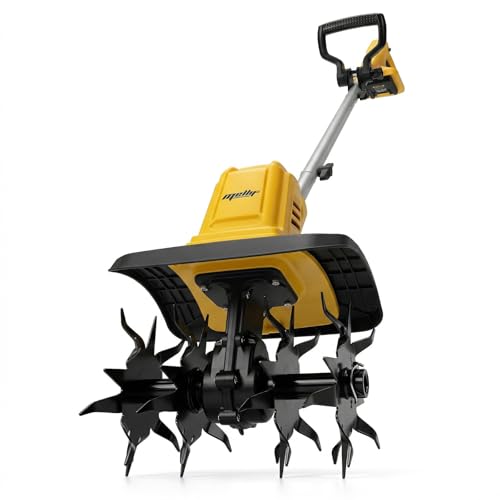
DeWALT 20V MAX 10-inch Cordless Cultivator
This cultivator shares the 20V MAX battery platform with many DeWALT tools. It has a 10-inch tine width and a high-torque motor. It is designed for occasional use in established beds. Owners appreciate the familiar battery system and durable build.
Pros
- Compatible with DeWALT batteries
- Solid build quality
- Good for light to medium duty
Cons
- Bare tool only
- May struggle with hard soil
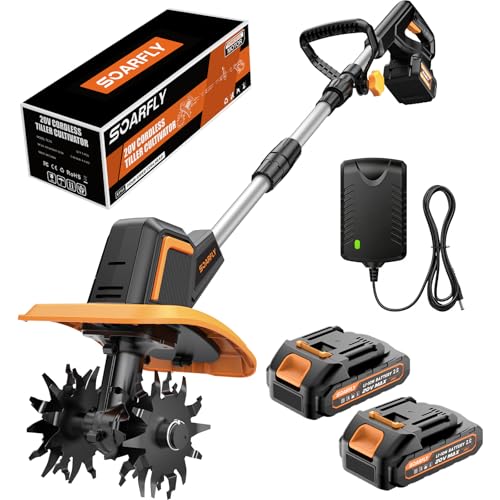
Craftsman V20 8-inch Cordless Cultivator
The Craftsman V20 cultivator is an affordable entry into battery tillers. It features an 8-inch tine width and runs on the V20 battery platform. It is lightweight and easy to store. Users find it sufficient for flower beds and vegetable plots. It comes as a kit with battery and charger, offering good value.
Pros
- Kit includes battery and charger
- Very affordable
- Lightweight and easy to use
Cons
- Not for compacted soil
- Short runtime
Side by side
| # | Model | Tine Width | Best for | Score | Price |
|---|---|---|---|---|---|
| 1 | Greenworks 40V 10-inch Cordless Cultivator | 10 inches | Overall best for most home gardens | 9.4 | Check price |
| 2 | Ryobi 40V Brushless 14-inch Cordless Tiller | 14 inches | Large gardens and tougher soil | 9.2 | Check price |
| 3 | BLACK+DECKER 20V MAX Cordless Cultivator | 8 inches | Small raised beds and quick touch-ups | 8.8 | Check price |
| 4 | Sun Joe TJ604E 16-Inch 12-Amp Electric Cultivator (Corded) | 16 inches | Budget conscious with access to outlets | 8.5 | Check price |
| 5 | EGO Power+ 10-Inch Cordless Cultivator | 10 inches | Premium build and long runtime | 9.1 | Check price |
| 6 | DeWALT 20V MAX 10-inch Cordless Cultivator | 10 inches | Existing DeWALT tool owners | 8.7 | Check price |
| 7 | Craftsman V20 8-inch Cordless Cultivator | 8 inches | Compact gardens and occasional weeding | 8.2 | Check price |
Questions worth asking
Can a battery cultivator break new ground?
Most battery cultivators work best on existing beds. For hard, compacted soil, you may need to moisten it first or use a gas model. The Greenworks 40V and Ryobi 40V can handle moderate soil. For tough sod, consider renting a gas tiller.
How long does a battery last on a cultivator?
Runtime depends on battery capacity and soil conditions. Typically, you get 20 to 45 minutes. A 4Ah battery lasts longer than a 2Ah. If you have a large garden, a spare battery is useful.
Are cordless cultivators as powerful as gas ones?
No, gas tillers are more powerful for heavy duty work. Battery models are sufficient for maintenance tilling. They are quieter and lighter. For occasional use, they are a good choice.
Do I need a cultivator or a tiller?
A cultivator is lighter and designed for weeding and mixing soil. A tiller is heavier and can break new ground. For raised beds, a cultivator is enough. For large in-ground gardens, a tiller is better.
Can I use the same battery for other tools?
Yes, if you stick to one brand. Most brands have a battery platform. For example, Ryobi 40V batteries work with many Ryobi tools. This saves money if you already own compatible tools.
How do I maintain a battery cultivator?
Keep the tines clean and free of soil. Check for debris wrapped around the axle. Store the battery indoors and charge it regularly. Sharpen tines if they dull, but this is rarely needed.
What safety gear should I wear?
Wear safety glasses to protect from flying debris. Use ear protection if you are sensitive to noise, though battery models are quiet. Avoid loose clothing that could get caught. Always inspect the work area for rocks and roots.
Can I till wet soil with a battery cultivator?
Working wet soil can lead to clumping and damage the motor. Wait until the soil is slightly dry. If it sticks to the tines, it is too wet. Test a small patch first.
Our take
For most gardeners, the Greenworks 40V cultivator offers the best combination of price, performance, and ease. Its 10-inch tines handle typical bed preparation and weeding without excessive weight. If your garden is larger or your soil is harder, step up to the Ryobi 40V brushless model. It costs more but covers more ground and lasts longer per charge. For a tight budget, the Craftsman V20 kit is a fine starter, but do not expect it to break new ground. Choose your battery platform wisely to save on future tools.
Sierra Daniels
Sierra's background is in landscape design and nursery retail. She focuses on lawn and garden equipment, outdoor furniture and gear durability, weighing published specs against how materials actually hold up outside.


