Daily vs Weekly Planners: Which Fits Your Routine
The Clever Fox Planner Pro wins overall for balancing goal pages with a weekly layout. Day by day workers do better with the Panda Planner Pro. Anyone who just needs a calendar should grab the Blue Sky Weekly and Monthly Planner.
Buying a planner in January and abandoning it by February is common, and layout is usually the reason. The Clever Fox Planner Pro balances goals with weekly structure well enough to survive that drop off. Day by day workers should look at the Panda Planner Pro instead, while the Blue Sky Weekly and Monthly Planner covers plain scheduling for less.
Planners fail for a personal reason: the layout fights how someone actually thinks, whether in appointments, tasks or projects. A structured daily page frustrates someone who only needs a calendar, and a bare monthly grid annoys someone managing goals. We compared layouts, paper weights, binding types and owner reports on which planners actually last the year.
How to pick the right one
What layout should a planner have? Layout decides almost everything about whether a planner gets used. An hourly weekly grid suits appointment heavy days, a daily page suits task based work that shifts every morning, and a plain week plus notes layout suits anyone who mostly needs a calendar with room to jot things down. Most abandoned planners were the wrong layout, not the wrong brand.
Dated or undated planner, which lasts longer? Dated planners are ready to use immediately but waste every page before your actual start date, which stings if you buy in March. Undated planners waste nothing and only ask you to fill in the date each week, a habit some people keep easily and others quietly drop. Undated is the safer bet for anyone who has abandoned a planner before, since restarting costs nothing.
Daily vs weekly planner layout, what’s the difference? A daily layout like the Panda Planner Pro gives a full page per day, room enough for a detailed schedule and task list, and it suits work that changes shape constantly. A weekly layout shows the entire week at a glance, better for appointment driven schedules and anyone who needs to see how the days connect. Daily books also run out faster, typically lasting about three months.
Best planner size for carrying versus desk use A large desk planner gives real writing room but stays put on a desk. A pocket sized one travels in a bag but gives only a few lines per day. A planner left at home during the day gets used far less than a smaller one carried everywhere, so match the size to where the planning actually happens rather than to how much space looks appealing in the store.
What we recommend

Clever Fox Planner Pro
Goal setting and quarterly review pages open this undated planner before it moves into weekly spreads for priorities, schedule and notes. Starting whenever you buy it avoids wasting months on unused dated pages. Owners report enough structure to stay useful without dictating exactly how to work.
Pros
- Undated pages waste nothing
- Goal sections without heavy prompting
- Lies flat when open
Cons
- Weekly dates must be filled in by hand
- More structure than pure calendar users want
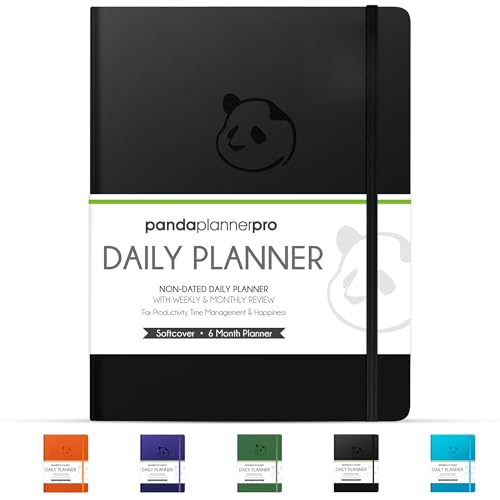
Panda Planner Pro
A daily page anchors this planner, with prompts for priorities, schedule and a short evening reflection above weekly and monthly overviews. Work that changes shape every morning suits a daily format better than a weekly grid. Owners report the reflection habit is the actual reason it works, and that skipping days is the main way people fall off.
Pros
- Daily structure suits variable workloads
- Reflection prompts build a review habit
- Compact enough to carry daily
Cons
- Lasts only around three months per book
- Daily prompts feel repetitive to some

Moleskine 12-Month Weekly Notebook Planner
A week sits on the left page and a blank ruled page fills the right, splitting planning evenly between schedule and notes. Fountain pen ink behaves better on this paper than on most planners. Owners report the appeal is simplicity, since there are no prompts to ignore and no system to fight.
Pros
- Notes page beside every week
- Paper handles fountain pens well
- No imposed prompts or system
Cons
- Dated pages waste time if started late
- No goal setting or review structure

AT-A-GLANCE Weekly and Monthly Appointment Book
Hourly time slots run across each week in this straightforward appointment book, backed by a monthly grid for the wider view. Prompts, goals and reflections are absent by design. Owners report it suits anyone who tried a lifestyle planner and found half the pages went unused.
Pros
- Hourly slots suit appointment driven days
- No unused lifestyle pages
- Wirebound and lies completely flat
Cons
- No space for goals or projects
- Plain office styling

Passion Planner Undated Weekly Planner
An hourly weekly layout pairs with roadmap pages that break multi year goals into steps you can actually schedule. Monthly reflection pages close the loop between intention and action. Owners report the roadmap section is what sets it apart, though anyone wanting just a calendar will find the extra structure unnecessary.
Pros
- Roadmap connects goals to weekly scheduling
- Undated version wastes no pages
- Separates personal and work tasks
Cons
- More structure than casual users need
- Hourly grid runs on fixed start and end times

Rocketbook Panda Planner Reusable Planner
Synthetic pages replace paper here, written on with an erasable pen and wiped clean with a damp cloth so one book lasts indefinitely. An app scans each page to cloud storage before wiping. Owners report the wipe and reuse cycle works reliably, though the writing feel differs noticeably from paper.
Pros
- One book replaces years of paper planners
- App scans pages before wiping
- Never runs out of pages
Cons
- Writing feel is slicker than paper
- Ink smudges before it fully dries

Blue Sky Weekly and Monthly Planner
Weekly and monthly spreads fill this plain dated planner, wrapped in a clear cover over wirebound pages. Nothing beyond scheduling space is included. Owners report it does exactly that with no wasted pages, though thin paper lets gel pen ink show through.
Pros
- Cheapest route to a working planner
- Wirebound and lies flat
- Available in several sizes
Cons
- Thin paper shows ink through
- No structure beyond calendar and weekly pages
How they compare
| # | Model | Layout | Best for | Score | Price |
|---|---|---|---|---|---|
| 1 | Clever Fox Planner Pro | Weekly spreads with priorities, schedule and notes | Best overall | 9.4 | Check price |
| 2 | Panda Planner Pro | Daily pages with weekly and monthly overviews | Best for daily focus | 9.2 | Check price |
| 3 | Moleskine 12-Month Weekly Notebook Planner | Week on left page, ruled notes page on right | Best classic design | 9.0 | Check price |
| 4 | AT-A-GLANCE Weekly and Monthly Appointment Book | Weekly hourly grid plus monthly spreads | Best for scheduling | 8.8 | Check price |
| 5 | Passion Planner Undated Weekly Planner | Weekly hourly grid, separate space for personal and work | Best for long term goals | 8.5 | Check price |
| 6 | Rocketbook Panda Planner Reusable Planner | Reusable synthetic, wipe clean | Best reusable | 8.2 | Check price |
| 7 | Blue Sky Weekly and Monthly Planner | Weekly spreads plus monthly calendar grids | Best budget | 8.0 | Check price |
Frequently asked questions
Is a paper planner still worth using?
Writing by hand aids recall in a way a phone calendar does not, and a paper page cannot show a notification. The tradeoff is that paper does not sync or send alerts, so many people pair a paper planner for reflection with a phone calendar for time bound reminders.
Should I get a dated or undated planner?
Undated if you have abandoned planners before or are buying partway through the year, since nothing goes to waste. Dated if you would rather the work be done for you and know you will start right away.
What is the difference between daily and weekly planners?
Daily layouts give a full page for detailed task lists and suit variable work. Weekly layouts show the whole week at once and suit appointment driven schedules. Daily books typically last around three months per volume.
Will fountain pen or gel ink bleed through the pages?
Thin paper in budget planners usually lets both bleed through. Heavier paper, like the Moleskine uses, handles fountain pen far better, though very wet inks still ghost slightly.
How do you actually stick with a planner past January?
Keep it open and visible instead of buried in a bag, set a fixed time each week for a short review, and pick a layout that needs less filling in than you think you will manage. A simple planner used consistently beats an elaborate one abandoned after six weeks.
Are goal setting pages in a planner actually useful?
Only if you revisit them. Roadmap and quarterly review pages pay off when checked monthly and sit as dead weight when filled in once during January. Anyone who knows they will not review is better served by a plain appointment book.
What size planner should I buy?
A larger size suits planning done at a desk, since it gives room to write properly. A compact size suits planning done on the move, since it actually travels with you. The planner left behind gets used the least.
Are reusable planners like the Rocketbook Panda Planner worth it?
Yes if you do not mind scanning pages before wiping them and a writing surface that feels different from paper. One book then replaces years of purchases, though ink needs a moment to dry before it smudges.
Which planner layout suits appointment heavy work?
An hourly weekly grid, like the AT-A-GLANCE Weekly and Monthly Appointment Book uses, matches days built from fixed time slots better than a task focused daily page.
Our take
The Clever Fox Planner Pro suits most people who will still be writing in June, since undated pages remove the cost of restarting and the structure supports goals without dictating a system. Pick the Panda Planner Pro if your work is genuinely day by day, or the AT-A-GLANCE Appointment Book if your week is pure appointments with no use for prompts.
Marcus Chen
Marcus covered consumer electronics for enthusiast tech publications for six years before joining ChoiceCrest. He specializes in translating manufacturer spec sheets into plain-language buying advice, with a focus on audio, computing accessories and smart-home gear.
You might also need
Standing Desk or Desk Converter: What Fits Your Space
Keyboard Tray or Desk Level Setup: Which Fits You?

Which Camera Actually Fits Your Vlogging Setup Best?
