Which Camera Actually Fits Your Vlogging Setup Best?
Sony’s ZV-1 II leads this group for its wide 18 to 50mm lens, dependable face tracking and clean built-in audio. Canon’s PowerShot V10 is the simplest value pick for grab-and-talk creators, and DJI’s Pocket 3 wins when gimbal-smooth walking footage matters more than manual control.
Sony’s ZV-1 II tops this list for creators who want one dependable body: wide framing, sticky autofocus and usable sound out of the box. Canon’s PowerShot V10 undercuts it on price for anyone who just wants to point and talk, while DJI’s Pocket 3 handles walking shots no handheld camera can match.
Spec sheets do not show whether a lens hunts for your face mid-sentence or whether audio turns to mush outdoors. We compared autofocus systems, lens width at arm’s length, stabilization method and mic quality, then checked what owners report about real recording sessions rather than lab numbers.
Before you buy
What actually matters in a vlogging camera Autofocus decides whether a vlog looks professional or amateur, more than resolution ever will. A lens that drifts off your face mid-sentence ruins a take no editing can fix. Sticky face and eye tracking should rank above megapixels on any shopping list.
How wide does the lens need to be for arm’s length shots Holding a camera out to frame yourself needs a genuinely wide view, or the shot crops to a forehead. An 18 to 24mm equivalent lens gives room for both face and background. Pocket cameras and action cams go even wider to compensate for close framing.
Best camera for walking and moving shots A mechanical gimbal like the one inside the DJI Pocket 3 produces the smoothest walking footage of any option here. Action cameras such as the GoPro Hero 12 lean on strong electronic correction instead. Mirrorless bodies without stabilization work best kept mostly still.
Is built-in audio good enough, or do you need a mic input A built-in mic handles calm, indoor talking well enough for most channels. Wind and echoey rooms expose its limits quickly. A 3.5mm input, like the one on the Canon G7 X Mark III, lets you plug in a lavalier or shotgun mic when sound quality starts to matter more than convenience.
The top picks, ranked

Sony ZV-1 II
An 18 to 50mm equivalent zoom keeps you and the background in frame even at arm’s length. Real-time eye and face tracking rarely lets go once it locks on, according to the listing and owner reports. A built-in directional mic favors your voice over street noise without an accessory.
Pros
- Wide zoom frames face and scene together
- Face and eye tracking stays locked while talking
- Directional mic reduces background noise
Cons
- No in-body stabilization for handheld walking
- 1 inch sensor lags full-frame bodies after dark

Canon PowerShot V10
A built-in kickstand and forward-facing screen turn the V10 into a tripod-free vlogging rig. Dual mics capture usable stereo sound without an external accessory. Its fixed wide lens and pocket size favor simplicity over manual control.
Pros
- Kickstand doubles as an instant tripod
- Front screen simplifies solo framing
- Pocketable body slips into a jacket pocket
Cons
- Fixed lens offers no optical zoom
- Manual exposure controls are limited

DJI Pocket 3
A mechanical 3-axis gimbal keeps a 1 inch sensor level through walking, running or handoffs. The rotating touchscreen lets you check framing without twisting your wrist. Active tracking follows a subject automatically, which suits solo creators working without a crew.
Pros
- Gimbal produces glassy-smooth walking footage
- Pocket-sized body fits in one hand
- Active tracking keeps a moving subject centered
Cons
- Compact body limits physical control dials
- Battery runs down faster on long shoots
Sony ZV-E10
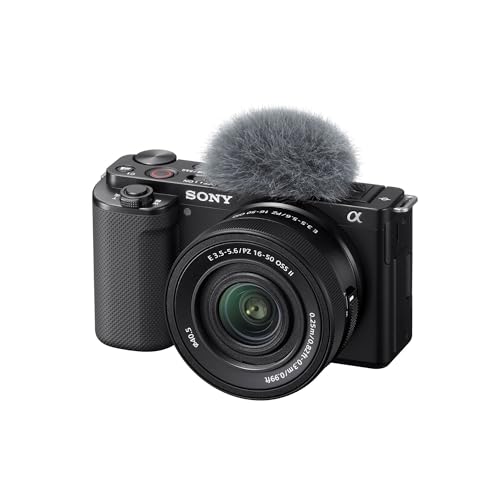
An APS-C sensor and Sony E mount let this body take wider or brighter lenses as a channel grows. Real-time tracking autofocus carries over from Sony’s compact vlogging cameras. Dedicated buttons switch between background blur and product-showcase framing in one press.
Pros
- Larger sensor improves low-light footage
- Interchangeable lenses widen creative options
- One-touch buttons for defocus and product shots
Cons
- No in-body stabilization for handheld shots
- Rolling shutter shows during fast pans
Canon PowerShot G7 X Mark III
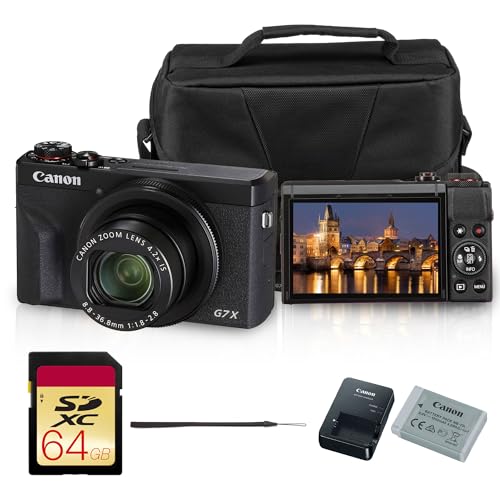
A bright 24 to 100mm zoom covers close talking-head shots and tighter product close-ups from one body. A rare 3.5mm mic input at this size lets creators upgrade audio without switching cameras. The flip-up screen tilts a full 180 degrees for self-framing.
Pros
- Versatile zoom range in a pocketable body
- Mic input allows external audio upgrades
- Bright aperture suits dim indoor rooms
Cons
- Hot-shoe mic can block the flip screen
- Autofocus tracking trails newer Sony bodies

Panasonic Lumix G100
A directional mic system tracks your face and steers sound pickup toward your voice. The Micro Four Thirds mount opens a wide range of affordable lenses. A fully articulating screen flips forward for self-monitoring while talking.
Pros
- Voice-tracking mic isolates speech from noise
- Interchangeable MFT lenses widen the kit
- Fully articulating screen aids self-framing
Cons
- Contrast-based autofocus can hunt in low light
- Cropped 4K narrows the field of view

GoPro Hero 12 Black
Waterproof and shockproof construction lets this body survive rain, sweat and drops without a case. Electronic stabilization with horizon lock keeps handheld footage level during rough movement. An ultra-wide lens fits your whole face in frame at arm’s length.
Pros
- Waterproof build survives active shooting conditions
- Electronic stabilization smooths handheld motion
- Ultra-wide lens suits close self-framing
Cons
- Small sensor struggles once light fades
- Front screen is small for detailed framing
Side by side
| # | Model | Sensor | Best for | Score | Price |
|---|---|---|---|---|---|
| 1 | Sony ZV-1 II | 1 inch | Best overall | 9.4 | Check price |
| 2 | Canon PowerShot V10 | 1 inch | Best value | 8.9 | Check price |
| 3 | DJI Pocket 3 | 1 inch | Best for stabilization | 9.2 | Check price |
| 4 | Sony ZV-E10 | APS-C | Best for interchangeable lenses | 9.0 | Check price |
| 5 | Canon PowerShot G7 X Mark III | 1 inch | Best compact zoom | 8.8 | Check price |
| 6 | Panasonic Lumix G100 | Micro Four Thirds | Best for audio | 8.6 | Check price |
| 7 | GoPro Hero 12 Black | Action camera | Best for action vlogs | 8.7 | Check price |
Common questions
What is the most important feature in a vlogging camera?
Reliable face and eye autofocus matters most. A camera that cannot hold focus while you move and talk undermines every other spec.
Do vlogging cameras need a flip screen?
For solo creators, yes. A front-facing or fully articulating screen confirms framing and focus before you hit record.
Is a 1 inch sensor good enough for vlogging?
For most creators, yes. It balances image quality with a pocketable body. Step up to APS-C or Micro Four Thirds for better low light and background blur.
Which camera is best for walking vlogs?
The DJI Pocket 3 and its mechanical gimbal produce the smoothest walking footage here. The GoPro Hero 12 Black is the sturdier pick for rough, active movement.
Can a vlogging camera record good audio without an external mic?
The Sony ZV-1 II and Panasonic Lumix G100 both use directional mics that favor your voice indoors. Outdoor or noisy shoots still benefit from an external mic through a 3.5mm input.
Do vloggers need 4K video?
It helps for cropping and future-proofing, but clean 1080p with reliable focus often looks better than shaky, out-of-focus 4K.
Sony ZV-1 II vs DJI Pocket 3, which is better for vlogging?
The ZV-1 II gives more manual control and a wider lens for talking-head shots. The Pocket 3 wins for walking and handheld movement thanks to its gimbal.
What is the best vlogging camera for beginners on a budget?
The Canon PowerShot V10 offers a kickstand, front screen and dual mics at the lowest price here, making it an easy first vlogging camera.
Is an interchangeable lens camera worth it for vlogging?
Bodies like the Sony ZV-E10 and Panasonic Lumix G100 let you swap lenses for wider shots or background blur, which suits a channel that keeps growing in ambition.
Our take
Sony’s ZV-1 II remains the vlogging camera most creators should reach for first, thanks to its wide lens, dependable autofocus and clean built-in sound. Pick the Canon PowerShot V10 for the simplest, most affordable grab-and-talk setup, or the DJI Pocket 3 when smooth walking footage matters most.
Marcus Chen
Marcus covered consumer electronics for enthusiast tech publications for six years before joining ChoiceCrest. He specializes in translating manufacturer spec sheets into plain-language buying advice, with a focus on audio, computing accessories and smart-home gear.