How to Pick a Pizza Steel for a Crispier Crust
Baking Steel Original leads for its thick, conductive slab that produces the fastest oven spring here. NerdChef Steel Stone matches that performance in a lighter, cheaper format, and Lodge Pro-Logic Cast Iron Pizza Pan suits small ovens and tighter budgets.
Thickness and conductivity are the entire argument for buying steel, and Baking Steel Original commits fully to both rather than splitting the difference. NerdChef Steel Stone delivers similar performance at a lower price and in lighter options, while Lodge Pro-Logic Cast Iron Pizza Pan suits a small oven or a tighter budget.
Home pizza usually disappoints because a domestic oven cannot push heat into the base fast enough before the top overcooks, and that gap is exactly what steel closes. We compared thickness against typical oven dimensions, weight, surface finish and preheat time, then weighed those against what owners report about rust management and oven rack strain.
Our top picks
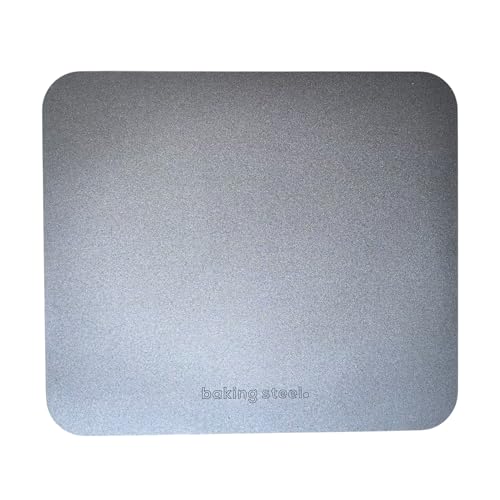
Baking Steel Original
This slab popularized home baking steel and still sets the reference point for the category. Its mass stores heat and releases it into dough quickly, producing base char and rise a stone cannot match at typical oven temperatures. Genuine weight means checking your oven rack rating before ordering.
Pros
- Fastest heat transfer into the base here
- Effectively unbreakable compared with stone
- Doubles as a griddle and bread surface
Cons
- Heavy to lift in and out of a hot oven
- Needs regular oiling to prevent rust

NerdChef Steel Stone
NerdChef sells essentially the same conductive slab at a lower price, across several thickness options that trade heat storage against weight. Thinner versions preheat faster and handle more easily, while thicker ones behave close to the reference product. A smoother machined finish helps a launched pizza slide cleanly.
Pros
- Thickness options let you pick the trade off
- Smooth surface releases dough cleanly
- Costs less than the category leader
Cons
- Thinner versions store less heat for repeat bakes
- Same rust prevention routine required

Dough-Joe Samurai Pizza Steel
Dough-Joe covers most of a standard oven rack, and a larger surface area stabilizes overall oven temperature during a bake. That extra room fits two smaller pizzas or a full sheet of flatbread. Confirm oven width first, since a slab that blocks all airflow creates its own problems.
Pros
- Large area stabilizes oven temperature
- Fits two smaller pizzas at once
- Deep heat reserve for repeat bakes
Cons
- May not fit smaller ovens
- Heaviest slab here to maneuver
Conductive Cooking Pizza Steel
Conductive Cooking mills its surface flatter than the raw plate steel some rivals use, cutting the odds of a base sticking on launch. Several sizes and thicknesses are available, including options light enough to handle solo. Owners report the seasoning builds well and holds up under regular use.
Pros
- Flat machined surface aids clean release
- Range of sizes fits different ovens
- Seasoning holds through regular use
Cons
- Priced above plain plate steel
- Still needs routine rust prevention

Hans Grill Pizza Steel
Hans Grill splits the difference, thick enough to beat any stone yet light enough to lift solo out of a hot oven. That balance suits anyone who stores the steel away between bakes rather than leaving it in permanently. Heat reserve for back to back pizzas trails the heaviest slabs.
Pros
- Practical weight for regular handling
- Still outperforms a ceramic stone easily
- Preheats faster than thicker slabs
Cons
- Less heat stored for consecutive bakes
- Edges run sharper than machined rivals

Baking Steel Griddle
One face bakes pizza in the oven and the flip side sears on the stovetop, so a single slab replaces two separate pieces of equipment. That trade off suits anyone short on kitchen storage. The ribbed griddle side needs the same seasoning care as cast iron.
Pros
- Two cooking surfaces on one slab
- Works on the stovetop as well as in the oven
- Saves storage space over separate tools
Cons
- Ribbed side takes longer to clean
- Heavy to shift between hob and oven

Lodge Pro-Logic Cast Iron Pizza Pan
Cast iron conducts a little less aggressively than steel, but it still stores plenty of heat at a fraction of a dedicated slab’s cost. Its round shape fits ovens where a large rectangle would not. Built in handles make it far safer to lift than a bare plate, and it arrives preseasoned.
Pros
- Handles make it safe to lift when hot
- Round shape fits smaller ovens
- Costs far less than a dedicated steel
Cons
- Conducts less aggressively than steel
- Smaller usable surface than a rectangular slab
Before you buy
Why does steel outperform stone in a home oven? Steel conducts heat far more readily than ceramic, so it dumps stored energy into wet dough on contact rather than releasing it slowly. That rapid transfer produces oven spring and a blistered base at temperatures a home oven can actually reach. Stone performs well in a wood fired oven where ambient heat does the work, but a capped domestic oven needs steel’s conductivity to close the gap. Steel also resists cracking, unlike stone.
How thick should a pizza steel be? A thicker slab stores more energy, staying hot through several consecutive bakes for a consistent third or fourth pizza. It also takes longer to preheat and gets genuinely hard to lift. Thinner steel heats faster and handles easily but loses heat quickly under a wet dough. Choose thick if the steel lives permanently on a rack, and choose a liftable weight if you move it in and out every time.
How long should you preheat a pizza steel? Preheating too briefly is the most common mistake. A steel needs roughly an hour at maximum oven temperature, well beyond how long the air itself takes to heat, since you are warming a large mass rather than empty space. An infrared thermometer aimed at the surface removes the guesswork. Placing the steel on an upper rack also brings the base closer to the top element, helping the crust finish in time with the toppings.
How do you stop a pizza steel from rusting? Bare steel rusts if left damp, so treat it like cast iron. Wipe it clean while still warm, skip soap and the dishwasher entirely, and rub on a thin film of neutral oil before storing. A bench scraper lifts burnt on residue once the slab has cooled. Discoloration and mottling are normal and actually improve release, so resist scouring it back to bare metal.
How they stack up
| # | Model | Material | Best for | Score | Price |
|---|---|---|---|---|---|
| 1 | Baking Steel Original | Solid steel | Best overall | 9.4 | Check price |
| 2 | NerdChef Steel Stone | Solid steel | Best value | 9.2 | Check price |
| 3 | Dough-Joe Samurai Pizza Steel | Solid steel | Best large format | 9.0 | Check price |
| 4 | Conductive Cooking Pizza Steel | Solid steel | Best finish quality | 8.8 | Check price |
| 5 | Hans Grill Pizza Steel | Steel plate | Best mid weight option | 8.6 | Check price |
| 6 | Baking Steel Griddle | Solid steel | Best dual purpose | 8.3 | Check price |
| 7 | Lodge Pro-Logic Cast Iron Pizza Pan | Cast iron | Best budget alternative | 8.0 | Check price |
Good to know
Is a pizza steel better than a pizza stone?
For most home ovens, yes. Steel moves heat into dough much faster, producing stronger oven spring and base browning at temperatures a domestic oven reaches. It also will not crack. Stone still performs well in a genuinely hot wood fired oven.
How thick should a pizza steel be?
Thicker stores more heat for consecutive bakes but takes longer to preheat and gets heavier to lift. A moderate thickness suits anyone removing the steel between uses, while a thick slab makes sense left in the oven permanently. Either option beats ceramic stone by a wide margin.
How long do you preheat a pizza steel?
Around an hour at your oven’s highest setting, longer than the oven itself needs to reach temperature. You are heating mass rather than air. An infrared thermometer aimed at the surface confirms readiness instead of guessing from the oven light.
Does a pizza steel rust?
Yes, if it stays damp. Treat it like cast iron: wipe clean while warm, skip soap and the dishwasher, and apply a thin film of neutral oil before storing. Surface rust that appears can be scrubbed off and the steel reseasoned.
Can a pizza steel stay in the oven all the time?
Many people leave it in, and doing so improves oven temperature stability for everything baked afterward. The tradeoff is a slower preheat, added weight on the rack and reduced airflow. Check your oven’s manual and avoid blocking any vents.
What else can you cook on a pizza steel?
Bread benefits enormously, since the same rapid heat transfer boosts oven spring in a loaf. It also works well for flatbread, roasted vegetables and cookies with a crisp base, and reversible models double as a stovetop griddle.
How do you clean a pizza steel?
Scrape off residue with a bench scraper once the slab is cool enough to handle, then wipe with a damp cloth. Skip soap, abrasive pads and the dishwasher. Discoloration is part of normal seasoning, not a sign it needs restoring to bare metal.
Will a pizza steel damage my oven rack?
Most racks handle it fine, but the heaviest slabs are worth checking against your oven’s stated weight limit, especially on older or lightweight racks. A thinner steel or a handled cast iron pan is the safer choice if you are unsure.
What is the difference between pizza steel and cast iron?
Steel conducts heat faster and produces stronger oven spring, while cast iron stores heat well and costs less for a similar effect. Cast iron pans like the Lodge Pro-Logic also come with handles, making them easier to lift safely than a bare steel plate.
The bottom line
Baking Steel Original delivers the biggest jump in home pizza quality for anyone willing to handle its weight, since thickness and conductivity are the entire point of steel. NerdChef Steel Stone offers the same performance argument for less and lets you pick a thickness you can actually lift. Where the oven runs small or the budget is tight, Lodge Pro-Logic Cast Iron Pizza Pan gets most of the way there with handles that make it safer to use.
Dana Whitfield
Dana spent eight years buying and merchandising for a regional kitchenware retailer before moving into editorial work. She has handled thousands of SKUs across cookware, small appliances and kitchen organization, and focuses on the practical differences that matter once a product is actually in daily use.