Dough Proofing Boxes Pizzerias Rely On Daily
The Cambro Dough Proofing Box with Lid is the best overall pick, pairing extra depth for dough rise with a tight-fitting lid that holds in moisture during long cold proofs. Rubbermaid Commercial seals even tighter for humid proofing, and LloydPans fits home refrigerators.
The Cambro Dough Proofing Box with Lid tops this list because its 6 inch depth leaves room for dough to triple in volume while the lid keeps the surface from drying out overnight. Rubbermaid Commercial’s gasketed lid seals even tighter for shops running humid cold proofs. Home cooks proofing a couple of dough balls should skip the full commercial size and look at LloydPans instead.
Proofing boxes differ from general dough storage mainly in lid seal and depth, so we compared how tightly each lid holds humidity, how much rise room the walls allow, and whether a box helps track multiple batches on a busy shift.
What to look for
What a Proofing Box Adds Over a Storage Box A proofing box pairs extra depth with a tighter lid, giving dough room to double or triple in volume without drying out. The lid matters more here than on a plain storage box, since moisture loss during a long cold proof toughens the dough surface.
Lid Seal and Humidity Control Gasketed lids like Rubbermaid Commercial’s hold humidity better than a basic snap lid, which matters most on overnight proofs in a dry refrigerator. Shops proofing for only a few hours can get by with a simpler snap-fit lid like Tezzorio’s.
Best for High-Volume and Multi-Batch Shops Shops running several proofing schedules benefit from color-coded or marked boxes, since staff can track batch age or rise level without opening every lid. Carlisle’s color-coded lids and Met Lux’s volume markings both solve this from different angles.
Best for Home Pizza Ovens A full 18×26 proofing box takes over most of a home refrigerator shelf. A smaller box like LloydPans’, sized for two to four dough balls, fits a home kitchen’s proofing needs without crowding other food.
The top picks, ranked

Cambro Dough Proofing Box with Lid
Cambro’s proofing version adds a tight-fitting lid and extra depth over its standard dough box, giving dough room to rise without spilling over. The 6 inch wall height suits doubling or tripling in volume during a long cold proof. Polycarbonate construction matches the brand’s standard dough box, so it survives repeated refrigerator cycles.
Pros
- Extra depth accommodates dough rise
- Tight lid seals in moisture
- Matches standard Cambro shelving
Cons
- Taller box takes more fridge height
- Costs more than the shallow storage version

Rubbermaid Commercial Proofing Container
Rubbermaid Commercial fits a gasketed lid that seals tighter than a standard snap lid, holding humidity around the dough during a long proof. The box body uses the same 18×26 footprint as other commercial trays. Owners report the seal matters most during overnight cold proofs where moisture loss dries out the dough surface.
Pros
- Gasketed lid holds humidity well
- Reduces dough surface drying overnight
- Standard commercial footprint
Cons
- Gasket needs occasional cleaning to stay effective
- Heavier than polycarbonate alternatives

Carlisle StorPlus Proofing Box with Lid
Carlisle pairs its StorPlus box with a matching color-coded lid built for stacking, so a shop running multiple proofing schedules can tell batches apart without opening each box. The lid locks down snugly enough to stack loaded boxes without sliding. Depth runs deeper than the brand’s basic storage box to leave rise room.
Pros
- Color-coded lids track proofing batches
- Locking fit prevents sliding when stacked
- Deeper walls than basic storage boxes
Cons
- Costs more than a lidless box and separate lid
- Color options may not matter for small operations
LloydPans Dough Proofing Box
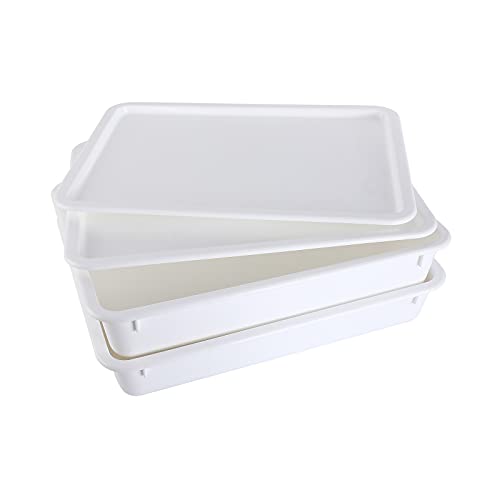
LloydPans scales its proofing box down to fit a home refrigerator shelf, holding two to four dough balls through a cold proof. The included lid seals tightly enough to prevent the dough skin from drying out overnight. It uses the same food-grade polycarbonate as the brand’s larger commercial trays.
Pros
- Fits home refrigerator shelves
- Lid prevents overnight drying
- Commercial-grade plastic durability
Cons
- Too small for shop-scale proofing
- Not stackable with full-size boxes

Tezzorio Dough Proofing Container
Tezzorio keeps costs down by using a simpler snap-on lid instead of a gasketed or color-coded design. The box still holds the standard 18×26 commercial footprint and enough depth for a normal rise. It suits shops that proof dough for a few hours rather than a long overnight cold proof.
Pros
- Lowest price with a lid included
- Standard commercial footprint
- Adequate depth for short proofs
Cons
- Snap lid seals looser than gasketed designs
- Less suited to long overnight proofs
Met Lux Proofing Box with Graduated Markings
Met Lux molds volume markings into the side wall, letting kitchen staff check how far a batch has risen without lifting the lid. That visual cue helps standardize proofing times across shifts and staff. The box still fits standard commercial shelving despite the added markings.
Pros
- Markings let staff check rise without opening the lid
- Helps standardize proofing times
- Fits standard shelving
Cons
- Markings can fade after years of scrubbing
- Not available in the deeper 6 inch size
Thunder Group Proofing Box with Lid
Thunder Group combines its reinforced base, built for stacking multiple loaded boxes, with a lid sized to seal dough in during a cold proof. The pairing suits high-volume shops running several proofing batches at once. Extra base thickness adds weight but prevents the lowest box in a stack from bowing.
Pros
- Reinforced base handles multi-box stacks
- Lid seals dough during long proofs
- Holds up under high-volume use
Cons
- Heavier than shallower proofing boxes
- More than needed for single-batch home use
How they compare
| # | Model | Material | Best for | Score | Price |
|---|---|---|---|---|---|
| 1 | Cambro Dough Proofing Box with Lid | Polycarbonate | Best overall | 9.4 | Check price |
| 2 | Rubbermaid Commercial Proofing Container | Polyethylene | Best for high-humidity proofing | 9.1 | Check price |
| 3 | Carlisle StorPlus Proofing Box with Lid | Polycarbonate | Best for stackable proofing racks | 8.9 | Check price |
| 4 | LloydPans Dough Proofing Box | Polycarbonate | Best for home ovens | 8.7 | Check price |
| 5 | Tezzorio Dough Proofing Container | Polyethylene | Best value | 8.5 | Check price |
| 6 | Met Lux Proofing Box with Graduated Markings | Polycarbonate | Best for tracking rise | 8.3 | Check price |
| 7 | Thunder Group Proofing Box with Lid | Polycarbonate | Best for high-volume shops | 8.0 | Check price |
Questions worth asking
What is a dough proofing box used for?
A dough proofing box holds portioned dough while it rises, usually in a refrigerator for a slow cold proof. The lid and extra depth distinguish it from a basic storage box.
How deep should a proofing box be?
Most run 4 to 6 inches deep, enough room for dough to double or triple in volume without pushing against a tight lid.
Does a proofing box need an airtight lid?
Not fully airtight, but a snug seal helps hold humidity and prevents the dough surface from drying out during long proofs.
Can I proof pizza dough without a lid?
Yes, with plastic wrap or a damp towel as a substitute, but a dedicated lid seals more consistently and stacks cleaner in a refrigerator.
What is the difference between proofing and just storing dough?
Storage boxes hold already shaped portions for short periods, while proofing boxes are sized and sealed specifically to support dough rising over hours.
How long can dough stay in a proofing box in the fridge?
Cold proofs commonly run 24 to 72 hours, depending on yeast quantity and dough hydration, with a sealed lid helping maintain consistency across that window.
Do proofing boxes work for bread dough as well as pizza dough?
Yes, the same depth and lid seal that benefit pizza dough work equally well for bread dough proofed in bulk before shaping.
Are graduated markings on a proofing box actually useful?
They help standardize proofing checks across shifts, since staff can judge rise by volume line instead of guessing by eye.
Can a home cook use a commercial proofing box?
Yes, though the full 18×26 size is oversized for most home kitchens. A scaled-down tray like LloydPans’ fits better.
Final word
The Cambro Dough Proofing Box with Lid is the strongest all-around choice, giving dough enough depth to rise fully while the tight lid holds in moisture through a long cold proof. Shops juggling several proofing batches a day should lean on Carlisle’s color-coded lids or Met Lux’s volume markings instead, since tracking matters more than raw capacity at that scale. Home cooks proofing two or three dough balls get more practical use from the compact LloydPans box, which fits a normal refrigerator shelf without crowding everything else.
Dana Whitfield
Dana spent eight years buying and merchandising for a regional kitchenware retailer before moving into editorial work. She has handled thousands of SKUs across cookware, small appliances and kitchen organization, and focuses on the practical differences that matter once a product is actually in daily use.