8 Pour Over Coffee Makers Worth Brewing With Daily
Hario’s V60 Ceramic Dripper Size 02 leads on control, since its steep cone and single hole put drawdown speed in your hands. Chemex’s Classic Series 6-Cup suits brewing for two or three. Melitta’s Ready Set Joe covers a single mug for the lowest cost of the group.
Geometry separates these seven brewers more than brand does. Hario’s V60 hands you the most control, since a steep cone and single hole put drawdown speed in your pour. Chemex brews a full pot in one glass vessel with almost no cleanup. Melitta’s Ready Set Joe turns a single mug into a two minute routine for the least money here.
Pour over is confusing to shop for because differences live in bed shape, not features on a spec sheet. Cone angle and hole size decide how forgiving a design is toward pouring technique. We compared drawdown speed, filter format and cost, heat retention in the brewer body, and how much a shaky pour actually matters for each design.
Our top picks

Hario V60 Ceramic Coffee Dripper Size 02
A sixty degree cone and one large hole put drawdown speed almost entirely under your control. Spiral ribs inside the cone let air escape so water flows evenly. Ceramic holds heat well once you rinse it with hot water first, and sloppy pouring shows up immediately in the cup.
Pros
- Maximum control over extraction and drawdown
- Ceramic retains heat once preheated
- Filters are cheap and sold nearly everywhere
Cons
- Punishes inconsistent pouring technique
- Ceramic cracks if dropped on a hard floor

Chemex Classic Series 6-Cup Pour-Over
Brewer and carafe share one piece of glass, so only one item needs washing after a pot for two or three. Thick bonded filters strip oils and fine sediment for a notably clean cup. Those same filters slow drawdown, which makes timing less critical than with a cone.
Pros
- Brews and serves from a single vessel
- Delivers a very clean cup with no sediment
- Thick filters forgive imprecise timing
Cons
- Proprietary filters cost more than cone filters
- Glass body sheds heat quickly during brewing
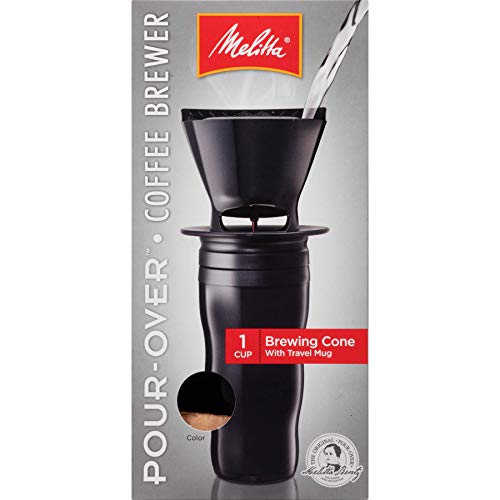
Melitta Ready Set Joe Pour-Over Coffee Brewer
This plastic cone sits directly on a mug and takes the number two filters stocked in any supermarket. Small holes regulate drawdown automatically, so a decent cup needs almost no technique. Experimentation is limited compared with a V60, and that is the whole point of the design.
Pros
- Lowest cost of any brewer in this group
- Filters sold in nearly every supermarket
- Needs almost no technique for a good cup
Cons
- Plastic body holds very little heat
- Little room to adjust extraction
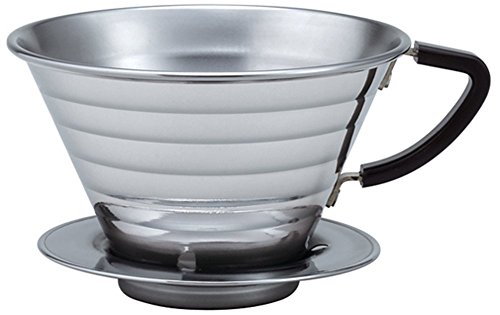
Kalita Wave 185 Stainless Steel Dripper
A flat bottom and three small holes keep the coffee bed level, so water passes through evenly even with an imperfect pour. Stainless steel resists breakage and travels well in a bag. Wave filters cost more than cone filters and are stocked in fewer stores.
Pros
- Flat bed evens out results with less technique
- Steel body survives drops and travel
- Three holes regulate drawdown reliably
Cons
- Wave filters cost more and stock is limited
- Thin steel loses heat faster than ceramic

OXO Brew Pour-Over Coffee Maker with Water Tank
An upper tank meters water onto the bed at a steady rate, removing pouring technique from the process. Fill it, walk away, and come back to a finished brew. Purists lose the control that makes pour over interesting, though a steady weekday cup has its own value.
Pros
- Removes pouring technique as a variable
- Delivers a consistent cup every time
- Works with standard, inexpensive cone filters
Cons
- No control over pour rate or bloom timing
- More parts to wash than a plain dripper

Bodum Pour Over Coffee Maker with Permanent Filter
A stainless mesh filter replaces paper entirely, so there is nothing to buy or run out of on a Sunday morning. Mesh lets more oils and fine particles through than paper does, giving a heavier, less clear cup. Whether that reads as a feature depends on personal taste.
Pros
- No paper filters to buy or run out of
- Produces a fuller bodied cup from retained oils
- Glass carafe doubles as a serving vessel
Cons
- Fine sediment reaches the finished cup
- Mesh needs thorough cleaning to avoid stale oils

Bee House Ceramic Coffee Dripper
A wedge shaped ceramic body with two small holes regulates flow, giving much of a V60’s heat retention with far less demand on technique. Filters follow the common Melitta style, sold in most stores. Experienced brewers may find the fixed flow limiting, which is exactly why beginners get along with it.
Pros
- Ceramic heat retention without V60 difficulty
- Uses common, inexpensive supermarket filters
- Delivers consistent results from a casual pour
Cons
- Fixed flow rate limits experimentation
- Heavy and breakable ceramic construction
What to look for
Cone or flat bottom: which shape fits you? A steep cone like the V60 funnels the bed toward one large hole, so drawdown speed tracks your grind and pour closely. That gives control, and it demands attention. A flat bottom design such as the Kalita Wave spreads several small holes under a level bed, so water meets the grounds evenly even with a casual pour. Pick the cone to tinker, the flat bed for consistency.
Why filters become the real ongoing cost A brewer gets bought once, filters get bought forever. Cone filters for a V60 or a Melitta style dripper stay cheap and sit on supermarket shelves. Chemex bonded filters and Kalita Wave filters cost more and often require an online order, which matters mid week. Reusable metal filters remove that cost but let more oil and fine sediment into the cup.
Does brewer material change the cup? Hot water loses heat fast the moment it meets a cold dripper, and that under-extracts the grounds. Ceramic holds temperature best once rinsed with hot water first, a ten second step with a real payoff. Glass sits in the middle, thin steel cools quickly, and plastic retains almost nothing while staying light and unbreakable. Preheating any brewer is the cheapest upgrade available.
What grind, ratio and bloom time work best? Pour over generally wants a medium grind, close to table salt in texture, finer if the brew runs too fast and coarser if it stalls. Around sixteen to eighteen parts water per part coffee suits most palates. Wet the grounds first, wait thirty to forty five seconds for the bloom as carbon dioxide escapes, then pour in slow circles. Skipping the bloom is the single most common reason home pour over tastes flat.
Side by side
| # | Model | Material | Best for | Score | Price |
|---|---|---|---|---|---|
| 1 | Hario V60 Ceramic Coffee Dripper Size 02 | Ceramic | Best overall | 9.4 | Check price |
| 2 | Chemex Classic Series 6-Cup Pour-Over | Borosilicate glass with wood collar | Best value | 9.2 | Check price |
| 3 | Melitta Ready Set Joe Pour-Over Coffee Brewer | BPA free plastic | Best budget | 9.0 | Check price |
| 4 | Kalita Wave 185 Stainless Steel Dripper | Stainless steel | Best flat bottom | 8.8 | Check price |
| 5 | OXO Brew Pour-Over Coffee Maker with Water Tank | Stainless steel and plastic | Best for consistency | 8.6 | Check price |
| 6 | Bodum Pour Over Coffee Maker with Permanent Filter | Borosilicate glass with steel mesh | Best reusable filter | 8.3 | Check price |
| 7 | Bee House Ceramic Coffee Dripper | Ceramic | Best for beginners | 8.0 | Check price |
Frequently asked questions
What grind size works best for pour over?
Medium, about the texture of table salt, is the right starting point. Water draining through in under two minutes signals too coarse a grind; past four minutes signals too fine. Adjust in small steps rather than large jumps.
What water temperature suits pour over coffee?
Aim for 92 to 96 degrees Celsius, just off a full boil. Boiling water scalds lighter roasts, while anything under about 88 degrees tends to under-extract and taste sour.
How long does a pour over take to brew?
A single cup runs roughly two and a half to three and a half minutes from first pour to finished drawdown. Larger brewers like the Chemex commonly take four to five minutes.
Is a gooseneck kettle necessary for pour over?
It helps a lot with cone brewers, where pour placement and rate change the result directly. A flat bottom brewer or a metered device like the OXO tolerates an ordinary kettle better, though a narrow spout still adds control.
Why does my pour over coffee taste bitter?
Over-extraction is the usual cause. Try a coarser grind, a slightly lower water temperature, or a shorter brew time. Bitterness paired with a dry finish almost always means the water sat too long with the grounds.
Why does my pour over taste sour or thin?
That points to under-extraction. Grind finer, raise the water temperature, or slow the pour so contact time increases. Check that you are using enough coffee for the water volume too.
Should I rinse the paper filter before brewing?
Yes. Rinsing clears papery taste and preheats the brewer and carafe in one step. Pour the rinse water out before adding coffee.
Is a metal reusable filter as good as paper?
It makes a different cup, not a worse one. Metal lets oils and fine particles through for a heavier body, while paper gives a cleaner, brighter result. Metal saves money and waste but needs careful cleaning to avoid rancid buildup.
Which pour over maker suits a beginner best?
A forgiving flat bottom or wedge design, such as the Kalita Wave or Bee House, tolerates an uneven pour better than a steep cone. Small holes regulate the flow instead of leaving that job entirely to technique.
Our take
Hario’s V60 Ceramic Dripper Size 02 remains the brewer worth learning on, since cheap filters and strong ceramic heat retention reward practice. Chemex’s Classic Series 6-Cup suits anyone brewing for more than one person who wants a clean, forgiving result. When pour over is a weekday habit rather than a hobby, Melitta’s Ready Set Joe gets the job done for the least money.
Dana Whitfield
Dana spent eight years buying and merchandising for a regional kitchenware retailer before moving into editorial work. She has handled thousands of SKUs across cookware, small appliances and kitchen organization, and focuses on the practical differences that matter once a product is actually in daily use.
You might also need
The Average Lifespan of a Coffee Maker, Explained
How Often Does a Coffee Maker Really Need Cleaning?

5 Non Stick Pans That Hold Up to Daily Cooking
