Massage guns that hold up to athlete training loads
Theragun PRO 5th Generation leads for heavy training loads, pairing 16mm amplitude with roughly 60 pounds of stall force. Hypervolt 2 Pro gives up some depth for noise damping that suits shared rooms. Theragun Prime keeps that same 16mm stroke in a lighter, simpler body.
Theragun PRO 5th Generation is the pick for athletes carrying real training volume, since 16mm of travel and about 60 pounds of stall force reach dense quads and glutes. Bulk and noise are what you trade for that depth. Anyone loosening sore calves in a hotel room will find it far more gun than the job needs.
Speed numbers dominate the marketing, yet amplitude and stall force are what change how a session feels. We compared stroke depth, force ratings, speed ranges and included heads across current models. Owner reports on motor stall over thick muscle, plus noise in shared training rooms, broke the close calls.
What we recommend

Therabody Theragun PRO 5th Generation
A 16mm stroke and roughly 60 pounds of stall force define this one, which is what larger athletes need before a motor bogs down mid quad. Its rotating arm offers four grip angles, so reaching your own mid back stops being a wrestling match. Applied force shows live on the OLED screen and inside the Therabody app.
Pros
- Holds speed on dense quads and glutes
- Rotating arm reaches the back without a partner
- Screen and app report the force you apply
Cons
- Heavier in the hand than mid-range guns
- Audible across a quiet treatment room
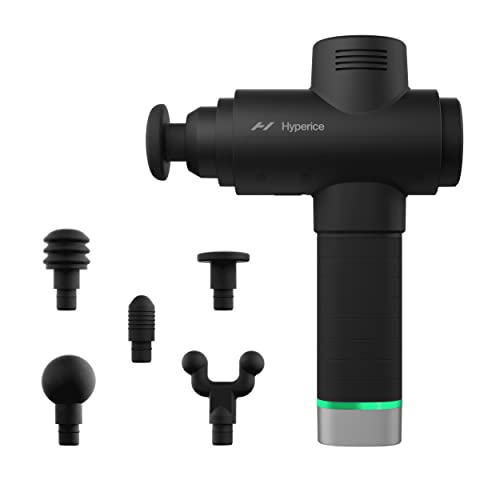
Hyperice Hypervolt 2 Pro
Behind the noise damping sits a 90 watt high torque motor with pressure sensing, so conversation survives a session. Five speeds and five heads cover warm up work through post-session calves. Battery life near three hours keeps a team bag supplied across a full training week.
Pros
- Quiet enough for a shared training room
- Runs about three hours between charges
- Pressure sensor shows how hard you lean in
Cons
- Stroke is shorter than the Theragun PRO
- Straight handle offers fewer grip angles
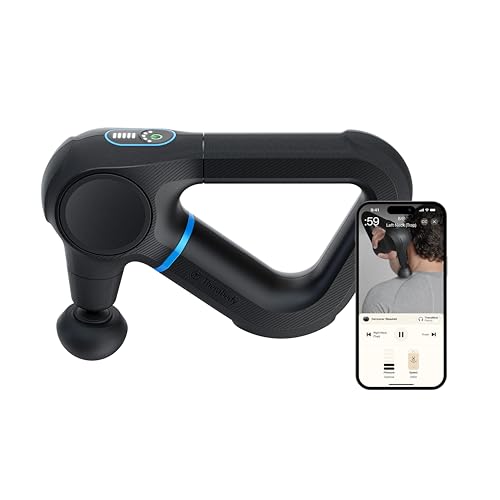
Therabody Theragun Prime 5th Generation
Prime carries the same 16mm amplitude, then drops the rotating arm, the extra screen data and the top force rating. Stall force lands near 30 pounds, which still covers hamstrings and calves for most athletes. Four heads plus Therabody app routines handle a standard recovery session.
Pros
- Full 16mm stroke without the PRO’s bulk
- Lighter to hold through daily use
- Runs the same guided app routines as the PRO
Cons
- Stalls sooner than the PRO under heavy pressure
- Fixed handle limits reach on your own back
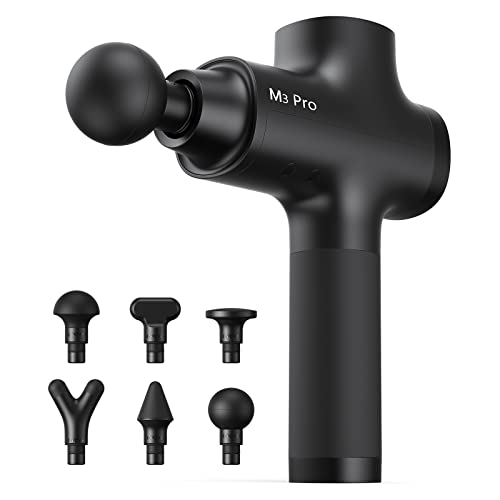
Opove M3 Pro Max
Opove lands between budget guns and the premium brands, with a 12mm stroke and a motor that resists stalling on thighs. Runtime spans several sessions per charge, which matters when a coach passes one gun down a bench. Flat, ball, bullet and fork heads cover the usual leg and back work.
Pros
- Works quads and glutes without bogging down
- Battery lasts across multiple team sessions
- Physical controls only, with no app to set up
Cons
- Louder in use than the Hypervolt 2 Pro
- No pressure feedback or session tracking
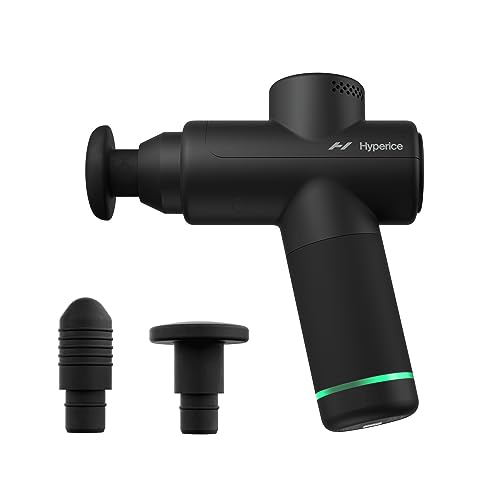
Hyperice Hypervolt Go 2
Around 1.5 pounds puts this in a gym bag pocket or a carry-on. Three speeds and two heads keep it simple for calves, forearms and shoulders between sessions. Depth is limited, so treat it as maintenance rather than deep work on a large athlete.
Pros
- Fits hand luggage and gym bag pockets
- Quiet enough for a hotel room or a plane
- One-hand use on calves and forearms
Cons
- Short stroke limits depth on thighs
- Only two heads come in the box
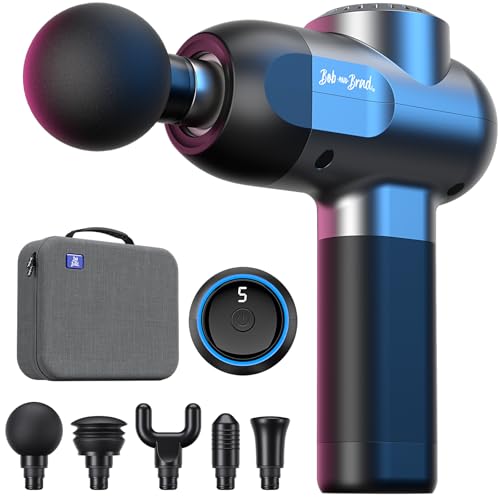
Bob and Brad C2 Massage Gun
Light and approachable is the brief, with a 10mm stroke that reads as firm rather than punishing. Five speeds let a newcomer start gentle on shins and shoulders. Clear head labelling and physiotherapy-minded instructions help people who have never used percussion before.
Pros
- Gentle enough as a first massage gun
- Under two pounds for longer calf work
- Labels explain which head suits which area
Cons
- 10mm stroke is shallow for heavy legs
- Plastic body feels less solid than premium rivals

TOLOCO EM26 Massage Gun
Volume is the pitch here: ten attachment heads, an LCD touch screen and a hard carry case. Speeds climb to around 3200 percussions per minute, though force fades once you lean into a thigh. As a first gun for general soreness it does the job, and it makes a sensible spare for a kit bag.
Pros
- More attachment heads than anything else here
- Hard case included for transport
- Low commitment way to try percussion therapy
Cons
- Motor stalls under firm pressure on big muscles
- Clearly louder than the premium models
What matters most
What matters in a massage gun for athletes Four numbers separate these guns: amplitude, stall force, speed range and weight. Amplitude measures how far the head travels, so it sets depth. Stall force is the pressure a motor absorbs before it slows, which decides whether a quad session works at all. Speed matters least, since anything past roughly 2000 percussions per minute covers most muscle groups. Choose on the first two numbers and treat the rest as tie-breakers.
Amplitude and stall force in practice At 10mm, as on the Bob and Brad C2, a gun suits forearms, calves and anyone new to percussion. Twelve millimetres on the Opove M3 Pro Max reaches hamstrings without stalling. Theragun’s 16mm stroke explains why the PRO and Prime feel unlike everything else, particularly over glutes. Heavier athletes press harder, so amplitude and stall force need to climb together. A long stroke behind a weak motor gives you the worst of both.
Using a massage gun before training and after Warm up work runs short: roughly 30 seconds per muscle at a lower speed, using a flat or ball head. Afterwards, Therabody and Hyperice both point to one or two minutes per muscle group. Joints, bony areas and fresh injuries stay off the list, and sharp pain means stop. Nagging strains need a physiotherapist rather than more percussion.
Noise, weight and shared training rooms Team rooms, hotels and a coach on a bus all turn noise into a real constraint. Hypervolt 2 Pro is the quietest full-size pick here, while budget guns carry across a gym floor. Weight compounds the problem, because anything past roughly two and a half pounds tires your arm when you work your own back. Athletes travelling weekly often run two: a full-size gun at home and a Hypervolt Go 2 in the bag.
The lineup, side by side
| # | Model | Amplitude | Best for | Score | Price |
|---|---|---|---|---|---|
| 1 | Therabody Theragun PRO 5th Generation | 16mm | Best overall | 9.4 | Check price |
| 2 | Hyperice Hypervolt 2 Pro | 90 watt high torque | Best for quiet sessions | 9.2 | Check price |
| 3 | Therabody Theragun Prime 5th Generation | 16mm | Best value | 9.0 | Check price |
| 4 | Opove M3 Pro Max | 12mm | Best for large muscle groups | 8.7 | Check price |
| 5 | Hyperice Hypervolt Go 2 | About 1.5 pounds | Best for travel | 8.5 | Check price |
| 6 | Bob and Brad C2 Massage Gun | 10mm | Best for beginners | 8.3 | Check price |
| 7 | TOLOCO EM26 Massage Gun | 7 levels, up to about 3200 percussions per minute | Best budget | 8.0 | Check price |
Frequently asked questions
What amplitude do you need in a massage gun?
About 10mm handles calves, forearms and shoulders. Quads, glutes and hamstrings want 12mm to 16mm before the stroke reaches anything useful.
What is stall force and why does it matter?
Stall force is the pressure that stops the head moving. Too little of it and the gun quits precisely when you push into a thick muscle.
Is a massage gun better before or after a workout?
Both work, at different settings. Short low-speed bursts suit a warm up, while slower passes of a minute or two suit recovery.
How long should you use a massage gun on one muscle?
One to two minutes per muscle group matches what Therabody and Hyperice advise. Staying longer tends to add irritation instead of benefit.
Which massage gun is best for quads and glutes?
Theragun PRO 5th Generation, because 16mm amplitude and high stall force keep it moving under real pressure. Theragun Prime gives the same stroke with less force headroom.
Theragun vs Hypervolt: what is the real difference?
Theragun uses a longer stroke and a triangular handle for depth and reach. Hypervolt runs quieter on a straight handle, with a softer feel at the head.
Are budget massage guns any good for athletes?
For general soreness, yes. TOLOCO EM26 works on calves and shoulders, then stalls exactly where a heavier athlete needs help most.
How often can you use a massage gun each week?
Daily use is common among athletes, kept to short passes per muscle. Back off if an area stays tender the next day.
Where should you never use a percussion massager?
Keep it off the neck’s front and sides, the spine, the kidneys, bony joints and any fresh injury. Bruising or numbness means stop and get it looked at.
Can you take a massage gun on a plane?
Compact models such as the Hypervolt Go 2 are built for carry-on. Check the airline’s lithium battery rules before flying with a full-size unit.
Our take
Take the Theragun PRO 5th Generation if you train at volume and need depth on legs and glutes, since nothing else here combines 16mm amplitude with that much stall force. Athletes sharing a treatment room should pick the Hypervolt 2 Pro, where noise decides the argument. Spending less costs little in practice: Theragun Prime keeps the identical 16mm stroke and simply stalls sooner.
Derek Holt
Derek has a background coaching recreational and amateur athletes and has worked the sales floor at specialty fitness retailers. He focuses on equipment durability, ergonomics and realistic use cases rather than marketing claims.


