Which Life Jackets Hold Up for Heavy Duty Use?
For all around toughness, the Onyx MoveVent Dynamic Vest leads with segmented foam and a triple strap system. Anglers and paddlers wanting freedom of movement do well with the Stohlquist Fisherman PFD. Budget shoppers get solid buoyancy from the Airhead Trend Life Vest.
A weak buckle or thin foam panel turns a life jacket into dead weight the moment water gets rough.
Heavy duty models differ mainly in foam density, buckle count and shoulder reinforcement, not just overall thickness. We ranked these by comparing Coast Guard approval type, stitched panel construction, and owner reports on strap failure and fit under real load.
The shortlist, ranked

Onyx MoveVent Dynamic Vest
Segmented foam panels flex with the torso instead of riding up during paddling or towing. Three adjustable straps plus a zip front hold the vest steady under sudden jerks. Owners running it behind tow ropes report no shifting even at speed.
Pros
- Segmented panels move with the body
- Triple strap system resists riding up
- Handles towing and wakeboard use well
Cons
- Runs warm in full sun
- Bulkier than mesh back paddling vests
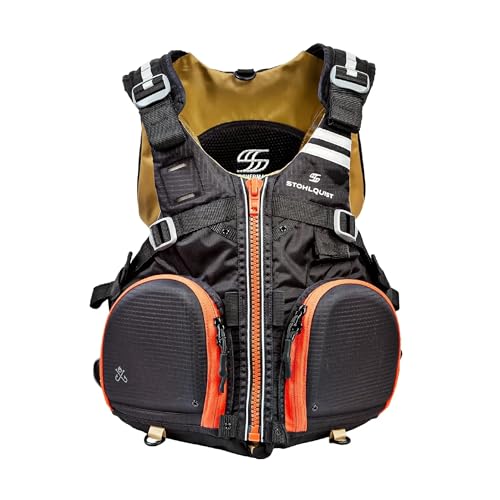
Stohlquist Fisherman PFD
A cut away mesh back clears kayak seat backs, so the vest never bunches during long casting sessions. Four external pockets hold pliers, leaders and a phone without a separate pack. Anglers report the shoulder straps stay put through repeated overhead rod work.
Pros
- High back mesh clears kayak seats
- Pockets fit tackle and a phone
- Straps hold through overhead motion
Cons
- Foam bulk limits kayak roll recovery
- Pricier than plain paddling vests

Mustang Survival HIT Inflatable PFD
An automatic hydrostatic inflator fires on submersion, keeping the wearer afloat even unconscious. A manual pull cord backs up the auto trigger for controlled inflation. Commercial crews favor its low bulk during long shifts on deck.
Pros
- Very low bulk for long wear
- Automatic trigger needs no action
- Rated for offshore commercial use
Cons
- Provides no flotation until inflated
- Rearm kits add ongoing cost

Astral Green Jacket Fishing PFD
PVC free foam meets the same buoyancy standard while cutting the manufacturing footprint some owners care about. A low profile front avoids catching on kayak coamings during wet exits. Guides report the shoulder adjustment holds through repeated rescue tows.
Pros
- Low profile front avoids coaming snags
- Foam holds shape after repeated soaking
- Works with quick release rescue harnesses
Cons
- Fewer storage pockets than fishing vests
- Limited size range for larger builds

Full Throttle Adult Rapid Dry Flex Back Vest
A segmented flex back panel lets a wearer sit against a boat seat without the vest riding into the neck. Rapid dry foam sheds water fast between runs behind the boat. Owners use it for wakeboarding, tubing and general towing without complaint.
Pros
- Flex back stays comfortable seated
- Foam dries fast between tow runs
- Wide size range up to 3X
Cons
- Straps loosen slightly over a season
- Foam is thinner than commercial grade vests

Kent Sportsman Heavy Duty Vest
Extra foam volume compensates for the bulk of layered clothing worn under a jacket in cold conditions. Oversized armholes preserve range of motion despite the added foam. Owners fishing early season report a comfortable fit over waders and jackets alike.
Pros
- Extra foam suits cold weather layering
- Oversized armholes keep mobility
- Reinforced side straps resist stretch
Cons
- Bulkier profile than summer vests
- Limited color options available

Airhead Trend Life Vest
Closed cell foam and a simple three buckle system cover core Coast Guard requirements without extra features. Neoprene trimmed armholes reduce chafing during longer paddles. Owners buy multiples for guests, since the price allows keeping spares aboard.
Pros
- Affordable enough to keep spares
- Neoprene trim reduces armhole chafing
- Simple buckle system is easy to size
Cons
- Foam panels are less segmented
- Straps feel thinner than premium models
Before you buy
What makes a life jacket heavy duty? Foam density, panel stitching and buckle count separate heavy duty vests from basic ones. Denser closed cell foam resists compression after repeated soakings, keeping buoyancy consistent for years. Reinforced stitching at stress points stops seams from tearing under sudden load, and strap width matters too, since one weak strap can let the whole vest ride up in rough water.
How do you pick the right Coast Guard type? Type III suits general boating, paddling and watersports where rescue stays close at hand. Type V covers specialized activities like commercial work or towing, and often must be worn exactly as labeled. Inflatable Type V models like the Mustang Survival HIT save bulk but give no flotation until triggered. Match the type to the activity, not just the price.
Which life jacket works best for kayak fishing and paddling? A high back cut, like the Stohlquist Fisherman’s, clears tall kayak seats so the vest never bunches at the neck. Pockets for pliers, leaders and a phone matter more here than raw buoyancy. Anglers casting overhead all day also want shoulder straps that will not slip, and mesh panels help since paddling generates more body heat than powerboating does.
What suits towing, wakeboarding and offshore work best? Watersports vests like the Full Throttle Flex Back need to survive impact at speed, so reinforced stitching and a snug fit matter most. Offshore and commercial crews favor low bulk inflatables such as the Mustang HIT for long shifts. Cold water paddlers should size up for layering, since a vest fitted for a t-shirt will not close over a jacket.
How they stack up
| # | Model | Coast Guard rating | Best for | Score | Price |
|---|---|---|---|---|---|
| 1 | Onyx MoveVent Dynamic Vest | Type III | Best overall | 9.4 | Check price |
| 2 | Stohlquist Fisherman PFD | Type III | Best for kayak fishing | 9.1 | Check price |
| 3 | Mustang Survival HIT Inflatable PFD | Type V, Type III when inflated | Best for offshore and commercial use | 8.9 | Check price |
| 4 | Astral Green Jacket Fishing PFD | Type III | Best for whitewater and river use | 8.7 | Check price |
| 5 | Full Throttle Adult Rapid Dry Flex Back Vest | Type III | Best for watersports and towing | 8.5 | Check price |
| 6 | Kent Sportsman Heavy Duty Vest | Type III | Best for cold water and layering | 8.2 | Check price |
| 7 | Airhead Trend Life Vest | Type III | Best budget | 8.0 | Check price |
Frequently asked questions
What is the difference between Type III and Type V life jackets?
Type III is general purpose flotation for boating and paddling, worn loosely for comfort. Type V is activity specific, such as commercial work vests or inflatables, and often must be worn as labeled to count as approved.
How long do heavy duty life jackets last?
Foam degrades gradually from UV exposure and repeated compression, typically losing reliable buoyancy after five to ten years of regular use. Inspect foam yearly by pressing panels for stiffness and checking straps for fraying.
Are inflatable life jackets as safe as foam vests?
Inflatables like the Mustang Survival HIT meet Coast Guard standards once inflated, but provide zero flotation before triggering. Foam vests float immediately with no mechanism to fail, which is why whitewater paddlers stick with foam.
What size life jacket do I need?
Fit is based on chest measurement, not body weight, so measure around the fullest part of the chest first. A properly sized vest should not ride up past the ears when lifted by the shoulders while worn.
Is a heavy duty life jacket worth it over a cheap one?
For towing, offshore work or whitewater, yes, since reinforced stitching and denser foam resist the higher stress those activities create. Casual lake paddling puts less strain on straps and seams, so a budget vest like the Airhead Trend can be enough.
What is the best life jacket for cold water use?
Look for extra foam volume and oversized armholes that fit over a jacket or wetsuit, like the Kent Sportsman offers. A vest sized for bare skin will not close properly over layers, and cold water also demands faster self rescue.
Can you wear a fishing life jacket for general boating?
Yes, fishing PFDs like the Stohlquist Fisherman carry the same Type III rating as general vests and add useful pockets. The tradeoff is a higher back cut that some non anglers find unnecessary.
How do you maintain and store a heavy duty life jacket?
Rinse off salt or chlorine after each use and let it air dry fully before storage, since trapped moisture breaks down foam faster. Store flat or hung, never balled up or under heavy gear that compresses the foam.
Which life jacket is best for towing and wakeboarding?
The Onyx MoveVent Dynamic Vest and Full Throttle Flex Back both use segmented, flexible foam panels that stay in place during sudden jerks behind a boat.
Do heavy duty life jackets come in larger sizes?
Yes, several models here extend past standard sizing, including the Full Throttle vest up to 3X and the Airhead Trend up to 4X.
The bottom line
Need one vest that handles paddling, towing and general boating without a weak point? The Onyx MoveVent Dynamic Vest covers that ground. Kayak anglers casting all day are better served by the Stohlquist Fisherman PFD and its pocket layout. Offshore crews working long shifts should look at the low bulk Mustang Survival HIT instead.
Derek Holt
Derek has a background coaching recreational and amateur athletes and has worked the sales floor at specialty fitness retailers. He focuses on equipment durability, ergonomics and realistic use cases rather than marketing claims.


