How to Choose a PC VR Headset for Smooth Play
Meta Quest 3 is the most practical PC VR headset for most people, pairing pancake lens clarity with flexible wired or wireless PC connection. Valve Index still leads on tracking precision and controller feel, and Pimax Crystal Light targets simulator players chasing maximum resolution.
One PC VR headset that covers gaming, simulators and general use is the Meta Quest 3, our starting recommendation. Valve Index stays ahead on tracking and controller feel, while Pimax Crystal Light targets simulator players chasing maximum clarity.
Shopping for PC VR gets confusing fast, since two headsets with matching resolution numbers can feel completely different depending on lens type and sweet spot size. We compared published panel specifications, lens designs, tracking methods, refresh rates and connection requirements, then weighed what owners report about comfort past the one hour mark.
What to look for
What matters more, lens type or resolution? Two headsets can list matching per eye resolution and still look completely different. Pancake and glass aspheric lenses keep the image sharp across a wide area, while older Fresnel lenses concentrate clarity into a narrow sweet spot with visible glare rings. Constantly adjusting a headset to find the clear spot points to a lens problem, not a panel problem.
How does tracking system change your room setup? Inside out tracking relies on headset cameras and needs no external hardware, so setup stays fast and portable. Lighthouse base stations mount in room corners and deliver the most precise tracking, particularly when controllers move behind your back. Precision or convenience, whichever matters more, decides what you end up installing in your space.
Can your PC actually drive a VR headset? High resolution headsets are demanding in a way flat screen benchmarks rarely prepare you for, since the GPU renders two high resolution views at once. A headset that outruns its graphics card produces stutter and reprojection artifacts, often worse looking than a lower resolution running smoothly. Match the headset to the PC you currently own, not the one you plan to build.
What makes a VR headset comfortable for long sessions? Weight distribution, facial interface material and strap design decide whether a session ends after twenty minutes or two hours. Halo style headbands shift weight to the forehead and back of the head rather than the cheekbones, which most people find more comfortable. A strap upgrade is often the cheapest comfort fix available on headsets that ship with a basic elastic band.
The top picks, ranked

Meta Quest 3 512GB
Pancake lenses give the Quest 3 a wide, clear sweet spot without the sharp edge falloff older Fresnel headsets show. It connects to a PC over a cable or wirelessly on a strong network. Inside out tracking needs no base stations, and color passthrough makes it easier to use in a normal room.
Pros
- Clear image across the whole lens, not just center
- Works wired or wireless with no external sensors
- Color passthrough simplifies use in a normal room
Cons
- Wireless PC play needs a strong dedicated network
- Stock strap benefits from an upgrade for long sessions
Valve Index VR Kit
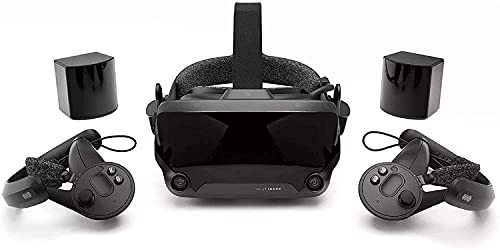
Lighthouse base station tracking remains the most precise system available, which matters in games demanding fast, accurate hand movement. Index controllers track individual fingers and strap to your hands, so an open grip will not drop them. High refresh modes stay competitive with newer hardware, based on published specifications.
Pros
- Most precise tracking system in this comparison
- Finger tracking controllers strap to the hand
- Off ear speakers deliver strong built in audio
Cons
- Base stations require mounting and dedicated space
- Fresnel lenses show more glare than pancake designs

Meta Quest 3S
Processor and controllers carry over from the Quest 3, while Fresnel lenses and a lower resolution panel bring the price down. PC VR performance stays similar, just with a smaller sweet spot. No base stations are required, making it the most accessible entry point into PC VR.
Pros
- Lowest cost entry into PC VR in this list
- Same tracking system and connection options as Quest 3
- No base stations to mount
Cons
- Smaller lens sweet spot than pancake designs
- Lower resolution panel strains text heavy sims

HTC VIVE Pro 2
A high resolution panel pairs with one of the widest fields of view in consumer PC VR, improving immersion in cockpit games. Lighthouse tracking shares the Index’s precision and setup requirements. A capable graphics card is needed to drive the panel at its higher refresh modes.
Pros
- Widest field of view in this comparison
- High resolution suits cockpit instrument reading
- Lighthouse tracking delivers precise controller movement
Cons
- Requires a powerful graphics card to run well
- Base stations and controllers add setup steps
Pimax Crystal Light
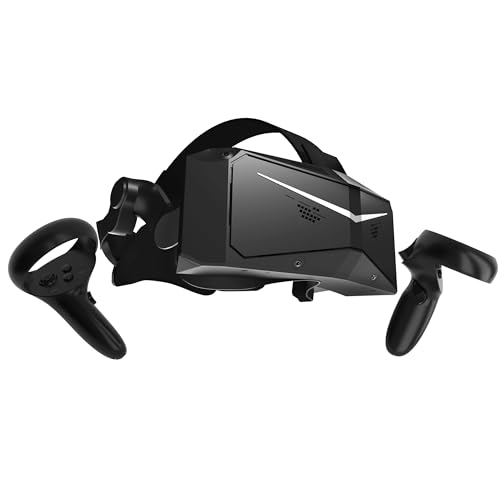
Standalone hardware from the full Crystal is stripped out here, focusing purely on PC use with very high per eye resolution. Glass aspheric lenses help sim racers and flight sim players read distant labels and instruments clearly. A strong PC and patience with setup software are both required, according to owner reports.
Pros
- Highest clarity for reading instruments and gauges
- Glass lenses reduce distortion versus plastic Fresnel
- Built specifically for PC performance, not standalone use
Cons
- Needs a high end graphics card to perform well
- Setup software is less polished than rival headsets

HTC VIVE Focus Vision
Standalone use and full PC VR over DisplayPort come from the same headset, a combination few rivals offer. Eye tracking and a hot swappable battery target longer sessions. DisplayPort avoids the compression that USB and wireless connections introduce, based on specifications.
Pros
- DisplayPort link avoids compression seen on wireless
- Eye tracking enables foveated rendering support
- Battery swaps without ending an active session
Cons
- Heavier on the head than consumer headsets
- Positioned more toward business use than gaming

PlayStation VR2 with PC Adapter
An official adapter opens PS VR2 to SteamVR, bringing its OLED panels and genuinely deep blacks to PC gaming. Contrast stands out especially in dark space and horror titles, where LCD headsets look washed out. Some console features, including haptics and eye tracking, do not carry over to PC, owners report.
Pros
- Deepest blacks and contrast in this comparison
- Halo style headband stays comfortable over time
- Adapter unlocks full SteamVR compatibility
Cons
- Several console-only features are lost on PC
- Adapter is sold separately from the headset
How they compare
| # | Model | Lenses | Best for | Score | Price |
|---|---|---|---|---|---|
| 1 | Meta Quest 3 512GB | Pancake with wide sweet spot | Best overall | 9.4 | Check price |
| 2 | Valve Index VR Kit | Lighthouse base stations | Best for tracking precision | 9.2 | Check price |
| 3 | Meta Quest 3S | Fresnel | Best value | 9.0 | Check price |
| 4 | HTC VIVE Pro 2 | High resolution dual panel | Best for wide field of view | 8.7 | Check price |
| 5 | Pimax Crystal Light | Very high per eye resolution | Best for simulators | 8.5 | Check price |
| 6 | HTC VIVE Focus Vision | DisplayPort to PC or standalone | Best for mixed use | 8.2 | Check price |
| 7 | PlayStation VR2 with PC Adapter | OLED with HDR on console | Best OLED image | 8.0 | Check price |
Common questions
Do you need a powerful PC for VR?
More power than flat screen gaming at equivalent settings, yes, since the GPU renders two views at a high refresh rate. Higher resolution headsets raise that requirement sharply, so check recommended specs before choosing a sim focused headset.
Can a standalone headset work as a PC VR headset?
Yes. Quest 3 and Quest 3S connect over USB cable or wirelessly, and VIVE Focus Vision uses DisplayPort. Wired connections avoid compression, while wireless play needs a strong dedicated network to look its best.
Is base station tracking still better than inside out?
For precision, yes. Lighthouse tracking handles fast movement and controllers hidden from headset cameras more reliably. Inside out tracking has closed most of the gap for general use and sets up far more simply.
What resolution do you need for sim racing or flight sims?
These genres reward resolution more than most, since you are reading distant signage and small instruments. Headsets with very high per eye resolution and glass lenses target exactly this use, provided your graphics card can drive them.
Are wireless PC VR connections good enough?
On a dedicated router with a clear line of sight, they can be excellent, but they always involve video compression. Players sensitive to compression artifacts or latency generally prefer a cable, especially in competitive games.
How much does field of view matter?
Wider fields of view increase immersion and reduce the sense of looking through goggles. It matters most in cockpit games, where peripheral vision fills with the interior of a car or aircraft.
Does OLED still beat LCD in VR headsets?
For contrast, yes, since OLED panels produce genuinely black blacks that transform dark scenes. LCD panels typically offer higher resolution with no burn in risk, so the right choice depends on what you play.
What extra accessories do PC VR headsets need?
Often a comfort strap for headsets with basic headbands, a link cable for wired play, and base stations plus controllers where the headset does not include them in the box.
The verdict
Meta Quest 3 is the PC VR headset most people should buy, since pancake lenses deliver clarity across the whole view and it works wired or wireless with no base stations. Tracking precision and controller feel point toward the Valve Index instead, while flight and racing sim players with a strong graphics card should look at the Pimax Crystal Light. Quest 3S remains the easiest way to find out whether PC VR suits you at all.
Marcus Chen
Marcus covered consumer electronics for enthusiast tech publications for six years before joining ChoiceCrest. He specializes in translating manufacturer spec sheets into plain-language buying advice, with a focus on audio, computing accessories and smart-home gear.