Natural vs Synthetic Paint Brushes: Which Holds a Line Better
Purdy’s XL Glide leads for its blended filaments and precise chisel edge on interior trim. Wooster’s Shortcut Angle Sash wins on value for ladder work, and the Bates 5-Pack covers occasional touch-ups without much cost.
Purdy’s XL Glide leads this roundup because its nylon and polyester blend holds a genuinely sharp chisel edge. That edge is what lets you cut a clean line against a ceiling without masking tape. Wooster’s Shortcut Angle Sash offers a stubby handle built for ladder control, while the Bates 5-Pack handles a weekend of touch-ups cheaply.
Most DIY paint jobs succeed or fail at the brush, since a cheap one leaves tramlines and drops bristles into wet paint. Filament material determines which paint a brush suits. Ferrule construction determines whether bristles shed, and the chisel cut determines how fine a line you can run. We compared filament blends, edge geometry, ferrule crimping and handle shape against what owners report after dozens of cleanings.
The shortlist, ranked

Purdy XL Glide 2.5-Inch Angular Trim Brush
Professional decorators reach for this brush on interior latex work because the nylon-polyester blend keeps its shape in water-based paint instead of going soft. A precisely cut chisel edge runs a freehand line against a ceiling. Cost sits well above a supermarket brush, and proper cleaning after every session is what justifies it.
Pros
- Holds a sharp edge for freehand cutting in
- Blend filaments stay stiff in water-based paint
- Stainless ferrule resists rust and bristle loss
Cons
- Significant cost for a single brush
- Requires proper cleaning to justify the price

Wooster Brush Q3211-2 Shortcut Angle Sash Brush
A stubby handle lets you grip the brush like a pencil, close to the ferrule, for control at a ceiling line. It fits in a pocket, which matters while working off a ladder. Long flat sections feel less comfortable with this handle than with a full-size brush.
Pros
- Short handle gives precise control at the tip
- Fits in a pocket during ladder work
- Strong value for the control it offers
Cons
- Tiring to use across large flat areas
- Small size means frequent reloading

Purdy Clearcut Dale 2-Inch Angular Trim Brush
Purdy tunes this range for a smooth finish on trim, doors and skirting, where brush marks show more than on a wall. Two inches of width suits architrave and window bars without overloading the surface. Large wall areas are better left to a bigger brush or a roller.
Pros
- Leaves a smooth finish with minimal brush marks
- Right size for architrave and window bars
- Sharp edge for detailed trim lines
Cons
- Too small for large wall areas
- Premium price for a specialist brush

Wooster Brush 5221 Alpha Angle Sash Paintbrush
A filament blend built for both water-based and oil-based paint suits projects that switch between emulsion, gloss and varnish. Paint release stays smooth, and the brush keeps its shape through repeated use. Its edge is not quite as sharp as a dedicated cutting-in brush.
Pros
- Handles both water-based and oil-based paints
- Smooth, consistent paint release
- Holds shape through repeated cleaning
Cons
- Edge less sharp than dedicated cutting brushes
- Mid to high price for a general-purpose brush

Zibra Grip-n-Glide 2.5-Inch Angle Paint Brush
A triangular handle switches grips easily, useful behind radiators or in corners where a round handle forces an awkward wrist angle. The handle end doubles as a paint can opener, saving a trip for a screwdriver. Bristle quality lands solidly good rather than exceptional next to premium brands.
Pros
- Triangular grip suits awkward working positions
- Handle end opens paint cans directly
- Comfortable to hold over long sessions
Cons
- Bristles trail premium brands on edge sharpness
- Handle shape divides opinion among users
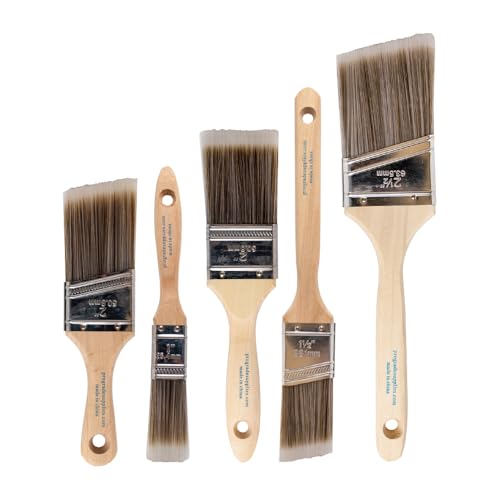
Pro Grade Paint Brushes 5 Pack Angle Sash Set
Five sizes in one purchase cover trim work up through wide walls, useful when a project needs several widths at once. Synthetic filaments handle water-based paint well for interior decorating. Edges soften sooner than a Purdy, so treat these as good tools with a shorter working life.
Pros
- Covers every common size in one purchase
- Reasonable filament quality for the price
- Useful for projects needing several brushes at once
Cons
- Edge softens sooner than premium brushes
- Occasional bristle shedding when new

Bates Paint Brushes 5-Pack
An inexpensive five-pack answers the need for touching up a scuffed wall or handing brushes to helpers who won’t clean them. Stainless ferrules outperform expectations at this price point. Some bristle loss shows up during first use, so flick and wipe before opening the paint.
Pros
- Very low cost for five usable brushes
- Stainless ferrules despite the low price
- Fine for small jobs and occasional helpers
Cons
- Sheds some bristles on first use
- Not suited to fine cutting in
Before you buy
How Do You Choose the Right Paint Brush? Natural bristle, usually hog hair, suits oil-based paints, varnishes and stains, since natural fibers absorb water and go limp in emulsion. Synthetic filaments, typically nylon, polyester or a blend, suit water-based paint instead. Nylon holds more paint and stays softer; polyester keeps its shape and stiffness. If the tin says water-based and the brush says natural bristle, put it back.
What Makes a Chisel Edge Cut a Clean Line? An angled sash brush has its filaments cut to a wedge, and that wedge’s sharpness decides how fine a line runs without masking tape. Cheap brushes carry a blunt, ragged edge that spreads paint sideways. View the tip end-on and look for a crisp, even chisel with tapered filaments. Flagged, or split, filament tips help a brush lay paint smoothly and hold more of it.
Does Ferrule Quality Predict Bristle Shedding? A ferrule is the metal band clamping filaments to the handle. Stainless steel resists rust and holds its crimp through repeated soaking, while plated steel corrodes and loosens over time. Check that the crimp sits tight and even, and that no filaments shift when you tug the bristle block gently. This detail separates brushes that survive years from ones that fail in a season.
How Do You Clean a Paint Brush So It Lasts? A premium brush only pays for itself if it survives, and survival comes down entirely to cleaning. Water-based paint needs the brush worked out in warm water until it runs clear, followed by a brush comb through the base of the filaments. Oil-based paint needs the correct solvent first, then soap and water. Spin or shake dry, reshape the chisel by hand, and store it hanging or in its cardboard keeper.
How they compare
| # | Model | Filament | Best for | Score | Price |
|---|---|---|---|---|---|
| 1 | Purdy XL Glide 2.5-Inch Angular Trim Brush | Nylon and polyester blend | Best overall | 9.4 | Check price |
| 2 | Wooster Brush Q3211-2 Shortcut Angle Sash Brush | Synthetic blend | Best for cutting in | 9.2 | Check price |
| 3 | Purdy Clearcut Dale 2-Inch Angular Trim Brush | Nylon and polyester blend | Best for trim work | 9.0 | Check price |
| 4 | Wooster Brush 5221 Alpha Angle Sash Paintbrush | Synthetic blend for all paints | Best for all paint types | 8.8 | Check price |
| 5 | Zibra Grip-n-Glide 2.5-Inch Angle Paint Brush | Synthetic blend | Best for tight spaces | 8.5 | Check price |
| 6 | Pro Grade Paint Brushes 5 Pack Angle Sash Set | Five angle sash brushes | Best value set | 8.3 | Check price |
| 7 | Bates Paint Brushes 5-Pack | Five brushes | Best budget | 8.0 | Check price |
Questions worth asking
What size paint brush should I use?
A 2 to 2.5 inch angled sash brush handles cutting in and most trim work. Use 1 to 1.5 inches for window bars and fine detail, and 3 to 4 inches for large flat areas without a roller.
Natural bristle or synthetic paint brushes, which is better?
Natural bristle suits oil-based paints, varnishes and stains. Synthetic filaments suit water-based and latex paints, since natural fibers absorb water and lose shape. Most modern interior work calls for synthetic.
Why do my paint brushes leave streaks?
Overloading the brush, fast-drying paint, and filaments that have lost their shape all cause streaks. Load only the bottom third of the bristles and maintain a wet edge as you work.
How do I stop a paint brush from shedding bristles?
New brushes always lose a few, so flick them hard and wipe across a clean hand before the first dip. Persistent shedding usually points to a corroded or poorly crimped ferrule, which cannot be fixed.
Can I leave a paint brush in water overnight?
Cleaning it properly works better. Standing a brush in water bends filaments at the bottom and lets water creep into the ferrule, loosening the crimp. Wrap it in cling film instead for a short break.
What is an angled sash brush used for?
Its angled chisel edge places a precise line against a ceiling, skirting board or window frame without masking tape. It ranks as the most useful single brush shape for interior decorating.
How long should a good paint brush last?
Cleaned properly after every use, a quality brush can last many years and dozens of projects. Cheap brushes typically stay sharp for one or two jobs before the edge splays.
Do you need to wet a brush before painting?
For water-based paint, dampening the brush and shaking out excess water helps paint release smoothly and eases cleanup. Oil-based paint calls for the matching solvent instead of water.
Purdy vs Wooster, which brand holds a sharper edge?
Purdy’s XL Glide generally holds the sharpest chisel edge for cutting in. Wooster’s Shortcut trades some edge sharpness for a short handle built for ladder control.
How many paint brushes do I actually need for a room?
One 2 to 2.5 inch angled sash brush covers cutting in and most trim. A small set, like the Pro Grade 5-Pack, adds sizes for window bars and wider trim without buying brushes one at a time.
Final word
Purdy’s XL Glide earns the outlay for anyone painting a room properly, since a sharp chisel edge and stainless ferrule turn cutting in from a chore into a straightforward task. Pair it with Wooster’s Shortcut Angle Sash for ladder work, where the short handle gives better control at the tip. Keep the Bates 5-Pack around for touch-ups and anything you would rather not clean carefully.
Jake Monroe
Jake worked as a residential contractor for over a decade before shifting to full-time writing. He evaluates power tools, hand tools and workshop gear through the lens of someone who has actually used them on job sites, not just read the box.


