Insulated Vests That Actually Pack Down Small
The Patagonia Micro Puff Vest leads this list for PlumaFill insulation that compresses close to down while still insulating when damp. The Mountain Hardwear Compressor Vest suits colder standing conditions with a higher fill volume, while the REI Co-op Magma 850 Down Vest fits buyers who want high fill power without premium branded pricing.
The Patagonia Micro Puff Vest stands out because its PlumaFill insulation compresses nearly as small as down while continuing to insulate if the shell gets damp. Its main limitation is cost, which runs higher than most synthetic-fill vests on this list.
We compared published fill type, fill power, shell weight and included packing accessories across each listing rather than wearing them ourselves outdoors.
The shortlist, ranked

Patagonia Micro Puff Vest
PlumaFill insulation mimics the structure of down clusters using continuous synthetic filaments, giving this vest compressibility close to down while still insulating when damp. A wind-resistant shell blocks gusts that would cut through an uninsulated fleece. The cut sits trim enough to layer under a shell jacket without added bulk.
Pros
- PlumaFill insulation compresses nearly as small as down
- Keeps insulating even if the shell gets damp
- Trim cut layers cleanly under a shell jacket
Cons
- Costs more than most synthetic-fill vests on this list
- Slightly less warm than a true down vest at the same thickness
Rab Xenon Vest
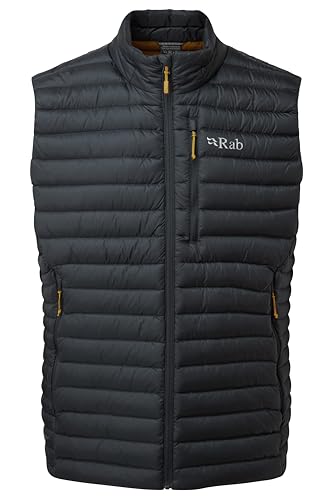
Stretch-bound edges around the synthetic insulation panels let this vest move with the body during technical climbing or scrambling. A wind-resistant front panel blocks chill while stretch side panels keep venting during exertion. The cut runs slightly longer at the back to stay tucked in while reaching overhead.
Pros
- Stretch side panels improve mobility during climbing or scrambling
- Longer back hem stays tucked in while reaching overhead
- Wind-resistant front blocks chill without a heavy shell
Cons
- Narrower cut runs tight for layering over a thick base layer
- Less packable than the Patagonia Micro Puff Vest

Mountain Hardwear Compressor Vest
Thermal.Q synthetic insulation gives this vest consistent warmth whether the shell is dry or wet, aimed at cold weather use over technical mobility. A higher fill volume than the Rab or Patagonia options adds noticeably more standalone warmth. The tradeoff is a slightly larger pack size once compressed.
Pros
- Higher fill volume adds more standalone warmth than thinner vests
- Thermal.Q fill performs consistently whether wet or dry
- Hand pockets add storage missing from thinner technical vests
Cons
- Packs larger than the Patagonia or Rab vests here
- Added warmth comes with added weight

Marmot Featherless Vest
Marmot’s Featherless insulation is built to replicate down’s loft and compressibility using a fully synthetic fill, aimed at buyers avoiding animal-derived down entirely. The vest compresses into a stuff sack included with purchase. A DWR-treated shell adds light water resistance on top of the synthetic fill’s inherent wet-weather performance.
Pros
- Fully synthetic fill avoids animal-derived down entirely
- Included stuff sack simplifies packing for travel
- DWR shell adds water resistance on top of the synthetic fill
Cons
- Not quite as compressible as premium 800 plus fill power down
- Mid-range price sits above basic budget synthetic vests
REI Co-op Magma 850 Down Vest
850 fill power down gives this vest one of the higher warmth-to-weight ratios on this list, while REI’s in-house pricing keeps it below comparable branded options. A 15 denier recycled nylon shell trims weight further without sacrificing much durability. An included stuff sack compresses the vest down to roughly fist size.
Pros
- 850 fill power delivers strong warmth for very little weight
- Lower cost than branded 800 plus fill power alternatives
- Compresses to roughly fist size with the included stuff sack
Cons
- Down fill loses loft if it gets fully soaked
- Thin 15 denier shell is more prone to snags than a thicker fabric

Arc’teryx Cerium Vest
Arc’teryx mixes 850 fill power down across the core with synthetic insulation at the side panels, a hybrid build that keeps warmth where it matters most while improving durability at high-wear points. The result runs warm for its weight without the fragility of an all-down vest. Construction quality trends toward the premium end of this list.
Pros
- Hybrid down and synthetic build balances warmth with durability
- Synthetic side panels resist wear better than all-down construction
- Strong warmth-to-weight ratio even with the added side panels
Cons
- Highest cost among the vests on this list
- Hybrid build is less packable than a vest using down throughout
L.L.Bean Ultralight 850 Down Vest
This vest pairs 850 fill power down with a genuinely lightweight shell fabric, built to disappear into a daypack when not needed. The simple cut skips extra panels or pockets beyond the essentials, keeping total weight low. It represents one of the more accessible ways to get premium fill power without top-tier branded pricing.
Pros
- 850 fill power matches pricier vests at a lower cost
- Lightweight shell keeps total pack weight down
- Simple design avoids unnecessary bulk
Cons
- Fewer durability features than the Arc’teryx or Mountain Hardwear vests
- Shell fabric feels less substantial than heavier technical options
Side by side
| # | Model | Fill | Best for | Score | Price |
|---|---|---|---|---|---|
| 1 | Patagonia Micro Puff Vest | PlumaFill synthetic | Best Overall | 9.4 | Check price |
| 2 | Rab Xenon Vest | Synthetic insulation | Best for Climbing and Scrambling | 8.8 | Check price |
| 3 | Mountain Hardwear Compressor Vest | Thermal.Q synthetic | Best for Cold Weather Insulation | 8.9 | Check price |
| 4 | Marmot Featherless Vest | Featherless synthetic down alternative | Best Down Alternative | 8.6 | Check price |
| 5 | REI Co-op Magma 850 Down Vest | 850 fill power down | Best Value | 9.0 | Check price |
| 6 | Arc’teryx Cerium Vest | 850 fill power down with synthetic side panels | Best Premium Pick | 9.1 | Check price |
| 7 | L.L.Bean Ultralight 850 Down Vest | 850 fill power down | Best Budget 850 Fill Power | 8.7 | Check price |
How to choose
Down versus synthetic insulation for packable vests Down, used in the REI Co-op, Arc’teryx and L.L.Bean vests, compresses smaller and feels warmer per ounce than synthetic fill. Synthetic insulation, like the PlumaFill in the Patagonia Micro Puff or Thermal.Q in the Mountain Hardwear Compressor, keeps insulating even after getting wet, which down struggles to do. Buyers heading somewhere genuinely wet should weigh that tradeoff above fill power or price.
Matching warmth to how you use it Technical climbing or scrambling benefits from a vest with stretch panels, like the Rab Xenon, since mobility matters more than maximum warmth. Standing still in cold conditions, such as belaying a climbing partner or watching a winter sports event, favors a higher fill volume vest like the Mountain Hardwear Compressor. Everyday layering under a shell jacket works well with a trimmer cut such as the Patagonia Micro Puff.
Fill power and what it changes Fill power measures how much a given weight of down lofts, so 850 fill power, used in the REI Co-op, Arc’teryx and L.L.Bean vests, traps more warm air per ounce than lower fill power down. A higher number means a warmer vest for the same weight, or a lighter vest for the same warmth. Synthetic vests do not use fill power ratings, so comparing them to down vests means looking at fill type and shell weight instead.
Shell durability and packed size tradeoffs A thinner shell, like the 15 denier nylon on the REI Co-op Magma, packs smaller but snags more easily on branches or rough surfaces. A hybrid build like the Arc’teryx Cerium adds synthetic reinforcement at high-wear points, improving durability at the cost of some packability. Buyers packing a vest for daily commuting rather than backcountry travel can prioritize pack size over heavy-duty shell fabric.
Questions worth asking
Is down or synthetic insulation better for a packable vest?
Down compresses smaller and feels warmer per ounce, which is why the REI Co-op Magma and Arc’teryx Cerium pack so tightly. Synthetic fill like PlumaFill in the Patagonia Micro Puff keeps working when wet, which matters more in damp climates.
What does fill power mean on a down vest?
It measures how much one ounce of down lofts in cubic inches. The 850 fill power used in the REI Co-op, Arc’teryx and L.L.Bean vests traps more warm air per ounce than lower fill power down.
Can a packable insulated vest get wet without losing warmth?
Only with synthetic fill. The Patagonia Micro Puff and Mountain Hardwear Compressor keep insulating even if their shells get damp, while pure down vests lose loft once soaked through.
Which packable vest suits climbing or scrambling best?
The Rab Xenon Vest uses stretch-bound side panels built specifically for the range of motion climbing requires, unlike the stiffer cuts on standard down vests.
Do hybrid down and synthetic vests make sense?
Yes, for buyers wanting durability at wear points without giving up much warmth. The Arc’teryx Cerium Vest places synthetic insulation at the side panels while keeping down across the core.
How small does an 850 fill power down vest pack?
The REI Co-op Magma 850 and L.L.Bean Ultralight 850 both compress to roughly fist size using their included stuff sacks, among the smallest pack sizes in this category.
Is the Marmot Featherless Vest a good choice for avoiding animal-derived down?
Yes. Its Featherless insulation is fully synthetic while still targeting down-like loft and compressibility, making it a direct alternative for buyers avoiding down specifically.
Do thinner shell fabrics on packable vests wear out faster?
Generally yes. Lighter shells like the 15 denier nylon on the REI Co-op Magma snag more easily than thicker technical fabric, trading some durability for lower pack weight.
Our pick
The Patagonia Micro Puff Vest earns the top recommendation for buyers who want down-like compressibility without losing warmth if the shell gets damp. Anyone facing genuinely cold, static conditions should choose the Mountain Hardwear Compressor Vest instead, since its higher fill volume adds more standalone warmth. Buyers who want premium 850 fill power down without top-tier branded pricing can get strong value from the REI Co-op Magma 850 Down Vest.
Priya Nathan
Priya spent years in apparel buying and merchandising for a multi-brand retailer before moving into editorial work. She focuses on fit, fabric and construction quality across everyday wear, activewear and accessories, reading past marketing copy to the details that affect how a garment actually wears and holds up.